Looking for Alligators

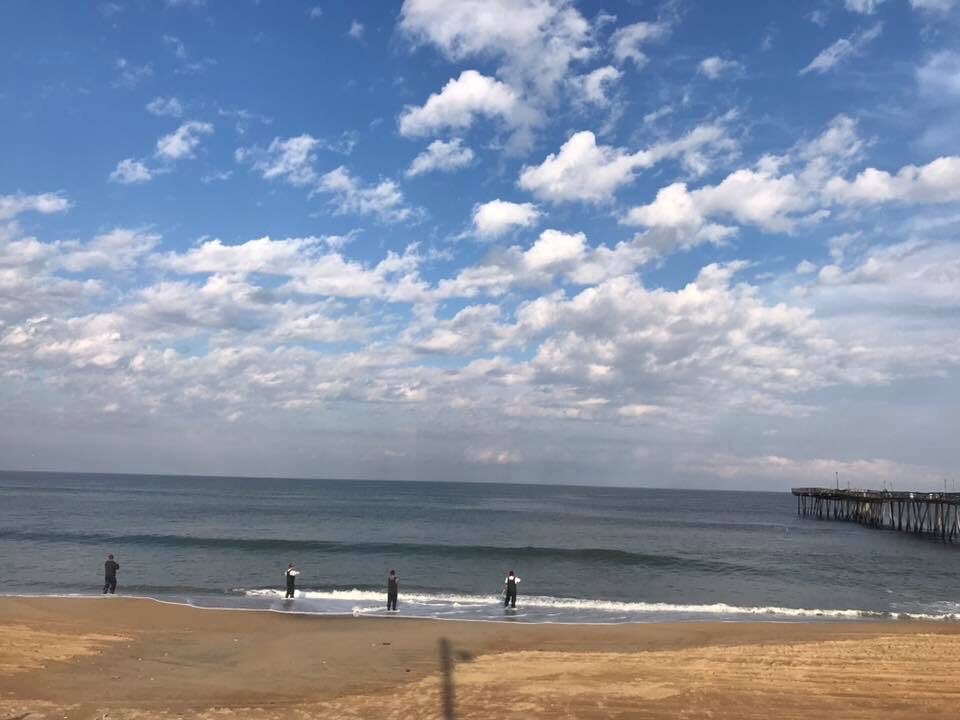
In answer to the question, “Are there alligators in that lake?,” a Florida realtor responded, “If it’s a body of water any larger than a puddle in Florida, there is an alligator there.” True enough, a run around two small lakes last week provided views of two alligators…that I could see. So when I run in Florida, I am constantly looking for them.

The problem with looking for alligators is that you miss stuff. I missed a great view of the town across the lake. I missed watching children play in the (heavily fenced in) lakeside playground. I missed hearing a couple speaking in a foreign accent as they experienced the beauty of the flora and fauna. Keeping vigilant in my alligator quest, I miss stuff.

Do you ever do this with people? Do you look for the alligators in them? Social life today has brought out a kind of meanness in people that did not exist ten years ago. I read someone’s post and it offends me. I respond with something strong, and offend them. Others read the exchange and they circle the lake, realizing the alligators are showing their teeth and they want nothing to do with it. And the next time I see them in real life, I am prejudiced and stand-offish.

I wonder if I am creating the alligator. Anticipation of someone’s teeth may actually be giving them teeth that they weren’t planning to use. A fight or disagreement from years past may rise up in my mind when I am about to see them again, and take on alligator-like proportions in my perception. And because I greet them with hesitancy and suspicion, I may actually be summoning the beast where one did not exist. Meanwhile, I miss seeing their true self. My empathy and understanding are dulled even before I open the door to let them in, and I miss moments of humor and gentleness.

Having a pre-conceived notion of someone is not always helpful. People change, but we miss it. We see alligators where they do not exist.

I am so glad that God does not treat me this way.

1 Samuel 16 Common English Bible (CEB)

Samuel anoints David

16 4 Samuel did what the Lord instructed. When he came to Bethlehem, the city elders came to meet him. They were shaking with fear. “Do you come in peace?” they asked.

5 “Yes,” Samuel answered. “I’ve come to make a sacrifice to the Lord. Now make yourselves holy, then come with me to the sacrifice.” Samuel made Jesse and his sons holy and invited them to the sacrifice as well.

6 When they arrived, Samuel looked at Eliab and thought, That must be the Lord’s anointed right in front.

7 But the Lord said to Samuel, “Have no regard for his appearance or stature, because I haven’t selected him. God doesn’t look at things like humans do. Humans see only what is visible to the eyes, but the Lord sees into the heart.”

8 Next Jesse called for Abinadab, who presented himself to Samuel, but he said, “The Lord hasn’t chosen this one either.” 9 So Jesse presented Shammah, but Samuel said, “No, the Lord hasn’t chosen this one.” 10 Jesse presented seven of his sons to Samuel, but Samuel said to Jesse, “The Lord hasn’t picked any of these.” 11 Then Samuel asked Jesse, “Is that all of your boys?”

“There is still the youngest one,” Jesse answered, “but he’s out keeping the sheep.”

“Send for him,” Samuel told Jesse, “because we can’t proceed until he gets here.”

12 So Jesse sent and brought him in. He was reddish brown, had beautiful eyes, and was good-looking. The Lord said, “That’s the one. Go anoint him.” 13 So Samuel took the horn of oil and anointed him right there in front of his brothers. The Lord’s spirit came over David from that point forward.

“God doesn’t look at things like humans do. Humans see only what is visible to the eyes, but the Lord sees into the heart.”

This is a reminder to us today to look at the hearts of those around us, not the outward appearance of things. Look beyond the snarkastic post, the angry retort, the past history, and put your God-Goggles on. How does God see this person in front of you? If you look harder, the alligator you are anticipating might not even be there. God sees us as people of intrinsic value, and thought highly enough of us to send his son as an expression of his unconditional love for each one of us. God sees into the heart.

Go, and see likewise.

Photo by Kenn Haas

Living Inside My Head

Are you living inside your head too much? Headspace is a place where we listen to an inner dialogue that circles around like a motorcycle in a round metal cage. Sadness, depression, isolation, and circumstances that grind us down can result in retreating inside to these cyclical thoughts. We stay in an unhealthy place of repetitious conversations with our inner voice. Worry and anxiety are often the trigger, and unfortunately the headspace that we dwell in is counterproductive to letting ourselves out and getting better.

One thing that being inside your head lacks is perspective. Because the inner dialogue is monotone and one-track, there is no counter point to your point. It becomes something akin to looking into a mirror of a mirror of a mirror. The reflection is duplicated over and over, but the image never changes.

I read something the other day that caught my attention. Twin boys were raised by an alcoholic father. One grew up to be an alcoholic. When asked why, he responded, “I watched my father…” The other never took a drink in his life. When asked why, he responded, “I watched my father…” Perspective determines your destination.

I live inside my head a lot. I spend a fair amount of time alone, and while conversations with the dog are entertaining, they are rarely enlightening. Writing helps me get outside of my skull to see what other voices are saying and gain an outside perspective. I do a fair amount of research when I write, so different definitions, commentaries, reading several scripture translations, etc. enlarge the conversation in my mind so that my views expand beyond my own.

This is why I recommend journaling to people I am counseling. Even if you keep it completely to yourself, writing down your thoughts gives you the opportunity to reflect on what you are experiencing in a different way. New thoughts will come as you read what you wrote, and the Holy Spirit gets a chance to enter into the dialogue.

Turning over our inner thoughts to the God who created the universe has the effect of bringing a far different perspective into our current situation than we can possibly manage for ourselves. The psalmists found this out. Everyone who sat down to write out their frustrations and tribulations arose with a newfound notion of how things were going to work out.

Let’s take a look at Psalm 23, but in order to gain a fresh perspective, we will use a translation you’ve probably never read:

Psalm 23 The Message (MSG) A David Psalm

23 1-3 God, my shepherd!

    I don’t need a thing.

You have bedded me down in lush meadows,

    you find me quiet pools to drink from.

True to your word,

    you let me catch my breath

    and send me in the right direction.

4  Even when the way goes through Death Valley,

I’m not afraid

    when you walk at my side.

Your trusty shepherd’s crook

    makes me feel secure.

5  You serve me a six-course dinner

    right in front of my enemies.

You revive my drooping head;

    my cup brims with blessing.

6 Your beauty and love chase after me

    every day of my life.

I’m back home in the house of God

    for the rest of my life.

“Your beauty and love chase after me every day of my life.”

Oh, my. Let that rest in your cacophonous mind for just a moment. God’s beauty and love chase after you! I guess the real question is, why are you running?

If you are caught up in a swirl of self-talk, try this: write that thing down, and then write out vs. 1-3 next to it. Then write your next thought, followed by vs. 4 and 5. Finally, write a summary of everything your inner voice is saying, and answer that with,

“Your beauty and love chase after me every day of my life. I’m back home in the house of God for the rest of my life.”

Try it today, and just see if your perspective doesn’t change.

God brings the rainbow and the lightening bolt. Which will you focus on?

Photo by Wende Pritchard

I Just Buzzed

While this could very well be something you hear at the local bar around 8PM from the fellow who arrived at Happy Hours, that is actually not the context we are considering today. The word “buzz” has a lot of fun applications: it can be a humming sound, a group expression of excitement and activity, the hurried motions of someone moving quickly, a military man’s crew cut, the activity of pressing a buzzer, and even making a telephone call (especially if you’re British. “Give you a buzz later, yah?”)

But none of those are the context we are considering today.

If you can guess where this is going, raise your Fitbitted arm. Yes, “I just buzzed” is something Fitbit wearers shout gleefully as they accomplish a pre-programmed goal of whatever number of steps they want to accomplish every day. FitBit rewards the walker by vibrating and flashing, creating a Pavlovian response that is addicting. Many Fitbit wearers can describe the utter devastation of realizing that their Fitbit didn’t charge, or they left it at home….it is as though NOTHING (IN LIFE!) COUNTS if you don’t get the buzz. Never mind that you did the walking and your body benefited, if you don’t get the buzz, it’s game over.

I think it is safe to say that Paul never wore a Fitbit, but he knew a lot about setting goals and getting your steps in:

Ephesians 4:1-3 The Message (MSG)

To Be Mature

4 1-3 In light of all this, here’s what I want you to do. While I’m locked up here, a prisoner for the Master, I want you to get out there and walk—better yet, run!—on the road God called you to travel. I don’t want any of you sitting around on your hands. I don’t want anyone strolling off, down some path that goes nowhere.

And mark that you do this with humility and discipline—not in fits and starts, but steadily, pouring yourselves out for each other in acts of love, alert at noticing differences and quick at mending fences.

How incredibly rich is this? Walk or run on the road God called YOU to travel. Wow. Paul reminds us that each of us has a different road. We are all headed to the same destination, but our roads are deliberately different. This means we dare not judge someone else’s path. Those who have walked the road to Emmaus are called to be gentle in their responses to those who won’t walk that road. Those who have had Damascus road conversions are expected to be patient with those whose faith grows over decades of contemplation. This is truly one thing where the destination outweighs the journey. God doesn’t care how you get there, as long as you get there.

This is why Paul charges us to go down our own path with HUMILITY and DISCIPLINE. Humility is a quality of having a modest lack of pride in one’s own progress. Discipline is the characteristic that will keep us moving forward in our maturity.

It’s a charge to pour ourselves out for others in acts of love, celebrating, rather than criticizing, each other’s differences. It’s a charge to eliminate the barriers between religious experiences and denominations, and ACCEPT one another as God has accepted and called each of us.

Where is God calling you to mend some fences today, in the name of the Lord? What steps should you take to come alongside of someone whose faith journey is different or even absent, and in need of unbiased encouragement? I suspect that if you take the first step, the buzz you receive will worth it in the end. Walk on!

Shell heart by Allison Brown.

Lord, Get Me up This Hill

In its best form, prayer is simply an ongoing communication with a heavenly parent who simply adores you and can’t wait to talk to you about every little thing. Somehow we have twisted prayer into a set of rubrics (“Do the A.C.T.S. of Prayer!”), a florid flood of flowery flowing words (“I don’t pray out loud because I can’t pray like the preacher does every Sunday”), or rote repetition (when was the last time you really, truly thought about the words of the Lord’s Prayer?) It’s just not that complicated, people. Prayer is just talking.

I am a big advocate of the open dialogue that runs between God and his people when we set aside our preconceptions about prayer and just talk. When you practice open dialogue, it’s like you have your earbuds in, your speaker button on, and you just yak away. Talking to God like this throughout the day is a wonderful way to be in his presence. You can dialogue through your morning coffee and share your anticipations and concerns about the day. As you go about your work, dialogue about the traffic, your co-workers, assignments that are due, tasks you are worried about…you get the idea.

I practice this form of open dialogue prayer. I am sure I look like a mad woman driving down the road with my mouth flapping. About ten times a day I ask Jesus to take the wheel, and not just on the bypass. And if you pass me while I am running, you are likely to hear my constant prayer: “Lord, get me up this hill!”

Take a look at this wonderful nugget from the book of Ephesians. See how many times the words “all” and “always” are used:

Ephesians 6:18 “And pray in the Spirit on all occasions with all kinds of prayers and requests. With this in mind, be alert and always keep on praying for all the Lord’s people. 

Pray also for me, that whenever I speak, words may be given me so that I will fearlessly make known the mystery of the gospel, for which I am an ambassador in chains. Pray that I may declare it fearlessly, as I should.”

All occasions. All kinds of prayers. Always keep on praying. All the Lord’s people.

Kinda makes you think that we should be praying all the time, always!

I love that Paul adds a personal prayer request at the end. YES, Paul! He is showing us that we should feel free to ask other people to pray for us. His prayer request for fearlessness in sharing the gospel is a request we all can make. Lord, make us FEARLESS when we talk about you! Make us FEARLESS when we come to you! Make us FEARLESS when we pray!

So pick up the phone today and phone home. God is so ready to hear from his kids. You can tell him anything you want, and he will listen. And he will always get you up that hill.

Gracious and Loving God, Thank you for giving us the gift of open dialogue with you! We want to be in communication with you, and we need to hear your voice of wisdom, comfort and truth as we navigate this day. Be with us, and help us overcome any obstacle that might come our way. AMEN

Photo by Kathy Schumacher.

Vanity Sizing

If you have been around for a while, and have been wearing clothes while you’ve been around, you may have noticed a marketing trend called “Vanity Sizing.” This is a practice by clothing manufacturers where clothing sizes are being redesigned to fit an ever expanding national waistline. People are getting taller and wider, and the response to this is that clothing sizes are getting smaller. That would seem to be a paradox, but think about what size you wore ten to twenty years ago compared to now.

I found a favorite wool dirndl skirt in our attic when we moved several years ago. It had been my go-to skirt in college. I added a maroon turtleneck sweater, a wide belt and a pair of boots and I was ready for anything. I tried it on, knowing there was no way it would fit. It cut through my waist like a garrote as I tried to force the button into the hole. Nope, goodbye dirndl skirt. You did not spark joy! As I tossed it into the thrift store pile, I glanced at the label. It was FOUR SIZES larger than the size I was currently wearing, and I couldn’t get it on.

And to make things more confusing, each manufacturer targets its median size toward a different customer. Ann Taylor’s median woman is much different than American Eagle’s median customer. So you might be a comfortable 2 in Ann and find that you will need a 4 or 6 with the Eagle. Men’s wear has undergone the same changes; a pair of size 36 jeans at Old Navy actually measures a 41 inch waistband.

Vanity indeed! They have figured out that if we can buy a size or two smaller at their store, we will return. You got me, Ann.

Vanity, or the practice of focusing on worthless things, is nothing new. See what the writer of Ecclesiastes has to say about the vanity of his day:

Ecclesiastes 1 New King James Version (NKJV)

The Vanity of Life

1 The words of the Preacher, the son of David, king in Jerusalem.

2 “Vanity of vanities,” says the Preacher;

“Vanity of vanities, all is vanity.”

3 What profit has a man from all his labor

In which he toils under the sun?

4 One generation passes away, and another generation comes;

But the earth abides forever.

5 The sun also rises, and the sun goes down,

And hastens to the place where it arose.

6 The wind goes toward the south,

And turns around to the north;

The wind whirls about continually,

And comes again on its circuit.

7 All the rivers run into the sea,

Yet the sea is not full;

To the place from which the rivers come,

There they return again.

8 All things are full of labor;

Man cannot express it.

The eye is not satisfied with seeing,

Nor the ear filled with hearing.

9 That which has been is what will be,

That which is done is what will be done,

And there is nothing new under the sun.

10 Is there anything of which it may be said,

“See, this is new”?

It has already been in ancient times before us.

11 There is no remembrance of former things,

Nor will there be any remembrance of things that are to come

By those who will come after.

Doesn’t that just cheer you right the heck up? Geez. But there is so much truth in it. Everything, and I mean everything, fades to nothing. You work hard all your life, and then your generation passes away and is replaced. The sun and the rivers remain, but for the rest of us, there is nothing new under the sun. So let this be our take-away this morning: it doesn’t matter what the number is on the label of your jeans. It doesn’t matter if you need to lose ten pounds or gain ten pounds. It doesn’t matter what you will wear today, so WHY WORRY?

What matters, what lasts, what is NOT vanity, is the one-size-fits-all love of God. Putting that on every morning will fit you for today and the rest of your life, until you reach your eternal destination. The rest? It’s all small stuff. Don’t sweat it.

One-size-fits-all love: it’s what all the cool kids are wearing.

Are We There Yet

Six and a half hours into the five hour drive, I realized that Connor had asked me, “Are we there yet?” at least a dozen times. I could sympathize. That is a long time to be stuck incarcerated in seatbelt, much less a carseat with an over the shoulders harness. Having no real sense of time or distance yet, it surely was frustrating to this four year old.

Finally I figured out a way to (hopefully) slow down the questions. The next time (approximately 3 minutes later) he asked, I said, “Connor, look out your window. Do you see your house?” He would crane his head around both sides of his car seat and answer, “No, Nana! I don’t see my house!” And I would say, “So are we there yet?”

Patience. It is a difficult thing to teach a child, especially when we’ve lost it ourselves. I have often confessed that my favorite prayer is, “Lord, give me patience. AND GIVE IT TO ME RIGHT NOW.”

James 5 counsels patience to an impatient world:

7-8 Meanwhile, friends, wait patiently for the Master’s Arrival. You see farmers do this all the time, waiting for their valuable crops to mature, patiently letting the rain do its slow but sure work. Be patient like that. Stay steady and strong. The Master could arrive at any time.

9 Friends, don’t complain about each other. A far greater complaint could be lodged against you, you know. The Judge is standing just around the corner.

10-11 Take the old prophets as your mentors. They put up with anything, went through everything, and never once quit, all the time honoring God. What a gift life is to those who stay the course! You’ve heard, of course, of Job’s staying power, and you know how God brought it all together for him at the end. That’s because God cares, cares right down to the last detail.

I wonder how much we actually think about the Master’s Arrival. Jesus has promised to return, and his Second Coming will usher in a new rule, a new world, and a new Kingdom on earth. But we walk around so consumed with our daily chores and burdens, we forget to anticipate that his return might be any day now.

But we’re not home just yet.

Impatience is a distractor that basically has no purpose. It doesn’t produce much beyond frustration, lack of focus, anger, and a feeling of annoyance. When children get impatient, we try to just distract them long enough for the thing to transpire. But as adults, we give into impatience and turn waiting into seething and seething into action. We take the matter into our own hands when we should have left well enough alone.

James encourages us to stay steady and strong. He reminds us that those who have staying power, those who stay the course, will discover that God is working to bring it all together for us in the end, just as he did for the old prophet mentors.

What are you pushing hard at right now? We often try to rush and hurry things that are better left to develop and grow on their own. A child who is slow to learn, an idea you are trying to promote, a marriage that has lost its charm, a dream you can’t wait to realize, a purchase you can’t afford without a credit card….life moves slowly at times and we impatiently force things that we shouldn’t.

James instructs us today to allow things to mature and be realized in their own time. God will bring rain that will do its slow but sure work to whatever it is you are trying to handle on your own. The farmer knows to wait. Be patient like that, and before you know it, you will be home.

Photo by Allison Brown.

What Remains of the Temple of Zeus

The Temple of Zeus was built in Athens, Greece in 470BC to honor the Olympian god Zeus. Zeus was the king of the Greek gods and the one who controlled thunder and sky. It took over 700 years to finally complete the construction because it fell into the hands of conquering peoples many times over the centuries.

The most impressive part of the temple was the magnificent golden and chryselephantine statue of Zeus, which is considered to be one of the seven wonders of the Ancient World. This 42 foot tall statue was made by Phidias, the most talented sculptor of ancient Greece, in his workshop in Olympia. Both the temple and the statue of Zeus were destroyed by an earthquake.

What temples have you constructed?

Your temple may not consist of over 104 Corinthian marble columns, but I bet you have built one or two in your lifetime. Temples are places where we worship things, spaces where adoration of gods take place, and halls filled with idols that we place on a throne where Jesus should sit. It’s not too hard to identify what your temple is: just think about the one thing you cherish most. What do you think about first thing in the morning and last thing at night? Where do you spend your time and money? Where is your attention going?

I know a man who has built a temple of adultery for himself. All of his time and effort is spent in this temple. His mind, his resources, and his energy are willingly given at the altar of this temple. Secretively, he slips in and out like a thief in the night, unaware and uncaring that his worship practice is destroying his family.

Another one brings her offering to the temple of resentment. Every day she gathers up alms of wanting what others have, begrudging relationships around her that are happier than hers, and feeding her resentment until it is a tall statue in her mind that blocks out the sun.

Still others worship at the temple of Netflix, work, InstaGram, neighbor disputes, gossip, apathy, anger, racism, narcissism, sloth….the temples are many and easy to build. If your daily thoughts are consumed with what you will eat, what alcohol you will drink today, flirting with that attractive co-worker, how you will go about getting high, shopping for things you can’t afford, how much you can’t stand someone, etc, you are in the construction zone of temple building. Anything that consumes your waking consciousness can become something you worship.

1 Corinthians 3 instructs us on the matter of building temples:

10 I laid a foundation like a wise master builder according to God’s grace that was given to me, but someone else is building on top of it. Each person needs to pay attention to the way they build on it. 11 No one can lay any other foundation besides the one that is already laid, which is Jesus Christ. 12 So, whether someone builds on top of the foundation with gold, silver, precious stones, wood, grass, or hay, 13 each one’s work will be clearly shown.

The day will make it clear, because it will be revealed with fire—the fire will test the quality of each one’s work. 14 If anyone’s work survives, they’ll get a reward. 15 But if anyone’s work goes up in flames, they’ll lose it. However, they themselves will be saved as if they had gone through a fire. 16 Don’t you know that you are God’s temple and God’s Spirit lives in you? 17 If someone destroys God’s temple, God will destroy that person, because God’s temple is holy, which is what you are.

“The day” that Paul refers to is the day of Judgment. On that day, we will stand before God and our work will be exposed to the flame of righteousness. We are God’s temple and God’s temple is holy. And so are you.

What does it mean to know that you are holy? Things that are holy are set apart and sacred. This is a reminder that your mind, heart, actions, and behaviors are sacred to God. If you build a temple where only the sacred exists, God will take his rightful place on the throne and your waking thoughts will only be about serving him, pleasing him, sharing him, living for him, and living through him.

The time in the scriptures where we see Jesus at his most angry was when he threw the money changers out of the Temple. They were guilty of conducting commerce (and likely cheating people) on the steps of the Sacred. This was intolerable.

If Jesus visited your temple today, what would he throw out? False gods bring false hope. Obsessive behavior and worshipping things that exclude God is false worship. Jesus would throw that stuff out. Go, and do likewise.

Photo by Kathy Kasperik.

Fetch or Keep Away?

A very hot run that I shouldn’t have done yesterday resulted in observing something quite special. I was rounding a cul-de-sac and noticed a little Jack Russell terrier coming bounding down his driveway, straight for me. I have been bitten twice by dogs while running, so my radar was UP. But this little fellow was running after a tennis ball that his owner had just thrown. The owner and his wife were standing in the shade of their garage overhang, throwing the ball from that relatively cool spot. I say relatively, as yesterday was a day that we “might as well be walking on the sun,” even in the shade. I had a thought to ask if I might come down the driveway and melt into a puddle as I watched them play fetch with their dog.

But as he bounded past me to retrieve and return the ball, Jack the Russell ran straight over to the mailbox and dropped it. Then I noticed a pile of about 30 balls there, and I realized that I didn’t know jack. This wasn’t fetch, it was keep away. His poor owner was down to his last two balls, then had to walk into the solar flare known as OBX in July and retrieve all the balls himself.

This is why I have a retriever. She may be bad to the bone, but she will bring you things: in fact, just this morning she tried to give a pair of my unmentionables to the HOUSE PAINTER. Geez, Georgia, this would have been a better time to play keep away!

In the book of Romans, Paul is laying the ground work for the new church to be a place where the gospel of Jesus Christ is not kept rolled around Torah scrolls and locked in a cabinet, but rather is shared widely and deliberately in the marketplace, on the roads, in the homes, around the tables….everywhere. The Jews were more accustomed to playing keep away. Their faith system depended on being born into the a Jewish family. Jesus’ radical ministry was a new thing, a game of round robin fetch: I have something I throw to you, you retrieve it and return it to somebody else, etc.

Romans 10:13 “Scripture reassures us, “No one who trusts God like this—heart and soul—will ever regret it.” It’s exactly the same no matter what a person’s religious background may be: the same God for all of us, acting the same incredibly generous way to everyone who calls out for help. “Everyone who calls, ‘Help, God!’ gets help.”

But how can people call for help if they don’t know who to trust? And how can they know who to trust if they haven’t heard of the One who can be trusted? And how can they hear if nobody tells them? And how is anyone going to tell them, unless someone is sent to do it? That’s why Scripture exclaims,

A sight to take your breath away!
Grand processions of people
    telling all the good things of God!

But not everybody is ready for this, ready to see and hear and act. Isaiah asked what we all ask at one time or another: “Does anyone care, God? Is anyone listening and believing a word of it?” The point is: Before you trust, you have to listen. But unless Christ’s Word is shared, there’s nothing to listen to.

And whenever we throw out the word of God, it never returns to us void, but instead brings others into its fold.

Sometimes folks get the love of God in their hearts and just keep it for themselves. Sometimes churches think that the gospel hope they have is meant to bless all those who are within their own four walls. Sometimes we hold on to our resources, our testimonies, our ability to serve others, and our salvation, thinking it was meant only for us.

Sometimes we are wrong.

There is no keep away in the kingdom of God. He tosses out his very best in hopes that we will catch it, and share it with someone else. His very best was his only Son, so that whosoever believes in him would not perish, but have eternal life. But nobody believes and calls on a savior they haven’t heard about. And nobody can hear without someone sharing with them. And nobody can share without being sent. Those who go out to bring the good news are the beauty of the Lord.

Where are you being called to tell all the good things of God to someone today? Remember everyone who calls ‘Help, God’ gets help. Somebody near you is in dire need of help. Today is a great day to share the love of God with someone who desperately needs it. Don’t just keep it for yourself.

Lake Peachtree, by Kathy Schumacher.

Anticipation…

And then there was that horrible Christmas that my sister and I ruined for ourselves….

Melanie had discovered where the Christmas presents were hidden about a week before Christmas. That evening, when my parents went out, we went to their closet and found the stack of wrapped presents. We were post-Santa at that point in our lives, so the appearance and the source of such abundance was no longer a mystery. Neither were the contents, as we methodically peeled back just enough tape and wrapping to see what each present contained. I remember we squealed with delight at what we were about to receive, and that joy lasted about 30 minutes after the presents were carefully re-wrapped and returned to the closet. We realized that we had just taken all of the fun of anticipation out of Christmas, and the next seven days were likely to be very deflated. And they were.

But wait! Tomorrow we would drive to the train station in Philadelphia to pick up our grandparents! And they always arrived with an armload full of presents! Joy to the world, there would be some surprise come Christmas morning.

Except for some strange reason, my grandmother chose that year to wrap everything in white tissue paper. We could see the contents of every single gift without even removing a smidge of tape. It was like a car wreck. We tried not to look, but we couldn’t stop ourselves.

Have you heard of Flat Stanley? We were Flat Betsy and Flat Melanie that Christmas. There was no surprise, no anticipation, no excitement except for that which we felt obligated to manufacture for our parents’ benefit. I can tell you one thing: we never did that again.

Anticipation is big part of the fun. Anticipation actually extends the happiness of an event, as you pre-game your game in your mind and your preparations. I always tell my husband that anticipating a trip is a big part of the trip itself, and it lasts longer. As we make plans, decide what to do, and look up information about our destination, we are emotionally on the the trip before we even leave. There is much to be said about the dreaminess of the “before.”

The Old Testament is a long pre-game of anticipation as the people waited for their Messiah to come. Glimpses of the salvation and redemption he would bring sustained them through long periods of waiting and hoping. Some of the most beautiful anticipatory language is found in the book of Isaiah:

Isaiah 40 

Comfort, O comfort my people,
says your God.
Speak tenderly to Jerusalem,
and cry to her
that she has served her term,
that her penalty is paid,
that she has received from the Lord’s hand
double for all her sins.

A voice cries out:
“In the wilderness prepare the way of the Lord,
make straight in the desert a highway for our God.
Every valley shall be lifted up,
and every mountain and hill be made low;
the uneven ground shall become level,
and the rough places a plain.
Then the glory of the Lord shall be revealed,
and all people shall see it together,
for the mouth of the Lord has spoken.”

The anticipatory voice crying out about valleys being lifted up and rough places being smoothed is a voice we should all heed when we find ourselves in need of saving. The question for us this morning is, are you just waiting, as though you are in a holding pattern, or are you anticipating, with your eyes raised up, ready to see the glory of the Lord? Waiting implies inertia. Don’t get me wrong, waiting is a necessary part of every journey. But waiting with anticipation is a place of hope. Waiting with anticipation tells God that you fully expect to be delivered, based not on your own works, but on his promises.

The scriptures encourage us again and again to anticipate God’s intervention and response whenever we cry out to him in our need:

Get you up to a high mountain,
O Zion, herald of good tidings;
lift up your voice with strength,
O Jerusalem, herald of good tidings,
lift it up, do not fear;
say to the cities of Judah,
“Here is your God!”
See, the Lord God comes with might,
and his arm rules for him;
his reward is with him,
and his recompense before him.
He will feed his flock like a shepherd;
he will gather the lambs in his arms,
and carry them in his bosom,
and gently lead the mother sheep.

So hear the good tidings today: God is actively working in your situation. He comes with might to answer your need. He comes with compassion, to feed you like a shepherd. He comes with love, to carry you in his arms.

He comes. Get you up to a high mountain! Anticipate, and make yourself ready, for he comes.

Rainbow over Colington.

Sparking Sadness

Yes, that is a picture of mismatched, old, worn-out socks. I took it against a nice background, since my epiphanies always happen at the Water’s Edge, but it is indeed a nasty pile of socks. These aren’t even my socks, but my husband’s. He walked down the steps with them last week and declared, “I have decided that these socks no longer spark joy.” In my mind I was thinking, “Honey, they haven’t sparked joy for about ten years, especially the red ones.”

His comment was a result of the Marie Kondo phenomenon. Kondo is a television personality who brilliantly came up with the idea to do shows helping people become more organized and efficient with their homes and their usage of space. Disciples of Kondo will recognize the “spark joy” reference. Her greatest teaching is that you should hold an object in your hands, and if it doesn’t spark any joy in your heart, you need to toss it out. I read a news report that said that once this idea went viral, thrift stores everywhere were suddenly overwhelmed with joyless donations. Her thinking is pretty revolutionary, don’t you think? But more importantly, don’t you wish you had come up with it first?? I sure do!

A friend of mine coined another phrase to describe the opposite of sparking joy. She said that she realizes there are things in her home that only “spark sadness.” She described how a beautiful figurine that looked just like her dog now sparks sadness, as the dog has passed away. I have a favorite photograph in my living room of my in-laws holding hands as they crossed the finish line at the Turkey Trot many years ago. Since my mother-in-law died, this picture of her smiling in her Penn State hat and wearing her race number pinned to her sweatshirt often sparks sadness for me. She will never do that race again, which was the highlight of our Thanksgiving day for many years. We keep things like these to honor the sweet bitterness of lost loves, but sometimes holding them truly sparks sadness, and rightfully so.

There is a difference between things that no longer spark joy and things that outright spark only sadness. Sometimes relationships are like that. They can go fallow for awhile, and temporarily fail to spark joy. Then a reconciliation or reunion happens and turns it around. But other times, the thought of them brings only a sweet-less bitter that is permanent. And that’s when you know it is time to let go.

This applies to anything that is bringing you despair and angst. When past mistakes, regrets, guilt, sin, poor choices, failures, bad relationships, hurts, anger, betrayals, etc. bring nothing useful to your life and only drag you deep into a place of darkness, let it go.

Paul calls us to reach forward and grasp what Christ has already planned for us:

Philippians 3:13 “Not that I have already obtained all this, or have already arrived at my goal, but I press on to take hold of that for which Christ Jesus took hold of me. 

Brothers and sisters, I do not consider myself yet to have taken hold of it. But one thing I do: Forgetting what is behind and straining toward what is ahead, I press on toward the goal to win the prize for which God has called me heavenward in Christ Jesus.

Remember when you were learning how to cross the monkey bars at the playground? Somebody held you up, and you grasped a bar. Then to move forward, you had to let go of the bar and grasp the next one in front of you. Otherwise your arms would eventually wear out and you would drop to the ground.

Forget what is behind. Strain toward what is ahead. Jesus took hold of the cross so that you could take hold of life, and he promised it would be a life ABUNDANT with meaning, purpose, and joy. So whatever you are holding today that sparks only sadness in your heart, let it go. Jesus has so much more for you than that.