Little Eyes See Big Things

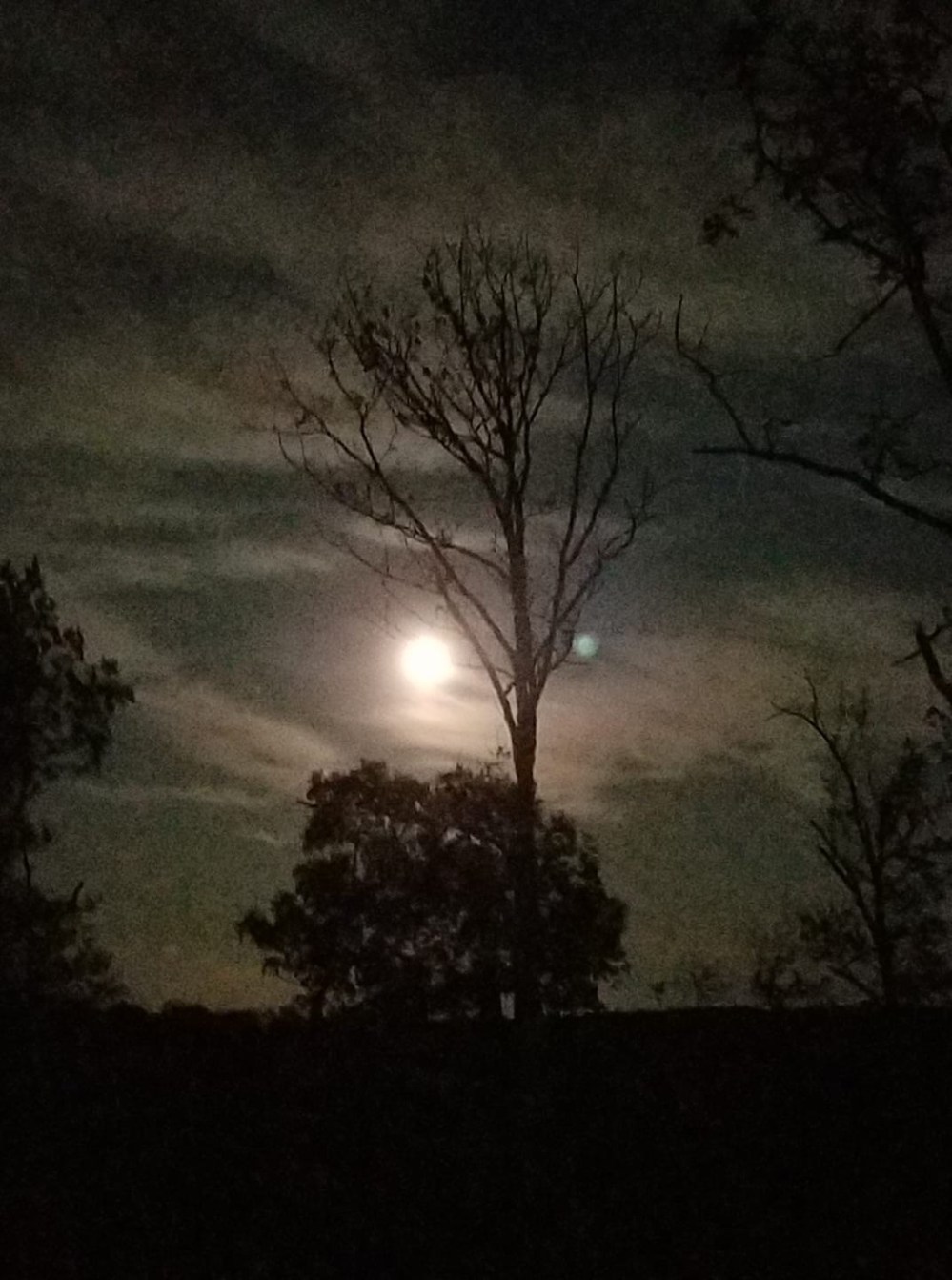
“Nana, do you see the moon?” It was midday, and Connor and I were walking the dog. I squinted up in the direction he was pointing. “Wow, Connor, that was good! I did not see the moon until you pointed it out,” I replied. He looked at me from the top of his eyes (as if to say, “Silly Nana…”) and said very seriously, “I have little eyes. I can see big things.”

From the mouths of babes. I began to ponder why my big eyes can’t always see big things.

Am I focused on the wrong thing?

Am I too distracted to notice things around me?

Does my immediate perspective of my circumstances alter what I actually see?

Does God speak through moons and clouds to the littlest ones because they are more open to it than adults?

Take a look at verse 18 in this scripture from the Apostle Paul:

Ephesians 1 New International Version (NIV)

Thanksgiving and Prayer

15 For this reason, ever since I heard about your faith in the Lord Jesus and your love for all God’s people, 16 I have not stopped giving thanks for you, remembering you in my prayers. 17 I keep asking that the God of our Lord Jesus Christ, the glorious Father, may give you the Spirit of wisdom and revelation, so that you may know him better.

18 I pray that the eyes of your heart may be enlightened in order that you may know the hope to which he has called you, the riches of his glorious inheritance in his holy people, 19 and his incomparably great power for us who believe. That power is the same as the mighty strength 20 he exerted when he raised Christ from the dead and seated him at his right hand in the heavenly realms, 21 far above all rule and authority, power and dominion, and every name that is invoked, not only in the present age but also in the one to come.

22 And God placed all things under his feet and appointed him to be head over everything for the church, 23 which is his body, the fullness of him who fills everything in every way.

You see, that’s the thing. My eyes aren’t focused on the hope. My eyes aren’t focused on the glorious inheritance we have through Christ. And my eyes certainly aren’t seeing the incomparably great power of Christ. This scripture calls me out because it is showing me what I should be looking at: Christ’s rule, authority, power, and dominion over every earthly thing.

I wasn’t able to see the moon that day, because I was ruminating on the hatred and the anger I see every time I open my iPad and look at social media. I couldn’t cast my eyes upward to the heavens because I was visualizing an email I stumbled upon that was extremely hurtful. And over a year old. (Why had I saved it??) I couldn’t see God’s hope because I was recalling a conversation with a friend who has opposing political opinions to my own, and I was wishing I didn’t know that about her. And I’m sure she feels the same way.

Paul reminds us today that Christ has AUTHORITY AND RULE over all that nonsense. Christ’s power far surpasses any earthly realm in which we find ourselves each day. When Christ comes again, none of it will matter or even be remembered.

So look at the moon today, and remember the ONE who put it there for your benefit. He who fills everything in every way is coming back to take you to himself. Whatever you are looking at right now will all pass away, if you would just look up.

Open the eyes of our hearts, Lord.

Photo by Michelle Robertson

Pushing Through Adversity

These beautiful flowers are called vinca. They delight their owner with their snowy white and Barbie pink petals. But if you look closer, you will spot the real source of amazement; they grow out of a crack in the driveway every year. These delicate beauties fight the resistance of heavy concrete and darkness, pushing through the tiny strip of dirt to emerge and display their glory. Vinca are survivor-fighters.

The genus name “vinca” means to bind or fetter in Latin. (A fetter is a shackle or leather strip that ties around the ankles or feet to hold them down.) Their name is due to their long, flexible stems, which can be bound together for things such as garland and wreaths.

The picture was shared on a Christian Breast Cancer Support FaceBook page with the caption, “Vinca growing in the cracks in my driveway. They are SURVIVORS like my breast cancer sisters.”

These women, like these flowers, have persevered against the heaviness of their diagnosis and turned their faces toward a God who heals, delivers, and grows them into the scarred beauties that they are.

I also think that part of their beauty is in the root of both the flower and root of the word. The root of the flower is bound to a creeping vine that pushes through obstacles to bloom. The root of the word “vinca” evokes an image of things that are tied together for strength in order to survive. These flowers, and these women, are bound and fettered to one another. They are bound and fettered to God. They have bound and fettered themselves to hope.

The vinca knows that its strength and beauty comes from the vine that runs under the pavement. What is the source of your strength and beauty?

John 15 The Message (MSG)

The Vine and the Branches

15 1-3 “I am the Real Vine and my Father is the Farmer. He cuts off every branch of me that doesn’t bear grapes. And every branch that is grape-bearing he prunes back so it will bear even more. You are already pruned back by the message I have spoken.

4 “Live in me. Make your home in me just as I do in you. In the same way that a branch can’t bear grapes by itself but only by being joined to the vine, you can’t bear fruit unless you are joined with me.

5-8 “I am the Vine, you are the branches. When you’re joined with me and I with you, the relation intimate and organic, the harvest is sure to be abundant. Separated, you can’t produce a thing. Anyone who separates from me is deadwood, gathered up and thrown on the bonfire. But if you make yourselves at home with me and my words are at home in you, you can be sure that whatever you ask will be listened to and acted upon. This is how my Father shows who he is—when you produce grapes, when you mature as my disciples.

9-10 “I’ve loved you the way my Father has loved me. Make yourselves at home in my love. If you keep my commands, you’ll remain intimately at home in my love.

We are fettered to the Father. He is the farmer who tends the vine and strengthens the branches to produce the fruits of love, joy, peace, patience, gentleness, kindness, goodness, faithfulness, and self-control. When we lose those things, it is an indication that we have somehow separated from the vine-father. That’s when it is time to bind ourselves to him though his word. Abiding in him and making our home with him is the best way to combat the darkness, the concrete, and the diseases.

One last note of interest to the cancer survivor-fighters: vinca alkaloids are also important for being cancer fighters. There are four major vinca alkaloids in clinical use: Vinblastine (VBL), vinorelbine (VRL), vincristine (VCR) and vindesine (VDS). (International Journal of Preventive Medicine)

So these little beauties that represent you so well may have also cured you. When you abide in Christ, all things are possible. So bloom away! And tell of his good deeds wherever you are planted.

Photo by Jan Wilson

O to grace how great a debtor

  Daily I’m constrained to be!

Let Thy goodness, like a fetter,

  Bind my wandering heart to Thee.

Prone to wander, Lord, I feel it,

  Prone to leave the God I love;

Here’s my heart, O take and seal it,

  Seal it for Thy courts above.

South of the Hype

Any trip going North-South on Interstate 95 is a lesson in bombardment-marketing at a DEFCON 1 level. If you’ve traveled this way before, you know what I am talking about: South Carolina’s famously tacky South of the Border. This enclave of plywood stores features a 100-foot-tall statue of a man named Pedro wearing a huge sombrero that can be seen from outer space, garishly painted firework shops, a reptile lagoon, Mexican restaurants, and even a dog potty complete with fake fire hydrants.

But even more amazing than the location itself is the plethora of billboards. In fact, there are 173 billboards, beginning about 170 miles away. The slogans are corny, yet strangely eye-catching:

A large, three demential hot dog with the caption, “You never sausage a place.”

“Pedro’s forecast: Chili Today, Hot Tamale”

And probably the most honest one: “Fill Your Trunk With Pedro’s Junk.”

I can remember driving with my family from New Jersey to Florida and just thrilling at all the signs. It meant we were getting closer, and my sister and I salivated at the idea of stopping to buy some of Pedro’s junk. Unfortunately, my parents were not the type to do the souvenir shop thing, so it wasn’t until I was adult that I actually got to stop there. Sadly, the experience did not live up to the hype. I was disappointed that it turned out not to be the place of my childhood fantasies and dreams. Still, it is an institution that has charmed many a traveler for over 70 years, so there is that.

I think Jesus suffered the same thing. He wasn’t able (by design) to live up to the hype surrounding what people assumed the promised Messiah would be. Of course he exceeded all possible expectations when he fulfilled his ministry with his resurrection and gateway to eternal life, but nobody was prepared for what his messiahship would actually look like. The Jews in his day were awaiting a fierce Battlestar Galactica warrior, who would ride in on a huge beast and slay all the oppressors. Their messiah would be a king who would restore Israel as the most powerful nation, and all other nations would bow down to his might. Instead they got a gentle carpenter, and they were very confused:

Matthew 22 English Standard Version (ESV)

Whose Son Is the Christ?

41 Now while the Pharisees were gathered together, Jesus asked them a question, 42 saying, “What do you think about the Christ? Whose son is he?” They said to him, “The son of David.” 43 He said to them, “How is it then that David, in the Spirit, calls him Lord, saying,

44 “‘The Lord said to my Lord,

“Sit at my right hand, until I put your enemies under your feet”’?

45 If then David calls him Lord, how is he his son?” 46 And no one was able to answer him a word, nor from that day did anyone dare to ask him any more questions.

This is just one instance of many where Jesus’ contemporaries thought he was the son of David and would have a reign in the manner and scope of King David, Israel’s favorite and most effective army general-king.

They were wrong. They believed the hype as it came down to them through generations of watchers and waiters, and they got it totally wrong. Even at his crucifixion he was labeled King of the Jews, when in fact his kingdom is for everyone.

Who do you say Jesus is?

I think that is an important consideration. Sometimes we leave our childhood churches either thinking he is a harsh and terrible judge or a kind and gentle friend. Neither image on its own is correct. While he does sit on his judgment throne separating the sheep from the goats, casting those who denied him into the eternal fire, this isn’t the entire picture. Neither is the gentle shepherd who will leave the flock behind just to find you. These are parts of our Lord’s greater whole, and all of these aspects combine together to bring us a complete understanding of who he is.

The only way I know to cut through the hype is to become a student of the Word. When we study the entire Bible, digging deep from Genesis to Revelation, we have a better chance of seeing God, Jesus and the Holy Spirit as they have been faithfully understood for generations. Empirical evidence will emerge as we discern and contemplate the why, when, how, where, and especially the who of the trinity.

Who Jesus is to me will be different than who Jesus is to you. Just like on the road to Emmaus, Jesus meets us where we are and deals with who we are in that moment. But what remains steadfast in all of our experiences with him is grace. Grace is the unmerited love and mercy God gives us as a gift that we can’t earn and rarely deserve. Grace is the empowering pardon that sanctifies us and reconciles us to God. Through grace and grace alone we are redeemed and saved. Jesus is grace upon grace.

So if you are experiencing him as a punishing judge of your sin, there is great grace in that. If you know him as a comforter in your grief, you know his grace. If you turn to him for guidance and direction in your confusion, his leading will be sprinkled with grace. Grace is his messiahship, his kingdom, and his unchanging nature.

And that’s no hype…only hope.

Photo by the Dillon Herald.

“How I Built This”

NPR has a Sunday morning show called “How I Built This” that I listen to on my way to work every week. It is an interview with an entrepreneur who has taken a dream and turned it into a multi-million dollar business. For example, last week they interviewed the developer of Stacy’s Pita Chips. Her story was similar to others; she started out running a small pita sandwich business out of a Boston hot dog cart. She decided to cut the leftover pitas, add seasonings, and bake them as chips. She and her partner worked hard on this one, focused idea, living on practically nothing. Eventually they were able to place a small amount of their product in a local “Whole Foods” type store, and it took off. Thus a huge company was born, and ten years after its inception, Stacey’s Pita Chips sold to PepsiCo for over 250 million dollars. Don’t you wish you had thought of it first?? If you are someone who tithes, I do too!

The New Testament offers some suggestions for how to build things:

Matthew 7 New International Version (NIV)

The Wise and Foolish Builders

24 “Therefore everyone who hears these words of mine and puts them into practice is like a wise man who built his house on the rock. 25 The rain came down, the streams rose, and the winds blew and beat against that house; yet it did not fall, because it had its foundation on the rock. 26 But everyone who hears these words of mine and does not put them into practice is like a foolish man who built his house on sand. 27 The rain came down, the streams rose, and the winds blew and beat against that house, and it fell with a great crash.”

Building yourself, your family and your life on the words of Jesus Christ is the way to ensure that you have a good foundation. While the passage refers to all the words of Christ, it is interesting to look at the chapter in its entirety to see which particular words lead up to this statement. Matthew 7 specifically addresses this:

Do not judge, or you will be judged.

Do not overlook the log in your own eye while focusing on the speck in your brother’s eye.

Do not misuse the sacred trust you have been given.

When you ask, seek and knock, God will respond to you in the way you respond to your hungry child.

The way that leads to life is narrow and small. Destruction’s gate is wide open. Choose the narrow one.

There are true and false prophets and disciples all around us. Beware of the false ones, and be a true one.

That’s a lot of foundation to build on, and it’s only one chapter of one book! If we were to just live a Matthew 7 life, what would it look like?

Building our lives on God’s words helps us to shore up our framework so that we can withstand the storms that come into every life. But building ourselves on the Word that IS Jesus Christ is the surest way to stand firm when sands begin to shift under our feet. John 1 reminds us that “In the beginning was the Word, and the Word was with God, and the Word WAS God.” Centering ourselves in the personhood of Jesus Christ is our best bet against the hurricane. In that way, our deeply-focused lives become lives of fortitude, endurance, and hope.

The only way I know to do this is by full immersion. It is the best way to learn a new language, and the best way to learn a new life. Full immersion means weekly worship, daily Bible reading (congratulations! You have just hammered a truss into place by reading this!), hourly prayer, faithful service, consistent meditation where you open yourself to the Holy Spirit, regular fasting, critical self-examination, repentance, and some self denial thrown in for good measure. You may recognize that list as spiritual disciplines, usually practiced at Lent. Guess what? Lent isn’t a season, it’s a construction tool.

What do you need to do today to strengthen your abode? God calls us to abide in him, and he will abide with us. Start now. It’s always hurricane season in the spiritual realm.

Photo by WUNC.

Running Lights

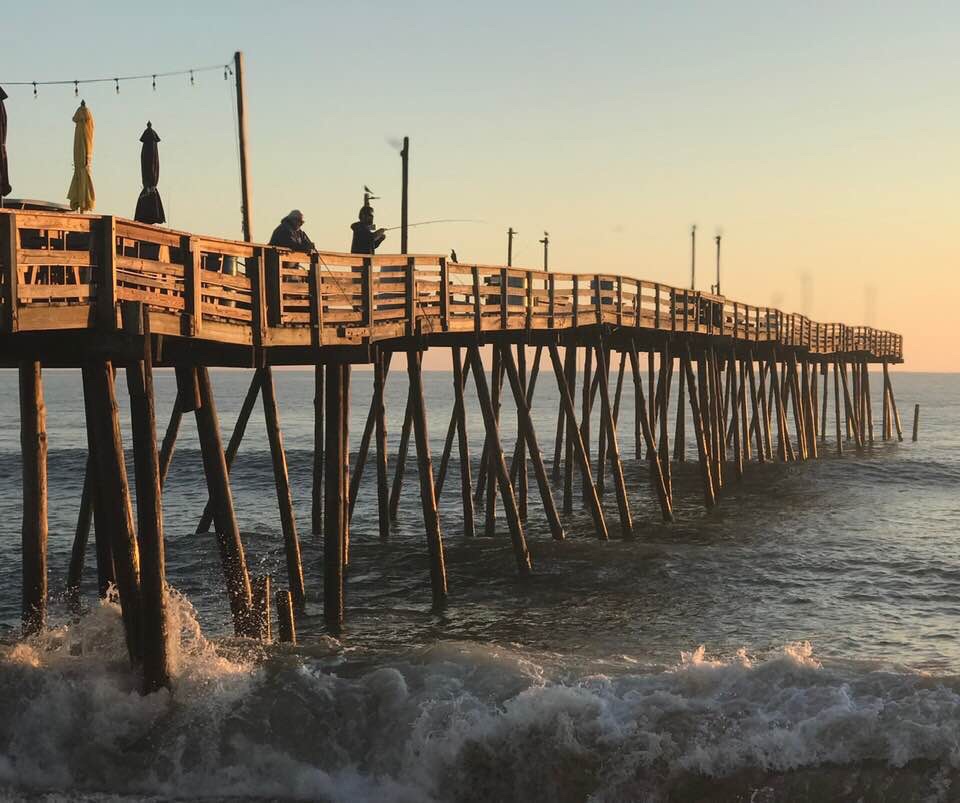
Sunset in Colington Harbour brings all of the boats back into port. Stately masted sailboats and little junkie pontoons all turn away from their day-trippy cruises and head back for the safety of secure slips and backyard docks. The ones who try to last out on the sound until the very last vestige of sunlight has slipped over the horizon have to return by the illumination of their boat’s running lights.

Running lights are regulated and have to comply with local guidelines. For example, port sidelights are red, starboard sidelights are green, and both shine from dead ahead to 112.5° aft on either side. Stern lights are white and shine aft and 67.5° forward on each side. This means that stern lights and sidelights form a complete circle of light around the bottom of the boat.

Running lights help us find our way home in the dark. So does Jesus.

Jesus Begins to Preach Matthew 4  New International Version

12 When Jesus heard that John had been put in prison, he withdrew to Galilee. 13 Leaving Nazareth, he went and lived in Capernaum, which was by the lake in the area of Zebulun and Naphtali— 14 to fulfill what was said through the prophet Isaiah:

15 “Land of Zebulun and land of Naphtali,

    the Way of the Sea, beyond the Jordan,

    Galilee of the Gentiles—

the people living in darkness

    have seen a great light;

on those living in the land of the shadow of death

    a light has dawned.”

17 From that time on Jesus began to preach, “Repent, for the kingdom of heaven has come near.”

The people living in darkness have seen a great light. This prophecy of Isaiah was fulfilled by Jesus’ birth. In this passage, he has just left the desert where Satan has tempted him three times, and he is now beginning his ministry on earth.

There is a connection between the “great light” reference and vs. 17: the great light we are invited to see is the kingdom of God that Christ is ushering in. He brings the kingdom of God to earth with his incarnation, and the shadow of death is forever gone.

But don’t miss the point. Repentance is the point. Jesus’ first-ever sermon was a call to repentance. It wasn’t about forgiveness. It wasn’t about love. It wasn’t about eternity, or how to treat people, or giving to the poor. It was about repentance.

How often we would prefer to skip that step! Repentance is hard, because it means a complete turning away from the sin you have been committing. It is not just being sorry, but a total reversal of that behavior or practice that has broken you away from God and others. If you go back and repeat that behavior again, you didn’t really repent. You may have felt bad, but you didn’t repent.

Christ calls us to true repentance so that we can be cleansed and made new. With true repentance, we are freed of the chains of our sinful behavior and can walk unencumbered toward the cross. When we confess and repent, a new creation is born in us and our slate is wiped clean.

Where is God calling you to repent today? What horrible thing have you been carrying around like a millstone on your neck for way too long? It is time to be set free. It is time to be ransomed. Repent, for the kingdom of God has come near. It is time to come home from the dark.

Colington at sunset.

Heavy Metal Knitting

It’s a thing. NPR just did a wonderful report on this new phenomenon, and it is just what it sounds like; a competition between knitters who knit on stage with a live heavy metal band playing behind them. The World Championship was recently held in Finland.

You all think I make this stuff up, don’t you?

The event’s Facebook page reads,

“In heavy metal knitting, needlework and music become united like never before. On the same stage, accompanied by a million dollar guitar solo, with hair flowing in the air, there’s heavy metal music and knitting, shaking hands. Knitting to the rhythm of heavy metal music can be compared to playing air guitar – which is a Finnish way to goof around as well. In heavy metal knitting, the knitter becomes a part of the band, showing their best needlework tricks as the heavy riffs echo on the background. The knitter takes part in the jam while their balls of yarn and knitting needles swish through the air…”

First place went to a Japanese team, “Giga’s Body Metal,” which included five knitters who wore kimonos, kabuki dresses, and performed traditional sumo wrestling while knitting. Second place went to Denmark’s “Crafts With Ellen,” and third place went to USA’s “9 Inch Needles.”

Finland is a natural location for this world championship, as they have an inordinate amount of heavy metal bands, and apparently a lot of knitters. Sociologists attribute this to the long, cold, dark winters. I suppose that could drive you to either knit or take up the electric bass. So the unlikely mix of knitting and heavy metal music produces a wonderful, weird, and remarkable product born of the symbiotic blending of two very unlike things.

In a wonderful, weird and similarly symbiotic way, this reminds us of how God puts the Body of Christ together. He takes what appears to be disparate parts, each with its own separate function, and blends them together to form a remarkable thing:

1 Corinthians 12 The Message

14-18 I want you to think about how all this makes you more significant, not less. A body isn’t just a single part blown up into something huge. It’s all the different-but-similar parts arranged and functioning together. If Foot said, “I’m not elegant like Hand, embellished with rings; I guess I don’t belong to this body,” would that make it so? If Ear said, “I’m not beautiful like Eye, limpid and expressive; I don’t deserve a place on the head,” would you want to remove it from the body? If the body was all eye, how could it hear? If all ear, how could it smell? As it is, we see that God has carefully placed each part of the body right where he wanted it.

27-31 You are Christ’s body—that’s who you are! You must never forget this.

How amazing is this! This tells us that whatever spiritual gift you have, it is needed, necessary, and vital to the functioning of the entire body. I love how Paul reminds us that it’s all the different-but-similar parts arranged and functioning together. Like a good marriage. Like an extended family. Like an office of co-workers, a sports team, or a surgical unit. Or a church. Each doing its own thing as they contribute to the functioning of the whole. Like heavy metal knitting! Who knew?

What is your part in the larger whole? Are you the eyes that see truth, the knees that bend in prayer, the feet that walk the mission field? Are you the cilia of the ear, filtering out harsh words, the aorta beating life into everything, the esophagus delivering sustenance (in Methodism, we call this Care Team Casserole Delivery) for the body?

Never forget that YOU are vital. YOU make a difference. Without you, the body/team/office/family/marriage would fall apart. So go today and be YOU, because you are vitally needed. We can’t be the body without you. God has carefully placed you just where he wants you. Thanks be to God!

Photo by Wende Pritchard.

Lessons From Shark Week

One of the best things that happens in July is the Discovery Channel’s annual Shark Week, where every program is devoted to sharks. Shark movies, shark documentaries, shows that explore how sharks react in certain situations, (and the divers demonstrate each one with live sharks….anything for ratings!) shark commercials, shark talk shows…it’s a sharkapalooza.

In one show, a female diver attempted to learn where you can touch a shark and where you can’t. (Ummmm….just don’t touch the shark??) Our fascination with sharks fuels this entire industry. Shark attacks are on the rise, not because sharks are our natural predators, but because we are increasingly getting into their habitats with disregard to our safety.

Here are a few tips from Shark Week:

If you fall off your paddle board near a shark, don’t thrash around. Stay very still (because that would feel so natural) and ease your way back on the board. Be cool. Even smarter: don’t paddle board in shark infested water.

Don’t bring your iphone or iWatch into the water. Your electronics attract the sharks and they will approach you to make a phone call or have a selfie taken with you.

If you encounter a shark in the wild, don’t reach out and touch it. If it comes for you anyway, touch it on the top of the snout and gently redirect it. But don’t touch it under the nose, or he will automatically open his jaws and eat you.

Sharks have excellent hearing, but they don’t like heavy metal bands or the sound of a camera flash going off. This was scientifically proven this week.

Now while there are no stories in the Bible involving sharks, there is a pretty cool story about a whale and a man named Jonah. Jonah was an Israelite whom God had called to be a prophet. Johan didn’t want to be a prophet, so he went on a sea cruise instead. God then raised a great storm to get Jonah’s attention. The sailors, realizing that Jonah’s disobedience had caused the storm, threw him overboard to try and save their ship. He was swallowed by a whale and lived for three days inside the creature, after which the fish “vomited out Jonah upon the dry land.” Thankful that his life had been spared, Jonah took up his prophetic mission:

Jonah 3 New International Version (NIV)

Jonah Goes to Nineveh

3 Then the word of the Lord came to Jonah a second time: 2 “Go to the great city of Nineveh and proclaim to it the message I give you.”

3 Jonah obeyed the word of the Lord and went to Nineveh. Now Nineveh was a very large city; it took three days to go through it. 4 Jonah began by going a day’s journey into the city, proclaiming, “Forty more days and Nineveh will be overthrown.” 5 The Ninevites believed God. A fast was proclaimed, and all of them, from the greatest to the least, put on sackcloth.

So here are three lessons from Jonah’s whale:

You can run from God, but you can’t hide.

God’s call may be hard, but it may also save lives (including your own.)

God is a God of second chances.

Think about that today. Where is God calling you to do something difficult? Are you running? Or maybe you are in a dark fish belly of disobedience and you’re sick and tired of the smell. Do you need a do-over? We serve a God of second chances. You get to come out and try again, this time with the power of the Holy Spirit helping you to make it.

God’s message to us today is that he is bigger than the shark, bigger than the whale, and bigger than anything this world has thrown at us to keep us down. He is a 24/7 God who is actively working to bring us to wholeness through joyful obedience and second chances. Rise up, people. Our deliverer is here.

Look closely at the wave. Photo by 9News.

Entertaining Angels

There is a town in central Florida called Celebration that has a charming, old-fashioned downtown area. The businesses that line the streets often have dog water bowls and little baskets filled with dog treats to entice you to stop and look in their windows. You can imagine my dog Georgia’s incredible joy when we discovered this on a recent visit! The downside for the other dogs is that her stop at the bike rental water bowl completely depleted their offering.

Now mind you, my girl is no angel, but the kindness these folks show the local dogs made me think about the scripture about “entertaining angels” in the book of Hebrews:

Hebrews 13 New International Version (NIV)

13 Keep on loving one another as brothers and sisters. 2 Do not forget to show hospitality to strangers, for by so doing some people have shown hospitality to angels without knowing it. 3 Continue to remember those in prison as if you were together with them in prison, and those who are mistreated as if you yourselves were suffering.

Providing hospitality is a common theme in the Bible. Think about travel in those days; inns were few and far between, or completely absent all together. Travelers could only get by with a little help from unknown friends, so providing shelter and a meal was commonplace.

Remember the story of Abraham and Sarah from Genesis 18? Three strangers came along as Abraham was sitting outside his tent. He jumped up and offered them water, bread, and the shade of his tree:

Genesis 18 Common English Bible (CEB)

18 The Lord appeared to Abraham at the oaks of Mamre while he sat at the entrance of his tent in the day’s heat. 2 He looked up and suddenly saw three men standing near him. As soon as he saw them, he ran from his tent entrance to greet them and bowed deeply. 3 He said, “Sirs, if you would be so kind, don’t just pass by your servant. 4 Let a little water be brought so you may wash your feet and refresh yourselves under the tree. 5 Let me offer you a little bread so you will feel stronger, and after that you may leave your servant and go on your way—since you have visited your servant.”

They responded, “Fine. Do just as you have said.”

Abraham offered the standard of care: water for foot washing and a little bread. But look what actually happens:

6 So Abraham hurried to Sarah at his tent and said, “Hurry! Knead three seahs of the finest flour and make some baked goods!” 7 Abraham ran to the cattle, took a healthy young calf, and gave it to a young servant, who prepared it quickly. 8 Then Abraham took butter, milk, and the calf that had been prepared, put the food in front of them, and stood under the tree near them as they ate.

It was a five-star meal. Course after course of breads, meat, butter, milk…he opened up a smorgasbord of hospitality for these three men. And mind you, while we’re in on the fact that it was the Lord whom he entertained (read vs. 1 again), Abraham wasn’t. He was simply extending gracious hospitality because he had it to give….thereby, entertaining angels.

How would you respond differently if you suspected that the hungry, dirty people needing your hospitality were the Lord and his angels? Would you lavish your resources on them, or offer water and a little bread? Would you close the door in their faces?

Jesus was very clear when he said that whenever you have offered the cup of cold water to the “least of these,” you have entertained him. So keep on showing hospitality to strangers. Keep on feeding the hungry, giving drink to the thirsty, clothing the unclothed, and most of all, keep on loving one another as your brothers and sisters.

Sorry, dogs of Celebration. Georgia was here.

I’d Rather Cut Off My Arm

A friend recently shared a problem she is having with a family member. After recounting several upsetting incidents that have occurred over the course of many years, she looked across the dinner table and said, “I know I should be praying for her, because we’re supposed to pray for our enemies, but frankly, I think I’d rather cut off my arm!” We collapsed into a fit of giggles that embarrassed our husbands, and then tackled the issues of 1. how difficult it is to pray for people who have been deliberately hurtful to us, and 2. the difficulty of trying to wash your hair or fold a fitted bed sheet with only one arm. I can’t do it with two.

Let’s take a look at that scripture in its entirety and see if we can’t find a way to comply with one of Jesus’ harder commandments, and help my friend keep her arm intact:

Matthew 5:43-48 New International Version (NIV)

Love for Enemies

43 “You have heard that it was said, ‘Love your neighbor and hate your enemy.’ 44 But I tell you, love your enemies and pray for those who persecute you, 45 that you may be children of your Father in heaven. He causes his sun to rise on the evil and the good, and sends rain on the righteous and the unrighteous. 46 If you love those who love you, what reward will you get? Are not even the tax collectors doing that? 47 And if you greet only your own people, what are you doing more than others? Do not even pagans do that? 48 Be perfect, therefore, as your heavenly Father is perfect.

In the broader context, Jesus is making an imprint on his new and very radical theology of how the people of God are to behave. From the first sentence, he is righting the wrong of the old way, by reversing how we are to treat enemies. Love, not hate, is the new way.

But the point of this radicalism comes in the next sentence: pray for those who persecute you so that YOU may be children of your Father in heaven.

Did you notice that the instruction to pray is not so that your enemy might be changed? No indeed, the point of this prayer is so that YOU might be changed.

God brings the warmth of the sun and the replenishing rains to provide for the good and the evil alike. This is a reminder to us that God sees potential for change in everyone. He has always been in the saving and transformation business. How easy it would be for him to simply cast out the unrighteous, but instead he includes them into his kingdom by holding the door of repentance wide open.

Being good to your friends, and hanging out with your own kind is something non-believers do with great ease. There has to be a difference between those who follow Christ and those who don’t. So what Jesus is saying here is that we are not to be like others around us, but we are to be like him in everything we do. We are called to love unconditionally, forgive without hesitation, encourage and build one another up, and be patient and long-suffering when need be.

I shared with my friend that I had a person who was extremely critical of me, and publicly so, at the very beginning of my ministry. Her words and her actions were devastating and caused me great pain. I confided to an elder church member about it, and he calmly reminded me to “pray for my enemies.” And so I did, for three solid years. I prayed she would be blessed, whole, and healthy. Some days I prayed that I wouldn’t see her at church, because every time I saw her, I had to greet her with a kindness I didn’t always feel. Other days I prayed she would receive me differently, and that maybe we would someday be friends. I just prayed.

One day we found each other in the church on a Saturday when volunteers had gathered to do some work. She was on a ladder, and saw me walking down the aisle of the sanctuary. She called out to me, and asked if we could talk. In tears, she asked me to forgive her for those words she had spoken many years ago, and told me how much she appreciated that I had been civil to her even though she had hurt me.

I told her that I had forgiven her a long time ago, and as those words came out of my mouth, I realized that in all of those years of “praying for my enemy,” my prayers hadn’t changed the situation, but it definitely changed ME.

Prayer changes us. Prayer opens us, helps us to let go of stuff, reminds us that the stuff is really God’s anyway, and allows us to be the face of Jesus to the enemy. My friend may never have reconciliation with her family member, but by praying without ceasing for them, she is sure to receive peace and release. And keep her arm.

Photo by Janet Kuchta.

The Big Reveal

Home improvement shows on television have captured the hearts and minds of the American public. These shows have developed a formula for their programming that has a vast, wide-spread appeal to its viewers. They start with something is old/broken/out of date/no longer feasible. Then Joanna Gaines, Ty Pennington, the Property Brothers, et al swoop in and go to work. That thing then gets fixed/updated/remodeled/expanded as the viewers watch the workers apply their craft, and the homeowners drop in occasionally to fret or complain. Finally, after the last set of commercials, we get to see the BIG REVEAL. The homeowners stand in front of their house, and the large “before” mural, or the bus, or their blindfold is removed, and PRESTO CHANGO, their home is beautifully and impossibly changed for something incredibly better.

The genius of these shows is that they make us wait for the end product. The majority of the show is dedicated to the transformation process, as we see walls coming down, plaster going up, farm tables being built, impossible obstacles being overcome, and so forth. The big reveal only takes up about two to three minutes of the entire show, but it is always worth waiting for.

In the 13th Chapter of Corinthians, Paul teaches us about faith, hope and love. Then he makes this remarkable statement:

1 Corinthians 13: 11
“It’s like this: when I was a child I spoke and thought and reasoned as a child does. But when I became a man my thoughts grew far beyond those of my childhood, and now I have put away the childish things.
 

In the same way, we can see and understand only a little about God now, as if we were peering at his reflection in a poor mirror; but someday we are going to see him in his completeness, face-to-face. Now all that I know is hazy and blurred, but then I will see everything clearly, just as clearly as God sees into my heart right now.

The BIG REVEAL. Paul assures us that what we see now is only a glimpse of heaven. What we know now is only in part. What we understand about the kingdom of God is childish. But when see God as he is, we shall know, face to face. Our earthly existence is a process of transformation. We submit to the Master Builder’s plan and take down old and unsuitable habits and attitudes. Meanwhile God crafts new, updated and more Christ-like behaviors in our actions and thoughts. If we allow it, God rebuilds us from the inside out in preparation for that time when we experience our own Big Reveal.

See what we say at the beginning of every funeral:

Dying, Christ destroyed our death.

Rising, Christ restored our life.

Christ will come again in glory.

As in baptism (the departed) put on Christ,

so in Christ may he/she be clothed with glory.

Here and now, dear friends, we are God’s children.

What we shall be has not yet been revealed;

but we know that when he appears, we shall be like him,

for we shall see him as he is.

Those who have this hope purify themselves

as Christ is pure.

These words of gathering assure the congregation of two things: what we shall be has not yet been revealed, but the person we are remembering sees everything now. They are enjoying Big Reveal as we gather to remember them, and that brings a soothing kind of hope to every mourner.

Death is the big reveal. God has saved the very best for last. It is nothing to fear, nothing to run from, nothing to dread. Rather, it is the fullest culmination of all our our life’s dreams and efforts here on earth, and the final step in our transformation journey. Impossibly beautiful, we get to be clothed in glory. We get to be like Jesus. We get to see God as he is.

Oh Death, where indeed is thy victory? Where, oh Death, is thy sting? In life, in death, in life beyond death, GOD IS WITH US. Thanks be to God.

Photo by Wende Pritchard.