The Confessional

How many of you insist on trying to carry every single grocery bag from your car to your kitchen in one trip? I don’t know why we do this. I seem to think that it it somehow against the law to make multiple trips up and down the stairs, so I slide the handles of every single bag down my arms and stagger up 13 steps to deposit them on the kitchen counters and then collapse. Do you do that, too?

It is hard to carry heavy things. Isn’t it lovely when you find a way to set them down?

David knew all about carrying heavy things. His many sins weighed heavily upon him. If you run a checklist of the Ten Commandments, he broke almost every one. But David also knew the joy that comes with forgiveness after you lay that heavy sin at God’s feet and repent:

Psalm 37 (New Revised Standard Version Updated Edition)

Happy are those whose transgression is forgiven,
    whose sin is covered.
Happy are those to whom the Lord imputes no iniquity
    and in whose spirit there is no deceit.

While I kept silent, my body wasted away
    through my groaning all day long.
For day and night your hand was heavy upon me;
    my strength was dried up as by the heat of summer. Selah

I have admired the sacredness and promise of the confessional booth. While protestants do not follow a practice of confessing sins to a priest, the visual example of that ornate box while sitting in a worship service must bring comfort to Catholics during mass. It is a visible, tangible reminder of the nearness of God’s grace, and that every single confession is guaranteed to be received with forgiveness.

All you have to do is come.

Then I acknowledged my sin to you,
    and I did not hide my iniquity;
I said, “I will confess my transgressions to the Lord,”
    and you forgave the guilt of my sin. Selah

Therefore let all who are faithful
    offer prayer to you;
at a time of distress, the rush of mighty waters
    shall not reach them.

God is our hiding place, where we can take our sins into the sacredness of his presence and be assured of redemption. God hears us when we confess and delivers us from the harm that sin brings.

You are a hiding place for me;
    you preserve me from trouble;
    you surround me with glad cries of deliverance. Selah

Are you carrying a burden of sin that is just too heavy to keep lugging around? The “confessional booth” of God’s heart is always open. Just come.

Hyde Park, London

“GOD IS WITH ME”

Every time I go to the hairdresser, I learn something new. The conversation at my salon yesterday revolved around “automatic thoughts”. These are unbidden images or words that flash into your mind in a seemingly random occurrence. One person described having an automatic thought on the way to work as she was driving. She instantly “saw” a big wreck where she watched herself running to a burning car to help. Anyone who has ever driven the Bypass in the Outer Banks on a Saturday in the summer can relate to this sudden image while driving. It’s dangerous out there, folks!

Automatic thoughts can be negative or positive. I find in times of great concentration or stress that my mind will conveniently supply an automatic thought of someplace I’d rather be. Suddenly I’ll flash on walking around the lake in a beautiful town called Celebration in Florida, or seeing a spectacular sunset from my back deck. Those images will creep up without warning, giving me a five-second respite from my work. When automatic thoughts are negative and related to emotional triggers, they can be problematic. Help can be found in working with a cognitive therapist to untangle the auto response. In the case of the car wreck image, it made the person drive more carefully and be alert to other drivers, which is a good thing.

I have always longed for a way to help people develop an automatic thought response that brings the peace, hope and contentment. That is why I began writing these devotionals six years ago. When folks are in a deep hole of despair, the stress of their situation only pulls them farther and farther down. It is in times like these that the automatic thoughts can be most harmful. Sad, hopeless, and despondent thoughts just continue to spiral in times of trouble. I want to be able to help them manufacture a positive automatic response that would focus on thoughts that uplift them and rebuke the darkness.

I often wonder if that was what the Psalmists were doing. The Psalms were written as songs for the journey. They describe great challenges, intense pain, and life threatening situations, but they are balanced with great anticipation of God’s activity and presence. The positive images far outweigh the negative, serving as point-counter-point to the dark. Look at Psalm 23, one of the most beloved Psalms:

Psalm 23 (New International Version)

The Lord is my shepherd, I lack nothing.

He makes me lie down in green pastures,

he leads me beside quiet waters,

he refreshes my soul.

He guides me along the right paths

    for his name’s sake.

Even though I walk

    through the darkest valley,

I will fear no evil,

    for you are with me;

your rod and your staff,

    they comfort me.

You prepare a table before me

    in the presence of my enemies.

You anoint my head with oil;

    my cup overflows.

Surely your goodness and love will follow me

    all the days of my life,

and I will dwell in the house of the Lord

    forever.

David wrote that, and David had trouble. Most of it was a result of his own activity, but he had trouble indeed. And yet in his darkest moment, he forced himself to counter his trouble with a positive auto response and wrote “Even though I walk through the darkest valley, I will fear no evil, for you are with me.”

Today, let’s try to create an auto response like David. When the negative thoughts try to intrude, say back to them, “GOD IS WITH ME.” When bad images flash unbidden in your mind, shake them off and say, “GOD IS WITH ME.” If you feel yourself slipping into the deep, stand up and yell, “GOD IS WITH ME.”

Go in peace. God is with you.

Norway

Pulitzer White

A few years ago my husband and I were on a trip in Florida, visiting a very posh hotel. We were having dinner there one night and as we made our way across the ornate lobby, I realized that the Florida air-conditioning was close to unbearable and somehow I had forgotten to pack my parka. We passed one of those fancy boutique shops with fancy boutique clothing and my husband said, “Why don’t we just go in here and buy you a sweater or something?” I looked at the selection of things in the window and surmised we couldn’t even afford to walk over the threshold of the store, but he insisted. Lo and behold, there was a sales rack of Lilly Pulitzer things, and further lo and beholding, there was a perfect white sweater with pockets. (And all girls know how amazing it is to have pockets!) Still protesting, I gave in and let him buy it, figuring it would be a good travel sweater, and I would get lots of use out of it, because, you know … pockets. I suppose he considered it a bargain just to not have to listen to me whine about freezing for the rest of the evening.

A few months later I was taking said white sweater out of my suitcase after another trip and was horrified to discover that a blue ball point pen had dumped its contents all over the pure while Lilly. I was distraught. After many washings with stain sprays applied, all I had managed to do was tune the dark blue ink into medium blue ink. This is why I shouldn’t have nice things.

My husband kept suggesting I just bleach the whole thing since it was all white. Bleach Lilly Pulitzer??? Are you kidding? The first rule of Lilly is “thou shalt not bleach my fine apparel!” But I obviously couldn’t wear it with ink stains, so I washed it in bleach. It came out white as snow.

Today we are reading Psalm 51, the famous and beautiful psalm of penitence written by King David after Nathan had confronted him about his adulterous affair with Bathsheba and the murder of her husband Uriah. David was agonized by his sins, and the power and wealth of his kingdom could not touch the depth of despair that his depravity brought. Only God could help.

Psalm 51 (Common English Bible)

 Have mercy on me, God, according to your faithful love!
    Wipe away my wrongdoings according to your great compassion!
Wash me completely clean of my guilt;
    purify me from my sin!
Because I know my wrongdoings,
    my sin is always right in front of me.
I’ve sinned against you—you alone.
    I’ve committed evil in your sight.
That’s why you are justified when you render your verdict,
    completely correct when you issue your judgment.
Yes, I was born in guilt, in sin,
    from the moment my mother conceived me.
And yes, you want truth in the most hidden places;
    you teach me wisdom in the most secret space.

David reminds us that by seeking God every day, by praying, worshipping, studying, and serving, we can encounter God’s wisdom and truth in the most secret space of our spirit. We, too, are invited to “come clean” through confession and repentance and ask God to wash us whiter than a bleached sweater. Only God can restore our joy.

Purify me with hyssop and I will be clean;
    wash me and I will be whiter than snow.
Let me hear joy and celebration again;
    let the bones you crushed rejoice once more.
Hide your face from my sins;
    wipe away all my guilty deeds!

Is today the day you will submit to God’s will? Do you need to be washed by the refining forgiveness that God offers you? May we pray with David this morning:
10 Create a clean heart for me, God;
    put a new, faithful spirit deep inside me!

Amen.

SnOBX

Purify Me

Have you ever been caught doing something you shouldn’t have done, and then had to face the consequences? I sure have. I will never forget getting caught gossiping in the cloak room of my fifth grade classroom about a girl of whom I was very jealous. The teacher heard me, sent the girl out of the room on an errand to spare her feelings, and then made me stand in front of the class and repeat what I said while she condemned every word. I was HUMILIATED, and rightfully so. The sting of that experience is still with me.

When we are caught, feelings of shame and regret are immediate and overwhelming. Our first thought is “Why, oh WHY did I do it?” Right up to the moment of discovery, we delude ourselves into thinking that we will get away with our sinful behavior. Most of us can even rationalize that if nobody finds out, nobody gets hurt.

Then everybody finds out, and everybody gets hurt.

Such is the case in Psalm 51, written by David after he was caught committing adultery with Bathsheba and was confronted by his friend Nathan. He immediately felt the searing pain of knowing that he has sinned against God and now everyone knows it. Listen to the regret and remorse that flowed from his pen as he composed a song of confession:

Psalm 51 (Common English Bible)

Have mercy on me, God, according to your faithful love!
    Wipe away my wrongdoings according to your great compassion!
Wash me completely clean of my guilt;
    purify me from my sin!
Because I know my wrongdoings,
    my sin is always right in front of me.
I’ve sinned against you—you alone.
    I’ve committed evil in your sight.
That’s why you are justified when you render your verdict,
    completely correct when you issue your judgment.

David is such a man of faith that his sinning against God was the worst part of it for him. He knew his wrongdoings. This sin was not done in ignorance of the Law that commands “Thou shalt not commit adultery.” He knew that he coveted another man’s wife and then had that man brought home from war to cover up the unplanned pregnancy that resulted. Then David sent him back to the front lines to be killed. Coveting, adultery, lying, murder…David was guilty on all counts.

Yes, I was born in guilt, in sin,
    from the moment my mother conceived me.
And yes, you want truth in the most hidden places;
    you teach me wisdom in the most secret space.

David was blessed to have received wisdom from God in the “most secret space.” He studied the scriptures. He experienced God’s power first hand when he faced down Goliath many years earlier. All of David’s experiences had been an adequate teacher of God’s will and direction for his life. It is this truth in the hidden places of his heart and soul that he walked away from in his pursuit of Bathsheba. There is no pleading ignorance here…David totally knew better.

As did I, when I sinned.

As do you, when you sin.

His song of confession then moves from pain to hope, and David reminds God that God alone has the power to wash this sin away. He writes that joy can be felt once more, but only after God wipes away all of his guilty deeds:

Purify me with hyssop and I will be clean;
    wash me and I will be whiter than snow.
Let me hear joy and celebration again;
    let the bones you crushed rejoice once more.
Hide your face from my sins;
    wipe away all my guilty deeds!

Singing these words to the God that he loved provided a moment of humble obeisance for David, as the song now moves to a plea for a new, clean heart. This may be one of the prettiest verses in all of the Psalms:

10 Create a clean heart for me, God;
    put a new, faithful spirit deep inside me!
11 Please don’t throw me out of your presence;
    please don’t take your holy spirit away from me.
12 Return the joy of your salvation to me
    and sustain me with a willing spirit.

“Create in me a clean heart, oh God, and return unto me the joy of your salvation!” This should be our song today as well. God always inclines an ear when people confess with contrite hearts and humility.

Where is God calling you to lay down your sin so that you might take up a new and faithful spirit? God truly longs to sustain you with the power of the Holy Spirit, but you have to come clean first.

Don’t let the sun go down on your sin. Open yourself to God and ask for a clean heart to be created in you. And may the joy of God’s salvation make you sing.

Don’t Let the Sun Go Down by Michelle Robertson

The Easy Road

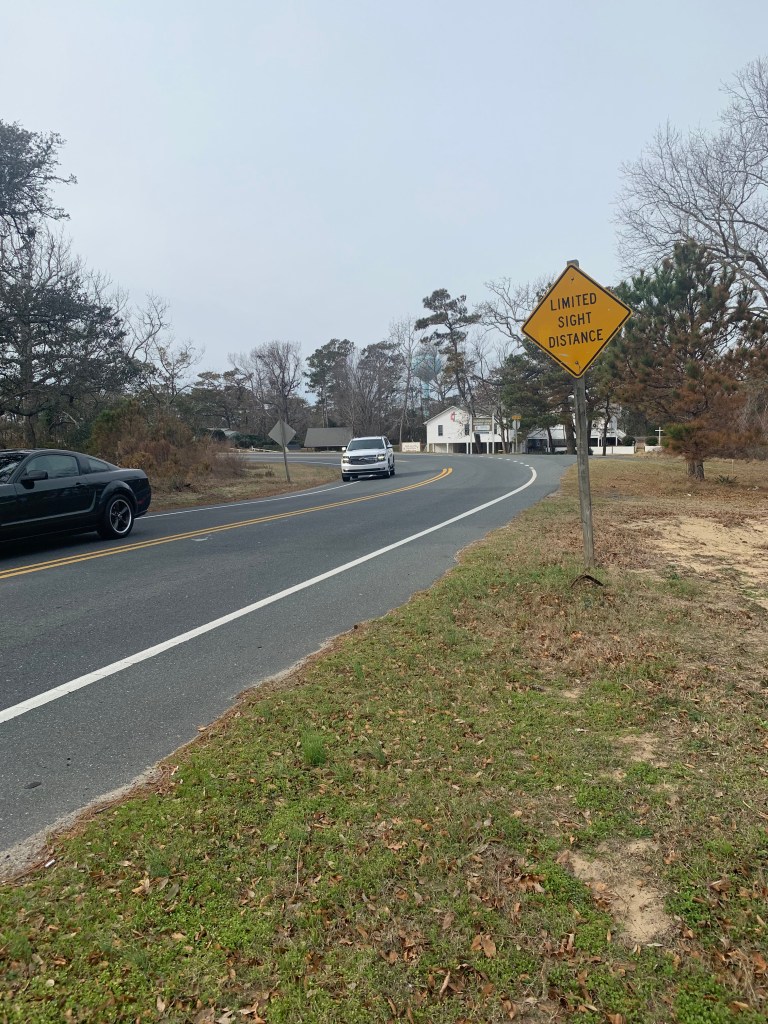
Colington Road provides the only access to the place where I live in Colington Harbour, North Carolina. This road has been here since the horse and buggy days and is the most twisty, winding road I have ever traveled, with the exception of the road which leads from Jericho to Jerusalem. That particular road is a horror show of extreme turns as you hover over the side of a cliff while ascending to Jerusalem. I have ridden it in a bus and was terrified when the wheels barely stayed on the road as the front of the bus hung over the side during the sharp turns. At least Colington Road is at sea level, so there is no chance of falling off! In the past several decades, two major road improvements were accomplished on Colington Road which straightened out some of the curves. But it is still a road that requires the driver’s full attention, especially at night.

In contrast, God’s paths are straight and narrow. They are easy to spot, easy to travel, and lead to safety and peace. The only trick to God’s roads is that they require a desire to pursue righteousness through a lot of study and learning. God longs to lead us and teach us these paths in order to prevent us from falling off the side.

And trust me, it is a long way down.

Psalm 25 (Common English Bible)

I offer my life to you, Lord.
    My God, I trust you.
Please don’t let me be put to shame!
    Don’t let my enemies rejoice over me!
For that matter,
    don’t let anyone who hopes in you
        be put to shame;
    instead, let those who are treacherous without excuse be put to shame.

Scholars can’t pinpoint the timing of David’s psalm, as there were many times in his life when he dealt with enemies. When you think about it, this psalm is kind of David’s experience with God in one compact nutshell. His themes of trust, conflict, sin, repentance, distress, and transgressions are all packed into these verses.

Make your ways known to me, Lord;
    teach me your paths.
Lead me in your truth—teach it to me—
    because you are the God who saves me.
        I put my hope in you all day long.
Lord, remember your compassion and faithful love—
    they are forever!
But don’t remember the sins of my youth or my wrongdoing.
    Remember me only according to your faithful love
        for the sake of your goodness, Lord.

David began this psalm by asking for protection against his enemies and continued by asking God to forget the sins and wrongdoings of his youth. Truly our greatest enemy in life is Satan, who encourages and tempts us to sin. When we ask God for protection against our sin, we are indicating our willingness to pursue God’s goodness. God will be faithful in teaching us the way to go if we simply keep our eyes and our attention focused on God’s Word.

The Lord is good and does the right thing;
    he teaches sinners which way they should go.
God guides the weak to justice,
    teaching them his way.
10 All the Lord’s paths are loving and faithful
    for those who keep his covenant and laws.

Throughout our lives the dangerous twists and cliff hangers of sin will always be in front of us. But like driving on a treacherous road, if we pay attention to the teachings of Scripture, the lessons of service, the guidance of worship, the instructions of prayer, and the constant GPS of the Holy Spirit, we will find the easy road to redemption every day. Pay attention! The Lord’s paths are loving and faithful.

Colington Road (The road used to go around the back of the white church. There were several accidents there before they moved it to in front of the church.)

Deep Within

Somewhere in his childhood, my husband memorized the classic poem Jabberwocky by Lewis Carroll. We were watching a movie last week when someone started to recite it incorrectly and out from the depths of my husband’s soul came the correct version of this nonsensical poem from Carroll’s novel Through the Looking Glass.

“Twas brillig, and the slimy doves/Did gyre and simple in the wabe …” It was impressive to see how something buried deep within his mind could immediately come forth when needed. I have often stood before a congregation or sat in a church meeting and wished I could recite long pieces of Scripture from memory, but alas, I do not have that gift. How about you? Have you worked to memorize Scripture? One of the commentators of the original Disciple Bible Study once said that the only Bible you actually own is the one you can access in a foxhole: In other words, the one in your mind and memory.

David’s beautiful psalm today is a reminder of the importance of keeping God’s Word and God’s will deep within our psyche. He lays out the argument that God really isn’t interested in our animal sacrifices or thoughtless offerings, but rather God desires our obedience and trust.

Psalm 40 (Common English Bible)
You, Lord my God!
    You’ve done so many things—
    your wonderful deeds and your plans for us—
        no one can compare with you!
    If I were to proclaim and talk about all of them,
        they would be too numerous to count!
You don’t relish sacrifices or offerings;
    you don’t require entirely burned offerings or compensation offerings—
    but you have given me ears!

I think that in order to be obedient to God and to do his will requires a certain amount of studying, meditating, and then acting on his instruction. For that to happen, God’s instruction must be deep within us.
So I said, “Here I come!
    I’m inscribed in the written scroll.
    I want to do your will, my God.
    Your Instruction is deep within me.”
I’ve told the good news of your righteousness
    in the great assembly.
    I didn’t hold anything back—
        as you well know, Lord!

David reminds us that a wholly sold out response to God is what God desires. Holding nothing back, we are invited to not only do God’s will but tell others about his faithfulness and salvation.
10 I didn’t keep your righteousness only to myself.
    I declared your faithfulness and your salvation.
I didn’t hide your loyal love and trustworthiness
    from the great assembly.

I am glad that you are reading Scripture with me in these devotionals and pray that you internalize God’s messages here and through your regular Bible study and worship habits. You never know when you might be called upon to jabberwocky some Scripture in the assembly!

Peace Deep Within

When You are Being Trampled

An old song from the musical “The King and I” kept floating through my mind during the recent hurricanes. As we were bombarded with images of charts and graphs showing the hurricanes increasing in intensity and coming closer and closer, this little song would replay itself. Sung by Anna as she is entering life as a teacher in the great palace of the fierce and intimidating King of Siam, the lyrics are a lighthearted reminder to try to project a brave countenance, even when you don’t feel it:

Whenever I feel afraid
I hold my head erect
And whistle a happy tune
So no one will suspect I’m afraid

I whistle a happy tune
And every single time
The happiness in the tune
Convinces me that I’m not afraid

Make believe you’re brave
And the trick will take you far
You may be as brave
As you make believe you are

The last verse is the best. You may be as brave as you make believe you are. Possibly the success in this lies in the fact that working to project a fearlessness that you don’t feel will distract you from the spinning cycle of despair that would like to swirl you downward deeper into your situation.

Today’s reading is from a time when David definitely felt afraid. The Philistines had seized him in Gath. He was alone, desperate, and very, very frightened. David was in great and constant danger from many enemies, both the Philistines and Saul’s servants. He cried out to God, knowing that divine help could rescue him from any man-made threat. He appealed to the mercy of God, not relying on what he may or may not deserve.

This is such a good place to start, whenever we feel afraid. Appealing to God’s mercy is exactly the right thing to do. David dove right into his petition, and addressed the attacks of his enemies who were “trampling” him.

You may or may not have “enemies” per se, but can you list people who oppose or oppress you? Are there people in your life who attack you on social media, family members who ignore or dismiss you, or rebellious teenagers who are working your last nerve? Who or what tramples you?

Psalm 56 (New International Version)

56 God, have mercy on me because I’m being trampled.
    All day long the enemy oppresses me.
My attackers trample me all day long
    because I have so many enemies.

Having made his petition David turned to his God on High, calling him “Exalted one.” This is David’s way of reminding both God and David that he understood the high and powerful nature of the God to whom he cried out. If you were writing this psalm, what name would you use for God? Who is God to you?
Exalted one, whenever I’m afraid,
    I put my trust in you—
        in God, whose word I praise.
        I trust in God; I won’t be afraid.
    What can mere flesh do to me?

David put his whole trust in God, and it made him feel less afraid. What would it mean to put your trust in God and leave all your fears there?

David now expressed his paranoia over his enemies ganging up against him. Have you ever felt that way? Can you recall a time when you felt ambushed or trapped by people or circumstances that you couldn’t overcome?

All day long they frustrate my pursuits;
    all their thoughts are evil against me.
They get together and set an ambush—
    they are watching my steps,
    hoping for my death.
Don’t rescue them for any reason!
    In wrath bring down the people, God!

But watch what comes next. David remembers and acknowledges where God has been all along. God has kept track of his misery. There is a tenderness in his statement “you put my tears into your bottle.” The tear bottle tradition dates back nearly 3,000 years, when mourners were said to collect their tears in a tear bottle, also called a lachrymatory. Tear bottles were buried with loved ones to express honor and devotion.

You yourself have kept track of my misery.
    Put my tears into your bottle—
    aren’t they on your scroll already?

What does it mean to you to know that God has numbered and kept every tear you have shed? For David, it gave him courage. It took his anxiety away and helped him see God’s activity in his situation. Then came this beautiful statement: “I know this because God is mine.” God is yours as well.

Then my enemies will retreat when I cry out.
    I know this because God is mine.
10     God: whose word I praise.
        The Lord: whose word I praise.
11 I trust in God; I won’t be afraid.
    What can anyone do to me?

When God is yours and you are God’s, what can anyone or any circumstance do to you, indeed?

12 I will fulfill my promises to you, God.
    I will present thanksgiving offerings to you
13     because you have saved my life from death,
    saved my feet from stumbling
        so that I can walk before God in the light of life.

God saves us from death and saves our feet from stumbling. We don’t have to be afraid! God enables us to walk in the light of life. Whenever you are afraid, God creates space for you. He counts, stores, and records everything about your fears and your tears.

And to know that the God of the universe cares about you makes everything all right. 

Moonrise over Colington

Forsaken, Yet …

Have you ever felt betrayed or forsaken? Life can be full of little rejections and large betrayals that leave us feeling adrift and unloved. Abandonment by family or friends is a terrible blow that can leave you so far down, you can’t even imagine getting up again. Have you ever experienced that? I have.

King David certainly felt this way, as his life was filled with strife and trials, mostly of his own making. In our Psalm today, he cried out to God about his plight, and began with the terrible cry, “My God, my God, why have you forsaken me?” (Psalm 22:1) It is one thing to be forgotten by a friend or undermined by a colleague, but to feel that God has abandoned you is a soul-shattering thing. Yet these very words were uttered by our Lord on the cross in his moment of agony.

But in the second half of this psalm, David has come around to the reality that God never leaves us or forsakes us. He gives us permission to feel this way for a time, but strongly asserts that God never despises or abhors us in our times of sin and trial: God will never hide his face from us, and always hears us.

Psalm 22 (New King James Version)

I will declare Your name to My brethren;
In the midst of the assembly I will praise You.
23 You who fear the Lord, praise Him!
All you descendants of Jacob, glorify Him,
And fear Him, all you offspring of Israel!
24 For He has not despised nor abhorred the affliction of the afflicted;
Nor has He hidden His face from Him;
But when He cried to Him, He heard.

I think this says a lot about doubt. Some people believe that doubting God is a sin. David says otherwise. This psalm assures us that there will be times when we are unsure of God’s activity in our mess, but we are never forsaken. Everyone who seeks God will find God. The poor and the prosperous alike will eat and be satisfied:

25 My praise shall be of You in the great assembly;
I will pay My vows before those who fear Him.
26 The poor shall eat and be satisfied;
Those who seek Him will praise the Lord.
Let your heart live forever!

27 All the ends of the world
Shall remember and turn to the Lord,
And all the families of the [nations
Shall worship before You.
28 For the kingdom is the Lord’s,
And He rules over the nations.

29 All the prosperous of the earth
Shall eat and worship;
All those who go down to the dust
Shall bow before Him,
Even he who cannot keep himself alive.

In the end, God is God. Jesus promised us at his own leaving that he is with us always, even to the very ends of the earth. So if you are struggling with your faith today, take heart! God is here. God is with you. God is working things out for you.

30 A posterity shall serve Him.
It will be recounted of the Lord to the next generation,
31 They will come and declare His righteousness to a people who will be born,
That He has done this.

So while you wait in your trial, take time to remember God’s righteousness. Bow before him and worship his name. You are precious to him, and he will never abandon you.

God With Us by Michelle Robertson

Find Rest

Like the rest of the world, my family has dealt with the “crud” since before Christmas. It was a full blown assault on the sinuses, throat, and chest for a week, and when that passed, all that was left was the cough. The cough decided to extend its visit and take up residency in our lungs. For weeks, my husband and I have shared a nightcap of NyQuil at bedtime and laid our heads on our pillows and hoped it would work. Many nights, rest only came in between fits of coughing. I have, however, perfected the art of sleeping upright with my head elevated on two pillows and a cough drop lodged between my cheek and my gums. Oy!

David’s psalm really resonated with me this morning as the cough is finally waning and rest has returned. He speaks of finding rest in God only, and I can relate. Rest in this context is a complete cessation of the mental and emotional turmoil that agitates us to the point that it prevents any real rejuvenation of the mind and soul.

Have you ever had a night/week/month like that?

Psalm 62 (Common English Bible)

Oh, I must find rest in God only,
    because my hope comes from him!
Only God is my rock and my salvation—
    my stronghold!—I will not be shaken.
My deliverance and glory depend on God.
    God is my strong rock.
    My refuge is in God.
All you people: Trust in him at all times!
    Pour out your hearts before him!
    God is our refuge!
 Selah

Right off the bat we see a connection between rest and hope. I think that is important. In those middle of the night awakenings, when we mull over problems, offenses, despair, grief, and grievances, hope has remained asleep and does not assert itself to say, “Enough! We will sort this out tomorrow.”

Hope reminds us that God is our rock and salvation. Hope tells us we will not be shaken. Hope proclaims that God is our refuge, and we can trust that!

Human beings are nothing but a breath.
    Human beings are nothing but lies.
    They don’t even register on a scale;
    taken all together they are lighter than a breath!
10 Don’t trust in violence;
    don’t set false hopes in robbery.
When wealth bears fruit,
    don’t set your heart on it.

David reminds us that people do not deserve the trust that God does, and in the end, God is the only one we can count on. David rebukes his enemies and says that when we take matters into our own hands it often does not work out well. The only thing we should set our hearts on is God’s strength.

11 God has spoken one thing—
    make it two things—
    that I myself have heard:
    that strength belongs to God,
12     and faithful love comes from you, my Lord—
    and that you will repay
    everyone according to their deeds.

There is something charming and conversational in verse 11 where David says, “God has spoken one thing … make that two things…” That made me smile, as it sounds like a middle schooler urgently making a case on why they should be allowed to do something. There is a familiar humanity to that way of speaking. Indeed, David is trying to persuade us that God is our strength and faithful love. That deserves a second try!

Is God your rock? Do you have hope? Are you tired and need the kind of rest that can only be found in God? When you lay your head on the pillow tonight, give it all over to him and dwell in his hope. If you can do that, I bet you’ll find peace.

Refuge by Wende Pritchard

Such Foolishness

Let’s talk about fools today. We often assume that when we call someone a fool, we are describing an intellectual incapacity. We think about foolishness as a lack of common sense or making poor decisions. When a friend does something foolish, we respond with “Well, that was stupid!” Foolish behavior is seen as a function of the mind, and fools lack the wherewithal to “know better.” Fools are imprudent and silly.

In David’s time, however, the word fool was more a factor of heart than mind. Foolish behavior came from a place of morality, not intellect. Thus fools were the ones who were morally bankrupt evildoers, regardless of intelligence. Fools believed there is no God.

David makes it clear in Psalm 14 that he considers anyone who rejects God to be corrupt and perverse. He complains that there are few people who seek God, stating that everyone has gone astray. He draws a clear line between those who accept God for who he is and those who contend that there is no God:

Psalm 14 (New Revised Standard Version)

Fools say in their hearts, “There is no God.”
    They are corrupt, they do abominable deeds;
    there is no one who does good.

The Lord looks down from heaven on humankind
    to see if there are any who are wise,
    who seek after God.

They have all gone astray, they are all alike perverse;
    there is no one who does good,
    no, not one.

You can almost feel David’s disdain for anyone who denies God. He is solidly in the camp of those who call upon the Lord for everything, and so he has no patience or respect for godless evildoers.

Have they no knowledge, all the evildoers
    who eat up my people as they eat bread,
    and do not call upon the Lord?

There they shall be in great terror,
    for God is with the company of the righteous.
You would confound the plans of the poor,
    but the Lord is their refuge.

Here is the application for modern day readers: those who call upon God will find a refuge of safety in that relationship. Knowing that God is real puts one in the camp of the righteous, where God resides. It is not only the smart choice, but also the only safe choice. God is our strength. God is our restoration. God is our deliverance.

O that deliverance for Israel would come from Zion!
    When the Lord restores the fortunes of his people,
    Jacob will rejoice; Israel will be glad.

Do you know someone who denies the existence of God? They, too, may make this assertion from a heart-perspective rather than a head-perspective. Ask questions. Have they been hurt by the church? Have they suffered at the hand of “religion?” Have they felt condemnation from those who know God?

Listening to the heart is much better than lecturing to the mind. When people see God in your actions as you offer unconditional love, compassion, generosity, and forgiveness, they can see with their hearts that God is real.

You’re the only Jesus some will ever see. Go and preach the Gospel with your winsome ways, and only use words when absolutely necessary.

The Lord Looks Down from Heaven by Michelle Robertson