When You are Being Trampled

An old song from the musical “The King and I” kept floating through my mind during the recent hurricanes. As we were bombarded with images of charts and graphs showing the hurricanes increasing in intensity and coming closer and closer, this little song would replay itself. Sung by Anna as she is entering life as a teacher in the great palace of the fierce and intimidating King of Siam, the lyrics are a lighthearted reminder to try to project a brave countenance, even when you don’t feel it:

Whenever I feel afraid
I hold my head erect
And whistle a happy tune
So no one will suspect I’m afraid

I whistle a happy tune
And every single time
The happiness in the tune
Convinces me that I’m not afraid

Make believe you’re brave
And the trick will take you far
You may be as brave
As you make believe you are

The last verse is the best. You may be as brave as you make believe you are. Possibly the success in this lies in the fact that working to project a fearlessness that you don’t feel will distract you from the spinning cycle of despair that would like to swirl you downward deeper into your situation.

Today’s reading is from a time when David definitely felt afraid. The Philistines had seized him in Gath. He was alone, desperate, and very, very frightened. David was in great and constant danger from many enemies, both the Philistines and Saul’s servants. He cried out to God, knowing that divine help could rescue him from any man-made threat. He appealed to the mercy of God, not relying on what he may or may not deserve.

This is such a good place to start, whenever we feel afraid. Appealing to God’s mercy is exactly the right thing to do. David dove right into his petition, and addressed the attacks of his enemies who were “trampling” him.

You may or may not have “enemies” per se, but can you list people who oppose or oppress you? Are there people in your life who attack you on social media, family members who ignore or dismiss you, or rebellious teenagers who are working your last nerve? Who or what tramples you?

Psalm 56 (New International Version)

56 God, have mercy on me because I’m being trampled.
    All day long the enemy oppresses me.
2 My attackers trample me all day long
    because I have so many enemies.

Having made his petition David turned to his God on High, calling him “Exalted one.” This is David’s way of reminding both God and David that he understood the high and powerful nature of the God to whom he cried out. If you were writing this psalm, what name would you use for God? Who is God to you?
Exalted one, 3 whenever I’m afraid,
    I put my trust in you—
4         in God, whose word I praise.
        I trust in God; I won’t be afraid.
    What can mere flesh do to me?

David put his whole trust in God, and it made him feel less afraid. What would it mean to put your trust in God and leave all your fears there?

David now expressed his paranoia over his enemies ganging up against him. Have you ever felt that way? Can you recall a time when you felt ambushed or trapped by people or circumstances that you couldn’t overcome?

5 All day long they frustrate my pursuits;
    all their thoughts are evil against me.
6 They get together and set an ambush—
    they are watching my steps,
    hoping for my death.
7 Don’t rescue them for any reason!
    In wrath bring down the people, God!

But watch what comes next. David remembers and acknowledges where God has been all along. God has kept track of his misery. There is a tenderness in his statement “you put my tears into your bottle.” The tear bottle tradition dates back nearly 3,000 years, when mourners were said to collect their tears in a tear bottle, also called a lachrymatory. Tear bottles were buried with loved ones to express honor and devotion.

8 You yourself have kept track of my misery.
    Put my tears into your bottle—
    aren’t they on your scroll already?

What does it mean to you to know that God has numbered and kept every tear you have shed? For David, it gave him courage. It took his anxiety away and helped him see God’s activity in his situation. Then came this beautiful statement: “I know this because God is mine.” God is yours as well.

9 Then my enemies will retreat when I cry out.
    I know this because God is mine.
10     God: whose word I praise.
        The Lord: whose word I praise.
11 I trust in God; I won’t be afraid.
    What can anyone do to me?

When God is yours and you are God’s, what can anyone or any circumstance do to you, indeed?

12 I will fulfill my promises to you, God.
    I will present thanksgiving offerings to you
13     because you have saved my life from death,
    saved my feet from stumbling
        so that I can walk before God in the light of life.

God saves us from death and saves our feet from stumbling. We don’t have to be afraid! God enables us to walk in the light of life. Whenever you are afraid, God creates space for you. He counts, stores, and records everything about your fears and your tears.

And to know that the God of the universe cares about you makes everything all right. 

Moonrise over Colington
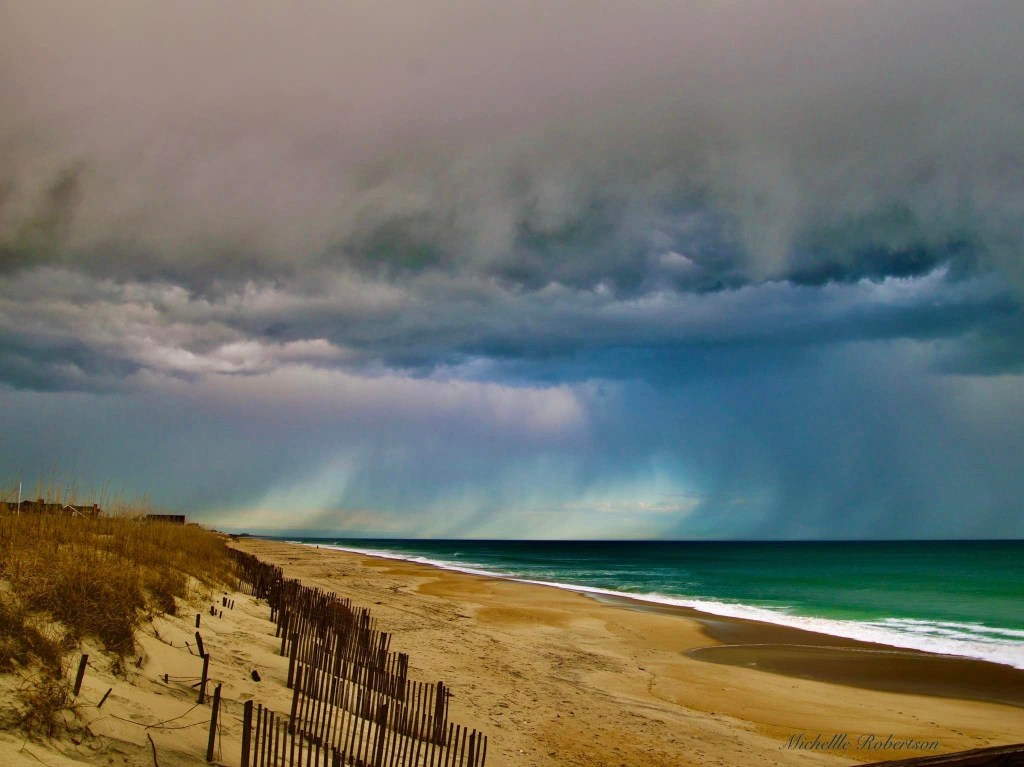
Forsaken, Yet …

Have you ever felt betrayed or forsaken? Life can be full of little rejections and large betrayals that leave us feeling adrift and unloved. Abandonment by family or friends is a terrible blow that can leave you so far down, you can’t even imagine getting up again. Have you ever experienced that? I have.

King David certainly felt this way, as his life was filled with strife and trials, mostly of his own making. In our Psalm today, he cried out to God about his plight, and began with the terrible cry, “My God, my God, why have you forsaken me?” (Psalm 22:1) It is one thing to be forgotten by a friend or undermined by a colleague, but to feel that God has abandoned you is a soul-shattering thing. Yet these very words were uttered by our Lord on the cross in his moment of agony.

But in the second half of this psalm, David has come around to the reality that God never leaves us or forsakes us. He gives us permission to feel this way for a time, but strongly asserts that God never despises or abhors us in our times of sin and trial: God will never hide his face from us, and always hears us.

Psalm 22 (New King James Version)

I will declare Your name to My brethren;
In the midst of the assembly I will praise You.
23 You who fear the Lord, praise Him!
All you descendants of Jacob, glorify Him,
And fear Him, all you offspring of Israel!
24 For He has not despised nor abhorred the affliction of the afflicted;
Nor has He hidden His face from Him;
But when He cried to Him, He heard.

I think this says a lot about doubt. Some people believe that doubting God is a sin. David says otherwise. This psalm assures us that there will be times when we are unsure of God’s activity in our mess, but we are never forsaken. Everyone who seeks God will find God. The poor and the prosperous alike will eat and be satisfied:

25 My praise shall be of You in the great assembly;
I will pay My vows before those who fear Him.
26 The poor shall eat and be satisfied;
Those who seek Him will praise the Lord.
Let your heart live forever!

27 All the ends of the world
Shall remember and turn to the Lord,
And all the families of the [nations
Shall worship before You.
28 For the kingdom is the Lord’s,
And He rules over the nations.

29 All the prosperous of the earth
Shall eat and worship;
All those who go down to the dust
Shall bow before Him,
Even he who cannot keep himself alive.

In the end, God is God. Jesus promised us at his own leaving that he is with us always, even to the very ends of the earth. So if you are struggling with your faith today, take heart! God is here. God is with you. God is working things out for you.

30 A posterity shall serve Him.
It will be recounted of the Lord to the next generation,
31 They will come and declare His righteousness to a people who will be born,
That He has done this.

So while you wait in your trial, take time to remember God’s righteousness. Bow before him and worship his name. You are precious to him, and he will never abandon you.

God With Us by Michelle Robertson

Find Rest

Like the rest of the world, my family has dealt with the “crud” since before Christmas. It was a full blown assault on the sinuses, throat, and chest for a week, and when that passed, all that was left was the cough. The cough decided to extend its visit and take up residency in our lungs. For weeks, my husband and I have shared a nightcap of NyQuil at bedtime and laid our heads on our pillows and hoped it would work. Many nights, rest only came in between fits of coughing. I have, however, perfected the art of sleeping upright with my head elevated on two pillows and a cough drop lodged between my cheek and my gums. Oy!

David’s psalm really resonated with me this morning as the cough is finally waning and rest has returned. He speaks of finding rest in God only, and I can relate. Rest in this context is a complete cessation of the mental and emotional turmoil that agitates us to the point that it prevents any real rejuvenation of the mind and soul.

Have you ever had a night/week/month like that?

Psalm 62 (Common English Bible)

Oh, I must find rest in God only,
    because my hope comes from him!
6 Only God is my rock and my salvation—
    my stronghold!—I will not be shaken.
7 My deliverance and glory depend on God.
    God is my strong rock.
    My refuge is in God.
8 All you people: Trust in him at all times!
    Pour out your hearts before him!
    God is our refuge!
 Selah

Right off the bat we see a connection between rest and hope. I think that is important. In those middle of the night awakenings, when we mull over problems, offenses, despair, grief, and grievances, hope has remained asleep and does not assert itself to say, “Enough! We will sort this out tomorrow.”

Hope reminds us that God is our rock and salvation. Hope tells us we will not be shaken. Hope proclaims that God is our refuge, and we can trust that!

9 Human beings are nothing but a breath.
    Human beings are nothing but lies.
    They don’t even register on a scale;
    taken all together they are lighter than a breath!
10 Don’t trust in violence;
    don’t set false hopes in robbery.
When wealth bears fruit,
    don’t set your heart on it.

David reminds us that people do not deserve the trust that God does, and in the end, God is the only one we can count on. David rebukes his enemies and says that when we take matters into our own hands it often does not work out well. The only thing we should set our hearts on is God’s strength.

11 God has spoken one thing—
    make it two things—
    that I myself have heard:
    that strength belongs to God,
12     and faithful love comes from you, my Lord—
    and that you will repay
    everyone according to their deeds.

There is something charming and conversational in verse 11 where David says, “God has spoken one thing … make that two things…” That made me smile, as it sounds like a middle schooler urgently making a case on why they should be allowed to do something. There is a familiar humanity to that way of speaking. Indeed, David is trying to persuade us that God is our strength and faithful love. That deserves a second try!

Is God your rock? Do you have hope? Are you tired and need the kind of rest that can only be found in God? When you lay your head on the pillow tonight, give it all over to him and dwell in his hope. If you can do that, I bet you’ll find peace.

Refuge by Wende Pritchard

Such Foolishness

Let’s talk about fools today. We often assume that when we call someone a fool, we are describing an intellectual incapacity. We think about foolishness as a lack of common sense or making poor decisions. When a friend does something foolish, we respond with “Well, that was stupid!” Foolish behavior is seen as a function of the mind, and fools lack the wherewithal to “know better.” Fools are imprudent and silly.

In David’s time, however, the word fool was more a factor of heart than mind. Foolish behavior came from a place of morality, not intellect. Thus fools were the ones who were morally bankrupt evildoers, regardless of intelligence. Fools believed there is no God.

David makes it clear in Psalm 14 that he considers anyone who rejects God to be corrupt and perverse. He complains that there are few people who seek God, stating that everyone has gone astray. He draws a clear line between those who accept God for who he is and those who contend that there is no God:

Psalm 14 (New Revised Standard Version)

Fools say in their hearts, “There is no God.”
    They are corrupt, they do abominable deeds;
    there is no one who does good.

2 The Lord looks down from heaven on humankind
    to see if there are any who are wise,
    who seek after God.

3 They have all gone astray, they are all alike perverse;
    there is no one who does good,
    no, not one.

You can almost feel David’s disdain for anyone who denies God. He is solidly in the camp of those who call upon the Lord for everything, and so he has no patience or respect for godless evildoers.

4 Have they no knowledge, all the evildoers
    who eat up my people as they eat bread,
    and do not call upon the Lord?

5 There they shall be in great terror,
    for God is with the company of the righteous.
6 You would confound the plans of the poor,
    but the Lord is their refuge.

Here is the application for modern day readers: those who call upon God will find a refuge of safety in that relationship. Knowing that God is real puts one in the camp of the righteous, where God resides. It is not only the smart choice, but also the only safe choice. God is our strength. God is our restoration. God is our deliverance.

7 O that deliverance for Israel would come from Zion!
    When the Lord restores the fortunes of his people,
    Jacob will rejoice; Israel will be glad.

Do you know someone who denies the existence of God? They, too, may make this assertion from a heart-perspective rather than a head-perspective. Ask questions. Have they been hurt by the church? Have they suffered at the hand of “religion?” Have they felt condemnation from those who know God?

Listening to the heart is much better than lecturing to the mind. When people see God in your actions as you offer unconditional love, compassion, generosity, and forgiveness, they can see with their hearts that God is real.

You’re the only Jesus some will ever see. Go and preach the Gospel with your winsome ways, and only use words when absolutely necessary.

The Lord Looks Down from Heaven by Michelle Robertson

Fear of Flying

A few weeks ago I met a young girl named Emily who did NOT want to ride TRON, the new high-speed rollercoaster at Walt Disney World. She and her parents were waiting in line behind my husband and me, and she was crying the entire time. In those situations, you cannot help but overhear the conversations around you, and my mama-heart went out to her. Her parents were doing an excellent job of both encouraging her to be brave and allowing her to decide whether or not to ride. The ride offers cleverly placed exits just before you board your lightcycle in case you have a change of heart. They also have a way for one adult to ride alone while the other waits with the child, and then swap without having to go through the line again. All the options were available to Emily.

I took advantage of an opportune moment in the line to turn around and address her. I asked her if it was her first time to ride, knowing it was. I asked her if she was scared, and she nodded through her tears. I then told her that it was my second time, but the first time I was scared, too, because doing something for the first time is always a little scary. I went on to describe the ride, talk about the cool lockers where you stash your things before you board, and how much I was looking forward to riding it again. I told her I was very proud of how brave she was being, but also very proud of how she was able to tell her parents about her feelings, because that takes courage, too. Finally I said that she should be proud of herself whether she decides to ride or not, because she was willing to try something new, even if this she decided that this wasn’t the right time.

As I was bending over to speak to her, her mother reached around her shoulder to squeeze mine in one of those, “thank you, mama” moments. We exchanged looks and nodded to each other.

David understood fear and felt it deeply when his attackers were close on his heels. Psalm 56 was written about the time when the Philistines captured David in Gath, as recorded in 1 Samuel 21. It deals with the period between the visit to the tabernacle at Nob and his arrival at Adullam when David was alone, desperate, and afraid.

Fortunately, David knew what to do with his fear.

Psalm 56 (Common English Bible)

3 whenever I’m afraid,
    I put my trust in you—
4         in God, whose word I praise.
        I trust in God; I won’t be afraid.
    What can mere flesh do to me?

5 All day long they frustrate my pursuits;
    all their thoughts are evil against me.
6 They get together and set an ambush—
    they are watching my steps,
    hoping for my death.

7 Don’t rescue them for any reason!
    In wrath bring down the people, God!

8 You yourself have kept track of my misery.
    Put my tears into your bottle—
    aren’t they on your scroll already?

Here was David, the slayer of lions, bears, and giants, and he was afraid. But he knew to acknowledge his fear and deal with it by trusting God. When he boldly proclaimed his faith, his fear moved aside, and his faith took over. He put his faith in God’s word, which he knew to be trustworthy. Fear was there, but it did not rule him … trust did. Even when we are scared, trust gives us enough momentum to take the next step toward faith.

What are you afraid of today? What has you immobilized in fear? God is able to come along side of your fear and help you move forward into faith.

When we got off the ride, I looked through the crowd to see if I could spot Emily. We had gotten separated before we rode, so I did not know if she got on or not. Sure enough, there she was with her parents, standing by the exit. I asked her if she rode, and she beamed with pride and said she had! We high-fived several times and she couldn’t stop talking about it and wanted to know if I had been on Guardians of the Galaxy, which they would ride the next day. I assured her that once she had conquered TRON, she could ride anything. We chatted some more and high fived several more times, and her parents glowed with their pride for her. I was proud of her, too.

The next time God calls you to do something new and scary, remember Emily. It’s okay to be afraid. God is with you.

And Away We Gooooo! by Mark Poblete

Help Me, Lord!

What is your favorite prayer? Not a formal prayer, like the Lord’s Prayer or the Prayer of Confession, but your personal go-to prayer that you say over and over again? Mine is “Help me, Lord!” This is a prayer I use all day long. I use it in extreme situations, such as the time my daughter had a fibroid removed that turned out to be a malignant tumor, and in the trivial moments of driving in bad traffic or trying to run up a steep hill. “Help me, Lord” is a universal plea that comes in handy in any situation.

David uses this prayer in the first verse of today’s reading. His simple and concise request encompasses a lot of background angst. His enemies were pressing in and trying to kill him. The mentally deranged King Saul was determined to eliminate him. He was on the run. Have you ever felt the urgent need for God’s help? I think we have all been there.

Psalm 109:26-31


Help me, Lord my God!
    Save me according to your faithful love!

27 And let them know that this is by your hand—
    that you have done it, Lord!

28 Let them curse—but you, bless me!
    If they rise up, let them be disgraced,
        but let your servant celebrate!
29 Let my accusers be dressed in shame;
    let them wear their disgrace like a coat.
30 But I will give great thanks to the Lord with my mouth;
    among a great crowd I will praise God!
31 Because God stands right next to the needy,
    to save them from any who would condemn them.

I am reminded of the Canaanite mother who approached Jesus in Matthew 15:25. Her daughter was possessed by a demon, and she went to the Lord with a simple “help me” prayer. Her persistent faith won Jesus over and her daughter was saved. 

Part of our take-away from this is a reminder that none of us approach God for help based on our own merit. David had multiple sins in his past and the Canaanite woman was a pagan. Neither one could show their credentials as they made their request for help. But God answered their prayers, not based on their worthiness but on the extravagant grace and mercy that flows from his heart. This is good news for us today, as we stand before God needing help. We can’t earn grace, but we can receive it.

David’s response to God’s intervention in his crisis was to “give great thanks to the Lord with my mouth; among a great crowd I will praise God” (verse 30). Do we do that? Do we remember to not only thank God for his intervention, but to do so in front of an unbelieving world?

As United Methodists, we take a vow to support our churches with prayers, presence, gifts, service, and witness. Notice that last word. Like David, we are called to give witness to the power of God in our lives in a way that shows people who God is and whose we are. Like David, we have opportunities to praise God among the great crowds. Who knows what an impression that might make?

And we don’t even need a pulpit. I once met a Jewish woman who noticed that I used the word “blessed” a lot. Finally she asked me about it, and I had a chance to give my testimony. Even our word choices can be a witness to our faith and enable us to praise God to others in ways that are invitational and approachable. Thanks be to God!

Moonglow by Sharon Tinucci

Favored One

“Inside Out” is a wonderful movie about the exploration of emotions. We enter the world of eleven-year-old Riley, who experiences joy, fear, anger, disgust, and sadness over the prospect of moving to a new city. Along the way, young viewers learn a new vocabulary for expressing their own feelings. Some old ones do, too.

One of the blessings of the psalms is that they give voice to our many emotions. Think of them as a pre-Pixar “Inside Out”. All the “feels” are there as we see them finding expression for everything we are going through on a daily basis. The relevance of these writings is timeless.

Today’s psalm is no exception, as we see David once again fleeing for his life. This time it is his own son Absalom who was the pursuer. Absalom’s successful rebellion has driven David out of Jerusalem. In his distress, David expressed all of those emotions in just the first five verses. We see him cry out loud to God in fear. We see him disgusted with those who claim that God won’t help him. We see his anger against the many who stand against him. We see his sadness that people are talking about him. And finally, we see joy in his ability to feel confidence in his identity as a child of God, who is his shield. Can you relate to any of this? I can.

Psalm 3:1-5 (Common English Bible)

Lord, I have so many enemies!
    So many are standing against me.
2 So many are talking about me:
    “Even God won’t help him.” Selah

3 But you, Lord, are my shield!
    You are my glory!
    You are the one who restores me.
4 I cry out loud to the Lord,
    and he answers me from his holy mountain. Selah
5 I lie down, sleep, and wake up
    because the Lord helps me.

By the way, “Selah” is a device in the psalms that offers a pause. It gives the reader/singer a chance to reflect before moving on. I recently told a group at a woman’s retreat that it is like saying, “Yo!” after a meaningful phrase. But I digress.

This psalm gives us permission to feel all those same things. Joy, sadness, anger, disgust, and fear are just some of the emotions we can run through on a daily basis. How we handle those feelings is an indication of where we are on our walk with Jesus. 

David handled his emotions with the confidence of a favored son. Do you know that you are God’s favored as well? And like David, God will answer us when we cry out, whether in silent prayer or by raising our voices and shouting to the heavens.

And don’t miss David’s dismissal of the people who talked behind his back and assumed that because of his past sin record, God would not come to his aid. David responds with a great big “But” and counters that God is his shield, his glory, and is the one who restores him. David knew that he was not defined by his past mistakes, but rather was defined by the future glory that came with his repentance and God’s forgiveness. Do you know that as well, or are you letting your past define your present?

Psalm 3 is a beautiful reminder of God’s continuing presence in our every emotion. It is a clear declaration that God’s mercy is always available to us when we cry out to our mighty God. 

Need help? Your Shield stands at the ready.

God’s Glory by Becca Ziegler

Practice, Practice

Do know the old joke about how to get to Carnegie Hall?

Question: “How do you get to Carnegie Hall?” Answer: “Practice, practice, practice.” The poor guy was looking for directions and he got a lecture.

But this is good advice for those who want to master an artistic, athletic, or academic performance of any kind. Good math requires practice. Good piano playing requires practice. Good ballet requires practice. My inability to do any of those three things is a result of my not wanting to practice!

Have you ever considered that praising God also requires practice? David was surely in the habit of praising God continually. It was a lifestyle for him and when he found himself in a place where his life and his sanity were in jeopardy, his praise practice helped him out:

Psalm 71 (Common English Bible)

I’ve taken refuge in you, Lord.
 Don’t let me ever be put to shame!
2 Deliver me and rescue me by your righteousness!
   Bend your ear toward me and save me!
3 Be my rock of refuge
   where I can always escape.
You commanded that my life be saved
  because you are my rock and my fortress.

The lovely phrase, “Bend your ear toward me” is a beautiful portrayal of our relationship with God. God indeed inclines his ear toward us every time we cry out to him. Like a mother bird feeding her squawking babies, God is ready to supply the need when we ask. He is the rock of refuge where we can always escape.

4 My God, rescue me from the power of the wicked;
    rescue me from the grip of the wrongdoer and the oppressor
5  because you are my hope, Lord.
    You, Lord, are the one I’ve trusted since childhood.

Here we see why it is important to bring our children to church. David writes that he has trusted God since childhood and has depended on him from birth. How will our children have this type of relationship with God if we don’t make the effort to get them to Sunday school and worship every week?

6 I’ve depended on you from birth—
    you cut the cord when I came from my mother’s womb.
    My praise is always about you.
7 I’ve become an example to many people
    because you are my strong refuge.

Now comes the “practice, practice, practice” part:
8 My mouth is filled with your praise,
    glorifying you all day long.
9 Don’t cast me off in old age.
    Don’t abandon me when my strength is used up!

Is your mouth filled with God’s praise, or do you spend time gossiping, cutting others down, or complaining?

10 Yes, my enemies have been talking about me;
    those who stalk me plot together:
11 “God has abandoned him!
    Pursue him!
    Grab him because no one will deliver him!”
12 Don’t be far from me, God!
    My God, hurry to help me!
13 Let my accusers be put to shame,
    completely finished off!
    Let those who seek my downfall
    be dressed in insults and disgrace!

David reminds us that we can also build a relationship with God by “repeating God’s righteous acts and saving deeds all day long.”

14 But me? I will hope. Always.
    I will add to all your praise.
15 My mouth will repeat your righteous acts
    and your saving deeds all day long.
    I don’t even know how many of those there are!
16 I will dwell on your mighty acts, my Lord.
    Lord, I will help others remember nothing but your righteous deeds
.

What will come out of your mouth today? Try practicing praise for a change. My guess is that your day will be filled with blessings if you do.

Practice Praise by Michelle Robertson

Down and Out

Have you ever felt completely down and out? Were you in a place where nothing you did went right, everyone had turned against you, and everywhere you turned, someone was after you, trying to do you harm? Life can sometimes catch up to us and grab us by the ankles so hard we can’t move or breathe.

Several years ago, I found myself in such a place. A person who was struggling with mental illness turned her focus on me in ways that were disturbing and threatening. Then I came out of my office one day to find my tire had been slashed, preventing me from leaving on a trip until it got fixed. A month later, my mother suddenly passed away. With no sibling available, I was left to settle her estate and take care of all of her arrangements while trying to process my deep grief. It seemed that everywhere I turned for a few months, it was nothing but doom and gloom.

King David found himself in such a state many times in his life. His down-and-out moments often came as a result of his own actions, but he also was threatened by a mentally ill king who tried to take David’s life. David learned through all of that, as I did, that there is only one place to go: God is our rescuer in troubling times, regardless of the cause of our stress:

Psalm 41 (Common English Bible)

Those who pay close attention to the poor are truly happy!
    The Lord rescues them during troubling times.
2 The Lord protects them and keeps them alive;
    they are widely regarded throughout the land as happy people.
    You won’t hand them over to the will of their enemies.
3 The Lord will strengthen them when they are lying in bed, sick.
    You will completely transform the place where they lie ill.

4 But me? I said, “Lord, have mercy on me!
    Heal me because I have sinned against you.”
5 My enemies speak maliciously about me:
    “When will he die and his name disappear?”
6 Whenever they come to visit, they say nothing of value.
    Their hearts collect evil gossip;
    once they leave, they tell it to everybody.
7 All of those who hate me talk about me, whispering to each other,
    plotting evil against me:
8 “Some horrible thing has been poured into him;
    the next time he lies down, he won’t get up.”

One of life’s greatest stressors is the betrayal of someone you love. Few things cut as deep as a spouse, sibling, or friend turning against you. This happened to David, too.

9 Even my good friend,
    the one I trusted,
    who shared my food,
    has kicked me with his heel—a betrayer!
10 But you, Lord, please have mercy on me and lift me up
    so I can pay them back!

David’s plea for revenge for revenge’s sake will go unheeded by God. God reminds us that vengeance is his. But we can certainly tap into David’s emotions here. Who among us hasn’t wished to see our enemy get what’s coming to them?

11 Then I’ll know you are pleased with me
    because my enemy won’t be shouting in triumph over me.
12 You support me in my integrity;
    you put me in your presence forever.

Are you feeling down and out today? Take heart. God is with you even in the worst of your situation. You are never alone.

13 Bless the Lord, the God of Israel,
    from forever to forever!
        Amen and Amen!

Light in the Darkness by Karen Warlitner

Back Scratching

Getting to the airport from where I live is no easy thing. I was spoiled by living 20 minutes away from one of the world’s largest airports for the 20 years we lived near Atlanta. Now an airport run takes up to two hours one way and involves a fair bit of traffic, state interchanges, bridges, poorly lit country roads, and a lot of aggravation.

I recently arranged for a friend to ride home with my pilot husband to spare her husband a four-hour round trip to get her. I know the inconvenience that would have been for him and was happy to help. These are friends who are gracious and hospitable. I know for sure they would do the same thing for me. In a “you scratch my back, I’ll scratch yours” relationship, it is easy to give and receive, knowing that the good will that is extended will come back in some form when you need the favor.

God calls us into reciprocal relationships in order to strengthen our ties in our community. We need to know we can count on folks when we get into a jam. I never considered that we have a reciprocal relationship with God, however. God is so far above us; I can’t imagine how we can ever “repay the favor” in any meaningful way. God has provided everything we need in life, including his only son, who guarantees our eternal life. How can we possibly respond?

But today’s psalm offers an idea. This is a psalm of David, who begins by outlining the many, many things he has received from the Lord:

Psalm 40 (Common English Bible)

I put all my hope in the Lord.
    He leaned down to me;
    he listened to my cry for help.
2 He lifted me out of the pit of death,
    out of the mud and filth,
    and set my feet on solid rock.
        He steadied my legs.
3 He put a new song in my mouth,
    a song of praise for our God.
Many people will learn of this and be amazed;
    they will trust the Lord.
4 Those who put their trust in the Lord,
    who pay no attention to the proud
    or to those who follow lies,
    are truly happy!

David gets it. He knows that God has listened to him in times of great trouble, and credits God for pulling him out of “the pit of death” and restoring his life. God has blessed David with the ability to sing new praise songs for what God has done. He continues listing all of God’s goodness to him:

5 You, Lord my God!
    You’ve done so many things—
    your wonderful deeds and your plans for us—
        no one can compare with you!
    If I were to proclaim and talk about all of them,
        they would be too numerous to count!
6 You don’t relish sacrifices or offerings;
    you don’t require entirely burned offerings or compensation offerings—
    but you have given me ears!
7 So I said, “Here I come!
    I’m inscribed in the written scroll.

Now comes an idea of how to repay God for his goodness. First, we are encouraged to seek God’s will and learn as much about God as we can:


8     I want to do your will, my God.
    Your Instruction is deep within me.”

David continues this thought with a specific way that all of us can repay God for his kindness: we can testify. We can share the good news with everyone we meet. We can go all out in witnessing to our faith.

It begs the question: when was the last time you shared your faith with someone? Have you been inviting people church? Have you borne witness to an answered prayer to your neighbor? Have you offered to pray with a hurting friend? Do you say grace in a restaurant?


9 I’ve told the good news of your righteousness
    in the great assembly.
    I didn’t hold anything back—
        as you well know, Lord!
10 I didn’t keep your righteousness only to myself.
    I declared your faithfulness and your salvation.
I didn’t hide your loyal love and trustworthiness
    from the great assembly.

Read that last part again, and let it inspire you.

Having demonstrated how he has reciprocated God’s attention, David now boldly shifts to the “scratch my back” part of the psalm:

11 So now you, Lord—
    don’t hold back any of your compassion from me.
Let your loyal love and faithfulness always protect me,
12     because countless evils surround me.
My wrongdoings have caught up with me—
    I can’t see a thing!
There’s more of them than hairs on my head—
    my courage leaves me.
13 Favor me, Lord, and deliver me!
    Lord, come quickly and help me!
14 Let those who seek my life, who want me dead,
    be disgraced and put to shame.
Let those who want to do me harm
    be thoroughly frustrated and humiliated.
15 Let those who say to me, “Yes! Oh, yes!”
    be destroyed by their shame.

I love how David doesn’t hold anything back. Even in his demanding tone, he is letting God know that the reason he asks for favor and deliverance is because he believes in God with all his heart. He knows God will answer him! Do you ask for what you need with such confidence?


16 But let all who seek you
    celebrate and rejoice in you.
Let those who love your salvation always say,
    “The Lord is great!”
17 But me? I’m weak and needy.
    Let my Lord think of me.
You are my help and my rescuer.
    My God, don’t wait any longer!

I want to encourage you to do a few things today. First, ask boldly for what you need. God will surely lean down with all his might to hear your prayer. And second, find someone in your circle today who needs to hear about God. Give a word of testimony, offer a casserole and a prayer, post a Christian meme on your Facebook page … let people know where you stand in your relationship with God. Find some way to let everyone know that “The Lord is Great!”

Because he is great, indeed.

Wave Watching by Michelle Robertson