Today’s lectionary passage from Mark 9 describes the amazing Transfiguration of Christ high atop Mount Tabor. This Sunday will be Transfiguration Sunday in our churches, and many of you will hear the following passage read aloud as the text for the sermon. Most pastors will emphasize the revelation of Jesus in that moment as the King of Glory. The transformation that took place visibly changed Jesus right before his friend’s eyes. Indeed, in that moment, Jesus went from a weary, dusty rabbi who had just climbed up a mountain to something ethereal and blindingly white. But for today, let’s focus on Peter, James, and John.
A commentator that I read made a passing remark about the three disciples, saying we assume that these three were selected to witness this historic event because of their boldness of witness and their leadership skills, but he (the commentator) thought it was also possible that Jesus selected them to make the journey because they were trouble makers and couldn’t be trusted to be left behind. That made me laugh out loud. I know trouble makers like that! I’ve been a trouble maker like that. How about you?
I am deeply inspired by the late John Lewis, the stalwart civil rights activist, human rights advocate, politician, protester, voter registration pioneer, and leader in the cause for equality, jobs, and freedom. He coined the phrase “good trouble” to encourage people to speak up and speak out for the cause of justice in America. He was a trouble maker, too.
Mark 9:2-9 (Common English Bible)
2 Six days later Jesus took Peter, James, and John, and brought them to the top of a very high mountain where they were alone. He was transformed in front of them, 3 and his clothes were amazingly bright, brighter than if they had been bleached white. 4 Elijah and Moses appeared and were talking with Jesus. 5 Peter reacted to all of this by saying to Jesus, “Rabbi, it’s good that we’re here. Let’s make three shrines—one for you, one for Moses, and one for Elijah.” 6 He said this because he didn’t know how to respond, for the three of them were terrified.
Peter’s humanity in this moment takes all of us back to that place where we found ourselves in a startling situation and had no idea how to respond. His outburst is silly in hindsight, but who could blame him? Nothing like this had ever happened to this humble fisherman before, and he was confused.
But maybe there was something else going on. The Transfiguration happened just after Jesus had been explaining his impending crucifixion on a cross to the disciples. They loved him and didn’t want to accept that this would be the end of their three-year missionary journey. Surely, they didn’t want to see their friend and leader suffer and die in the way he predicted. So perhaps Peter saw this as a short-cut to glory. Why go through the horrible beating and death on a cross if glory could be had so easily? It was happening right in front of them! Couldn’t they just stay there and bask in the reflected glow of the King’s radiance, and skip the suffering part?
Many times we, too, want to take the short cut that would prevent us from having to suffer. Avoiding real issues, ignoring warning signs, looking the other way, glossing over what is really happening, are all things we do to avoid walking the way of suffering. Ask any family dealing with addiction and they will outline all the shortcuts they tried to take to avoid the reality of their loved one’s addiction. But sometimes, we must suffer in order to get to the other side of something.
7 Then a cloud overshadowed them, and a voice spoke from the cloud, “This is my Son, whom I dearly love. Listen to him!” 8 Suddenly, looking around, they no longer saw anyone with them except Jesus.
9 As they were coming down the mountain, he ordered them not to tell anyone what they had seen until after the Human One had risen from the dead.
Verse 7 resonates with what God said at Jesus’ baptism, but with a twist. He affirms Jesus as his beloved son and then adds “Listen to him!”
Let that be our focus today. Listen to him. Ask him for help along the way of suffering. See him for the King of Glory that he really is. Listen, and then go out and make some “good trouble” for the Lord.
Last Sunday, I had the privilege of preaching for my lovely friend Gina, who was on a well-deserved cruise with her husband as they celebrated their anniversary. I have preached for her before, and it is a complete joy. Her congregation is warm, inviting, engaged, and one of the strongest examples of contributing to local mission and ministry that we have in our conference. Her lay people lead the worship service with expertise and practice, reading Scripture, offering prayers, singing, playing, and generally running the show (as laity should) except for the sermon. One of my favorite moments is watching the little acolyte come up from her pew, pull out a step stool, and offer the prayer for the offering at the lectern. This child isn’t even ten years old, and she leads worship.
Another favorite moment is watching the Children’s Sermon. A young mom came forward and sat with the children gathered around her and began to talk about flashlights. The flashlight she brought had a very dull beam, so she made talked to the children about the importance of batteries, needing to re-charge when they go weak, and things work better when they are fully powered. At the end, she pulled out fresh batteries and allowed the kids to help her put them in the flashlight.
The contrast between the dull light from a flashlight that needs a new charge and the blinding beam that the new batteries provided was startling and instructive.
We all have moments where we need to re-charge, get fresh batteries, take a break, go on a trip with our spouse, or just have a lie-abed day. But work pressures, a society that promotes workaholism, and the demands and needs of others often prevent us from getting the rejuvenation that we need.
In our passage today, Paul addressed his church at Corinth and encouraged them to keep shining their light into a darkness of unbelievers. He warned them about people who prefer to follow their “god of darkness” and look away from a Truth they can’t see. He called the unbelievers “stone-blind:”
2 Corinthians 4 (The Message)
3-4 If our Message is obscure to anyone, it’s not because we’re holding back in any way. No, it’s because these other people are looking or going the wrong way and refuse to give it serious attention. All they have eyes for is the fashionable god of darkness. They think he can give them what they want, and that they won’t have to bother believing a Truth they can’t see. They’re stone-blind to the dayspring brightness of the Message that shines with Christ, who gives us the best picture of God we’ll ever get.
5-6 Remember, our Message is not about ourselves; we’re proclaiming Jesus Christ, the Master. All we are is messengers, errand runners from Jesus for you. It started when God said, “Light up the darkness!” and our lives filled up with light as we saw and understood God in the face of Christ, all bright and beautiful.
As errand runners for Jesus, we are charged with shining his light into the darkness of the world. Our lives are filled up with light and it is incumbent upon us to use our flashlight like an usher in a dark theater, directing people to the safety and joy of God’s presence. But we can’t do that if we allow our batteries to be drained beyond repair.
How about you? Are you fully charged up and ready to lead others into the dayspring brightness of Christ? Or do you need power down and recharge? We all know that stopping to recharge gives us strength and energy to move forward. A small moment of self-care can make a world of difference.
May God rejuvenate us as we do the errands of serving, worshipping, and loving his Son.
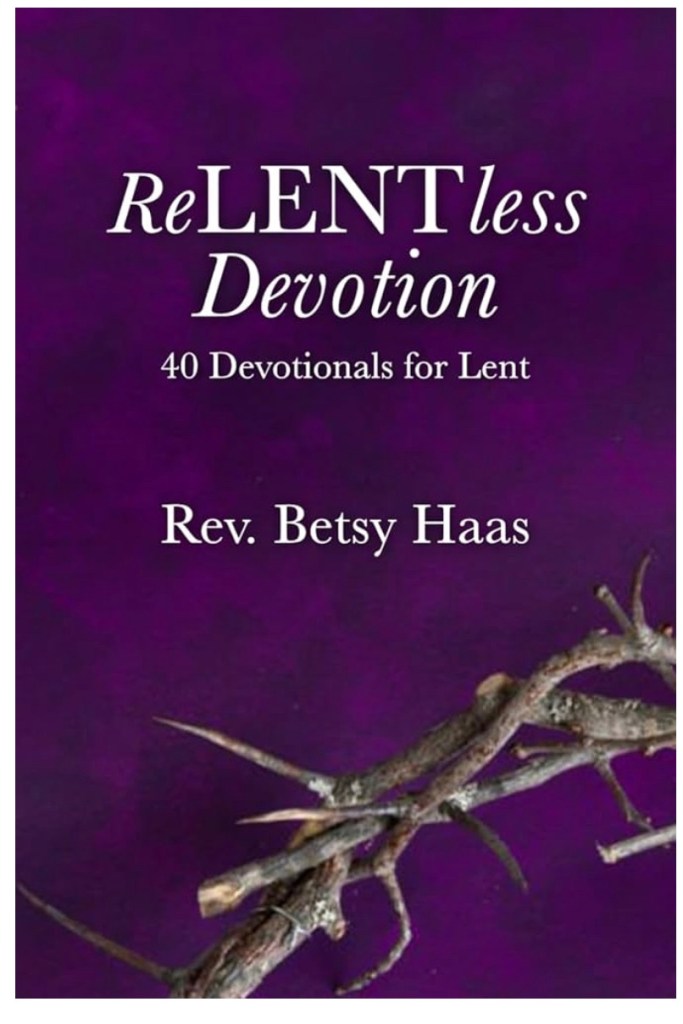
This ReLENTless Devotion Small Group Leader’s Guide gives you six weeks of discussion questions intended to spur conversation and reflection in your small group. Lent begins on a Wednesday, so you will have to establish the “weeks” according to which day of the week your small group meets. This guide gives you forty days of questions so that you can break it down into six weeks depending on your group’s schedule. Schedule your weeks so that students will have read each day before they come into class and provide them with a schedule before you begin so that they understand which days will be discussed each week. You should finish the study the week before Easter.
(Day One: Ash Wednesday) Lent is a holy season and we are meant to approach it in a somber and quiet way. It is a time to “come clean” with God by practicing the traditional Lenten disciplines: study, meditation, fasting, prayer, worship, giving, self-examination, repentance, and serving. Go over this list carefully with your class and ask them to choose at least three of the disciplines to which they will faithfully and intentionally commit. All of the disciplines should be practiced, but by choosing three, students will focus their attention on the things that God is calling them to observe the most. Have them turn to page 4 and write down their three things. These are personal, but some folks might be willing to share what they wrote down and why. By naming them out loud, there will be a sense of accountability in the group.
(Day Two) What does it mean to be God’s treasure? Have you ever struggled to believe this?
(Day Three) Andrew brought Peter to meet this new rabbi, and the world was changed. Who is God calling you to bring to Jesus? Write down their name on page 11 and begin praying for ways to be invitational. Can you invite them to church on Easter? Make a plan!
(Day Four) Psalm 84 invites us to stay on the “upright walk”. What does that mean? Can you give examples of someone who walks it? Why do people stray? Are you struggling with temptation? Write down a temptation on page 15 and commit to walking away from it.
(Day Five) Is it a sin to be tempted? What tempts you? How can we become strong against our temptations and say, “Beat it, Satan”?
(Day Six) Jesus’ death on the cross is an invitation to let things die in our lives that prevent us from living as whole disciples. What is God asking you to die to today? Sometimes holding on to things like regret, sin, the past, grudges, hatred, prejudices, bad memories, etc. prevent us from experiencing the peace that Jesus desires for us. What do you need to let go of in order to embrace the freedom that he died to give you? Write your answer on page 23.
(Day Seven) Paul writes that people who cause divisions by bringing stupid controversies, worthless dissensions, and unprofitable quarrels are “perverted and sinful”. What does this say about our current situation? How should this inform our use of news media outlets and social media?
(Day Eight) What are the golden calves that people worship today? What idols do you worship? Does society need a do-over? Where in your life did you get a second chance that you didn’t deserve? Do you need one today?
(Day Nine) Are you stubborn? Have you ever been betrayed? Has God ever helped you release a long-held grievance? How did it make you feel to be released? Share stories of redemption today with your class.
(Day Ten) What do you think the world thirsts for the most? Do we pursue the things that bring true joy? Do you know someone who is very low right now who could use a cup of effervescent Jesus? Write down their name on page 40 and find a way this week to be Living Water to them.
(Day Eleven) Today’s lesson focuses on acts of service. Have a discussion in class about an act of service you all can do together. Make a commitment and make a plan!
(Day Twelve) What happened to Israel when they rebelled against God? Have you, or someone you love, ever rebelled against God’s will? Often the teenage years are times of acts of rebellion. Some of us never grow out of it. What is God’s response?
(Day Thirteen) Define sin (separation from God). Define repentance (returning to God). Since all have sinned and fallen short of the glory of God, why do we feel justified in judging other people’s sin? What does it mean to be forgiven?
(Day Fourteen) Psalm 150 is a final word on praising God. Think about your own devotional life. Do you stop your busy day and simply praise God? Are your prayers more praise or petition? How can you change that?
(Day Fifteen) Why do you think Nicodemus sought out Jesus at night? Have you ever been uncomfortable about your faith? Do Christians ever feel condemned by society for standing up for our beliefs? How can you be an appealing witness to the truth of Christ?
(Day Sixteen) Have you ever struggled with accepting God’s timing in a situation where you longed for a quick answer or a resolution? Tell your story.
(Day Seventeen) Have you ever needed God to turn a situation around for you? Do you have enemies? What needs turned around today in your life?
(Day Eighteen) Today’s lesson asks a very hard question. Does your judgment of others negate the call to be the unconditional love of Christ to the world? Are you a Pharisee in the way you view people?
(Day Nineteen) Talk about a time when you were misunderstood or unfairly criticized or attacked. How did you feel?
(Day Twenty) When have you experienced a hurtful truth? How did you handle it?
(Day Twenty-One) Define the word “sanctification” (the process of becoming holy). Sin often begins with “flirting” with a little temptation. What can we do when that happens?
(Day Twenty-Two) Make a list of things that people long for in life. Do you long for a relationship with God in the same way? Have you ever been taunted by your enemies? What happened?
(Day Twenty-Three) What did Paul mean when he said that the message of the cross was foolishness? Are you sold out to the Lord? What does a sold-out life look like?
(Day Twenty-Four) Today’s lesson challenges us to do one thing that reflects God’s compassion for the world. Discuss things the class can do. Write your answers on page 95 and check back next week to see how your students did with the challenge.
(Day Twenty-Five) Discuss the difference between the power of the law versus the power of the spirit. Paul warns that being absorbed with the “self” can result in ignoring God. Can you give an example of this?
(Day Twenty-Six) Has God ever given you something you didn’t want? What happened?
(Day Twenty-Seven) We can be guilty of cherry-picking God’s instructions and following the easy ones. What are the hard things God commands? Are you ignoring something that God is telling you to do?
(Day Twenty-Eight) Have you ever experienced hurt from a church? What can you do, as a parishioner, to make church feel warm and invitational to everyone?
(Day Twenty-Nine) Discuss what it means to “fear” God. Is this fear a good or a bad thing?
(Day Thirty) How can we help others see the spiritual truth of the risen Lord? Do you ever suffer from “spiritual blindness”? Do you believe in miracles?
(Day Thirty-One) Today’s lesson challenges us to step out of our comfort zone and invite others to Christ. Name reasons why people are reluctant to evangelize. Can you overcome these things and make a plan to invite a neighbor to church on Easter?
(Day Thirty-Two) Learning how to worship God in the storm takes practice. Ask your class if anyone can share an example of a time when they were able to praise God in a time of terrible distress. Invite them to share their stories.
(Day Thirty-Three) Sometimes we long for the simplicity and ease of the past. But longing for the things of old prevents us from seeking God in the present. Can you think of examples of this? Were the “good old days” really that good? Can we find ways to experience God in the “good now days”?
(Day Thirty-Four) When have you felt like you were walking in a desert alone? Where was God in that moment? Share your experience.
(Day Thirty-Five) Define the word “entitlement”. Do we live in an entitled society? What are you willing to lose in order to gain Christ?
(Day Thirty-Six) Today’s lesson addresses suffering. Think of a time when you suffered. How were you delivered? Can you share your story?
(Day Thirty-Seven) We are moving closer and closer to the crucifixion this week. Jesus invites us to “walk in the light” and be “children of the light”. How can we do that?
(Day Thirty-Eight) This reading falls on Maundy Thursday. Invite your class to talk about what happened on Maundy Thursday, and if they attended a Maundy Thursday service, invite them to share their reactions to it.
(Day Thirty-Nine) Jesus willingly took on the “cup of wrath” for our sins. Discuss what that means. As we mark the day of the crucifixion, look back to the three Lenten disciplines each student committed to and recorded on page 4 of their books. Ask them how they did and invite them to consider making these things a life-long habit rather than a Lent exercise.
(Day Forty) On Holy Saturday, we experience the silence that Jesus’ death brought to the earth. On Easter, we will celebrate his resurrection, but on this day, we experience the void he left. Describe a time in your life when you were keenly aware of a void that the death of a loved one made in your heart. What does the resurrection say to those moments of deep loss?
An Easter Sunday Meditation Ask your class for their insights from this meditation. What parts resonated with them?
Leaders: I hope this guide was helpful. Thank you so much for your willingness to lead! And bless you to bits for using ReLENTless Devotion. May God add his blessing to the reading and hearing of his Word.
When I was about four years old, I had an accident that almost cost me my sight. My mother was cleaning the wall oven in our kitchen with an Easy-Off product that was very caustic. She was applying it to the open door of the oven with the brush-in-the-lid applicator when I quietly came around the corner and startled her. The brush flicked a gob of oven cleaner straight into my eye, burning my eyeball in an instant.
Mom was amazingly good at thinking on her feet, and grabbed the glass of water I had in my hand and flushed my eye. She then ran me to the tub and flushed out the eye even more, amidst my howls and screams. I think I may have been in more danger of drowning than losing my sight at that point. Then she wrapped me in a towel and ran five blocks with me to our local GP. My father had taken our only car to work that day, and the doctor’s practice was located in an addition to his house.
He filled my eyes with some kind of dye to assess the damage. This is my only memory of the event … the rest of it is only known to me through hearing the story told. I have a clear memory of sitting on his examination table in the dark with my eyes closed. Naturally I had kept them shut as much as possible during the entire ordeal, with my right eye feeling as though it was on fire. They had to cajole me into opening them, and when I finally did, the darkened room was a lovely shade of blue, due to the dye. The doctor was using an ophthalmoscope, moving it back and forth to assess the damage. As I looked at my mother’s anxious face, haloed in blue, I said to her, ”Mommy! You are so pretty in blue!” Thus they knew that my sight had survived the ordeal. I got my lollipop, and we walked home.
Sight, in all of its many forms, is a precious thing.
Today’s passage tells the story of a blind man who is healed by Jesus, Son of David:
Mark 10 (New International Version)
46 Then they came to Jericho. As Jesus and his disciples, together with a large crowd, were leaving the city, a blind man, Bartimaeus (which means “son of Timaeus”), was sitting by the roadside begging. 47 When he heard that it was Jesus of Nazareth, he began to shout, “Jesus, Son of David, have mercy on me!”
48 Many rebuked him and told him to be quiet, but he shouted all the more, “Son of David, have mercy on me!”
This an interesting detail that Mark thoughtfully included. This entire community knew the man. He sat in the same place every day, begging for enough coins to sustain him. And yet the minute he has a chance to be healed, they shushed him.
Sometimes society likes to keep its status quo by silencing those who sit at the bottom of the class structure. The hungry, the poor, the disabled, the homeless, the immigrant, the mentally ill … aren’t we guilty of looking the other way and just wishing they wouldn’t bother us?
49 Jesus stopped and said, “Call him.”
This is exactly what we are meant to do as well. Call over the ones who are hurting. Call over the ones who need help. Call over the ones who need JESUS.
So they called to the blind man, “Cheer up! On your feet! He’s calling you.” 50 Throwing his cloak aside, he jumped to his feet and came to Jesus.
Again, Mark blesses us with detail. Don’t you love it when they say to the blind man, ”Cheer up!”? What a happy moment. They know what is coming. They know the next part of the story. They know what their savior can do.
Do you?
And don’t miss the detail of the man throwing his cloak aside. It is very probable that this is this man’s only possession. Think about that! Would you be willing to give up everything you owned to have an encounter Jesus? The rich young ruler couldn’t. (Mark 10:17-31)
51 “What do you want me to do for you?” Jesus asked him.
The blind man said, “Rabbi, I want to see.”
52 “Go,” said Jesus, “your faith has healed you.” Immediately he received his sight and followed Jesus along the road.
Perhaps the greatest teaching in this passage is found in the newly-sighted man’s response. The minute he finally saw Jesus, he followed him.
Can you see Jesus actively working in your life? Do you need to be healed? Would you give up everything to follow him?
As we ponder these things today, may God grant us wisdom and insight into everything he is doing in our lives.
Open your eyes! Jesus is calling.
Ocean Lace by Michelle Robertson
Are you looking for a Lent devotional book? Look here.
Have you ever noticed how many times the Bible talks about sheep? References to sheep, sheepfolds, and gates are abundant in the Old Testament. Psalm 23 gives us beautiful language that speaks about God’s safe and protected meadows: “The Lord is my shepherd. I lack nothing. He lets me rest in grassy meadows; he leads me to restful waters; he keeps me alive. He guides me in proper paths for the sake of his good name” (Psalm 23:1-3, Common English Bible). Let’s read the entire psalm in the New King James Version. As you do, try to see the word pictures in your mind:
Psalm 23 (New King James Version) The Lord is my shepherd; I shall not want. 2 He makes me to lie down in green pastures; He leads me beside the still waters. 3 He restores my soul; He leads me in the paths of righteousness For His name’s sake.
4 Yea, though I walk through the valley of the shadow of death, I will fear no evil; For You are with me; Your rod and Your staff, they comfort me.
5 You prepare a table before me in the presence of my enemies; You anoint my head with oil; My cup runs over. 6 Surely goodness and mercy shall follow me All the days of my life; And I will dwell in the house of the Lord [e]Forever.
God’s sheepfold has always been a place of abundance, rest, and safety. David’s beautiful psalm speaks directly into our need to be rescued from the valley of the shadow of death and ensconced in a place where we need fear no evil.
In a similar manner, Ezekiel 34 speaks of keeping the sheep of Israel protected from predators and famine. As you read this, note the beautiful undertones of shalom that come with God’s provision and presence:
Ezekiel 34 (Common English Bible)
“I will make a covenant of peace for them, and I will banish the wild animals from the land. Then they will safely live in the desert and sleep in the forest.
26 I will give them and those around my hill a blessing by sending the rain in its season.
They will be rains of blessing. 27 The trees in the field will bear fruit, and the earth will yield its harvest. They will be safe on their fertile land, and they will know that I am the Lord when I break the bars of their yoke and deliver them from those who enslaved them.
28 The nations will no longer prey on them, and wild animals will no longer devour them. They will live in safety, with no one to trouble them” (Ezekiel 34: 25-28).
The war that continues to rage in Gaza makes us long for peace in that region. The still-held hostages, the constant bombing, and the loss of life and property grieves our hearts. Daily we pray for a resolution in Israel and daily we wait. It is good to remember God’s promise of shalom as we wait for the end to come.
Oh, how we long for this peace in our land as well!
Isn’t it a wonderful experience when you are new to a group, and you find someone who consistently remembers your name? There can’t be any quicker way to feel welcomed than to have someone call your name from across the room. If you are someone gifted with the ability to remember names easily, thank your loving Father for that gift!
My husband and I used to struggle with names when we were in the Navy. In all fairness, the names around us changed every couple of months as people deployed and were assigned to other squadrons, while others came in and took their place. It was pretty easy to remember the pilots, since their names were conveniently displayed on their flight suits. But in social occasions where spouses were included and name tags weren’t worn, we had to develop a way of figuring out someone’s name without letting them know. Kenn would say to the person, “Have you ever met my wife, Betsy?” and I would immediately extend my hand for a handshake and say, “Hi, I’m Betsy!” They then had to respond with a greeting and their name. I could see Kenn leaning in as they gave their name. We had to reverse this when I served a large church many years later. Everyone knew my name, but I had a bit of a struggle keeping up with the close to 4,000 members’ names. There were many potluck suppers where I did the “Have you ever met my husband Kenn?” and then leaned in to hear them introduce themselves. Try this at your next awkward social gathering! It works like a charm.
We continue our examination of John 10 this morning with a special emphasis on verse 3. Jesus states that the sheep not only listen to the shepherd’s voice, but he calls his own sheep by name and leads them out:
John 10 (Common English Bible)
1 I assure you that whoever doesn’t enter into the sheep pen through the gate but climbs over the wall is a thief and an outlaw. 2 The one who enters through the gate is the shepherd of the sheep. 3 The guard at the gate opens the gate for him, and the sheep listen to his voice. He calls his own sheep by name and leads them out. 4 Whenever he has gathered all of his sheep, he goes before them and they follow him, because they know his voice. 5 They won’t follow a stranger but will run away because they don’t know the stranger’s voice.” 6 Those who heard Jesus use this analogy didn’t understand what he was saying.
Embedded in this complex story of sheep, thieves, and fences is a beautiful nod to the reverence of baptism. In our United Methodist understanding of this sacrament, baptism is a time of “naming and claiming”. We need to be clear that God knows every child by name at their conception. Psalm 139 confirms this:
“You are the one who created my innermost parts; you knit me together while I was still in my mother’s womb” (Psalm 139:13, Common English Bible).
But in baptism, we invite the entire community to participate in the naming of that person and acknowledge that Jesus has claimed them as one of his sheep. Notice that our liturgy asks only for the first and middle name of the person. I believe that is because we take on a new last name in that water-washed moment. We all share that same last name as family members in the Body of Christ. I am no longer Haas. You are no longer Smith or Jones. Our new last name is Beloved.
What does it mean to you to know that Jesus knows your name? You are his Beloved.
How many of you use baby gates to keep your little ones safe? We have them in our house for two reasons. We have grandchildren who are under 2 years old, and the 13 wood steps from the ground level to the living level are dangerous for them. We also use them every day to keep our dog from attempting to do the stairs alone. At almost 14, our old girl has taken several spills, and now needs a guiding hand to safely go up and down. We are grateful for gates that keep everyone save and contained.
In John 10, Jesus declared himself to the Gate for the sheepfold. He determines who may come and go into the pen, with the priority of keeping the thieves and outlaws out. He allows the sheep who follow his voice to enter through his gate to find the pasture, where life can be experienced to the fullest. Those who come only to steal, kill, and destroy will be locked out.
John 10 (Common English Bible)
7 So Jesus spoke again, “I assure you that I am the gate of the sheep. 8 All who came before me were thieves and outlaws, but the sheep didn’t listen to them. 9 I am the gate. Whoever enters through me will be saved. They will come in and go out and find pasture. 10 The thief enters only to steal, kill, and destroy. I came so that they could have life—indeed, so that they could live life to the fullest.
The Gospel of John does not contain any parables, but this metaphorical rendering comes close. John calls this teaching a paroimia, which refers to an illustration used to deliberately be vague as to its real meaning. (See John 10:6, where our Common English Bible version uses the word “analogy”.) Remember that we have established in previous devotionals that the revelation of the truth of Jesus as the Son of God was dangerous for him at this point. He had so much work to do before he took on the work of the crucifixion. So the paroimia served to allude to the truth of his nature without being too confrontational to the Pharisees.
The image of gates and fences when applied to a first century sheepfold might leave us with a visual of a rickety structure of wood or branches on a rocky Judean hill. But when applied to Jesus, it is more appropriate to envision a twenty-foot high gate of steel embedded in the Great Wall of China. Jesus’ gate was impenetrable. Jesus’ fences were secure. If you entered through the open gate, your life was guaranteed to be protected and defended by Jesus himself.
For his first followers, then, Jesus offered safety from the dead adherence of the Law and its false claims. He offered them a new life of salvation through the true Messiah of Israel.
For modern day readers, the safety of entering through Jesus’ gate is a promise of eternal salvation. If you consider this illustration as referring to the gates of heaven, it makes sense that Jesus is the gate. In John 14:6 we read: “Jesus answered, “I am the way, the truth, and the life. No one comes to the Father except through me” (John 14:6). But for his first followers, Jesus offered himself as the way back to knowing and understanding the Father, something that the thief and outlaw Pharisees could not do. They had forgotten about God in their never-ending pursuit of the Law.
Truly, this passage confronts us with a model of community envisioned by Jesus where all may come in. His model is grounded in the word “open.” This invites us to reflect on our own community’s practices. The illustration of open gates opens up a question for us today. How open are the gates of the church? Do people feel as thought they can come in, just as they are, or do the “gatekeepers” of doctrine and tradition prevent people from entering in? What does Jesus, our Open Gate, want? And as we expand the call to openness, what can we discern about the openness of our social structures, our neighborhoods, and our borders? Are the practices and policies that control these entities in line with Jesus’ vision?
This morning we are going to talk about two groups of people who historically did not get along. Think Hatfields and McCoys. Think Sharks and Jets. Think Penn State and Michigan football fans.
Think Jesus and the Pharisees. (If you’re thinking, “But wait! Jesus isn’t a group!” may I present the Holy Trinity for your consideration …)
A quick study of the New Testament reveals the constant conflict and tension between Jesus and the Pharisees. The Pharisees were laymen, not priests, who related to Jesus as a rabbi since they, too, were teachers. But their focus was on keeping the religious laws, including their interpretations of the religious laws, which led them farther and farther away from the purpose of the law, which was to keep the community safe in a covenant relationship with God. They had great influence with the people, and they spent a tremendous amount time arguing with Jesus and trying to discount his authority. They shepherded the crowds away from the true Good Shepherd with their bias and rejection of Jesus. Read this exchange from the Gospel according to John:
John 8 (Common English Bible)
12 Jesus spoke to the people again, saying, “I am the light of the world. Whoever follows me won’t walk in darkness but will have the light of life.”
13 Then the Pharisees said to him, “Because you are testifying about yourself, your testimony isn’t valid.”
14 Jesus replied, “Even if I testify about myself, my testimony is true, since I know where I came from and where I’m going. You don’t know where I come from or where I’m going. 15 You judge according to human standards, but I judge no one. 16 Even if I do judge, my judgment is truthful, because I’m not alone. My judgments come from me and from the Father who sent me. 17 In your Law it is written that the witness of two people is true. 18 I am one witness concerning myself, and the Father who sent me is the other.”
Of course the Pharisees objected! They defaulted to their faulty understanding of the law and claimed that Jesus’ testimony wasn’t valid. Jewish law stated that a man’s witness when he was testifying about himself was not legally valid if it was the only evidence. Two corroborating witness needed to speak on an issue for it to be admissible in court. Jesus responds to their invalidation of his proclamation by invalidating their perspective of the law. Indeed, his entire self-revelation was an invalidation of their misguided messianic expectations, and this is an important moment in that argument. God was the giver of the Law. God was the enforcer of the Law. And here was the Law, standing right in front of them, incarnated as Jesus. The truth of the matter was that Jesus stood in the witness box with his Father as co-defendant and the Holy Spirit as his advocate; thus there were three witnesses.
Jesus’ relationship with God provided all the validation he needed to speak. He is the only one who had seen God and could make God known to the world. But remember that the understanding of the Holy Trinity was an unknown concept at this time. We believe in a triune being of God, Son, and Holy Spirit. But the Pharisees only saw a man from Nazareth, Joseph’s son, and judged him accordingly.
The Pharisees’ love of order, law, and the minutia of little rules had led them far astray from the love and grace of the Father. Because they had lost touch with their creating and sustaining God, they could not recognize God’s redeeming son. They walked in spiritual darkness, blinded to their own blindness.
But before we judge them too harshly, we should stop and see if there is some pharisaical thinking lurking in our own hearts. Perhaps this can be a reminder to us when we are dealing with a perceived injustice or insult to look a little farther and see what lies beyond the situation. We would do well to remember that our accuser is a child of God, in need of redemption. Mercy, not judgement, is sometimes the better path.
Is there someone in your life with whom you experience constant conflict and tension? Look deeper. Go farther. Listen longer. And pray for guidance. May the Holy Spirit Advocate come and settle your heart.
Name something that you consume every day that you could not live without. Be honest! For me, it is coffee. Surely it is an addiction, as any abstinence from coffee gives me a terrific headache and I don’t feel well. I learned this during two pregnancies back in the dark ages when doctors (many of whom had never been pregnant) insisted that coffee was dangerous to the fetus. So each time, for nine months, I did not have a drop, which meant that in addition to morning sickness, I dealt with coffee withdrawn for the first two months. Modern thinking now allows for a cup of coffee in the morning for pregnant women, and for the sake of my coffee-loving daughters, I am grateful that they turned that thing around. It was brutal!
Your thing might be fruit, or cigarettes, or candy, or bread. I bet for a lot of us, bread is something we consume once a day. It would be missed if we were deprived of it. In ancient times, bread was essential to life, as grain was a main source of nutrition, and it was easily obtained. This was the case in Jesus’ time.
In our passage today, Jesus took advantage of the cultural norm of bread consumption to make a startling point about himself:
John 6:30 (Common English Bible)
30 They asked, “What miraculous sign will you do, that we can see and believe you? What will you do? 31 Our ancestors ate manna in the wilderness, just as it is written, ‘He gave them bread from heaven to eat.‘”
32Jesus told them, “I assure you, it wasn’t Moses who gave the bread from heaven to you, but my Father gives you the true bread from heaven. 33 The bread of God is the one who comes down from heaven and gives life to the world.”
34They said, “Sir, give us this bread all the time!”
35 Jesus replied, “I am the bread of life. Whoever comes to me will never go hungry, and whoever believes in me will never be thirsty. 36 But I told you that you have seen me and still don’t believe. 37 Everyone whom the Father gives to me will come to me, and I won’t send away anyone who comes to me. 38 I have come down from heaven not to do my will, but the will of him who sent me. 39 This is the will of the one who sent me, that I won’t lose anything he has given me, but I will raise it up at the last day. 40 This is my Father’s will: that all who see the Son and believe in him will have eternal life, and I will raise them up at the last day.”
John used heavenly descent language to hammer home the point that while both manna and Jesus came down from heaven, Jesus is the true bread. Descent language is used to solidify the connection between the manna miracle and Jesus’ revelation of himself as the Bread of Life. The manna of Exodus 16 was bread that came down from heaven, but Jesus’ claims of his own heavenly descent, coupled with the “I am” statement of v.35, show him to be the true bread from heaven. Jesus, not the manna, is God’s life-giving gift to the world.
What does this mean to you today? Jesus’ revelation that he was the Bread of Life is a sign of God’s sustaining and providing presence in our lives. It means we will never go spiritually hungry if we fill ourselves with God’s Word. We are assured that if we drink of the Living Water we will never thirst for salvation and forgiveness again. This is the word of hope that this starving, parched world needs!
Yet sadly, the world seeks to fill itself with the empty calories of popularity, politics, social media, hours filled watching Netflix, YouTube, and streaming services, mindless pleasure-seeking, greed, celebrity, and a host of other things that may fill us for a moment but won’t last enough to help us thrive. Even the church can be guilty of taking the pleasant short cuts of performance-based worship and personality-cult preachers who, like candy, might satisfy you for an hour on Sunday, but won’t last until Monday morning. A steady diet of such fluff leaves your soul malnourished and your teeth rotten. But Jesus offers us the kind of soul-sustenance that helps us to thrive. When we feast on the bread that is Jesus, through daily in-depth Bible study, meditation, prayer, giving, serving others, and true worship, we fill ourselves with the kind of wholesome nutrition that enables us to find happiness, peace, and contentment.
We thrive.
This is why it is important to keep doing what we are doing every morning. When we grab that first cup of coffee and sit down to consume Scripture, we are filling ourselves with good stuff that will last through eternity. Thank you so much for reading! May we thrive in God’s Word together.
Need a Lent devotional? ReLENTless Devotion is now available at Amazon. You can order one HERE.
Would you think me very strange if I confessed that we have left one small Christmas tree up in our family room, and every night I look forward to plugging it in? This tree is our only real attempt at decorating, as we now travel to be with family at our daughter’s homes for Christmas. This year we extended our stay for an extra week or so, and when we returned, we realized that we had just not had enough time to enjoy this festive assemblage of colorful twinkling lights and elaborate gold-laced White House ornaments, a gift that we have received every year from my in-laws. At some point we will move it back into storage, but not today.
In John 8:12, Jesus redefines the true nature of True Light:
John 8:12 (Common English Bible)
12 Jesus spoke to the people again, saying, “I am the light of the world. Whoever follows me won’t walk in darkness but will have the light of life.”
“Jesus spoke to the people again” alerts us to the fact that this is a continuation of his speech in the Temple in Jerusalem. To set this into context, Jesus made this speech in the Temple during the Festival of Tabernacles. This fall harvest festival was a time of commemorating God’s glory appearing in the wilderness after the exodus to guide the people, and it celebrated God’s residing in the Temple. Leviticus sets the stage for this festival of booths: “So that your future generations will know that I made the Israelites live in huts when I brought them out of the land of Egypt; I am the Lord your God” (Leviticus 23:43). The people erected booths and stayed for a week to celebrate God’s provision of harvest every year. Light played an important part in the celebration.
We recall that in Exodus 13:21, God went before the nation of Israel into the wilderness as a pillar of fire at night. This theophany was celebrated each year in the hope and expectation that God would return to the Temple as a bright, shining, fiery light. We share this eschatological hope with our Jewish forebearers: We, too, have a hope and expectation that Jesus will return in a blaze of glory to reclaim his Temple and us, his people.
Light is an important image in the Old Testament. God’s first creation was light (Genesis 1:3-4). God appeared to Moses from a burning bush (Exodus 3:1-3). Psalm 119 speaks of God’s word being a “light unto our paths.” Light is equated to wisdom in Ecclesiastes 2:13, and Isaiah 60 proclaims that the nation should arise and shine, for “our light has come”, a prophecy which Christians believe was completed at the Lord’s birth (Isaiah 60:1).
During the festival, four large lampstands in the Temple Court of the Women were lit at the end of the first day. These lamp stands produced a tremendous amount of light, so much so that it was said that there was not a courtyard in Jerusalem that didn’t reflect it. Festival goers danced around the lamp stands with burning torches, which must have made the Temple seem as though it went from night to day in that moment. It must have been beautiful! It was in the midst of this very Jewish celebration that Jesus stood up and declared himself to be the Light of the World.
It was bold. It was truth! And it was audacious.
Have you ever felt compelled to speak the truth into a setting or situation where it was not wanted? Have you ever been confrontedwith a truth you did not want to hear? How did it go?
Jesus’ startling proclamation that he was the Light of the World invites us to our own startling reality: if he is the Light, we need to reflect that light in our lives. How can we live so that others see his light in us? What changes would we have to make in our behavior to stay true to that light?
We are called to be the light that illuminates the path to Jesus. Shine on, my friends!







 At Water’s Edge