Next Things Next

Our last devotional focused on Psalm 63, a “psalm of David when he was in the wilderness of Judah.” Scholars estimate that David wrote about 73 psalms, so in addition to his other gifts of shepherding, leading a country, slaying giants, and establishing Jerusalem as the center of religious authority in Israel, he also was quite a proliferate poet. This particular psalm is striking in that it was written after he had fled Jerusalem when his son Absalom organized a coup and tried to have him killed. David had been king of Israel for over 30 years at this point, but when Prince Absalom raised an army against him, he fled east from Jerusalem to the other side of the Jordan river and ended up in the arid desert.

This isn’t David’s first time in the wilderness. As a young shepherd boy, he would drive his flock in the spring to graze on the grass and flowers that grew there during the brief rainy season. It was in this wilderness period that David practiced his rock-slinging and his hunting skills. He also meditated on the beauty of God’s creation and practiced his poetry, penning such phrases in Psalm 23:

“the Lord is my Shepherd, I shall not want. He makes me lie down in green pastures he leads me beside the still waters.”

His second time in the wilderness was when crazy King Saul was trying to kill him. He found protection and solitude there, writing in Psalm 57: 

Be merciful to me, O God; be merciful to me,
    for in you my soul takes refuge;
in the shadow of your wings I will take refuge,
    until the destroying storms pass by.
I cry to God Most High,
    to God who fulfills his purpose for me.
He will send from heaven and save me;
    he will put to shame those who trample on me. 
God will send forth his steadfast love and his faithfulness.

So here he is on his third venture to the wilderness. He is totally cut off from the sanctuary in Jerusalem, where he longs to be. His need to worship makes his soul thirst and his flesh long for God’s presence in the sanctuary.  See verse 2:

Psalm 63 (Common English Bible)

O God, You are my God;
Early will I seek You;
My soul thirsts for You;
My flesh longs for You
In a dry and thirsty land
Where there is no water.

So I have looked for You in the sanctuary,
To see Your power and Your glory.

Because Your lovingkindness is better than life,
My lips shall praise You.
Thus I will bless You while I live;
I will lift up my hands in Your name.
My soul shall be satisfied as with marrow and fatness,
And my mouth shall praise You with joyful lips.

I have to say that when I read that verse, I was immediately reminded of how much we all longed for our sanctuaries during the pandemic. My church worshipped in a lot of weird places back then. Our first time worshipping over at an elementary school ball field parking lot was so hot, my cell phone stopped working and the live Facebook feed cut out. Then we moved over to the front lawn of our church and ladies wearing sandals discovered how many ant hills we have over there.

Probably my favorite non-sanctuary place was when the other pastor and I drove over to Island Farm on Roanoke Island, a working farm of horses, cows, and sheep. We filmed our Christmas Eve service there. I read a children’s story I had written for the service with the sheep gathered all around me, which was great until the handler worried that they were wandering out of the camera frame, so she threw some sheep food at my feet. Have you ever been rushed by 10 hungry sheep? On camera?? Boy was I longing for the Sanctuary on that day! And then there was the pre-dawn taping over in the creepy cemetery for the Easter Sunday service … suffice it to say, I missed the four walls of my church and I bet you missed your church, too. But those months taught us how to worship anywhere. David missed his sanctuary, and did you notice what he did? He immediately began to worship and praise exactly where he was.

This is something we all learn in the wilderness. Sometimes you experience a wilderness in your soul where joy and praise seem impossible. Some of you are in a wilderness right now. It may be a wilderness of confusion. It may be a wilderness of addiction. It may be a wilderness of extreme disappointment, physical ailments, loss of hope … we’ve all been in that dry desert at one point in our lives. But like David, you have to learn how to worship and praise exactly where you are.

I talked with a relative this week who is in a desert like this. Her 88-year-old parents are both suddenly failing. For months now she has been running from one hospital to another, from nursing home to hospice, and battling red tape and Medicare systems that offer no help. She is in a desert of despair. 

I spoke with one of my daughter’s friends who is struggling with a recent miscarriage and a life-long estrangement from her mother. She has no mother to turn to as she deals with her loss. She is in a desert of loneliness.

A former church member got in touch with me recently to seek advice about her crumbling marriage. Her husband struggles with an addiction to pornography that has completely eroded their intimacy. She is in a desert of mis-trust and insecurity.

David’s ability to worship in his desert is an inspiration and a challenge.

What is your wilderness today? Can you pause for a moment and seek God, even in the bleak dry place you are in?

Remember that God is even in your harshest moments. Just go find him.

Early I Will Seek Him by Faye Gardner

First Things First

I want to start today by taking a little survey. I am interested to know what the first thing is you do every morning. Not about multiple trips to the loo, but when you are finally up and about, what is the first thing you do?

I get coffee. My first act of the day is to tumble out of bed, stumble to the kitchen, pour myself a cup of ambition, then yawn and stretch and try to come alive. From that point I usually write for a few hours, walk the dog, go for a run, etc. but nothing happens until I have consumed that first cup of joe.

Apparently I am in good company. According to a survey done in January, over 73% of Americans drink coffee first thing in the morning. 51% purchase coffee from a coffee shop, 48% report that Starbucks coffee is their favorite brand, followed by Dunkin and Folgers. The survey also noted that 25% of people like to sip on espresso martinis, although maybe not first thing in the morning!! And weirdly, 16% of coffee drinkers prefer decaf, and for the life of me, I can’t figure out why. It’s like eating a reduced fat Oreo. Why?? Just why??

We’re talking about early morning habits this morning because today we are reading Psalm 63. David the poet-king clearly stated his early morning habit at the very beginning of this beautiful psalm. Early in the morning, David rises and seeks God:

Psalm 63 (NKJV) A Psalm of David when he was in the wilderness of Judah.

O God, You are my God;
Early will I seek You;
My soul thirsts for You;
My flesh longs for You
In a dry and thirsty land
Where there is no water.

So I have looked for You in the sanctuary,
To see Your power and Your glory.

Because Your lovingkindness is better than life,
My lips shall praise You.
Thus I will bless You while I live;
I will lift up my hands in Your name.
My soul shall be satisfied as with marrow and fatness,
And my mouth shall praise You with joyful lips.

When I remember You on my bed,
I meditate on You in the night watches.
Because You have been my help,
Therefore in the shadow of Your wings I will rejoice.
My soul follows close behind You;
Your right hand upholds me.

But those who seek my life, to destroy it,
Shall go into the lower parts of the earth.
10 They shall fall by the sword;
They shall be a portion for jackals.

11 But the king shall rejoice in God;
Everyone who swears by Him shall glory;
But the mouth of those who speak lies shall be stopped.

This reference to seeking God early in the morning has made Psalm 63 a daily morning reading in the Eastern Orthodox Church for centuries.

I want to ask you something. What would your day be like if you sought God first thing every morning? Do you think the day might take shape differently? And what if those 73% of Americans reached for the Word of God first thing every day instead of coffee? What if we thirsted and longed for God the same way we thirst and long for coffee? Do you think that would make a difference in how people behave? I do. Perhaps we could be like our Eastern Orthodox friends and get up every morning and read this psalm aloud to start our day.

We’ll unpack this psalm over the next two devotionals, but for now, go back and read this psalm out loud. Perhaps we could make a practice of reading it out loud every morning and see how it shapes our day.

Are you in?

Early Rising by Michelle Robertson

Spirited

Canadian geese are mean. These beautiful, majestic creatures return to the waters of the Outer Banks every year and make their home here. When they come in great number, the “residue” of their presence is all over our docks, driveways, and lawns. Every spring I watch the parents teach their fuzzy babies how to swim and it brings me joy. But I know better than to get anywhere near them. Geese can be aggressive, territorial, and visicous. When my dog was smaller, a mother goose chased her across her own yard to keep her away from the nest, honking and pecking at her backside until she ran into the house. Like I said, they’re mean!

Did you know that the Celtic symbol for the Holy Spirit is the wild goose? While the descending dove is prominent with other faith systems, the Celts adopted the wild goose as their symbol for this part of the trinity. I think there is some genius in that. The mighty, fiery, powerful presence of the Lord of Creation truly is more like a strong-willed goose than a mild dove.

Luke describes the outpouring of the Holy Spirit in three different places in his Gospel. The first was when Jesus received the Spirit at his baptism, when he was named and claimed by God:

Luke 3 (Common English Bible)

21 When everyone was being baptized, Jesus also was baptized. While he was praying, heaven was opened 22 and the Holy Spirit came down on him in bodily form like a dove. And there was a voice from heaven: “You are my Son, whom I dearly love; in you I find happiness.”

Then we see the Spirit again as Jesus, filled to the brim with baptismal Spirit, was led to the wilderness to combat the devil’s temptations over 40 lonely days:

Luke 4 (Common English Bible)

1 Jesus returned from the Jordan River full of the Holy Spirit, and was led by the Spirit into the wilderness.

And now tested and tried, he returned in power to begin his ministry on earth in earnest:

Luke 4 (Common English Bible)

14 Jesus returned in the power of the Spirit to Galilee, and news about him spread throughout the whole countryside.

The image of a strong and unrelenting wild goose resonates with these three passages, doesn’t it? When I consider how hard God came after me to correct me, woo me, and save me from my sin, I see how much of a wild goose chase I put us both through. Thankfully, I am caught.

Are you still running away? Are you being chased by his Spirit, thinking you can outmaneuver God? Take it from one who knows … you can never outrun, out love, out give, or out power the God who loves you so much, he sent his only son to die on the cross for you.

It’s time to get caught.

Geese on the Move by Michelle Robertson

Make the Connection

Have you ever been in a situation where you encounter a new thing, person, or place and your mind is realizing that there is some connection to be made? My husband had a conversation like that with our neighbor. We knew that both of them were raised in Navy families, and also knew at different times of their lives they lived in the Virginia Beach area. But one evening a conversation led them to realize that the houses they lived in were in the same neighborhood, which meant … you guessed it … they went to the same Elementary school. Instant connection! Suddenly the conversation switched to remembering favorite teachers, playground memories, what it was like to walk to that school, etc. The familiar became really familiar in that moment.

I felt that way when I read Isaiah 66. This well-loved Old Testament prophet wrote about a “new heaven and a new earth” and I realized a connection with his vision and the words written in Revelation. Another random connection is the number 66. This is from the 66th chapter of Isaiah, and Revelation is the 66th book of the Bible.

Today’s Scripture is a journey into what happens at the end. The Old Testament prophet talks about how God will gather all the nations and cultures together to see his glory, and points to the new heavens and new earth that God will create.

Isaiah 66 (Common English Bible)

18 Because of their actions and thoughts, I’m coming to gather all nations and cultures. They will come to see my glory. 19 I will put a sign on them, by sending out some of the survivors to the nations, to Tarshish, Libya, and Lydia, and to the archers of Cilicia and Greece—distant coastlands that haven’t heard of my fame or seen my glory. They will declare my glory among the nations. 20 They will bring your family members from all nations as an offering to the Lord—on horses, in chariots, in wagons, on mules, and on camels—to my holy mountain Jerusalem, says the Lord, like Israelites bringing an offering in purified containers to the Lord’s house. 21 I will select some of them as priests and Levites, says the Lord.

22 As the new heavens and the new earth that I’m making will endure before me, says the Lord,
    so your descendants and your name will endure.
23 From month to month and from Sabbath to Sabbath,
    all humanity will come to worship me, says the Lord.

People love to speculate about the end times. Scholars, Bible study teachers, preachers, and the average Joe in the pew have differing ideas about what will happen when Jesus returns to claim his kingdom. Scriptures from Matthew, Second Corinthians, Ephesians, Daniel, Acts, Revelation, etc. sketch out what will occur. The study of end times theology is called eschatology. Notice the connection between Isaiah 66 and these passages from Revelation:

Revelation 7 (Common English Bible)

After this I looked, and there was a great crowd that no one could number. They were from every nation, tribe, people, and language.

Revelation 21 (Common English Bible)

Then I saw a new heaven and a new earth, for the former heaven and the former earth had passed away, and the sea was no more. I saw the holy city, New Jerusalem, coming down out of heaven from God, made ready as a bride beautifully dressed for her husband. 

One connection I hope we make today is that heaven will be filled with people from all nations, races, cultures, and languages. Why do we struggle so much to get along on earth? Why do we war with one another when in eternity, all those “differences” will be set aside?

Perhaps this is a good reminder to do everything we can to live each day as though it we are living in heaven on earth. People, get ready! Heaven awaits.

Heaven on Earth by Michelle Robertson

Power Lifting

Want to learn more about theology? Talk to a three-year-old. The study of theology should include a mandatory class on how three-year-olds experience God. All of the books, commentaries, studies, and wise masters of thought can’t hold a candle to the simple observation of these tiny theologians.

Many years ago I had a chance to be schooled by my then three-year-old grandson Connor. He put my seminary years to shame. And to the test. One morning we came upon a dead bird on the street on our walk. I remember my alarm bells instantly going off. Danger, danger, warning, Will Robinson!! You’re going to have to explain death in a minute! Sure enough:

Connor: What’s that?

Me: Oh, that’s a dead bird, Sweetie.

Connor: How did it die?

Me: It looks like maybe it fell out of its nest. (Or was attacked and dropped by a larger predator bird … quick .edit. … yeah, it fell out of its nest.)

Connor: Will it wake up?

This is when my sweating turned to praying. The concept of death is a terrible struggle for an adult, much less a concrete, literal thinker who has only been on the planet for 36 months.

Me: No, it won’t.

Connor: Then where will it go?

AHA! Something I know about! Here is a chance to talk to this boy about heaven! Eternal Life! The power of God! The hope! Something I can explain!

Me: It will go to heaven and live with Jesus.

Connor: How will it get there?

Me: God will take it there.

Connor: But how can God lift it up?

Enough with the concrete thinking, young man. We live by faith, not by sight! Boy was he putting my education to the test … and then I remembered a song he had just sung at his pre-school end-of-year program. Thanking God for all things Presbyterian, I said:

Me: Remember the song you just sang at pre-school?

Connor: Yes!

He started to sing “What a Mighty God We Serve.” I started to breathe again.

Me: So God is mighty enough to take the bird up to heaven.

Connor: Can God lift up a bird?

Me: Yes.

Connor: Can God lift up a bush?

Me: Yes.

Connor: Can God lift up a boat?

Me: Yes.

Connor: But God can’t lift up a cactus.

Me: Why not?

Connor: Because he will get a pokey poke.

Me: Its OK, God is stronger than a pokey poke.

We then worked through how God can lift up houses, helicopters, and sharks, even though they bite.

So, I have a simple question for you today. What are you carrying that is impossibly heavy? What burden, sin, problem, or regret are you lugging around that is absolutely crushing you?

And the second question is: Why?

Isaiah 40 ( Common English Bible)
Look up at the sky and consider:
    Who created these?
    The one who brings out their attendants one by one,
    summoning each of them by name.
Because of God’s great strength
    and mighty power, not one is missing.
27 Why do you say, Jacob,
    and declare, Israel,
    “My way is hidden from the Lord,
    my God ignores my predicament”?
28 Don’t you know? Haven’t you heard?
    The Lord is the everlasting God,
    the creator of the ends of the earth.
    He doesn’t grow tired or weary.
His understanding is beyond human reach,
29     giving power to the tired
    and reviving the exhausted.
30 Youths will become tired and weary,
    young men will certainly stumble;
31     but those who hope in the Lord
    will renew their strength;
    they will fly up on wings like eagles;
    they will run and not be tired;
    they will walk and not be weary.

God can lift up any impossible thing that is weighing you down. He can lift you up on eagle’s wings, but only if you let him. Why carry it any longer? Give it over to God and let him do the heavy lifting from now on.

Fly Away by Michelle Robertson

Answered in Thunder

The master bedroom of my house is situated on a corner of the third floor, which faces due west. There is almost nothing but water between our room and the Albemarle Sound. There is nothing to block the winds except a tiny sand hill at the other side of the harbor, and then it’s just water. This means that we are treated to incredible sunsets, but whenever a storm comes across the sound, there is no protection to this side of the house. There have been many nights when the thunder and lightning wake me up and keep me awake until the storm finally heads out. A recent storm was so strong, the thunder shook the windows in their casings and rattled pictures on the wall. It was nerve-wracking, to say the least!

Can you imagine camping in the wilderness and suddenly hearing thunder so loud that it makes your teeth rattle? And then on top of that, smoke begins spewing out of the nearby mountain, followed by a very loud horn? That conjures up scenes of science fiction movies for me. I think the visions and sounds of fire, wind, smoke, lightening, and thunder would at least have some grounding in natural phenomena. but then to hear a trumpet sound that kept getting louder and more insistent would surely signal the super-natural.

And indeed, that is exactly what happened to the Israelites during their third month of wilderness wandering.

Exodus 19 (Common English Bible)

16 When morning dawned on the third day, there was thunder, lightning, and a thick cloud on the mountain, and a very loud blast of a horn. All the people in the camp shook with fear. 17 Moses brought the people out of the camp to meet God, and they took their place at the foot of the mountain. 18 Mount Sinai was all in smoke because the Lord had come down on it with lightning. The smoke went up like the smoke of a hot furnace, while the whole mountain shook violently. 19 The blasts of the horn grew louder and louder. Moses would speak, and God would answer him with thunder.

God’s presence had been with them throughout this entire journey. He had been with them from the miraculous deliverance from Egypt, the mind-boggling parting of the Red Sea and subsequent destruction of Pharaoh and his army, the outpouring of sustenance in the form of food and water, and even a defeat of the Amalekites. The nation knew that God was leading them through every moment, and so coming to them in smoke, fire, and thunder was yet another demonstration of God’s power.

But did you notice that even in this incredible display, Moses spoke, and God answered. God’s voice was audible and discernible in the midst of the thunder, and in a double moment of power and grace, he had conversation with Moses.

Moses went up the mountain and God came down. This truly is a foretelling of Jesus’ coming to earth to have a conversation with humanity. We, too, are called out of thunder to experience the power of forgiveness, grace, and the authority of God-on-the-mountain. But you have to be willing to climb. God will meet you there, as soon as you turn away from the world and take the first step toward the holy mountain. So don’t get too rattled! An answer in thunder is still an answer from a loving, mighty God.

Peace Before the Storm by Peggy Bryson

Why Are You Standing Here?

Have you ever been seated on an airplane next to a person who turned out to be the chattiest, most loquacious passenger ever to travel in the history of air travel? Like, since 1903 when the Wright brothers talked through the first flight? How did you handle it? I enjoy a brief friendly conversation with my fellow passengers when I sit down, but relish the opportunity to travel quietly with my book or a movie and just experience some downtime. Being a mother, grandmother of six, and a church pastor, I feel like all I do is talk to people. One of my running partner’s husbands labeled us “Toggers” since we talk and jog through all those miles. Even as an extreme extrovert, too much talking can wear me out, so I take deliberate efforts to signal to my seat-mates that I am going to be quiet for the flight. Earphones go in, eye contact stops, book or iPad opens, and I’m off in my own world.

Except that one time when my seat mate just wouldn’t stop talking. And talking. And talking. I resigned myself to a five-hour talkfest and prayed that either the gentleman would eventually shut up, or God would use that time for His good. Sure enough, as soon as I opened up to the possibility, God turned it into an opportunity to witness to this man. He was returning from his brother’s funeral, and he shared a lifetime of family dysfunction and regret with me. By the end, we had thoroughly explored the nature of Christ’s forgiveness and said a prayer together before we deplaned. As he expressed his thanks for my attentive listening, I explained that God had deliberately seated us together, as I was a pastor. That was a moment of discovering God’s prevenient grace, and I believe his eyes were opened up to how much God loves him.

Our Scripture today is a solid reminder of our responsibility to bear witness to what we know about God’s love every time we get the chance. Luke wrote to Theophilus about Jesus’ resurrection and his promise of his Second Coming. He recounted what happened at Jesus’ ascension. Take note of what the two angels said to the disciples as Jesus was taken up into heaven:

Acts 1 (Common English Bible)

1 Theophilus, the first scroll I wrote concerned everything Jesus did and taught from the beginning, right up to the day when he was taken up into heaven. Before he was taken up, working in the power of the Holy Spirit, Jesus instructed the apostles he had chosen. After his suffering, he showed them that he was alive with many convincing proofs. He appeared to them over a period of forty days, speaking to them about God’s kingdom.While they were eating together, he ordered them not to leave Jerusalem but to wait for what the Father had promised. He said, “This is what you heard from me: John baptized with water, but in only a few days you will be baptized with the Holy Spirit.”

As a result, those who had gathered together asked Jesus, “Lord, are you going to restore the kingdom to Israel now?”

Jesus replied, “It isn’t for you to know the times or seasons that the Father has set by his own authority. Rather, you will receive power when the Holy Spirit has come upon you, and you will be my witnesses in Jerusalem, in all Judea and Samaria, and to the end of the earth.”

After Jesus said these things, as they were watching, he was lifted up and a cloud took him out of their sight. 10 While he was going away and as they were staring toward heaven, suddenly two men in white robes stood next to them. 11 They said, “Galileans, why are you standing here, looking toward heaven? This Jesus, who was taken up from you into heaven, will come in the same way that you saw him go into heaven.”

“Why are you just standing here?” Why, indeed? Why do we go about our daily routines, overlooking the opportunities to share the Good News with our friends and neighbors? Why do we look heavenward instead of looking around our communities to see the needs and hurts that sharing Jesus could alleviate? Why do we put in our earphones and ignore people around us?

The next time you are tempted to avoid conversation, take a minute and pray. See if God is actually sending that person to you for help and hope. May we bear witness to the good things God has provided and share his goodness with the world. Even on a long flight.

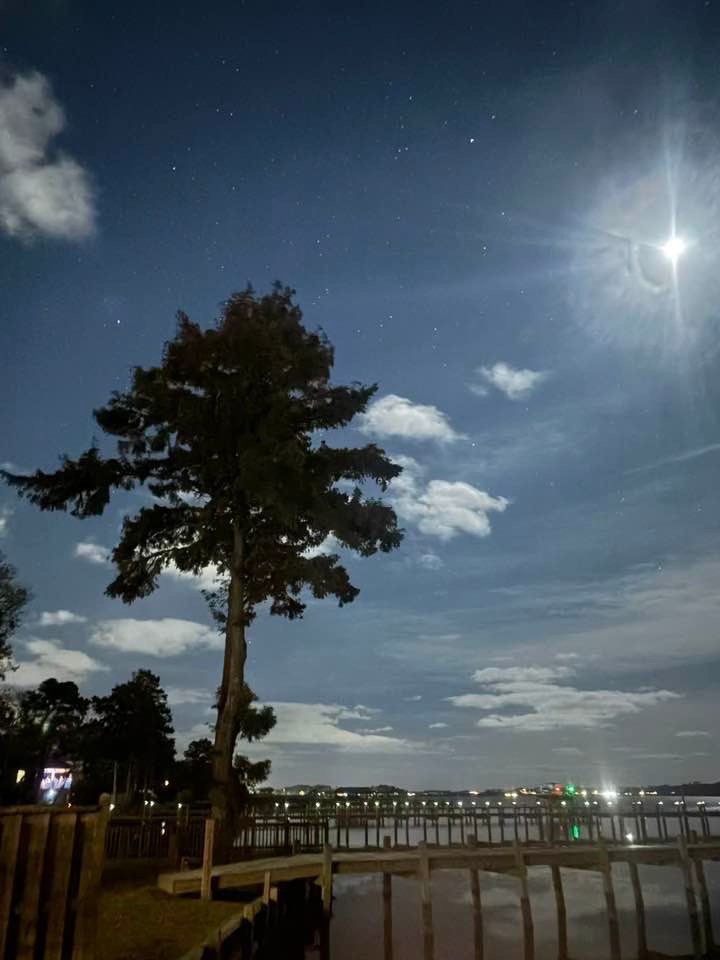
Long Night

The Permanent Rule

Do you ever wonder why priests and pastors lift certain things up during worship? You’ve probably watched as the chalice, the paten, the bread, the offering plates, etc. are lifted up as words of blessing are spoken. Many of these traditions are hand-me-downs from ancient rituals observed by our desert fore-parents, who were sometimes following Levitical laws. We remember that the tribe of Levi were the ones who were the designated priests for the nation of Israel, so the book of Leviticus is chock-full of priestly knowledge and instruction.

In today’s passage, instructions are given for the observance of the Feast of Weeks, also known as the Pentecost. You will remember that it was this same festival that was being observed in Acts when the Holy Spirit came upon the disciples gathered there and empowered them to speak and understand each other’s languages. It is understood that the church began that day. The festival of Pentecost was so named as it fell 50 days after the Feast of the First Fruits. The other two festivals that were prescribed in this chapter are the Passover and the Feast of the Unleavened Bread.

Leviticus 23:15-21

15 You must count off seven weeks starting with the day after the Sabbath, the day you bring the bundle for the uplifted offering; these must be complete. 16 You will count off fifty days until the day after the seventh Sabbath. Then you must present a new grain offering to the Lord. 17 From wherever you live, you will bring two loaves of bread as an uplifted offering. These must be made of two-tenths of an ephah of choice flour, baked with leaven, as early produce  to the Lord. 

The precision with which these instructions were given seems almost daunting.

18 Along with the bread you must present seven flawless one-year-old lambs, one bull from the herd, and two rams. These will be an entirely burned offering to the Lord, along with their grain offerings and drink offerings, as a food gift of soothing smell to the Lord. 19 You must also offer one male goat as a purification offering and two one-year-old lambs as a communal sacrifice of well-being. 20 The priest will lift up the two sheep, along with the bread of the early produce, as an uplifted offering before the Lord. These will be holy to the Lord and will belong to the priest. 

The image of the priest lifting up two sheep is an impressive one. I have trouble lifting up two metal offering plates on Sundays … and that’s not because they are full! But imagine the power of this image to the worshippers. As we lift things up in worship, we are reminding ourselves of the One who provided those gifts in the first place. By lifting them up to heaven, we consecrate our gifts back to God, our Provider. So while we aren’t required to bring our goats, lambs, and sheep to the altar any longer (thank heavens) we are invited to lift up our hearts to the Lord at every holy occasion and give generously of our means..

21 On that very same day you must make a proclamation; it will be a holy occasion for you. You must not do any job-related work. This is a permanent rule wherever you live throughout your future generations.

Do you observe the Sabbath? Do you avoid work on that day? Is Sunday a holy occasion?

God deserves an offering of our hearts and minds at least one day a week. May we make that our permanent rule.

We Lift Up Our Hearts by Kitty Hawk United Methodist Church

Grow in Grace

Did your high school require you to study a foreign language? Mine did. I took four years of French with Madame Viola, a lovely, bubbly, cheerful teacher who loved the French language and its people. She was one of my favorite teachers, and in my junior year, eleven of us traveled with her to France for a week of full language immersion. It was an incredible experience, and one of my best friends from band was on the trip and was my roommate. She ended up becoming a French teacher herself.

We studied and practiced the language daily. In our fourth year, the class was quite small and so we were able to read novels in French together and really advance our skills. When I entered Penn State the following fall, I tested out of (and received credit for) the first two levels of college French, all thanks to our incredible high school experience.

Do you think I can speak much French today? Not a chance. Non, mon ami. Je ne parle pas Francais maitenant. And oui, I had to Google that in French to get it right. When I stopped studying and growing in my ability to speak French, my language skill diminished.

Our passage from 2 Peter today is a reminder that we need to be growing in our understanding and knowledge of God every day. He warned of the end times, when heaven and earth will pass away, and cautioned the people to make every effort to be found pure and faultless as they waited for the end.

2 Peter 3 (Common English Bible)

11 Since everything will be destroyed in this way, what sort of people ought you to be? You must live holy and godly lives, 12 waiting for and hastening the coming day of God. Because of that day, the heavens will be destroyed by fire and the elements will melt away in the flames. 13 But according to his promise we are waiting for a new heaven and a new earth, where righteousness is at home.

14 Therefore, dear friends, while you are waiting for these things to happen, make every effort to be found by him in peace—pure and faultless.15 Consider the patience of our Lord to be salvation, just as our dear friend and brother Paul wrote to you according to the wisdom given to him,16 speaking of these things in all his letters. Some of his remarks are hard to understand, and people who are ignorant and whose faith is weak twist them to their own destruction, just as they do the other scriptures.

I believe we are living in the times Peter wrote about in verse 16. God’s word is constantly being twisted by ignorance and a lack of Biblical scholarship. That is why it is imperative for us to be serious about our daily Bible study routines. Like learning a foreign language, it takes diligence, practice, and serious study to understand God’s Word.

17 Therefore, dear friends, since you have been warned in advance, be on guard so that you aren’t led off course into the error of sinful people, and lose your own safe position. 18 Instead, grow in the grace and knowledge of our Lord and savior Jesus Christ. To him belongs glory now and forever. Amen.

May our daily devotional work allow us to grow in grace together! Thank you for coming along on this journey with me.

Growing into Nana’s Shoes

Leave

The first week of July marks the departures and arrivals of itinerate pastors in The United Methodist Church. Many of our clergy sisters and brothers have left their familiar pulpit for a new one this week. This is how our system of pastoral appointments works, and while it is what clergy signed on for, it is extremely disruptive, disheartening, terrifying, and strangely wonderful all in the same moment. A minister friend of mine was packing her U-Haul this week and she wore a t-shirt that read, “War is hell, but moving is a close second.” We hear you, sister! We pray for all those uprooted pastor-families and the churches who will receive them.

Today’s passage is a reminder to those folks and to us as well that sometimes you have to leave in order to do God’s will. Abram became the “father of all nations” but only after he obeyed God and left everything that was comfortable to pursue an unknown destiny. It took a lot of faith, hope, and trust for him to uproot his entire household and leave his land. Eventually, he even left the name given to him at his birth and became Abraham. His name is still revered among Jews, Muslims, and Christians.

Genesis 12 (Common English Bible)

The Lord said to Abram, “Leave your land, your family, and your father’s household for the land that I will show you. I will make of you a great nation and will bless you. I will make your name respected, and you will be a blessing.

I will bless those who bless you,
    those who curse you I will curse;
        all the families of the earth
            will be blessed because of you.”

When Abram obediently left Haran for the land of Canaan, he set into motion a missionary seed that would bless “all the families of the earth.” Jesus was born of that same family lineage, and you and I can count ourselves as part of the many descendants of Abraham.

Galatians 3 (Common English Bible)

But when it saw ahead of time that God would make the Gentiles righteous on the basis of faith, scripture preached the gospel in advance to Abraham: All the Gentiles will be blessed in you. Therefore, those who believe are blessed together with Abraham who believed.

Do you remember the VBS song about Father Abraham?

“Father Abraham had many sons. Many sons had Father Abraham! I am one of them, and so are you. So let’s all praise the Lord!”

The challenge for us today is to consider what God is asking us to leave in order to follow our destiny. The many children of Abraham are promised a life of freedom in Christ. What do you need to leave in order to be free? Is an addiction blunting your joy? Are you so angry you can’t feel God’s hope? What bad habit or behavior is preventing you from entering God’s promised future?

Whatever it is, just leave it all behind. And then let’s all praise the Lord.

You Will be a Blessing by Mary Anne Mong