Oh Tannenbaum

Is your Christmas tree up yet? I bet for the majority of us it is. Decorating a Christmas tree is such a time of sweet nostalgia. We decorated our tree with the help of our older grandchildren, hanging each ornament up with the story of where it came from. I almost cried when my granddaughter showed me a little gold teapot with sparkling crystals and said it was her favorite one. I gave that to my tea-loving mother decades ago and inherited it back when she died. To see a fourth generation daughter appreciate it blessed me so much, and we had a long talk about her great-grandmother and what a wonderful woman she was.

Have you ever wondered about the history of the Christmas tree and what it symbolizes? Take a look at the first sentence of today’s lectionary passage from Isaiah.

Isaiah 11 (Common English Bible)

A shoot will grow up from the stump of Jesse;
    a branch will sprout from his roots.

Isaiah prophesies that a branch from Jesse’s roots will shoot up and receive the Lord’s spirit. Jesse was David’s father’s and of course Jesus was born of David’s lineage. So even back to the Old Testament we see Jesus’ birth associated with trees. We’ve been celebrating Christmas with trees for centuries.

I did some research and discovered that Christmas is a holiday especially suited to trees. Earl W. Count wrote a book called 4000 Years of Christmas (New York: Henry Schuman, 1948). Count reveals that using evergreens at Christmas was a medieval practice from Northern Europe. The green boughs served as devil-proof shields against all the evil forces of the universe, because evergreens refuse to die and never give up their green for the winter.

You probably didn’t realize that your humble Christmas tree is a devil-proof shield, did you? Unless you have a cat, in which case the devil-proofing function is null and void.

Count wrote: “Winter kills most of summer’s train but the greens remain steadfast. Where the greens are, it is not winter. They are the enemies of winter’s white death” (64-66).

According to our United Methodist Website, evergreens are understood as a symbol of the eternal coming to dwell among us as Word made flesh. They are a sign of life and growth overcoming and flourishing in the midst of the dead of winter, and also of the resurrection of Christ.  The symbolism of evergreens points to the unending life of the age to come when Christ returns, the dead are raised, and the righteous enter life in the new creation.

Isaiah goes on to describe the attributes of the impending messiah:

The Lord’s spirit will rest upon him,
    a spirit of wisdom and understanding,
    a spirit of planning and strength,
    a spirit of knowledge and fear of the Lord.
He will delight in fearing the Lord.
He won’t judge by appearances,
    nor decide by hearsay.
He will judge the needy with righteousness,
    and decide with equity for those who suffer in the land.
He will strike the violent with the rod of his mouth;
    by the breath of his lips he will kill the wicked.
Righteousness will be the belt around his hips,
    and faithfulness the belt around his waist.

When you admire your own Christmas tree over the next few weeks, ponder these things. We are called to be like Jesus: wise and understanding, strong in our faith, non-judgmental, impervious to gossip, and generous to the needy. We are the lovely branches of Christ. How can you live that out today?

10 On that day, the root of Jesse will stand as a signal to the peoples. The nations will seek him out, and his dwelling will be glorious.

May we stand as a signal to the people as well.
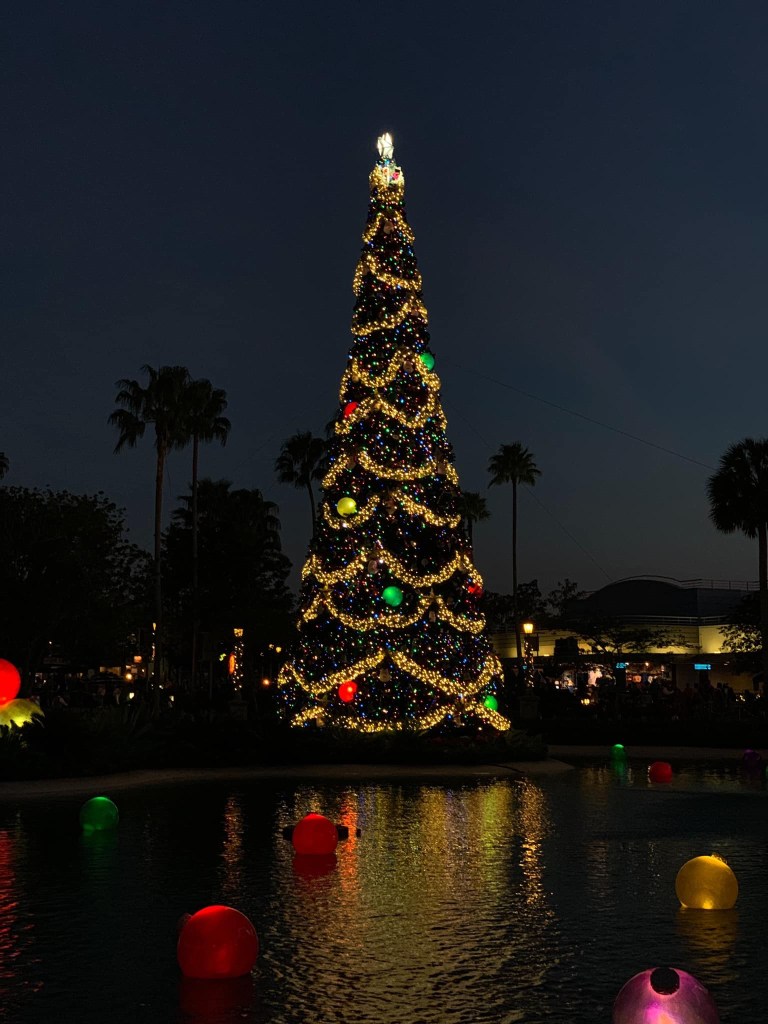
How Lovely Are Thy Branches

Bee Still

When it comes to gardening, I have a real “black thumb.” I don’t come by it honestly. My Dad was a terrific “green-thumb” gardener and I grew up eating fresh vegetables from his back garden. Plants die easily in my care, including silk ones. You think I’m kidding. I received a gift of a beautiful plant in a ceramic holder a few months ago. I put it on my coffee table and was so grateful that the giver had chosen an artificial plant for me. A few weeks later I returned from a long trip to discover that the leaves had turned black. I can’t even tell real plants from fake ones.

I have a raised planter at the side of my house that I was determined would hold some vegetable plants this year. I make this determination every year. Friends have built a new house on that side, and so my garden of weeds is making me a little self-conscious, as my new neighbors will be able to look down into it from their upper deck. I read that we shouldn’t tend our gardens until the temperature is above 50 degrees, so as to not disturb winter pollinators who take refuge in dormant gardens. The world’s bee population is being decimated by insecticides and climate change, and we all need to do our part.

When the temps rose, I went out to really study it and see about taking down all the weeds so I could plant some tomato plants in their place. Lo and behold, my “garden” of weedy wild flowers is full of bees. I have decided to just neaten it up by trimming the edges, and I may put a sign in the middle that says “Bee Garden.” Perhaps the kindest thing I can do is just let the bees have it…I don’t think I can kill them if I just leave them alone. If I can’t grow plants, maybe I can grow bees!

In our passage from the fifteenth chapter of John, we see the image of God as a Master Vineyard Keeper. He lovingly removes unproductive branches and trims the remaining ones to produce more fruit.

John 15 (Common English Bible)

15 “I am the true vine, and my Father is the vineyard keeper. He removes any of my branches that don’t produce fruit, and he trims any branch that produces fruit so that it will produce even more fruit. You are already trimmed because of the word I have spoken to you. 

People-branches are trimmed by the word of God. When we read scripture and allow it to take root in our lives, our behavior changes accordingly. We stop doing unproductive things and engage in activities that grow our faith and pollinate the world with God’s message.

Remain in me, and I will remain in you. A branch can’t produce fruit by itself, but must remain in the vine. Likewise, you can’t produce fruit unless you remain in me. I am the vine; you are the branches. If you remain in me and I in you, then you will produce much fruit. Without me, you can’t do anything. 

John reminds us that apart from God, we can’t do anything. Did you get that? Apart from God, you can’t do anything. I know people who are very proud of their self-reliance, as though everything they have achieved and everything they possess is by their own hand. Yes, hard work and perseverance are part of success, but apart from God, we have nothing. God calls us to remain in him and he will cause us to produce much fruit.

If you don’t remain in me, you will be like a branch that is thrown out and dries up. Those branches are gathered up, thrown into a fire, and burned. If you remain in me and my words remain in you, ask for whatever you want and it will be done for you. My Father is glorified when you produce much fruit and in this way prove that you are my disciples.

Today is a good day to be humble and thank our Master Gardener for everything that he provides. Our true vine is our source of all things! Let us take root in his word. Thanks be to God.

Sound Roots and Branches by Lainie Reed