On the Basis of Grace

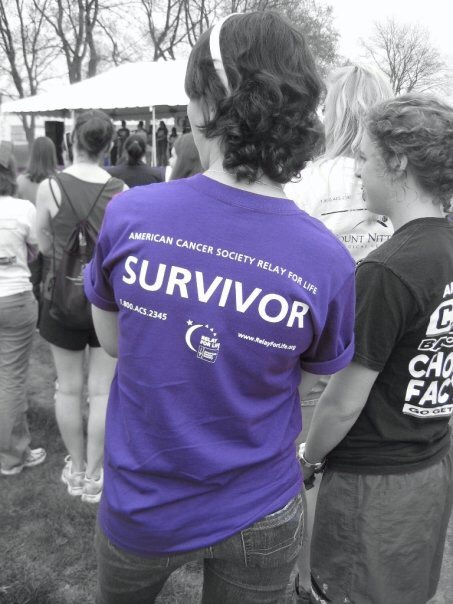
I had a conversation with a young woman last week who was unsettled by a sermon she had recently heard. The preacher recounted his cancer journey and made several statements that led the listeners to believe that he was cured because he was a preacher, and that if you pray hard enough, God will heal you. Thus, if you weren’t healed, it is because you didn’t pray hard enough. This rankled the woman, also a cancer survivor, because she doesn’t think God works that way. She does not believe that God arbitrarily chooses to heal one and condemn another to die. She does not believe her healing came from any action on her part. Many prayers were offered during her treatment, but that is not why she was healed. She believes God healed her through grace and good medicine. She believes that things just happen as they happen.

What do you think?

Understanding the concept of grace is fundamental to understanding the concept of God. Many faith practices emphasize righteousness by following a long set of rules, complying with the Law, or performing enough good deeds to “get in.” But we know that it is only by grace that we are saved.

Let’s take a look at Paul’s thoughts on righteousness, following the law, earning things on your own, and grace. This passage does not answer the question of how healing happens but helps us understand the basic issue of grace.

Romans 4 (Common English Bible)


4 So what are we going to say? Are we going to find that Abraham is our ancestor on the basis of genealogy? Because if Abraham was made righteous because of his actions, he would have had a reason to brag, but not in front of God. What does the scripture say? Abraham had faith in God, and it was credited to him as righteousness.  Workers’ salaries aren’t credited to them on the basis of an employer’s grace but rather on the basis of what they deserve. But faith is credited as righteousness to those who don’t work, because they have faith in God who makes the ungodly righteous.

Paul was clearly in the camp of those who believe that one can’t claim to be able to work for their righteousness. No, he contended, faith is the result of the righteousness credited to us by the gift of God. Read how Eugene Peterson described it in the Message:

Romans 4 (The Message)

4-5 If you’re a hard worker and do a good job, you deserve your pay; we don’t call your wages a gift. But if you see that the job is too big for you, that it’s something only God can do, and you trust him to do it—you could never do it for yourself no matter how hard and long you worked—well, that trusting-him-to-do-it is what gets you set right with God, by God. Sheer gift.

“Sheer gift.” In other words, you can’t earn it, you can’t work hard for it, you can’t be entitled to it based on your status or profession, you just have to be willing to receive it as a sheer gift. No strings attached, nothing to do on your part, money back guarantee with no questions asked gift. Our salvation and our inheritance as children of God are grace-based offerings that are freely given to all.

Romans 4 (Common English Bible) continued

13 The promise to Abraham and to his descendants, that he would inherit the world, didn’t come through the Law but through the righteousness that comes from faith. 14 If they inherit because of the Law, then faith has no effect and the promise has been canceled. 15 The Law brings about wrath. But when there isn’t any law, there isn’t any violation of the law. 

16 That’s why the inheritance comes through faith, so that it will be on the basis of God’s grace. In that way, the promise is secure for all of Abraham’s descendants, not just for those who are related by Law but also for those who are related by the faith of Abraham, who is the father of all of us. 17 As it is written: I have appointed you to be the father of many nations. So Abraham is our father in the eyes of God in whom he had faith, the God who gives life to the dead and calls things that don’t exist into existence.

You see, the preacher was wrong. He was the blessed recipient of something he couldn’t earn and didn’t deserve just because he is faithful to his calling. He is a walking example of the sheer gift of God’s unmerited favor and love.

May we all embrace this wonderful gift.

Sunrise Gift by Dustin Daniels

It Depends on Faith

When you are at your darkest moment and you open your eyes in the morning and all you see is crushing despair, how strong is your faith?

Friends who are saddled with the unrelenting sadness of failed marriages, family members involved in criminal activity, terminal diagnoses, and watching a mother waste away in hospice are currently experiencing this right now. Maybe you are, too.

In the bleakest of our circumstances, Paul advises us to look to God’s promises to counter-balance the hopelessness that we feel. God’s promises are real. God’s promises are steadfast. God’s promises are eternal.

The promise made to Abraham in the form of a covenant of God’s abiding presence with his descendants is one of the most comforting promises we can rely on in times of trouble. God promises to always be WITH us, having claimed us for himself. This promise is not based on any law, but based solely on God’s faithfulness to his people.

Romans 4 (New Revised Standard Version)

13 For the promise that he would inherit the world did not come to Abraham or to his descendants through the law but through the righteousness of faith. 14 If it is the adherents of the law who are to be the heirs, faith is null and the promise is void. 15 For the law brings wrath; but where there is no law, neither is there violation.

16 For this reason it depends on faith, in order that the promise may rest on grace and be guaranteed to all his descendants, not only to the adherents of the law but also to those who share the faith of Abraham (for he is the father of all of us, 17 as it is written, “I have made you the father of many nations”)—in the presence of the God in whom he believed, who gives life to the dead and calls into existence the things that do not exist. 

The promise rests on grace. Hallelujah! It doesn’t rest on performance on our part, it doesn’t rest on the law, but solely on the grace of God. We understand grace to be the unmerited favor of our Lord. You can’t earn it, so you can’t lose it, thanks be to God. God’s grace is guaranteed.

18 Hoping against hope, he believed that he would become “the father of many nations,” according to what was said, “So numerous shall your descendants be.” 19 He did not weaken in faith when he considered his own body, which was already as good as dead (for he was about a hundred years old), or when he considered the barrenness of Sarah’s womb. 

And so we must be like Abraham, and hope against hope. No matter how awful your circumstance is, grace can come in such a way that your head will spin. God often does the unexpected in answer to our fervent prayers and unwavering faith. Even old Abraham and geriatric Sarah conceived a child!

20 No distrust made him waver concerning the promise of God, but he grew strong in his faith as he gave glory to God, 21 being fully convinced that God was able to do what he had promised. 22 Therefore his faith “was reckoned to him as righteousness.” 23 Now the words, “it was reckoned to him,” were written not for his sake alone, 24 but for ours also. It will be reckoned to us who believe in him who raised Jesus our Lord from the dead, 25 who was handed over to death for our trespasses and was raised for our justification.

May we have the faith of Abraham as we encounter the terrible. May we have the righteousness of Sarah as we pray for the impossible. And may we be raised in Christ as the final proof of our hope that “with God, all things are possible.”

New Mercies I See by Michelle Robertson

The Trust Clause

We sat in a waiting room at the Mount Nittany hospital, waiting for the doctor to let us know that our daughter’s fibroid removal was complete and she was in Recovery. It was a relatively simple procedure, made a little more complicated due to the fact that the fibroid was just a tad too big to be removed laparoscopically, and so surgery was necessary. I had taken a week off of work to stay with her while she recovered from the incision, and planned to return home when she returned back to classes. Her Dad planned to return a few days after the surgery to go home to our other teenage daughter.

Then the words “cancerous tumor” came out of the doctor’s mouth, followed by “months of chemo” and “she’ll have to drop out of college indefinitely.” As my mind swirled with this unexpected horror, I suddenly heard a voice in my ear saying, “It’s OK, Bets. I’ve got this. You and Sarah are going to go on a journey that will teach you many things about me.” The peace that passes all understanding came over me, and I felt equipped for what came next.

God had offered us a trust clause in that moment. An unbreakable contract, a promise that was iron-clad, and a guarantee that our daughter would not only survive, but thrive. We grew closer to each other as a family and to God in those months of cancer treatment, and we learned how to TRUST, even when the things that were right in front of us (extreme nausea, hair loss, weight loss, isolation, additional surgeries) suggested otherwise.

Today Sarah has beautiful long hair, an amazing husband, two degrees, and three kids. God blessed us in abundance.

Romans 4 (The Message)

16 This is why the fulfillment of God’s promise depends entirely on trusting God and his way, and then simply embracing him and what he does. God’s promise arrives as pure gift. That’s the only way everyone can be sure to get in on it, those who keep the religious traditions andthose who have never heard of them. For Abraham is father of us all. He is not our racial father—that’s reading the story backward. He is our faith father.

Not everyone gets to hear God speak words of reassurance in the moment of crisis. This is why developing a life of faith-based trust is so important.

In our scripture today, Paul is reminiscing about Abraham’s call to leave the unknown and settle his family in a land far away. In faith, Abraham agreed. With no evidence that it would turn out all right, he simply was obedient to the strange and disconcerting instruction. God spoke, and Abraham trusted. In doing so, he became the father of all nations, and was blessed to be a blessing.

Where is God calling you to trust him in the absence of any real evidence that doing so will work out well for you? Where is acting on faith rather than by guarantees the response he is looking for?

God’s promise comes as a gift. One promise we can all stand on is his promise to prosper us and not harm us, as he offers us a future with HOPE. (Jeremiah 29:11)

Whatever you are facing today, remember this: when we step out in faith, we never step out alone. Thanks be to God.

Survivor! by Sarah Haas Callahan