Party Hats

A year ago my husband and I scheduled a trip that fell on my dog’s birthday. Not that she knew, mind you, as she can’t read a calendar, but I felt a little sad when I realized that we wouldn’t be home to wish her a happy 15th birthday. Fifteen is a big number for a large purebred dog who tips the scales at 100 pounds, so it is certainly a milestone to celebrate. When she was a puppy, the vet told us that her life expectancy was eight to twelve years, so we know we are living on blessed time.

Her dog sitter Teresa is her best friend. She brings Georgia’s second best friend when she comes to take care of her. He is a little mixed breed named Teddy, and he weighs about five pounds. I am always worried that Georgia will inadvertently sit on him, but so far they have managed a wonderful Mutt and Jeff friendship. Teresa has known Georgia all her life and was happy to learn that she would be staying in the house over Georgia’s birthday.

Imagine my surprise and delight when I began to receive birthday party pictures on the night of her birthday. But it was not just any celebration: It was a full-blown party with all my neighborhood crowded around my dining room table wearing festive party hats and holding up birthday banners. The table itself was laden with birthday cake, snacks, colorful plates, matching napkins, cards, and presents. Georgia and Teddy were given special cupcake-shaped dog biscuits and a grand time was had by all. Teddy didn’t want his, so Georgia got two. I laughed myself silly as each picture revealed more and more of the celebration. I truly have the best neighbors, don’t I? And God has blessed me with the best friend and dog sitter that a girl could ask for. And no, you can’t have her phone number.

Today’s psalm is a celebration of joy. David was in Judah and reflected on the goodness and provision of God. You may be surprised to see that I am using The Message translation this morning, which I do not usually do for the Psalms. But my browser was open to The Message, and somehow the phrases “prime rib and gravy” and “free to run and play” made me think that if Georgia could write a psalm, this is what it would sound like.

Psalm 63 (The Message)

God—you’re my God!
    I can’t get enough of you!
I’ve worked up such hunger and thirst for God,
    traveling across dry and weary deserts.

2-4 So here I am in the place of worship, eyes open,
    drinking in your strength and glory.
In your generous love I am really living at last!
    My lips brim praises like fountains.
I bless you every time I take a breath;
    My arms wave like banners of praise to you.

5-8 I eat my fill of prime rib and gravy;
    I smack my lips. It’s time to shout praises!
If I’m sleepless at midnight,
    I spend the hours in grateful reflection.
Because you’ve always stood up for me,
    I’m free to run and play.
I hold on to you for dear life,
    and you hold me steady as a post.

We’re mid-way through Lent and today is a good day to pause and count our blessings. I definitely count my dog sitter and neighbors as huge blessings in my life. What can you praise God for this morning? Can you bless him today? What praises would you offer, even in the midst of what you are going through?

Hold on to God for dear life and remember he holds you steady as a post. So take some time today to run and play!

Fit for a Queen by Teresa Holloway

Last, But Not Least

Today we will finish our look into Psalm 63. You’ll recall that King David wrote this in a wilderness of despair, as he was fleeing from his son’s attempted coup. In this bleak situation, he sought God and was able to praise him despite his situation. Perhaps it was easier for David to do this because he had come to know God’s lovingkindness first hand:

Psalm 63 (Common English Bible)

Because Your lovingkindness is better than life,
My lips shall praise You.
Thus I will bless You while I live;
I will lift up my hands in Your name.
My soul shall be satisfied as with marrow and fatness,
And my mouth shall praise You with joyful lips.

The Hebrew word for lovingkindness in this passage is hesed. Hesed is one of the most fundamental characteristics of God, consistent with what we know about His covenantal nature. Hesed is “wrapping up in itself all the positive attributes of God: love, covenant faithfulness, mercy, grace, kindness, loyalty–in short, acts of devotion and loving-kindness that go beyond the requirements of duty,” elaborates Bible scholar Darrell L. Bock.

Throughout the Hebrew Bible, we see hesed translated in a number of different ways; steadfast love, mercy, kindness, and goodness. While these synonyms develop our understanding, they only just skim the surface of this multifaceted, rich word. It isn’t a romantic kind of love: indeed it is love in action, love given to the undeserving, love that is loyal to the point that it will never leave you. 

David learned about God’s deep well of hesed for him over the many trials and tribulations of his life. This “man after God’s own heart” pretty much broke all the 10 commandments during his lifetime, including adultery and murder, and yet could say in this moment that God’s hesed/lovingkindness is better than life itself, providing a feast of marrow and fat in the barren wilderness. 

Hesed was a mark of the early church. In the early times, there was a growing recognition of the uniqueness of the church in the general population because of the way Christians treated one another. Tertullian, who is called the Father of Western Theology, said, 

“It is our care for the helpless, our practice of lovingkindness, that brands us in the eyes of many of our opponents. ‘Look!’ they say. ‘How they love one another! Look how they are prepared to die for one another’ ”

It was the same reaction of the unbelieving Greek writer Lucian (a.d. 120–200) upon observing the warm fellowship of Christians: 

“It is incredible to see the fervor with which the people of that religion help each other in their wants. They spare nothing. Their first legislator [Jesus] has put it into their heads that they are brethren.”

I have a question for you this morning. Do you think that the church is still known for its extreme lovingkindness today? Do you think the secular world looks at us and can see how we help each other, sparing nothing, acting like brethren ready to die for one another? Or does the world see our in-fighting, our angry, accusing social media posts, and our schisms instead? Would they know we are Christians by our love today?

Church, this is a challenge to pick up the mantle of lovingkindness that David was writing about. We have received the greatest gift of God’s lovingkindness in the form of Jesus, who poured out hesed on the cross so that we might receive his love and his forgiveness of sins.

That is who we need to be to the world.

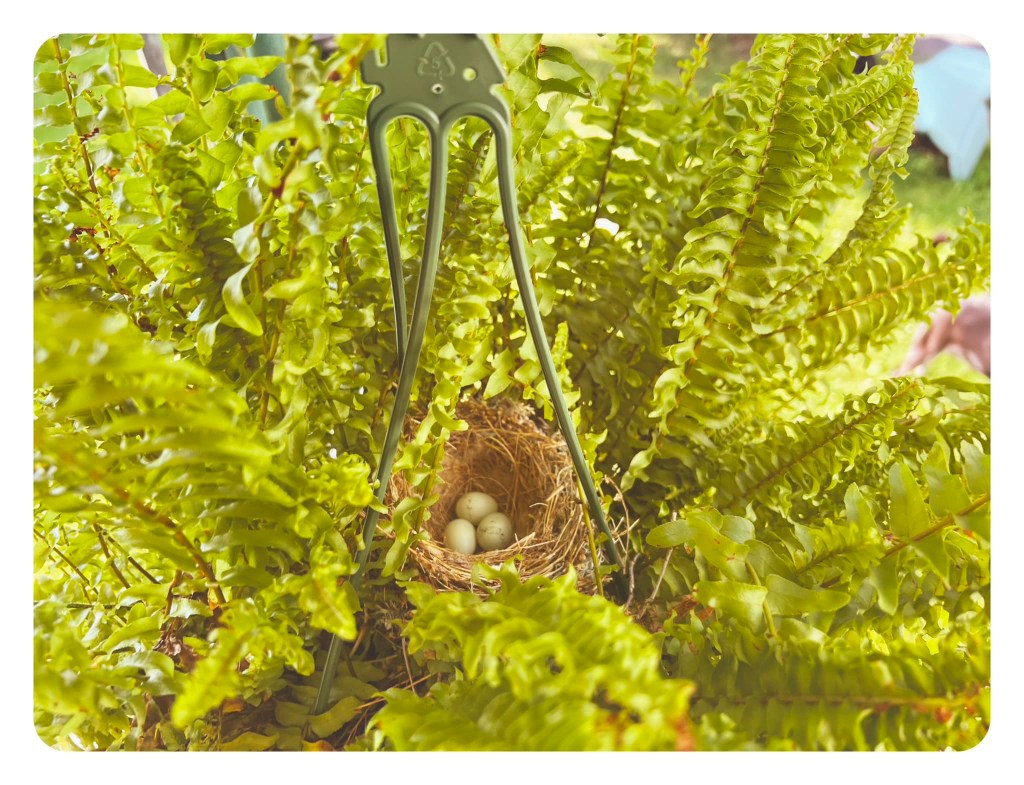
Ready to Hatch by Becca Ziegler

Next Things Next

Our last devotional focused on Psalm 63, a “psalm of David when he was in the wilderness of Judah.” Scholars estimate that David wrote about 73 psalms, so in addition to his other gifts of shepherding, leading a country, slaying giants, and establishing Jerusalem as the center of religious authority in Israel, he also was quite a proliferate poet. This particular psalm is striking in that it was written after he had fled Jerusalem when his son Absalom organized a coup and tried to have him killed. David had been king of Israel for over 30 years at this point, but when Prince Absalom raised an army against him, he fled east from Jerusalem to the other side of the Jordan river and ended up in the arid desert.

This isn’t David’s first time in the wilderness. As a young shepherd boy, he would drive his flock in the spring to graze on the grass and flowers that grew there during the brief rainy season. It was in this wilderness period that David practiced his rock-slinging and his hunting skills. He also meditated on the beauty of God’s creation and practiced his poetry, penning such phrases in Psalm 23:

“the Lord is my Shepherd, I shall not want. He makes me lie down in green pastures he leads me beside the still waters.”

His second time in the wilderness was when crazy King Saul was trying to kill him. He found protection and solitude there, writing in Psalm 57: 

Be merciful to me, O God; be merciful to me,
    for in you my soul takes refuge;
in the shadow of your wings I will take refuge,
    until the destroying storms pass by.
I cry to God Most High,
    to God who fulfills his purpose for me.
He will send from heaven and save me;
    he will put to shame those who trample on me. 
God will send forth his steadfast love and his faithfulness.

So here he is on his third venture to the wilderness. He is totally cut off from the sanctuary in Jerusalem, where he longs to be. His need to worship makes his soul thirst and his flesh long for God’s presence in the sanctuary.  See verse 2:

Psalm 63 (Common English Bible)

O God, You are my God;
Early will I seek You;
My soul thirsts for You;
My flesh longs for You
In a dry and thirsty land
Where there is no water.

So I have looked for You in the sanctuary,
To see Your power and Your glory.

Because Your lovingkindness is better than life,
My lips shall praise You.
Thus I will bless You while I live;
I will lift up my hands in Your name.
My soul shall be satisfied as with marrow and fatness,
And my mouth shall praise You with joyful lips.

I have to say that when I read that verse, I was immediately reminded of how much we all longed for our sanctuaries during the pandemic. My church worshipped in a lot of weird places back then. Our first time worshipping over at an elementary school ball field parking lot was so hot, my cell phone stopped working and the live Facebook feed cut out. Then we moved over to the front lawn of our church and ladies wearing sandals discovered how many ant hills we have over there.

Probably my favorite non-sanctuary place was when the other pastor and I drove over to Island Farm on Roanoke Island, a working farm of horses, cows, and sheep. We filmed our Christmas Eve service there. I read a children’s story I had written for the service with the sheep gathered all around me, which was great until the handler worried that they were wandering out of the camera frame, so she threw some sheep food at my feet. Have you ever been rushed by 10 hungry sheep? On camera?? Boy was I longing for the Sanctuary on that day! And then there was the pre-dawn taping over in the creepy cemetery for the Easter Sunday service … suffice it to say, I missed the four walls of my church and I bet you missed your church, too. But those months taught us how to worship anywhere. David missed his sanctuary, and did you notice what he did? He immediately began to worship and praise exactly where he was.

This is something we all learn in the wilderness. Sometimes you experience a wilderness in your soul where joy and praise seem impossible. Some of you are in a wilderness right now. It may be a wilderness of confusion. It may be a wilderness of addiction. It may be a wilderness of extreme disappointment, physical ailments, loss of hope … we’ve all been in that dry desert at one point in our lives. But like David, you have to learn how to worship and praise exactly where you are.

I talked with a relative this week who is in a desert like this. Her 88-year-old parents are both suddenly failing. For months now she has been running from one hospital to another, from nursing home to hospice, and battling red tape and Medicare systems that offer no help. She is in a desert of despair. 

I spoke with one of my daughter’s friends who is struggling with a recent miscarriage and a life-long estrangement from her mother. She has no mother to turn to as she deals with her loss. She is in a desert of loneliness.

A former church member got in touch with me recently to seek advice about her crumbling marriage. Her husband struggles with an addiction to pornography that has completely eroded their intimacy. She is in a desert of mis-trust and insecurity.

David’s ability to worship in his desert is an inspiration and a challenge.

What is your wilderness today? Can you pause for a moment and seek God, even in the bleak dry place you are in?

Remember that God is even in your harshest moments. Just go find him.

Early I Will Seek Him by Faye Gardner

First Things First

I want to start today by taking a little survey. I am interested to know what the first thing is you do every morning. Not about multiple trips to the loo, but when you are finally up and about, what is the first thing you do?

I get coffee. My first act of the day is to tumble out of bed, stumble to the kitchen, pour myself a cup of ambition, then yawn and stretch and try to come alive. From that point I usually write for a few hours, walk the dog, go for a run, etc. but nothing happens until I have consumed that first cup of joe.

Apparently I am in good company. According to a survey done in January, over 73% of Americans drink coffee first thing in the morning. 51% purchase coffee from a coffee shop, 48% report that Starbucks coffee is their favorite brand, followed by Dunkin and Folgers. The survey also noted that 25% of people like to sip on espresso martinis, although maybe not first thing in the morning!! And weirdly, 16% of coffee drinkers prefer decaf, and for the life of me, I can’t figure out why. It’s like eating a reduced fat Oreo. Why?? Just why??

We’re talking about early morning habits this morning because today we are reading Psalm 63. David the poet-king clearly stated his early morning habit at the very beginning of this beautiful psalm. Early in the morning, David rises and seeks God:

Psalm 63 (NKJV) A Psalm of David when he was in the wilderness of Judah.

O God, You are my God;
Early will I seek You;
My soul thirsts for You;
My flesh longs for You
In a dry and thirsty land
Where there is no water.

So I have looked for You in the sanctuary,
To see Your power and Your glory.

Because Your lovingkindness is better than life,
My lips shall praise You.
Thus I will bless You while I live;
I will lift up my hands in Your name.
My soul shall be satisfied as with marrow and fatness,
And my mouth shall praise You with joyful lips.

When I remember You on my bed,
I meditate on You in the night watches.
Because You have been my help,
Therefore in the shadow of Your wings I will rejoice.
My soul follows close behind You;
Your right hand upholds me.

But those who seek my life, to destroy it,
Shall go into the lower parts of the earth.
10 They shall fall by the sword;
They shall be a portion for jackals.

11 But the king shall rejoice in God;
Everyone who swears by Him shall glory;
But the mouth of those who speak lies shall be stopped.

This reference to seeking God early in the morning has made Psalm 63 a daily morning reading in the Eastern Orthodox Church for centuries.

I want to ask you something. What would your day be like if you sought God first thing every morning? Do you think the day might take shape differently? And what if those 73% of Americans reached for the Word of God first thing every day instead of coffee? What if we thirsted and longed for God the same way we thirst and long for coffee? Do you think that would make a difference in how people behave? I do. Perhaps we could be like our Eastern Orthodox friends and get up every morning and read this psalm aloud to start our day.

We’ll unpack this psalm over the next two devotionals, but for now, go back and read this psalm out loud. Perhaps we could make a practice of reading it out loud every morning and see how it shapes our day.

Are you in?

Early Rising by Michelle Robertson