Next Things Next
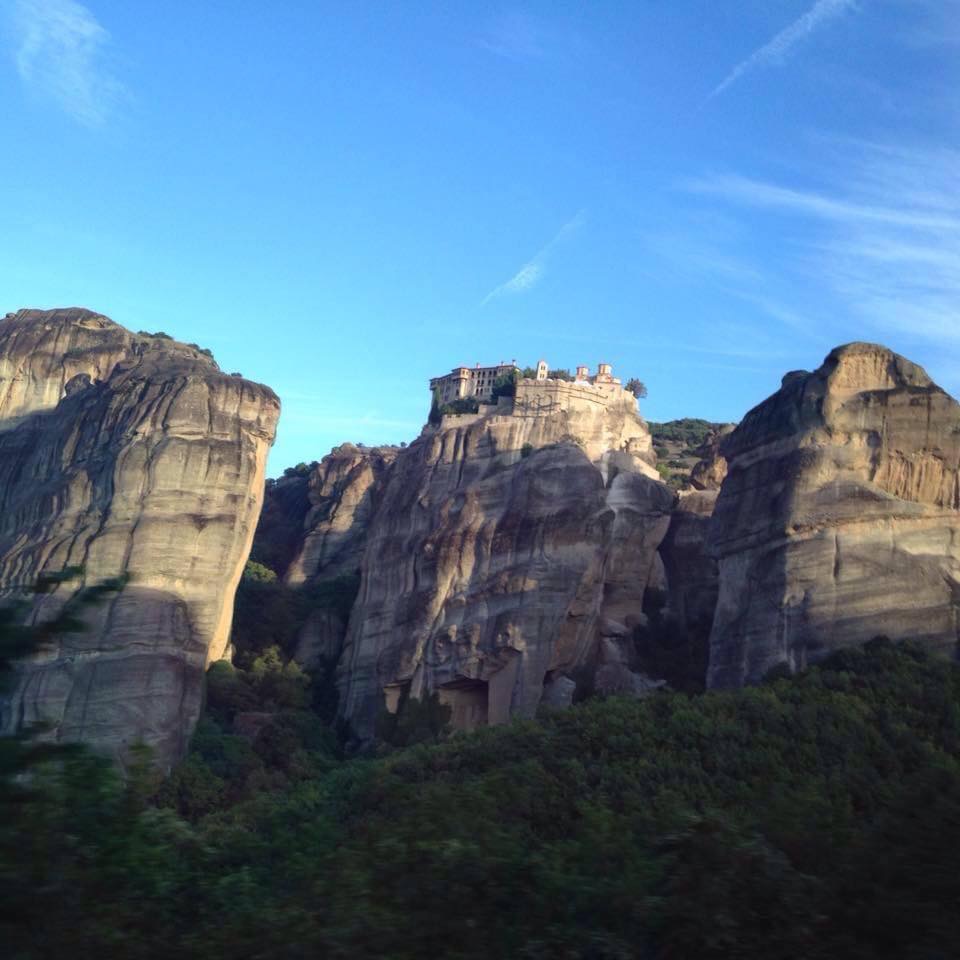
Our last devotional focused on Psalm 63, a “psalm of David when he was in the wilderness of Judah.” Scholars estimate that David wrote about 73 psalms, so in addition to his other gifts of shepherding, leading a country, slaying giants, and establishing Jerusalem as the center of religious authority in Israel, he also was quite a proliferate poet. This particular psalm is striking in that it was written after he had fled Jerusalem when his son Absalom organized a coup and tried to have him killed. David had been king of Israel for over 30 years at this point, but when Prince Absalom raised an army against him, he fled east from Jerusalem to the other side of the Jordan river and ended up in the arid desert.
This isn’t David’s first time in the wilderness. As a young shepherd boy, he would drive his flock in the spring to graze on the grass and flowers that grew there during the brief rainy season. It was in this wilderness period that David practiced his rock-slinging and his hunting skills. He also meditated on the beauty of God’s creation and practiced his poetry, penning such phrases in Psalm 23:
“the Lord is my Shepherd, I shall not want. He makes me lie down in green pastures he leads me beside the still waters.”
His second time in the wilderness was when crazy King Saul was trying to kill him. He found protection and solitude there, writing in Psalm 57:
Be merciful to me, O God; be merciful to me,
for in you my soul takes refuge;
in the shadow of your wings I will take refuge,
until the destroying storms pass by.
2 I cry to God Most High,
to God who fulfills his purpose for me.
3 He will send from heaven and save me;
he will put to shame those who trample on me.
God will send forth his steadfast love and his faithfulness.
So here he is on his third venture to the wilderness. He is totally cut off from the sanctuary in Jerusalem, where he longs to be. His need to worship makes his soul thirst and his flesh long for God’s presence in the sanctuary. See verse 2:
Psalm 63 (Common English Bible)
O God, You are my God;
Early will I seek You;
My soul thirsts for You;
My flesh longs for You
In a dry and thirsty land
Where there is no water.
2 So I have looked for You in the sanctuary,
To see Your power and Your glory.
3 Because Your lovingkindness is better than life,
My lips shall praise You.
4 Thus I will bless You while I live;
I will lift up my hands in Your name.
5 My soul shall be satisfied as with marrow and fatness,
And my mouth shall praise You with joyful lips.
I have to say that when I read that verse, I was immediately reminded of how much we all longed for our sanctuaries during the pandemic. My church worshipped in a lot of weird places back then. Our first time worshipping over at an elementary school ball field parking lot was so hot, my cell phone stopped working and the live Facebook feed cut out. Then we moved over to the front lawn of our church and ladies wearing sandals discovered how many ant hills we have over there.
Probably my favorite non-sanctuary place was when the other pastor and I drove over to Island Farm on Roanoke Island, a working farm of horses, cows, and sheep. We filmed our Christmas Eve service there. I read a children’s story I had written for the service with the sheep gathered all around me, which was great until the handler worried that they were wandering out of the camera frame, so she threw some sheep food at my feet. Have you ever been rushed by 10 hungry sheep? On camera?? Boy was I longing for the Sanctuary on that day! And then there was the pre-dawn taping over in the creepy cemetery for the Easter Sunday service … suffice it to say, I missed the four walls of my church and I bet you missed your church, too. But those months taught us how to worship anywhere. David missed his sanctuary, and did you notice what he did? He immediately began to worship and praise exactly where he was.
This is something we all learn in the wilderness. Sometimes you experience a wilderness in your soul where joy and praise seem impossible. Some of you are in a wilderness right now. It may be a wilderness of confusion. It may be a wilderness of addiction. It may be a wilderness of extreme disappointment, physical ailments, loss of hope … we’ve all been in that dry desert at one point in our lives. But like David, you have to learn how to worship and praise exactly where you are.
I talked with a relative this week who is in a desert like this. Her 88-year-old parents are both suddenly failing. For months now she has been running from one hospital to another, from nursing home to hospice, and battling red tape and Medicare systems that offer no help. She is in a desert of despair.
I spoke with one of my daughter’s friends who is struggling with a recent miscarriage and a life-long estrangement from her mother. She has no mother to turn to as she deals with her loss. She is in a desert of loneliness.
A former church member got in touch with me recently to seek advice about her crumbling marriage. Her husband struggles with an addiction to pornography that has completely eroded their intimacy. She is in a desert of mis-trust and insecurity.
David’s ability to worship in his desert is an inspiration and a challenge.
What is your wilderness today? Can you pause for a moment and seek God, even in the bleak dry place you are in?
Remember that God is even in your harshest moments. Just go find him.
Early I Will Seek Him by Faye Gardner

 At Water’s Edge