Persons of Peace

Many years ago I attended a clergy retreat where a speaker introduced us to the concept of a person of peace. Based in Luke 10, a person of peace is someone who welcomes and listens to others and is able to build bridges in a community. They are open and receptive to new ideas and can serve as a doorway to God. We were then asked to identify people who had personally served that function in our own lives, and I immediately thought of a clergy sister who invited me to join her small group the day after I moved into the area, opening the door to new friendships and support. This woman made room for every crazy idea or grievance I had about ministry. She was a deep listener, and I always felt peace in her presence.

The final section of Psalm 37 refers to “persons of peace.” According to David, the future belongs to them. Once again in this psalm, David referred to the righteous and blameless people who will enter in to a place of peace while the future of the wicked will be cut off. For the sixth and final time in this psalm, David states that the future of the wicked is not to be desired. So while we spend time envying the wealth and celebrity of the wicked in the world, we should realize that their fleeting abundance will be cut off like a tree felled by the ax of the Good Woodcutter.

The righteous man and woman are noted for their wise and just words. We realize that wisdom is not just an innate gift of God but also a result of the effort and work we put into knowing God and learning God’s Word. We can’t know wisdom until we learn it. We can’t understand justice until we study it. We can’t learn God’s instruction unless we intentionally read the Bible and engage in corporate study with others. So good for you! You’re actively becoming a person of peace by your reading today. Now be sure to open this to someone else.   

Psalm 37:30-40


The mouths of the righteous recite wisdom;
    their tongues discuss justice.
31 The Instruction of their God is in their hearts;
    they don’t miss a step.
32 The wicked, on the other hand, target the righteous,
    seeking to kill them.
33 But the Lord won’t leave the righteous
    to the power of the wicked,
    and won’t let the righteous
    be found guilty when they are judged.

34 Hope in the Lord and keep his way!
    He will lift you up so you can possess the land.
        When the wicked are eliminated,
        you will see it for yourself!
35 I myself have seen wicked powerful people,
    exalting themselves like a stately cedar.
36 But when I came back, they were gone!
    I looked all over for them,
    but they couldn’t be found!

37 Observe those who have integrity
    and watch those whose heart is right
    because the future belongs to persons of peace.
38 But wrongdoers will be destroyed all together;
    the future of the wicked will be cut short.
39 The salvation of the righteous comes from the Lord;
    he is their refuge in times of trouble.
40 The Lord will help them and rescue them—
    rescue them from the wicked—and he will save them
    because they have taken refuge in him.

David’s words make sense in a Christian context as well. People who are open avenues to the Gospel and invite others in will be instrumental in bringing peace and harmony to the world.  David invites us to hope in the Lord and keep God’s ways. When we do, peace is ours not just in the future but in the here and now. Who is your person of peace? Are you a person of peace in your community? 
Persons of Peace by Kathy Schumacher

When Little is Better

Have you ever locked yourself out of your house or is it just me? We were returning from a family outing and found that sure enough, all the doors to the house were locked and we couldn’t get in. All of a sudden our five-year-old grandson yelled, “Hey! I think I can go through the dog door!” At first all the adults tried to go through but each one of us got stuck. Finally we instructed him on how to open the front door and not stop to play on the way. Sure enough, his tiny little frame crawled perfectly though the flaps and we were in like flint. Sometimes little is better.

This is the underlying message for today’s passage. In ways, it reads like a recruitment poster for righteousness. Writing from the long-life experience of a man who was after God’s own heart, David assures readers that even though the righteous have little compared to the “overabundant wealth”(verse 16) of the evil, things will right themselves in the end.

Psalm 37 (Common English Bible)

Better is the little that the righteous have
    than the overabundant wealth of the wicked.
17 The arms of the wicked will be broken,
    but the Lord supports the righteous.
18 The Lord is intimately acquainted
    with the lives of the blameless;
    their heritage will last forever.

David sets up his argument in a series of opposites. The blameless receive an inheritance that lasts forever: The wicked die. The righteous are generous: The wicked borrow and don’t pay back. The blessed will possess the land: The cursed will be cut off.

19 They won’t be ashamed in troubling times,
    and in a period of famine they will eat their fill.
20 But the wicked will die,
    the Lord’s enemies will disappear—
    disappear like the beauty of a meadow—in smoke.
21 The wicked borrow and don’t pay it back, but the righteous are generous and giving.
22 Those blessed by God will possess the land,
    but those cursed by God will be cut off.

If that wasn’t enough to make you want to join the righteous, David offers a beautiful word picture in verse 24: “Though they trip up, they won’t be thrown down, because the Lord holds their hand”. Who among us doesn’t resonate with an image of a loving father holding the hand of a small child?

23 A person’s steps are made secure by the Lord
    when they delight in his way.
24 Though they trip up, they won’t be thrown down,
    because the Lord holds their hand.

You see, the overabundance of the wicked in this world is a fleeting, temporary illusion. Whatever they have now will not last. The “little” that comes from doing good is eternal and enough to sustain us though times of famine and strife. In the end, the righteous will live in the land forever.

25 I was young and now I’m old,
    but I have never seen the righteous left all alone,
    have never seen their children begging for bread.
26 They are always gracious and generous.
    Their children are a blessing.

David ends his recruitment speech with a clear directive: “Turn away from evil! Do good!”.

27 Turn away from evil! Do good!
    Then you will live in the land forever.
28 The Lord loves justice.
    He will never leave his faithful all alone.
    They are guarded forever,
        but the children of the wicked are eliminated.
29 The righteous will possess the land;
    they will live on it forever.

Friends, we are living in times when it seems like the wicked among us are living in luxury and power. It is easy to get discouraged to see them prosper while the poor and disenfranchised suffer. David speaks directly to us today. The Lord loves justice! Vengeance will be God’s. God will never leave the faithful alone. Of that we can be sure.

Would you rather have it all in this life or the next? How can we encourage one another to do good in the world? These are good things to ponder as we enter Holy Week.

Little is Better


Farming Faithfulness

Did you read Hamlet in high school? Many of us were exposed to this monumental Shakespearian “revenge tragedy” in our youth. Hamlet is a story of revenge gone wrong. Instructed by his father’s ghost to avenge his death, young Hamlet devises a way to kill his uncle for the murder. So Hamlet fakes madness, rejects his intended love interest Ophelia (who later drowns), stabs loyal attendant Polonius by accident behind a tapestry, and watches his mother die from poisoned wine intended for him. It ends with duel that kills both Laertes and Hamlet. The lesson of Hamlet is that revenge is a dish best not served. 

David’s Psalm 37 teaches the same thing. This wisdom psalm is reminiscent of Proverbs and follows a rough acrostic pattern where the first words of each line flow alphabetically from Alpha to Zed.

Psalm 37 (Common English Bible)

Don’t get upset over evildoers;
    don’t be jealous of those who do wrong,
    because they will fade fast, like grass;
    they will wither like green vegetables.

David tells us not to fret. We all recognize that fretting is harmful and unproductive, and yet when evildoers prevail, it is hard not to fume. David teaches us instead to “farm faithfulness” by waiting on God to avenge us. God will eliminate the evil doers who fade fast like grass on a hot summer day. We don’t need to take action, for God will avenge us.

Trust the Lord and do good;
    live in the land, and farm faithfulness.
Enjoy the Lord,
    and he will give what your heart asks.
Commit your way to the Lord!
    Trust him! He will act
    and will make your righteousness shine like the dawn,
    your justice like high noon.
Be still before the Lord,
    and wait[b] for him.
Don’t get upset when someone gets ahead—
    someone who invents evil schemes.

Verses 3 through 7 are a list of directives that will help us from being distracted by our desire for revenge and enable us to farm that faithfulness that David encouraged. Look at the first words in each verse. We are instructed to enjoy the Lord, commit our way to God, trust God, be still, and don’t get upset. The invitation to delight in God reminds us that even in prison, Paul and Sirus sang as they awaited justice. God intends to give us the desires of our heart if we commit our ways to him. 

Let go of anger and leave rage behind!
    Don’t get upset—it will only lead to evil.
Because evildoers will be eliminated,
    but those who hope in the Lord—
    they will possess the land.
10 In just a little while the wicked won’t exist!
    If you go looking around their place,
    they won’t be there.
11 But the weak will inherit the land;
    they will enjoy a surplus of peace.
12 The wicked plot against the righteous,
    grinding their teeth at them.
13 But my Lord just laughs at them
    because he knows that their day is coming.
14 The wicked draw their swords and bend their bows
    to bring down the weak and the needy,
    to slaughter those whose way is right.
15 But the sword of the wicked will enter their own hearts!
    Their bows will be broken!

Psalm 37 offers pointers on how to live in and live as the Kingdom of God. We can see correlations between David’s writing and Jesus’ Beatitudes found in Matthew 5, particularly in the revelation that the meek shall inherit the land/earth in Psalm 37:11 and Matthew 5:5. All of the spiritual reversals in the Beatitudes are reflected in this psalm’s contrasts between the wicked and the righteous. Our Lord knew his Scriptures and certainly Psalm 37 served as a foundation to the words he spoke in the Sermon on the Mount. Blessed are we when we trust God’s justice and wait patiently for God to act.

Do you trust God enough to be patient or do you need to get revenge? What would it take for you emulate meekness? Be still. God is on your side.

Still Water by Stacy Murphy

The Confessional

How many of you insist on trying to carry every single grocery bag from your car to your kitchen in one trip? I don’t know why we do this. I seem to think that it it somehow against the law to make multiple trips up and down the stairs, so I slide the handles of every single bag down my arms and stagger up 13 steps to deposit them on the kitchen counters and then collapse. Do you do that, too?

It is hard to carry heavy things. Isn’t it lovely when you find a way to set them down?

David knew all about carrying heavy things. His many sins weighed heavily upon him. If you run a checklist of the Ten Commandments, he broke almost every one. But David also knew the joy that comes with forgiveness after you lay that heavy sin at God’s feet and repent:

Psalm 37 (New Revised Standard Version Updated Edition)

Happy are those whose transgression is forgiven,
    whose sin is covered.
Happy are those to whom the Lord imputes no iniquity
    and in whose spirit there is no deceit.

While I kept silent, my body wasted away
    through my groaning all day long.
For day and night your hand was heavy upon me;
    my strength was dried up as by the heat of summer. Selah

I have admired the sacredness and promise of the confessional booth. While protestants do not follow a practice of confessing sins to a priest, the visual example of that ornate box while sitting in a worship service must bring comfort to Catholics during mass. It is a visible, tangible reminder of the nearness of God’s grace, and that every single confession is guaranteed to be received with forgiveness.

All you have to do is come.

Then I acknowledged my sin to you,
    and I did not hide my iniquity;
I said, “I will confess my transgressions to the Lord,”
    and you forgave the guilt of my sin. Selah

Therefore let all who are faithful
    offer prayer to you;
at a time of distress, the rush of mighty waters
    shall not reach them.

God is our hiding place, where we can take our sins into the sacredness of his presence and be assured of redemption. God hears us when we confess and delivers us from the harm that sin brings.

You are a hiding place for me;
    you preserve me from trouble;
    you surround me with glad cries of deliverance. Selah

Are you carrying a burden of sin that is just too heavy to keep lugging around? The “confessional booth” of God’s heart is always open. Just come.

Hyde Park, London

Better News

Twice last week I had an unexpected phone call from a loved one. In both cases, my first thought was that something was terribly wrong. I answered with trepidation, not knowing what was about to come. Fortunately in both cases, the caller immediately let me know that they were not reporting death or disaster but rather calling with incredibly good news. One reported a miraculous remission of her cancer. That was the sweetest, most uplifting news I have had in a long time. The other reported that she was making arrangements to fly down to see me in a few weeks and would run the last 5 miles of a Half Marathon with me to help me “over the line.” If you run long distances, you know what a blessing that will be. Listening to my audible book will only take me so far!

It seems to me that there isn’t enough good news going around these days. The horrific wildfires in California, the uncertainty of a new administration poised to take over our country in a matter of days, the changes in social media that are happening right now, and even the price of eggs seem to dominate our daily experiences, conversations, and our minds. Let’s face it: January comes with its own special challenges. A women’s event where I am scheduled to speak was postponed due to snow. In Atlanta. Go figure!

David wrote a beautiful psalm about what to do when the bad things seem to be overwhelming and overshadowing the good things. He wrote this in his later years, after he had experienced a fair amount of wickedness and evil. Listen to his counsel today as you consider where to turn when the bad seems to be winning:

Psalm 37 (New International Version)

 Do not fret because of those who are evil
    or be envious of those who do wrong;
for like the grass they will soon wither,
    like green plants they will soon die away.

Trust in the Lord and do good;
    dwell in the land and enjoy safe pasture.
Take delight in the Lord,
    and he will give you the desires of your heart.

Commit your way to the Lord;
    trust in him and he will do this:
He will make your righteous reward shine like the dawn,
    your vindication like the noonday sun.

Be still before the Lord
    and wait patiently for him;
do not fret when people succeed in their ways,
    when they carry out their wicked schemes.

Refrain from anger and turn from wrath;
    do not fret—it leads only to evil.
For those who are evil will be destroyed,
    but those who hope in the Lord will inherit the land.

10 A little while, and the wicked will be no more;
    though you look for them, they will not be found.
11 But the meek will inherit the land
    and enjoy peace and prosperity.

12 The wicked plot against the righteous
    and gnash their teeth at them;
13 but the Lord laughs at the wicked,
    for he knows their day is coming.

14 The wicked draw the sword
    and bend the bow
to bring down the poor and needy,
    to slay those whose ways are upright.
15 But their swords will pierce their own hearts,
    and their bows will be broken.

16 Better the little that the righteous have
    than the wealth of many wicked;
17 for the power of the wicked will be broken,
    but the Lord upholds the righteous.

18 The blameless spend their days under the Lord’s care,
    and their inheritance will endure forever.
19 In times of disaster they will not wither;
    in days of famine they will enjoy plenty.

20 But the wicked will perish:
    Though the Lord’s enemies are like the flowers of the field,
    they will be consumed, they will go up in smoke.

21 The wicked borrow and do not repay,
    but the righteous give generously;
22 those the Lord blesses will inherit the land,
    but those he curses will be destroyed.

23 The Lord makes firm the steps
    of the one who delights in him;
24 though he may stumble, he will not fall,
    for the Lord upholds him with his hand.

Look again at the beginning of verses 1, 3, 7 and 8. Here is what David is saying:

Do not fret.

Trust in the Lord and do good.

Commit your way to the Lord.

Be still.

Refrain from anger.

Truly, this is the better way to deal with all the bad news! David was right.

Of course, my favorite verse is verse 23: “The Lord makes firm the steps of one who delights in him; though he may stumble, he will not fall.” Good news for this runner! And if I do stumble, now my friend will be there to catch me.

What did you hear today in this Scripture? Are you focusing too much on the bad news? Can you be a source of better news to somebody today?

Remember, the Lord upholds us all with his hand. May we reach out a hand to uphold someone else.

S N O W by Kathy Schumacher

Happy Are Those

Here is what not to do next time you are traveling. Do not put your heavy laptop in your checked baggage. I realize most of you know this. I struggle with the weight of my laptop in my carry-on, so on a recent flight I changed my routine and put it in my suitcase so I wouldn’t have to lug it around the airport. It was a direct flight … what could go wrong?

All was well until my checked bag decided to take a trip to Buffalo, N.Y. Unfortunately, I got off the plane in Norfolk, VA. Because of the lateness of the flight to Buffalo, my suitcase could not be returned to me for another day. Lesson learned.

It is hard to carry heavy things. Isn’t it lovely when you find a way to set them down?

David knew all about carrying heavy things. His many sins weighed heavily upon him. If you run a checklist of the Ten Commandments, he broke almost every one. But David also knew the joy that comes with forgiveness after you lay that heavy sin at God’s feet and repent:

Psalm 37 (New Revised Standard Version Updated Edition)

Happy are those whose transgression is forgiven,
    whose sin is covered.
Happy are those to whom the Lord imputes no iniquity
    and in whose spirit there is no deceit.

While I kept silent, my body wasted away
    through my groaning all day long.
For day and night your hand was heavy upon me;
    my strength was dried up as by the heat of summer. Selah

I have admired the sacredness of the confessional booth. While protestants do not follow a practice of confessing sins to a priest, the visual example of that ornate box while sitting in a worship service must bring comfort to Catholics during mass. It is a visible, tangible reminder of the nearness of forgiveness.

All you have to do is come.

Then I acknowledged my sin to you,
    and I did not hide my iniquity;
I said, “I will confess my transgressions to the Lord,”
    and you forgave the guilt of my sin. Selah

Therefore let all who are faithful
    offer prayer to you;
at a time of distress, the rush of mighty waters
    shall not reach them.

God is our hiding place, where we can take our sins into the sacredness of his presence and be assured of redemption. God hears us when we confess and delivers us from the harm that sin brings.

You are a hiding place for me;
    you preserve me from trouble;
    you surround me with glad cries of deliverance. Selah

Are you carrying a burden of sin that is just too heavy to keep lugging around? The “confessional booth” of God’s heart is always open.

Happy Are Those by Michelle Robertson

Breaking Up is Hard to Do

At some point in your life, you will endure a break-up. It is as inevitable as death and taxes. It might be a romantic interest, a friend, a co-worker, a family member, or even a spouse. We know the pain that ending a close relationship can bring. The classic rock song, ”Breaking Up is Hard to Do” speaks truth into that pain. A bad break-up can leave a scar that lasts a long time.

Breaking up with someone who has wronged you is even harder. It’s hard enough when a relationship has run its natural course, but when the other person betrays you, strays from the relationship, undermines you, or is downright evil in their dealings with you, that scar can be permanent.

Our Psalm today is a lovely reminder that when we have been left in the dust by someone who has done us wrong, we don’t need to fret over it. God will take care of us in that situation by taking care of the evildoer. Our job is to let go, “let God,” and commit our way toward the justice, righteousness, and healing that only God can offer:

Psalm 37 (Common English Bible)

Don’t get upset over evildoers;
    don’t be jealous of those who do wrong,
    because they will fade fast, like grass;
    they will wither like green vegetables.
Trust the Lord and do good;
    live in the land, and farm faithfulness.
Enjoy the Lord,
    and he will give what your heart asks.

I have a friend who is going through a terrible divorce. Another friend is struggling with a rebellious and sullen teenager. Another is dealing with an ex who is trying to change their custody agreement. All of these situations are hurtful. What can we do when people let us down so terribly? David suggests that we should do good and ”farm faithfulness.” I love that phrase. We should commit to God, trust him, and WAIT.

Commit your way to the Lord!
    Trust him! He will act
    and will make your righteousness shine like the dawn,
    your justice like high noon.
Be still before the Lord,
    and wait for him.
Don’t get upset when someone gets ahead—
    someone who invents evil schemes.

And in your waiting, look only at God. He will deliver you.

Let go of anger and leave rage behind!
    Don’t get upset—it will only lead to evil.
Because evildoers will be eliminated,
    but those who hope in the Lord—
    they will possess the land.
10 In just a little while the wicked won’t exist!
    If you go looking around their place,
    they won’t be there.

It is normal to feel weak in those times when someone is getting the better of you, especially when that person is acting from evil intentions while you are remaining steadfast in your righteousness. It can be tempting to be underhanded in your response, because feeling weak is so debilitating. But God calls us to a higher standard.

Remember that when you are weak, God is strong.

This battle is his.

11 But the weak will inherit the land;
    they will enjoy a surplus of peace.

May the peace of Christ surround you today as you watch what God is doing.

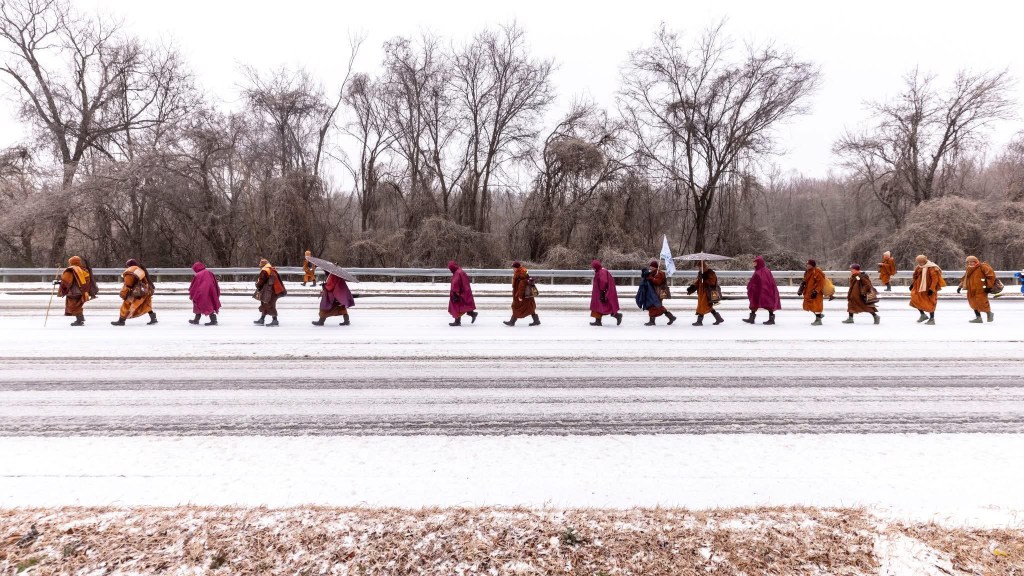
Watching and Waiting by Michelle Robertson