What Would You Do-ooo-oo?

In 1982, the makers of the iconic chocolate-covered vanilla ice cream treat called the Klondike bar came up with a clever advertising campaign. They went around the country and asked people what they would do to receive a Klondike bar. Folks responded by dancing, singing, jumping in a pool, and performing other acts of spontaneous fun for the prize of a Klondike bar. I remember one young boy claiming that he would sell his sister for a Klondike bar. Do you think some family counseling might be in order there? In any case, it was a catchy phrase that sticks with us.

As I read through today’s passage, I kept thinking that these three Kingdom parables answer the question of what Jesus would do for the Kingdom of God. It is easy to read these and assume that we are the ones being asked to perform some task in order to attain the Kingdom, but upon closer inspection, we see that Jesus is talking about himself and what he was willing to do and give up in order to preserve the Kingdom for us.

Rabbinical law did not appreciate the notion of  “finders, keepers” and so the field that yielded great treasure had to be purchased in order for the finder to keep the treasure. This alludes to the great purchase that was made by our Lord on the cross, as he paid the price of his life for our salvation. Jesus is also the purchaser of the pearl of great beauty who was willing to sell all that he had in order to possess this one great and lovely thing. In this instance, we understand how much Jesus treasures and values people. We are the pearl of great price, paid for in blood and breath.

Matthew 13 (Common English Bible)

44 “The kingdom of heaven is like a treasure that somebody hid in a field, which someone else found and covered up. Full of joy, the finder sold everything and bought that field.

45 “Again, the kingdom of heaven is like a merchant in search of fine pearls. 46 When he found one very precious pearl, he went and sold all that he owned and bought it.

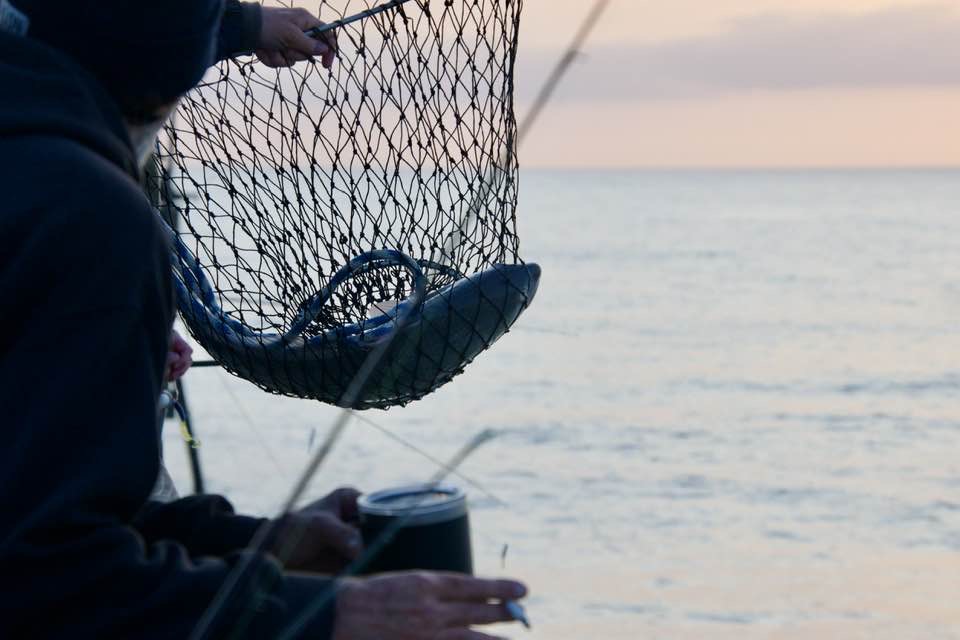
The last parable of the dragnet is a foretelling of the End Times, when angels will come and assist in the sorting of the fish, i.e. us, into the wicked and the just for the final judgment. All the fish are gathered, but not all the fish survive. The wicked will be sent into the furnace while the righteous will be put together into one community.

47 “Again, the kingdom of heaven is like a net that people threw into the lake and gathered all kinds of fish. 48 When it was full, they pulled it to the shore, where they sat down and put the good fish together into containers. But the bad fish they threw away.49 That’s the way it will be at the end of the present age. The angels will go out and separate the evil people from the righteous people, 50 and will throw the evil ones into a burning furnace. People there will be weeping and grinding their teeth.

Unlike the previous parables that warned of corruption spreading through the Kingdom, these three stories focus on how much Jesus treasures us, and points to what he was about to do for the world at the crucifixion. Of course nobody had a clue about that yet, although the disciples pretended to understand.

51 “Have you understood all these things?”Jesus asked.

They said to him, “Yes.”

52 Then he said to them, “Therefore, every legal expert who has been trained as a disciple for the kingdom of heaven is like the head of a household who brings old and new things out of their treasure chest.”

Do we understand? Can we possibly comprehend the extent to which God would go to save us? God’s only son died so that we might live. God went to the ultimate extreme to save his children.

What would you do to save yours? Would you sing and dance and jump through a hoop? Today is a good day to teach them about what Jesus did. They are the real treasure.
Good Fish by Michelle Robertson
Smallest of All

One of the many blessings of a church with a preschool and kids’ ministry is that people get to observe first-hand how small things grow. Parents experience this at home every time they have to replace shoes and clothes that fit last week. A toothless baby needs braces before you know it. Soon enough, that fixed and perfect smile is grinning back at you on her wedding day. Small things grow … sometimes too fast!

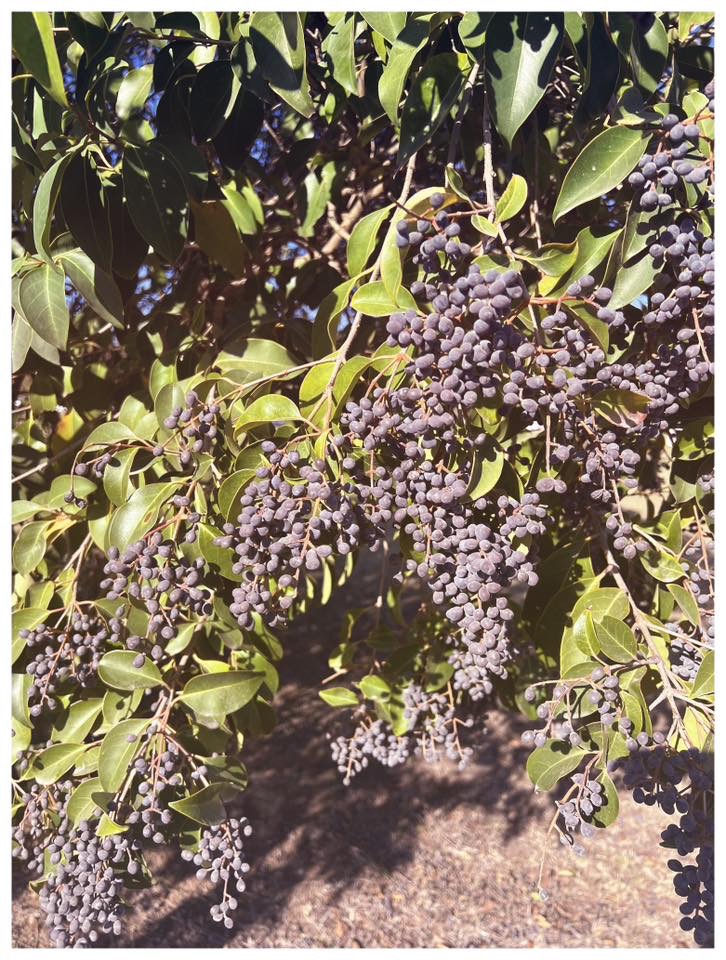
In our reading today, Jesus told the parable of the tiny mustard seed. Have you ever seen a mustard seed? They are actually about 1 to 2 millimeters in diameter, about half the size of a peppercorn. This teaching sits amidst other parables that talk about small things growing; a handful of seeds becomes food for the community, small weeds shoot up and threaten to take over a garden, and a mustard seed provides branches for bird’s nests. Even these parables themselves help our small faith grow.

Matthew 13:31-32

31 He told another parable to them: “The kingdom of heaven is like a mustard seed that someone took and planted in his field. 32 It’s the smallest of all seeds. But when it’s grown, it’s the largest of all vegetable plants. It becomes a tree so that the birds in the sky come and nest in its branches.”

A parable is a short and memorable story that is told to reveal a longer, more complicated truth. The word parable means “to throw alongside of.” Parables teach a single lesson with one point. Jesus’ parables revealed the kingdom of God to people who couldn’t comprehend the truth about it and protected him from his enemies. 

The mustard seed parable is a prophetic story that reveals the future of the church. From the very small beginnings, the Gospel of Christ would grow to be a movement that would be large enough to offer refuge and protection to the world in her branches. This kingdom on earth reveals the all-encompassing kingdom of heaven. The seed grows fantastically into a tree, not a bush as it should, indicating the supernatural scope of an exponential world-wide faith.

This is a fantastic reminder to us about our own faith. The applications here are endless. With a tiny grain of hope, life is renewed. With the smallest seed of faith, peace is restored. With just a little perseverance, a door is unlocked and you are set free. With one word gently spoken, anger is prevented. With one small act of kindness, a day is made. With one selfless move, an accident is avoided. With one smile, a stranger decides to hang on for another day. With one quick phone call, a lonely person is comforted. With one man’s actions on a cross, the world is saved.

Where is God calling you to be that one small thing? What little effort on your part could turn things around for someone else? You are the mustard seed! Go and plant peace, hope, and love in someone’s heart. You can make all the difference in someone’s day today.

Growing in Grace by Becca Ziegler

Never Put Off ‘Til Tomorrow

Here is a macabre question for you today. If you were to die in the next hour, what business would you leave undone? What words would you wish you had said? What regrets would you have as you draw that last breath? What is left to finish in the next sixty minutes?

The human spirit is a powerful thing. I have watched dying people hang on for days and weeks in order to finish something. I’ll never forget sitting at a bedside with a church member for weeks as she waited for her estranged daughter to come. Every day she asked for her, and every day the daughter didn’t show up. Finally the other daughter drove to another state to get her sister, and when she walked in, she and her mother finally reconciled. They held each other and cried, forgave all past grievances, and expressed their love. The mother died peacefully in minutes.

Sorry for the “Debby Downer” tone of this devotional! But the question is legit. What unfinished business is lying around in your soul?

Today’s passage is a reminder that we never know the day or the hour of our last breath. We never know the moment when this world and all of its horror will suddenly be replaced by the Kingdom of God. (Come, Lord Jesus, COME!) The point is to be ready.

Matthew 25  (Common English Bible)

“At that time the kingdom of heaven will be like ten young bridesmaids who took their lamps and went out to meet the groom. Now five of them were wise, and the other five were foolish. The foolish ones took their lamps but didn’t bring oil for them. But the wise ones took their lamps and also brought containers of oil.

“When the groom was late in coming, they all became drowsy and went to sleep. But at midnight there was a cry, ‘Look, the groom! Come out to meet him.’

“Then all those bridesmaids got up and prepared their lamps. But the foolish bridesmaids said to the wise ones, ‘Give us some of your oil, because our lamps have gone out.’

Jesus is not being coy in this parable. He is clearly delineating the wise people from the foolish ones. The foolish people think they have time to make amends, pursue righteousness, reconcile bitter divisions, and walk in obedience. They are wrong.

The wise ones live each day as if it were the last one on earth. They are ready to meet their maker.

“But the wise bridesmaids replied, ‘No, because if we share with you, there won’t be enough for our lamps and yours. We have a better idea. You go to those who sell oil and buy some for yourselves.’ 10 But while they were gone to buy oil, the groom came. Those who were ready went with him into the wedding. Then the door was shut.

11 “Later the other bridesmaids came and said, ‘Lord, lord, open the door for us.’

12 “But he replied, ‘I tell you the truth, I don’t know you.’

It was too late for the foolish bridesmaids, but it’s not too late for you. Today is a good day to reflect on your readiness. Do you need to repent? Should you ask God for forgiveness? Have you hurt someone and need to apologize? Are there unreconciled relationships that require your attention?

Don’t wait. Tomorrow may be too late.

13 “Therefore, keep alert, because you don’t know the day or the hour.

The Hour is Upon Us by Michelle Robertson

RSVP

Have you ever thrown a party and nobody came? Imagine the frustration of that. You send the invitations, bake the cake, buy the decorations, and put together the little party favors for every guest. The day of the party you clean the house, set the table, sweep the front steps, change your clothes, and….nada. Nobody comes. Nobody calls. Nobody even has the manners to at least try to come up with a reason not to attend.

This is the story Jesus told when asked about the Kingdom of God. His listeners were the chief priests and the leaders of the temple. They had questioned Jesus’ authority to speak as the Son of God. They had allowed money lenders to defile the steps of the temple on the holy days. They had been listening to Jesus for three years, but they weren’t picking up what he was laying down.

Now they were out to get him.

Matthew 22 (The Message)

22 1-3 Jesus responded by telling still more stories. “God’s kingdom,” he said, “is like a king who threw a wedding banquet for his son. He sent out servants to call in all the invited guests. And they wouldn’t come!

“He sent out another round of servants, instructing them to tell the guests, ‘Look, everything is on the table, the prime rib is ready for carving. Come to the feast!’

5-7 “They only shrugged their shoulders and went off, one to weed his garden, another to work in his shop. The rest, with nothing better to do, beat up on the messengers and then killed them. The king was outraged and sent his soldiers to destroy those thugs and level their city.

Jesus throws down the authority gauntlet. He warns the Jewish leadership that their continued refusal to receive the Son of God was not going to end well. They may succeed in ensnaring Jesus for a time, but the ultimate victory was going to be his at the resurrection. God would destroy not only their hierarchy but their precious temple and the city it stood in.

He warns them that God wasn’t playing.

8-10 “Then he told his servants, ‘We have a wedding banquet all prepared but no guests. The ones I invited weren’t up to it. Go out into the busiest intersections in town and invite anyone you find to the banquet.’ The servants went out on the streets and rounded up everyone they laid eyes on, good and bad, regardless. And so the banquet was on—every place filled.

And so the doors of the kingdom were flung wide open to the gentiles, the prostitutes, the tax collectors, the poor, the blind, the marginal….suddenly the invitation was sent out to everyone. The banquet was on and everybody had a seat. The Bread of Life welcomed everyone to come and feast at HIS table.

You are invited as well. Maybe this is your moment to accept Christ into your heart. Jesus invites you to come inside and put your feet under his table. The food has been laid out on beautiful platters and the glasses are filled with Living Water. The meal has been bought for you with the precious blood of the lamb. In Christ, you will never hunger or thirst again. You can come and eat and stay as long as you like…even for the rest of your life. Will you come and partake?

RSVP.

Come and You Will Never Thirst Again by Kathy Schumacher