Blessed and Broken

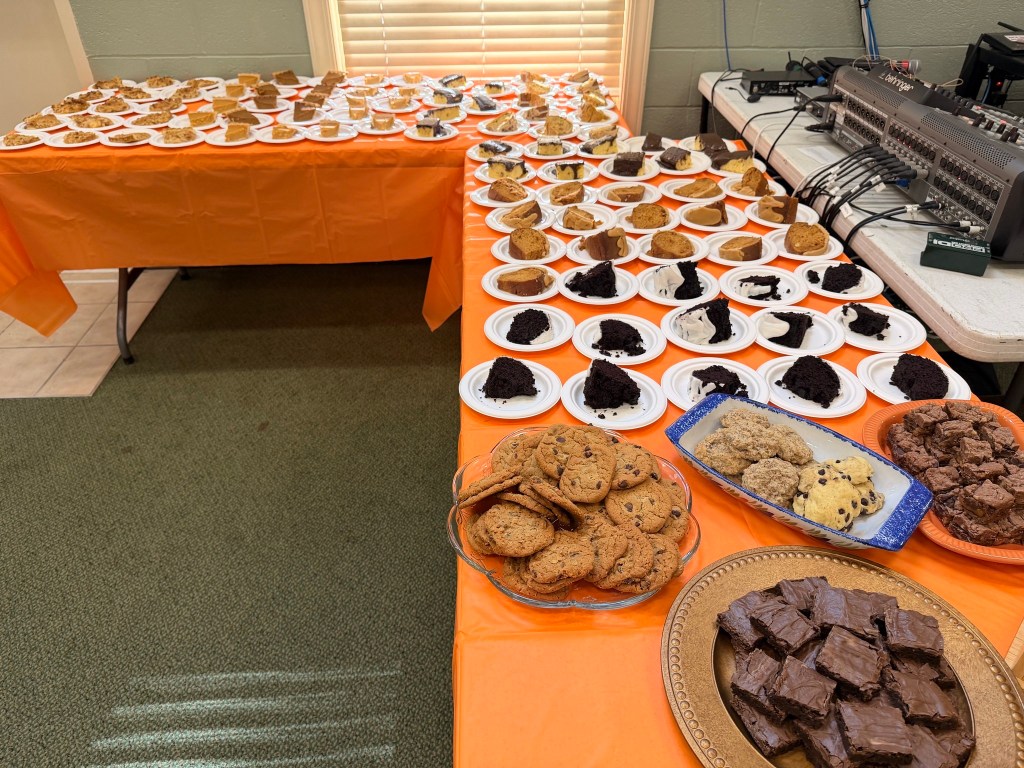
I believe that the love language of the United Methodist Church is the potluck supper. I know the cross and flame is our symbol, but I think it should be a casserole dish. Hear me out, now! When we have a potluck supper, people who haven’t been to church in ages suddenly appear. The lines are long and filled with chatty people catching up with one another. Plates are heaped high and hearts and bellies are filled. It is always guaranteed to be a love feast. As long as you’re not the last in line.

In our passage today, a multitude that exceeded 5,000 people sat and ate the miraculous meal of fish and bread. Certainly Jesus could have done this miracle by himself, but he used his disciples instead. There is a great lesson in that for us. It required them to demonstrate their faith in Jesus’ ability to take their meager resources and multiply them. Indeed, Jesus provided a meal out of resources they couldn’t even see because of their faith that he would.

John 14 (Common English Bible)

13 When Jesus heard about John, he withdrew in a boat to a deserted place by himself. When the crowds learned this, they followed him on foot from the cities. 14 When Jesus arrived and saw a large crowd, he had compassion for them and healed those who were sick. 15 That evening his disciples came and said to him, “This is an isolated place and it’s getting late. Send the crowds away so they can go into the villages and buy food for themselves.”

16 But Jesus said to them, “There’s no need to send them away. You give them something to eat.”

17 They replied, “We have nothing here except five loaves of bread and two fish.”

18 He said, “Bring them here to me.” 19 He ordered the crowds to sit down on the grass. He took the five loaves of bread and the two fish, looked up to heaven, blessed them and broke the loaves apart and gave them to his disciples. Then the disciples gave them to the crowds. 20 Everyone ate until they were full, and they filled twelve baskets with the leftovers. 21 About five thousand men plus women and children had eaten.

This miracle was an act that demonstrated Jesus’ authority over nature, just as walking on water and turning water into wine had done. It also was an act that demonstrated Jesus’ authority over human nature. He challenged his disciples to break open their reluctance, their hesitation, and their own desire to be fed so that the bread could be blessed and broken for others. And don’t forget the twelve baskets that were left over, demonstrating just how far our Lord would go to feed people.

People everywhere are hungry, but the world answers with empty words. Governments and politicians try to convince them that they really aren’t that hungry. The Haves hoard what they have while the Have-Nots starve. The truth is, if everyone shared God’s provision, no one would ever be hungry.

People are hungry for meaning, but popular culture responds with vapid and superficial sugar that distracts momentarily but leaves them starving. People are hungry for the truth, but the church answers with another new, shiny program and fog machine worship. We must be sure we are providing spiritual sustenance to a starving world in everything we do.   

We have resources we can’t even see. God can take them and bless and break them, if we are just willing to hand ourselves over and ask God to feed others with what we have. Part of that challenge is to only take what we really need for ourselves, ensuring that the last fellow in the potluck line has as full a plate as the first.

Is God calling you to trust what you have and give some away? Jesus can do miracles with that.
Kitty Hawk United Methodist Church

Re-Sourcing the Source

Crowdsourcing is a way of outsourcing a task or obtaining information for a project by using the input of a large group of people, typically via the internet. Social media, smartphone apps, and electronic surveys are some of the means by which interested parties can source work or gather information. People are invited to collectively contribute ideas, time, expertise, or funds to a common goal. For example, traffic tracking apps such as Waze use driver/rider generated reports to communicate issues on your journey. We use these types of crowd sourcing applications to “feed the need” of others.

A few years ago, Lays Potato Chips maximized the concept of crowdsourcing in its campaign “Do Us a Flavor,” where they asked people to submit ideas for potato chip flavors. The public then voted on the flavors they would like to try. The top four submissions became actual products. So new flavors such as Crispy Taco, Flamin’ Hot Dill Pickle, and Beer Cheese have been crowdsourced from inception to having the final selection available at your local Publix. Who came up with the idea of Flamin’ Hot Dill Pickle potato chips? I want some!

At the heart of crowdsourcing is the notion of people coming together to help each other. 

Crowdsourcing existed in the early church, but of course they didn’t call it that. Martin Luther was an original crowd-sourcer. His frustrations with the institutional Church led him to write his “Ninety-Five Theses: A Disputation on the Power of Indulgences” and nail them on the door of the church in Wittenberg, located in the heart of the city on the public square. People read it, printed it, translated it, and shared its ideas with others throughout Germany and the rest of Europe, and thus the Reformation began.

But Jesus, of course was the original crowd Source. He spent a good deal of his ministry among the crowds, finding ways to feed their needs. In this wonderful miracle known as the “Feeding of the Four Thousand,” we see him at his crowdsourcing best.

Matthew 15 (Common English Bible)

32 Now Jesus called his disciples and said, “I feel sorry for the crowd because they have been with me for three days and have nothing to eat. I don’t want to send them away hungry for fear they won’t have enough strength to travel.”

33 His disciples replied, “Where are we going to get enough food in this wilderness to satisfy such a big crowd?”

34 Jesus said, “How much bread do you have?”

They responded, “Seven loaves and a few fish.”

35 He told the crowd to sit on the ground. 36 He took the seven loaves of bread and the fish. After he gave thanks, he broke them into pieces and gave them to the disciples, and the disciples gave them to the crowds. 37 Everyone ate until they were full. The disciples collected seven baskets full of leftovers. 38 Four thousand men ate, plus women and children. 39 After dismissing the crowds, Jesus got into the boat and came to the region of Magadan.

Jesus sourced the miracle, and the crowd sourced the resource. What resource are you holding onto that would be better shared with the crowd? Where can you offer your expertise, your ideas, or your opinions in a way that constructively benefits others? Where is God calling you to take the Good News out into the public square and re-form the people?

Whenever you have served the least of these with whatever you have, you have served the Lord. And don’t forget to pick up the leftovers!

Sharing is Caring

Come and See

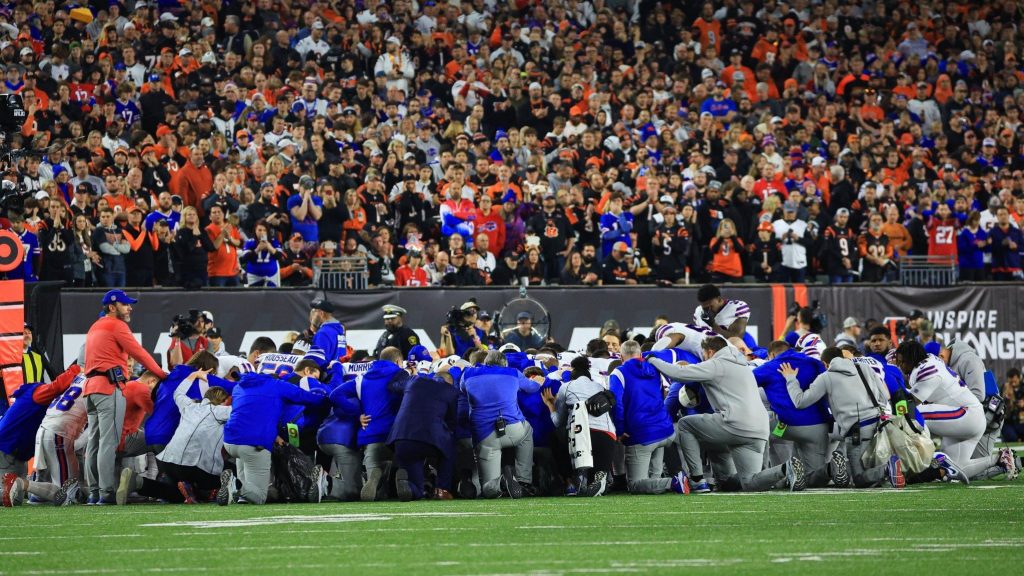
The images still haunt us. A healthy, young, 24-year-old athlete lay dead on the football field. Players who surrounded him were weeping. An ambulance drove across the grass as an athletic trainer performed CPR for nearly 10 minutes. An AED was used to shock the young man’s heart back into life. Oxygen was administered. When he was finally stabilized enough for transport, he was taken to the ICU of the nearest hospital, which happened to be only two miles away. Today, Damar Hamlin is recovering and making tremendous strides. He is breathing on his own and talking. Thanks be to God!

This morning I read a thread on Twitter from a hospital chaplain asking that people not label this as a “miracle.” His reasoning is that by labeling everyday medical procedures as miracles “we end up with people who deny its legitimacy.” A doctor retweeted it and gave a lengthy explanation of all the step-by-step medical science that was the reason for Hamlin’s recovery, calling each step a miracle. I have to say I’m with the doc on this one. The doctor saw what the chaplain couldn’t. God was with Hamlin every step of the way. Life after death is a miracle. I don’t care what avenues of medical science God uses … he is still the author of all life who performs miracles every day. Who’s with me on this?

Today’s lectionary passage is all about people seeing for themselves. Jesus invites us all to “come and see.”

John 1 (The Message)

29-31 The very next day John saw Jesus coming toward him and yelled out, “Here he is, God’s Passover Lamb! He forgives the sins of the world! This is the man I’ve been talking about, ‘the One who comes after me but is really ahead of me.’ I knew nothing about who he was—only this: that my task has been to get Israel ready to recognize him as the God-Revealer. That is why I came here baptizing with water, giving you a good bath and scrubbing sins from your life so you can get a fresh start with God.”

32-34 John clinched his witness with this: “I watched the Spirit, like a dove flying down out of the sky, making himself at home in him. I repeat, I know nothing about him except this: The One who authorized me to baptize with water told me, ‘The One on whom you see the Spirit come down and stay, this One will baptize with the Holy Spirit.’ That’s exactly what I saw happen, and I’m telling you, there’s no question about it: This is the Son of God.”

Come, See for Yourself

35-36 The next day John was back at his post with two disciples, who were watching. He looked up, saw Jesus walking nearby, and said, “Here he is, God’s Passover Lamb.”

37-38 The two disciples heard him and went after Jesus. Jesus looked over his shoulder and said to them, “What are you after?”

They said, “Rabbi” (which means “Teacher”), “where are you staying?”

39 He replied, “Come along and see for yourself.”

I believe miracles are happening all around us every day. From the profound to the ordinary, God is present. Here is an example from the mundane: my husband and I drove 12 hours on I-95 through four states a few days ago and never once slowed down. If you’ve ever driven that route, you know that was a miracle!

They came, saw where he was living, and ended up staying with him for the day. It was late afternoon when this happened.

40-42 Andrew, Simon Peter’s brother, was one of the two who heard John’s witness and followed Jesus. The first thing he did after finding where Jesus lived was find his own brother, Simon, telling him, “We’ve found the Messiah” (that is, “Christ”). He immediately led him to Jesus.

Jesus took one look up and said, “You’re John’s son, Simon? From now on your name is Cephas” (or Peter, which means “Rock”).

Finding the Messiah in the ordinary is miraculous. Receiving grace and compassion from a stranger is a miracle. God sending his son to forgive the sins of the world was the best miracle of all. You have the opportunity to come and see this Passover Lamb for yourself and then invite others.

Come and see!

The Power of Prayer photo by the New York Times via Facebook