Joseph Knew

Ann Weems is the author of a marvelous book of poetry called Kneeling in Bethlehem. It is one of my favorite Christmas reading resources. She looks at things from an angle that is unique and thoughtful. Of all the poems in her book, I like “Getting to the Front of the Stable” the best.

To set the stage for today’s devotional, take a look at your nativity set if you have one in the house. If not, remember or imagine ones you have seen in the past. Where is Joseph, the father of the son of God? Where stands this man who made the extraordinary decision to stay with Mary when the culture and the world said to divorce her and send her and the baby off to a life of shame? Most likely your Joseph is stuck at the back of the stable, upstaged by wise strangers, smelly shepherds, glory-blinding angels, and even barn animals.

Who put Joseph in the back of the stable? 
Who dressed him in brown, put a staff in his hand, 
and told him to stand at the back of the crèche, 
background for the magnificent light of the Madonna? 
(Ann Weems, “Getting to the Front of the Stable,” Kneeling in Bethlehem, pp. 52-53.)

We only get to talk about Joseph every three years in the lectionary cycle when we delve into Matthew’s account of the nativity. Read this with intention, as you won’t see it again for another 36 months:

Matthew 1:18-25 (Common English Bible)

18 This is how the birth of Jesus Christ took place. When Mary his mother was engaged to Joseph, before they were married, she became pregnant by the Holy Spirit. 19 Joseph her husband was a righteous man. Because he didn’t want to humiliate her, he decided to call off their engagement quietly. 20 As he was thinking about this, an angel from the Lord appeared to him in a dream and said, “Joseph son of David, don’t be afraid to take Mary as your wife, because the child she carries was conceived by the Holy Spirit.21 She will give birth to a son, and you will call him Jesus, because he will save his people from their sins.” 

Joseph had the right to outcast Mary and her unborn child. His decision to do so quietly speaks volumes of his integrity. The fact that he didn’t speaks to his faith in God.

One thing Joseph knew already was his own family lineage. Matthew gives us a neatly divided family tree from Joseph’s line, which includes women, of all things. Among those women listed were Rahab the prostitute and Bathsheba the adulteress. Perhaps Joseph knew that their inclusion in his family tree was evidence of God’s saving mercy and powerful forgiveness. Perhaps he knew that women hardly stood a chance in the patriarchal society that so easily cast them aside. Perhaps he knew God’s power and might in his own ordinary life and trusted that God would protect him and his little family if he just yielded this moment to the angel’s promise.

22 Now all of this took place so that what the Lord had spoken through the prophet would be fulfilled:

23 Look! A virgin will become pregnant and give birth to a son,
        And they will call him, Emmanuel.

(Emmanuel means “God with us.”)

24 When Joseph woke up, he did just as an angel from God commanded and took Mary as his wife. 25 But he didn’t have sexual relations with her until she gave birth to a son. Joseph called him Jesus.

One thing Joseph knew for sure was his Scriptures. So when the angel promised that this unborn child was the long-awaited messiah, he already had a vision of what that meant to the world. Was he startled to find himself at the center of the fulfillment of that prophecy? You betcha. But isn’t God always working in mysterious and startling ways?

It’s time to give Joseph the prominence he is due. Get up from your chair and move him to the front!

God-chosen, this man Joseph was faithful 
in spite of the gossip in Nazareth, 
in spite of the danger from Herod. 
This man, Joseph, listened to angels 
and it was he who named the Child 
Emmanuel. 

Is this a man to be stuck for centuries 
in the back of the stable? 
Actually, Joseph probably stood in the doorway 
guarding the mother and child 
or greeting shepherds or kings. 

When he wasn’t in the doorway, 
he was probably urging Mary to get some rest, 
gently covering her with his cloak, 
assuring her that he would watch the Child. 
Actually he probably picked the Child up in his arms 
and walked him in the night, 
patting him lovingly 
until he closed his eyes. 

This Christmas, let us give thanks to God 
for this man of incredible faith 
into whose care God placed the Christ Child. 
As a gesture of gratitude, 
let’s put Joseph in the front of the stable 
where he can guard and greet 
and cast an occasional glance 
at this Child 
who brought us life.

Joseph knew that his trust in God would be rewarded, reinforced, and protected. Do you trust God the same way? Maybe it’s time to yield.
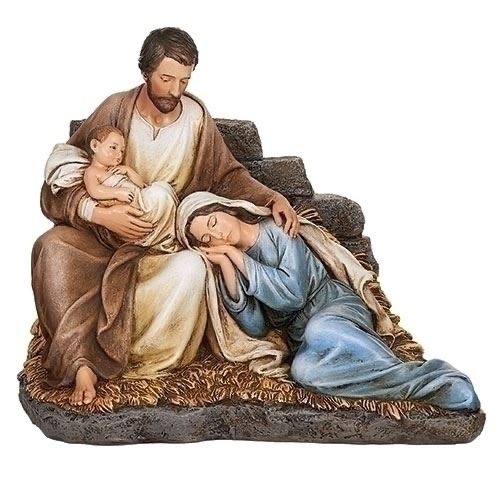
Let Mum Rest available at Catholic Supply
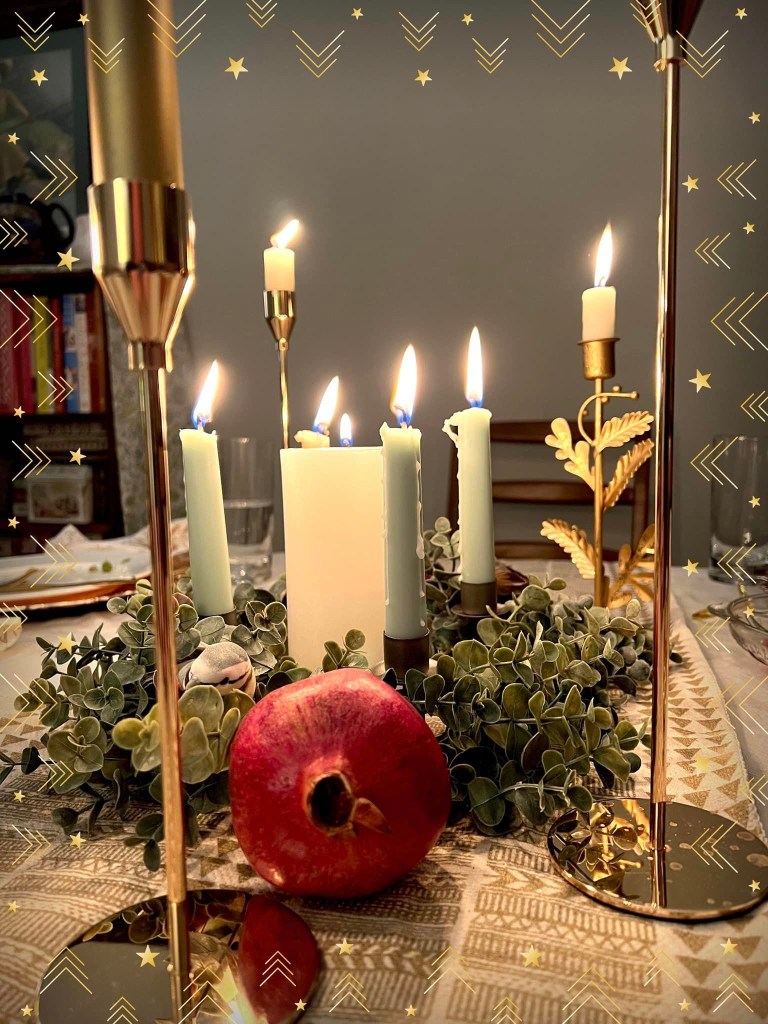

One More Candle

One more candle.

During the season of Advent, we mark off the Sundays by lighting candles in our churches that remind us of the hope, peace, joy, and love that Jesus came to bring. We have only one more to light before Christmas Eve. Are you ready?

Advent is a season of listening to the messengers. What have you heard so far? The prophets of the Old Testament wrote about a much-needed messiah who would come to save their people. Their prophesies set the stage for Jesus. Listen to Malachi’s words about a messenger who would come to announce the arrival of the savior:

Malachi 3:1-4  (Common English Bible)

Look, I am sending my messenger who will clear the path before me; suddenly the Lord whom you are seeking will come to his temple. The messenger of the covenant in whom you take delight is coming, says the Lord of heavenly forces. 2 Who can endure the day of his coming? Who can withstand his appearance. He is like the refiner’s fire or the cleaner’s soap.
He will sit as a refiner and a purifier of silver. He will purify the Levites and refine them like gold and silver. They will belong to the Lord, presenting a righteous offering. 4 The offering of Judah and Jerusalem will be pleasing to the Lord as in ancient days and in former years.

Malachi is the last book of the Old Testament and was written to address the religious, spiritual, and moral laxity that had overtaken the Israelites. The people had returned from their Babylonian exile seventy years prior, and the temple had been rebuilt. But they had fallen into laziness and cynicism about their relationship with God. Their disaffection led them to bring “polluted offerings” to the temple, breaking the covenant law about first fruits, which required that only the finest and unblemished offerings be presented. (Malachi 1:7). Malachi speaks directly to their powerless worship and warns that judgment is coming.

It was always the mission of the prophets to bring God’s message of God’s covenant relationship to the people and the expectations that came with it. God established a covenant through Abraham, reinforced it through Joseph, and defined it through Moses. The covenant promise continued through the major and minor prophets and always carried both warnings and hope. Their work involved warning against social injustice and the worldly powers that oppressed God’s people, but it also included words of hope about their future deliverance and a peace that would last. The prophetical writings breathed hope into humanity’s present condition, regardless of the century they were written. Malachi warned that in order for a righteous offering to be presented, a cleansing fire will occur first, beginning with the slack priests (the Levites) who should have been leading the people in true worship.

We see Malachi’s prophecy fulfilled in Jesus, who came and will come again to do the final and ultimate refining. Those who repent and believe in him will never perish but will become a righteous and pleasing offering to God through the unblemished First Fruit of the Son. (1 Corinthians 15:20).  Jesus is the final candle, bringing a light that cannot be extinguished by any darkness of the soul.

Only in this way can any of us endure the day of his coming.  Sound scary? Hang on … hope is also coming. John the Baptizer, the messenger chosen to clear the way for Jesus, shows us the way: repent, for the kingdom is at hand.

This call to repent sounds as though we have confused the season and are jumping to Lent. But the call to repentance is seasonless. Malachi reminds us that a refiner’s fire is coming and we need to be ready.

As we make ourselves ready in this last week, let us not neglect to make our hearts ready as well. “Suddenly the Lord whom you are seeking will come to his temple,” says Malachi.

As we light the final candle in our Advent wreath this Sunday, let us make the temples of our souls ready and waiting.

Advent Wreath by Becca Ziegler

Kingdom Come

When do your Christmas decorations go up? I feel as though people decorate earlier and earlier. In the past, it seemed as though decorations started to appear the weekend after Thanksgiving, beginning with outdoor decorations. A tree might go up somewhere around the middle of December, especially if you use a live tree with a short shelf life. There is nothing worse than having your tree die before Christmas!

But lately it seems that Christmas immediately follows Halloween. Take a look around your neighborhoods and see if that is true where you live. Perhaps it is an economy of effort, as you might as well take advantage of ladders and steps tools already being out for the removal of Halloween decor. And nothing ages faster than Halloween decor in November.

Advent will begin on the Sunday after Thanksgiving this year, in November. It seems as though even the lectionary calendar is rushing us toward Christmas.

But while we are still in October, let us dwell in the moment of realization that a messiah was needed before we get to the manger. Isaiah is probably my favorite book in the Old Testament, and this passage resonates with the hope and heartache of a nation in diaspora who longed for a messiah to come in order to be delivered:

Isaiah 11 (Common English Bible)

A shoot will grow up from the stump of Jesse;
    a branch will sprout from his roots.
The Lord’s spirit will rest upon him,
    a spirit of wisdom and understanding,
    a spirit of planning and strength,
    a spirit of knowledge and fear of the Lord.
He will delight in fearing the Lord.
He won’t judge by appearances,
    nor decide by hearsay.
He will judge the needy with righteousness,
    and decide with equity for those who suffer in the land.
He will strike the violent with the rod of his mouth;
    by the breath of his lips he will kill the wicked.
Righteousness will be the belt around his hips,
    and faithfulness the belt around his waist.

The humble nature of this messiah is proclaimed right off the bat. By stating that this “shoot” will spring from Jesse and not David reminds us of the humility of the messiah yet to come. David was a king, and Jesse was a plain farmer and shepherd. While both are part of the messiah’s lineage, to name Jesse as the stump is to indicate that this savior would not appear as royalty. Amazing!

The wolf will live with the lamb,
    and the leopard will lie down with the young goat;
    the calf and the young lion will feed[c] together,
    and a little child will lead them.
The cow and the bear will graze.
    Their young will lie down together,
    and a lion will eat straw like an ox.
A nursing child will play over the snake’s hole;
    toddlers will reach right over the serpent’s den.
They won’t harm or destroy anywhere on my holy mountain.
    The earth will surely be filled with the knowledge of the Lord,
    just as the water covers the sea.

Good news for the vegans! This seems to indicate a return to the beginning of creation, when all creatures lived in harmony and there were no carnivores on the earth. It wasn’t until Genesis 9: 2-3 that humans were given dominion over the earth’s creatures and meat was added to their diet. When the messiah comes to reign, even the lion will eat straw and the children will be safe around snakes.

10 On that day, the root of Jesse will stand as a signal to the peoples. The nations will seek him out, and his dwelling will be glorious.

“On that day.” We already know the end of this story as it bore fruition with the birth of Christ. We now anticipate Christ’s second coming, which will fulfill all the promises of peace and harmony that the world today so desperately needs. Let’s not jump ahead too quickly but allow the seasons to unfold slowly as we wait. Jesus is coming! Let us take time to get ready.

Harvest Moon at Sunrise by Stacy Murphy

Waiting Room Wisdom

The saying goes that “good things come to those who wait”. I remember a time in the Navy when that saying was replaced with “hurry up and wait.” Going to the Exchange? Hurry up. Then wait. Seeing a doc at the base clinic? Hurry up. Be on time for your appointment. Then wait. The deployment is almost over … hurry up and come home! Then wait.

There are many times in everyone’s life when hurry up and wait comes in to play: College applications are due by a certain date. Hurry up and fill them out! Then wait to see if you got in. Cancer tests are scheduled for this day; hurry up and get ready! Then wait for weeks for the results. Babies come when they want to. Pre-labor beings! Hurry up! Then wait forever.

Waiting is hard. Waiting is wearisome. Waiting slap wears you OUT.

The people of Israel were promised a Messiah. The Messiah would come to rule his kingdom on earth. He would take away their sins and would save them. Under his reign, justice would flow like the waters, and there would be peace on earth. But they were beginning to get tired of waiting:

Isaiah 40 (NIV)

28 Have you not known? Have you not heard?

The Lord is the everlasting God,

    the Creator of the ends of the earth.

He does not faint or grow weary;

    his understanding is unsearchable.

29 He gives power to the faint,

    and strengthens the powerless.

30 Even youths will faint and be weary,

    and the young will fall exhausted;

31 but those who wait for the Lord shall renew their strength,

    they shall mount up with wings like eagles,

they shall run and not be weary,

    they shall walk and not faint.

And so Israel hurried up. And waited. Centuries passed from the time of Isaiah to the advent of Jesus Christ. And then they had waited so long, many didn’t recognize him as the Messiah. But some did. Perhaps they were the ones who waited with open anticipation. As you wait, are you open to receiving God’s answer in a completely different way than you are expecting? Jesus was not what was expected, but good things came to those who waited for him.

Those who wait for the Lord shall renew their strength. Why? Because God does not faint or grow weary. God gives power to the faint. He strengthens the powerless. You will mount up with wings like eagles if you choose to wait for the Lord.

The challenge is to spend your time in the “waiting room” wisely. What else can you be doing while you wait? Can you be immersed in the word? Shoring up failing relationships? Actively spreading hope to others who are also waiting? Witnessing to God’s presence in the waiting room? Waiting rooms can be places that bear just as much fruit as delivery rooms if we keep our eyes open while we wait.

What are you waiting for right now? While we wait upon the Lord to deliver, we gain strength in knowing that God never grows weary. And so we take this time in our waiting room to grow in our love of God, of family, of faith, and in confidence that in every hurry-up and every slow-down moment, God is with us.

And I just can’t wait to see what he does.

Bay Drive Nutria

The Miraculous, Glorious Absurdity

Isaiah 9

2 The people walking in darkness

    have seen a great light;

on those living in the land of deep darkness

    a light has dawned.

3 You have enlarged the nation

    and increased their joy;

they rejoice before you

    as people rejoice at the harvest.

Of all the Old Testament prophets who pointed to the coming of the Messiah, I love the words of Isaiah the best. Did you know that Jesus quoted from Isaiah more that any other prophet? Jesus was the fulfillment of all of the prophecies, and Isaiah apparently says it best.

One of the Advent traditions that many churches observe is called the Festival of Lessons and Carols. It tells the entire story from start to finish of how the Messiah came, and why he was necessary. While it relies on several Isaiah passages, it doesn’t start there. Surprised?

It starts with Genesis. From the beginning of time, we needed a Savior. With the first sin in the garden, humanity necessitated a saving from ifself, as it were. We see throughout the entire Old Testament that the sacrificial system offered by God in order to redeem us failed again and again.

Then came Jesus, the fulfillment of every promise and the hope of every heart. Jesus is the end-all-be-all of sacrificial lambs. He took the sins of the world upon himself and we are forever reconciled with God through Jesus’ saving death that brings eternal life.

And thus the need for the incarnation. The incarnation is understood as “God becoming flesh.” God, in his omniscience, realized that we would need a Savior that we could relate to. He chose to come to earth in the form of an infant, so that he would walk, talk, suffer, feel anger, experience temptation, know hunger and fatigue, and be relatable.

John 1

14 And the Word became flesh and dwelt among us, and we have seen his glory, glory as of the only Son from the Father, full of grace and truth.

I think the whole notion is a glorious and miraculous absurdity, and one that demonstrates God’s love beyond a doubt. That the God who created the universe would lower himself to such a humble place blows my mind. Born in dirt, cradled in straw, homeless and cold, God came, and dwelt among us. Isn’t that absurd? 

This morning I recalled a wonderful young female pastor named Alice who preached at my Annual Conference many years ago. I sat in my seat, spellbound. I had not done much preaching up to that point, and I had modeled my style after my colleagues, who were all male. When I heard Alice preach, I was stunned. She preached like a girl. She was relatable, humorous, genuine, and authentic. I never preached like a man after that. Her example helped me preach from my own voice, and it changed me forever.

The reason God came as a baby was so that he could experience the world he created, and thus be an authentic guide, a relatable savior, and a credible witness. Jesus is the real deal. The stories of his life on earth are stories we can put ourselves directly into. We can feel what he felt, see what he saw, and walk where he walked. As absurd as it was, it was the only way to save us.

God became flesh and dwelt among us. This is the greatest gift you will receive on any Christmas. How will you respond? Where will you be a credible witness, and tell this story to someone who needs to hear it? How will you relate to Jesus today?

Go, and preach this in your own voice. Tell someone about the Messiah. Better yet, act it out in everything you say, think, and do. Be the light in the darkness of somebody’s Christmas, and rejoice.

Lights in the Darkness by Suzanne Wrenn