The Power of Broken Things

Have you ever heard the old saying that in order to make an omelette, you have to break a few eggs? People say this to comfort us when we are feeling broken by life. It suggests that in our breaking, we can become something new … a more refined version of ourselves, if you will. But breaking is hard work, and recovering is even harder. Good omelettes take time to perfect.

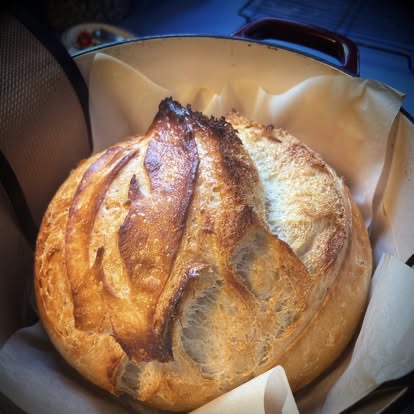
Now think about the broken bread that we receive at communion. There is such power in watching the loaf being torn in half! I bet you have received communion in many places and in many forms, from the casual retreat setting to the most formal of presentations in a church. I once took communion at Notre Dame cathedral in Paris, which may count as the most elaborate setting for communion. But probably the most profound communion experiences I have had were the day I was confirmed in my childhood church in Gibbsboro, N.J., the first time I served it as a newly ordained pastor at my church in Peachtree City, GA, and the communion settings of the Walk to Emmaus retreats. Communion is one of two sacraments in the United Methodist Church and truly is the place where God meets us right where we are. I hope you feel the power and the presence of the Holy Spirit every time you receive the body and blood of Christ, given for you.

Our passage today marks the moment when the Last Supper became the Lord’s Supper for all eternity. Read it and feast:

Mark 14 (New International Version)

12 On the first day of the Festival of Unleavened Bread, when it was customary to sacrifice the Passover lamb, Jesus’ disciples asked him, “Where do you want us to go and make preparations for you to eat the Passover?”

13 So he sent two of his disciples, telling them, “Go into the city, and a man carrying a jar of water will meet you. Follow him. 14 Say to the owner of the house he enters, ‘The Teacher asks: Where is my guest room, where I may eat the Passover with my disciples?’ 15 He will show you a large room upstairs, furnished and ready. Make preparations for us there.”

16 The disciples left, went into the city and found things just as Jesus had told them. So they prepared the Passover.

17 When evening came, Jesus arrived with the Twelve. 18 While they were reclining at the table eating, he said, “Truly I tell you, one of you will betray me—one who is eating with me.”

19 They were saddened, and one by one they said to him, “Surely you don’t mean me?”

20 “It is one of the Twelve,” he replied, “one who dips bread into the bowl with me. 21 The Son of Man will go just as it is written about him. But woe to that man who betrays the Son of Man! It would be better for him if he had not been born.”

22 While they were eating, Jesus took bread, and when he had given thanks, he broke it and gave it to his disciples, saying, “Take it; this is my body.”

23 Then he took a cup, and when he had given thanks, he gave it to them, and they all drank from it.

24 “This is my blood of the covenant, which is poured out for many,” he said to them. 25 “Truly I tell you, I will not drink again from the fruit of the vine until that day when I drink it new in the kingdom of God.”

26 When they had sung a hymn, they went out to the Mount of Olives.

Amidst the disciples’ confusion, Judas’ betrayal, the ritual remembrance of the Passover (when God delivered his children from death at the last plague in Egypt),and the gathering of friends for one last meal, Jesus abruptly broke the bread and raised the cup, instituting the new covenant and the Eucharist. When we gather in our churches tomorrow night for Maundy Thursday services, we will remember this exact moment. “Maundy” comes from the Latin word for “mandate, command” and refers to the new commandment that followed this evening’s actions, as recorded in John 13:34-35 34 “A new command I give you: Love one another. As I have loved you, so you must love one another. 35 By this everyone will know that you are my disciples, if you love one another.”

How well do we follow that new commandment? Do we live up to our communion invitation to participate in Christ by loving as he loved?

I hope you are able to attend a Maundy Thursday service. When you receive that broken body and shed blood, remember the new covenant.

Then go out and be the new covenant for the world. It is your mandate.

Take and Eat by Becca Ziegler

Mandated

I recently had a fun conversation with a friend from my old church about Christmas Eve services. We were a large church that became huge on Christmas Eve, and at one point we had to offer four services to accommodate all of the worshippers. Calculating the amount of people that I personally would serve at one of three communion stations, my friend estimated that I would need to say, “the body and blood of Christ given to you” several hundred times that night. At our pre-Christmas Eve dinner with church members at our favorite Mexican restaurant, somebody suggested that for the ones gathered there, I could save myself and simply say, “Here!” That got a good laugh. Unfortunately, my oldest daughter was seated at the end of the table and missed the conversation. So imagine her surprise (and displeasure!) when she came forward in Mom’s line and was met with, “Here!”

Think for a moment about the power of taking communion. I bet you have received it in many places and in many forms, from the casual retreat setting to the most formal of presentations in a church. I once took communion at Notre Dame cathedral in Paris, which may count as the most elaborate setting for communion. But probably the most profound communions I have received have been the day I was confirmed in my childhood church in Gibbsboro, N.J., the first time I served it as a newly ordained pastor at my church in Peachtree City, GA, and the communion settings of the Walk to Emmaus retreats. Communion is one of two sacraments in the United Methodist Church, and truly is the place were God meets us right where we are. I hope you feel the power and the presence of the Holy Spirit every time you receive the body and blood of Christ, given for you.

Our passage today marks the moment when the Last Supper became the Lord’s Supper for now until eternity. Read it and feast:

Mark 14 (New International Version)

12 On the first day of the Festival of Unleavened Bread, when it was customary to sacrifice the Passover lamb, Jesus’ disciples asked him, “Where do you want us to go and make preparations for you to eat the Passover?”

13 So he sent two of his disciples, telling them, “Go into the city, and a man carrying a jar of water will meet you. Follow him. 14 Say to the owner of the house he enters, ‘The Teacher asks: Where is my guest room, where I may eat the Passover with my disciples?’ 15 He will show you a large room upstairs, furnished and ready. Make preparations for us there.”

16 The disciples left, went into the city and found things just as Jesus had told them. So they prepared the Passover.

17 When evening came, Jesus arrived with the Twelve. 18 While they were reclining at the table eating, he said, “Truly I tell you, one of you will betray me—one who is eating with me.”

19 They were saddened, and one by one they said to him, “Surely you don’t mean me?”

20 “It is one of the Twelve,” he replied, “one who dips bread into the bowl with me. 21 The Son of Man will go just as it is written about him. But woe to that man who betrays the Son of Man! It would be better for him if he had not been born.”

22 While they were eating, Jesus took bread, and when he had given thanks, he broke it and gave it to his disciples, saying, “Take it; this is my body.”

23 Then he took a cup, and when he had given thanks, he gave it to them, and they all drank from it.

24 “This is my blood of the covenant, which is poured out for many,” he said to them. 25 “Truly I tell you, I will not drink again from the fruit of the vine until that day when I drink it new in the kingdom of God.”

26 When they had sung a hymn, they went out to the Mount of Olives.

Amidst the disciples’ confusion, Judas’ betrayal, the ritual remembrance of the Passover, (when God delivered his children from death at the last plague in Egypt) and the gathering of friends for one last meal, Jesus abruptly breaks the bread and raises the cup, instituting the new covenant and the Eucharist. When we gather in our churches tomorrow night for Maundy Thursday services, we will remember this exact moment. “Maundy” comes from the Latin word for “mandate, command” and refers to the new commandment that followed this evening’s actions, as recorded in John 13:34-35 34 “A new command I give you: Love one another. As I have loved you, so you must love one another. 35 By this everyone will know that you are my disciples, if you love one another.”

How well do we follow that new commandment? Do we live up to our communion invitation to participate in Christ by loving as he loved?

I hope you are able to attend a Maundy Thursday service. When you receive that broken body and shed blood, remember the new covenant. Then go out and be the new covenant for the world.
Come to the Table by Kitty Hawk United Methodist Church

Love to Die For

Ever wonder what your last thoughts will be just before you die? (A dark subject, I know…) I imagine our thoughts will be about our lives and our loves. We may have sadness over unfinished business, memories of happy times, or recall words we wished we had said, or not said…

They say that in the moments just before dying, your “life flashes before your eyes,” like a video stuck in rewind. How we live today will determine the content. Will it be a movie filled with joy, laughter, shared love, and warm memories? Or will it be filled with regret?

More importantly, what can you do today to change how the video will play?

It is interesting to see what thoughts Jesus had in the hours before his death. He knew that he was at the very end of his life on that last night as he sat among friends having supper:

John 13 (The Message)

 1-2 Just before the Passover Feast, Jesus knew that the time had come to leave this world to go to the Father. Having loved his dear companions, he continued to love them right to the end. It was suppertime. The Devil by now had Judas, son of Simon the Iscariot, firmly in his grip, all set for the betrayal.

“Having loved his dear companions, he continued to love them right to the end.” His last hours were filled with active love. It was this love that would see its greatest manifestation the next day on the cross. Jesus’ entire life was love in action.

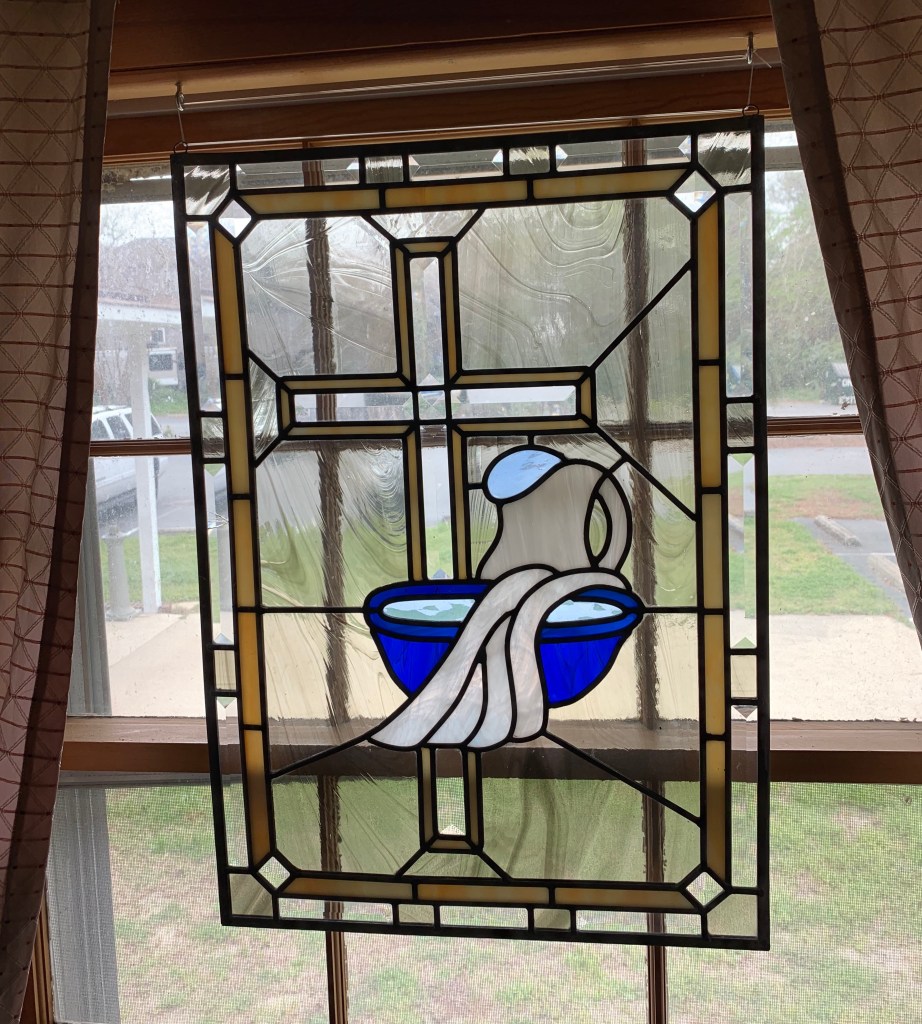
3-6 Jesus knew that the Father had put him in complete charge of everything, that he came from God and was on his way back to God. So he got up from the supper table, set aside his robe, and put on an apron. Then he poured water into a basin and began to wash the feet of the disciples, drying them with his apron. When he got to Simon Peter, Peter said, “Master, you wash my feet?”

Jesus’ love was manifested that night in a beautiful act of servanthood. It did not feel right to the disciples that the Master was going to get on his knees and wash their dirty feet. It almost felt like groveling.

Jesus answered, “You don’t understand now what I’m doing, but it will be clear enough to you later.”

Peter persisted, “You’re not going to wash my feet—ever!”

Peter’s objection was in part his way of acknowledging Jesus’ authority over them. Looking at the filth on his bare feet, he cringed at the thought of his teacher, rabbi, master, and friend even touching them. But Jesus was trying to leave them with a very important message: “when you serve one another, that is when you have served me.”

Jesus said, “If I don’t wash you, you can’t be part of what I’m doing.”

“Master!” said Peter. “Not only my feet, then. Wash my hands! Wash my head!”

We need to be like Peter and take the full immersion of Jesus’ washing. Only the blood of Jesus that flowed from the cross can truly make us clean. From our head to our toes, we need to allow him to cleanse us from the inside out.

Imagine if you were ask for complete cleansing, and commit to living a life of servanthood in his example. How different would your end-of-life video look?

It’s not too late. Jesus is waiting, with his basin and towel. On the night before he died, he thought not of himself, but of YOU.

Come to the water. Jesus is ready.

The Basin and the Towel