The Power of Broken Things

Have you ever heard the old saying that in order to make an omelette, you have to break a few eggs? People say this to comfort us when we are feeling broken by life. It suggests that in our breaking, we can become something new … a more refined version of ourselves, if you will. But breaking is hard work, and recovering is even harder. Good omelettes take time to perfect.

Now think about the broken bread that we receive at communion. There is such power in watching the loaf being torn in half! I bet you have received communion in many places and in many forms, from the casual retreat setting to the most formal of presentations in a church. I once took communion at Notre Dame cathedral in Paris, which may count as the most elaborate setting for communion. But probably the most profound communion experiences I have had were the day I was confirmed in my childhood church in Gibbsboro, N.J., the first time I served it as a newly ordained pastor at my church in Peachtree City, GA, and the communion settings of the Walk to Emmaus retreats. Communion is one of two sacraments in the United Methodist Church and truly is the place where God meets us right where we are. I hope you feel the power and the presence of the Holy Spirit every time you receive the body and blood of Christ, given for you.

Our passage today marks the moment when the Last Supper became the Lord’s Supper for all eternity. Read it and feast:

Mark 14 (New International Version)

12 On the first day of the Festival of Unleavened Bread, when it was customary to sacrifice the Passover lamb, Jesus’ disciples asked him, “Where do you want us to go and make preparations for you to eat the Passover?”

13 So he sent two of his disciples, telling them, “Go into the city, and a man carrying a jar of water will meet you. Follow him. 14 Say to the owner of the house he enters, ‘The Teacher asks: Where is my guest room, where I may eat the Passover with my disciples?’ 15 He will show you a large room upstairs, furnished and ready. Make preparations for us there.”

16 The disciples left, went into the city and found things just as Jesus had told them. So they prepared the Passover.

17 When evening came, Jesus arrived with the Twelve. 18 While they were reclining at the table eating, he said, “Truly I tell you, one of you will betray me—one who is eating with me.”

19 They were saddened, and one by one they said to him, “Surely you don’t mean me?”

20 “It is one of the Twelve,” he replied, “one who dips bread into the bowl with me. 21 The Son of Man will go just as it is written about him. But woe to that man who betrays the Son of Man! It would be better for him if he had not been born.”

22 While they were eating, Jesus took bread, and when he had given thanks, he broke it and gave it to his disciples, saying, “Take it; this is my body.”

23 Then he took a cup, and when he had given thanks, he gave it to them, and they all drank from it.

24 “This is my blood of the covenant, which is poured out for many,” he said to them. 25 “Truly I tell you, I will not drink again from the fruit of the vine until that day when I drink it new in the kingdom of God.”

26 When they had sung a hymn, they went out to the Mount of Olives.

Amidst the disciples’ confusion, Judas’ betrayal, the ritual remembrance of the Passover (when God delivered his children from death at the last plague in Egypt),and the gathering of friends for one last meal, Jesus abruptly broke the bread and raised the cup, instituting the new covenant and the Eucharist. When we gather in our churches tomorrow night for Maundy Thursday services, we will remember this exact moment. “Maundy” comes from the Latin word for “mandate, command” and refers to the new commandment that followed this evening’s actions, as recorded in John 13:34-35 34 “A new command I give you: Love one another. As I have loved you, so you must love one another. 35 By this everyone will know that you are my disciples, if you love one another.”

How well do we follow that new commandment? Do we live up to our communion invitation to participate in Christ by loving as he loved?

I hope you are able to attend a Maundy Thursday service. When you receive that broken body and shed blood, remember the new covenant.

Then go out and be the new covenant for the world. It is your mandate.

Take and Eat by Becca Ziegler

Mandated

I recently had a fun conversation with a friend from my old church about Christmas Eve services. We were a large church that became huge on Christmas Eve, and at one point we had to offer four services to accommodate all of the worshippers. Calculating the amount of people that I personally would serve at one of three communion stations, my friend estimated that I would need to say, “the body and blood of Christ given to you” several hundred times that night. At our pre-Christmas Eve dinner with church members at our favorite Mexican restaurant, somebody suggested that for the ones gathered there, I could save myself and simply say, “Here!” That got a good laugh. Unfortunately, my oldest daughter was seated at the end of the table and missed the conversation. So imagine her surprise (and displeasure!) when she came forward in Mom’s line and was met with, “Here!”

Think for a moment about the power of taking communion. I bet you have received it in many places and in many forms, from the casual retreat setting to the most formal of presentations in a church. I once took communion at Notre Dame cathedral in Paris, which may count as the most elaborate setting for communion. But probably the most profound communions I have received have been the day I was confirmed in my childhood church in Gibbsboro, N.J., the first time I served it as a newly ordained pastor at my church in Peachtree City, GA, and the communion settings of the Walk to Emmaus retreats. Communion is one of two sacraments in the United Methodist Church, and truly is the place were God meets us right where we are. I hope you feel the power and the presence of the Holy Spirit every time you receive the body and blood of Christ, given for you.

Our passage today marks the moment when the Last Supper became the Lord’s Supper for now until eternity. Read it and feast:

Mark 14 (New International Version)

12 On the first day of the Festival of Unleavened Bread, when it was customary to sacrifice the Passover lamb, Jesus’ disciples asked him, “Where do you want us to go and make preparations for you to eat the Passover?”

13 So he sent two of his disciples, telling them, “Go into the city, and a man carrying a jar of water will meet you. Follow him. 14 Say to the owner of the house he enters, ‘The Teacher asks: Where is my guest room, where I may eat the Passover with my disciples?’ 15 He will show you a large room upstairs, furnished and ready. Make preparations for us there.”

16 The disciples left, went into the city and found things just as Jesus had told them. So they prepared the Passover.

17 When evening came, Jesus arrived with the Twelve. 18 While they were reclining at the table eating, he said, “Truly I tell you, one of you will betray me—one who is eating with me.”

19 They were saddened, and one by one they said to him, “Surely you don’t mean me?”

20 “It is one of the Twelve,” he replied, “one who dips bread into the bowl with me. 21 The Son of Man will go just as it is written about him. But woe to that man who betrays the Son of Man! It would be better for him if he had not been born.”

22 While they were eating, Jesus took bread, and when he had given thanks, he broke it and gave it to his disciples, saying, “Take it; this is my body.”

23 Then he took a cup, and when he had given thanks, he gave it to them, and they all drank from it.

24 “This is my blood of the covenant, which is poured out for many,” he said to them. 25 “Truly I tell you, I will not drink again from the fruit of the vine until that day when I drink it new in the kingdom of God.”

26 When they had sung a hymn, they went out to the Mount of Olives.

Amidst the disciples’ confusion, Judas’ betrayal, the ritual remembrance of the Passover, (when God delivered his children from death at the last plague in Egypt) and the gathering of friends for one last meal, Jesus abruptly breaks the bread and raises the cup, instituting the new covenant and the Eucharist. When we gather in our churches tomorrow night for Maundy Thursday services, we will remember this exact moment. “Maundy” comes from the Latin word for “mandate, command” and refers to the new commandment that followed this evening’s actions, as recorded in John 13:34-35 34 “A new command I give you: Love one another. As I have loved you, so you must love one another. 35 By this everyone will know that you are my disciples, if you love one another.”

How well do we follow that new commandment? Do we live up to our communion invitation to participate in Christ by loving as he loved?

I hope you are able to attend a Maundy Thursday service. When you receive that broken body and shed blood, remember the new covenant. Then go out and be the new covenant for the world.
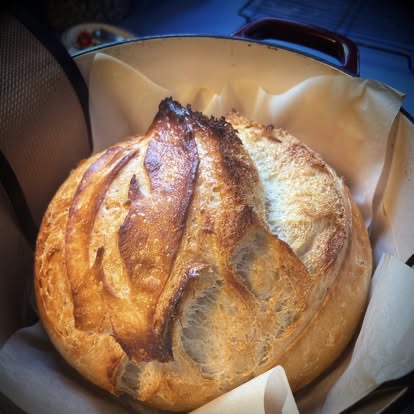
Come to the Table by Kitty Hawk United Methodist Church

Do Something Good

Recently the entire East Coast was under a Severe Storm warning. A large system that brought copious amounts of rain, lightning, high winds, and the threat of tornadoes made its way across several states. As it approached North Carolina, all the weather outlets started posting warnings, maps, forecasts, projections, and color-coded resources that gave predictions about the strength of the storm and possible damage to one’s immediate area.

In my immediate area, the storm shifted, wobbled, and weakened to the point that the projections from 24 hours earlier were happily way off the mark. I say happily because that is how we should have received the change of course. But instead, many people took to social media to denounce and decry the efforts of meteorologists who were using their best science to keep people safe. They were complaining that the storm they had prepared for DIDN’T hit them.

Honestly, people will complain about EVERYTHING!

This well-known passage in the book of Mark tells a story of a woman who made a beautiful and fragrant offering to our Lord. It was just before the crucifixion, and Jesus received it as an anointing of his body.

Mark 14 (Common English Bible)

 It was two days before Passover and the Festival of Unleavened Bread. The chief priests and legal experts through cunning tricks were searching for a way to arrest Jesus and kill him. But they agreed that it shouldn’t happen during the festival; otherwise, there would be an uproar among the people.

Jesus was at Bethany visiting the house of Simon, who had a skin disease. During dinner, a woman came in with a vase made of alabaster and containing very expensive perfume of pure nard. She broke open the vase and poured the perfume on his head. Some grew angry. They said to each other, “Why waste the perfume? This perfume could have been sold for almost a year’s pay and the money given to the poor.” And they scolded her.

The gift was very expensive. Contained in a jar of alabaster, the perfume was so pungent that its aroma filled the entire house. It was pure nard, and it was hers to give.

And of course, someone complained.

Jesus said, “Leave her alone. Why do you make trouble for her? She has done a good thing for me. You always have the poor with you; and whenever you want, you can do something good for them. But you won’t always have me. She has done what she could. She has anointed my body ahead of time for burial. I tell you the truth that, wherever in the whole world the good news is announced, what she’s done will also be told in memory of her.”

I love Jesus’s response. Leave her alone! SHE has done a good thing.

The take-away here is that if you find yourself complaining, get up and go do a good thing. Complaining doesn’t bring anything but misery to those around you. Going out and doing something in the name of Jesus is the best antidote to your complaints.

Find someone today who needs to breathe in the blessing of your generosity. And when you give as this woman gave, the good news is announced everywhere, leaving behind only its sweet fragrance.

Spring Smells by Becca Ziegler

Broken to be a Blessing

A man walking along a California beach was deep in prayer. He was wondering if there really is a God, and if God really hears his prayers. All of a sudden he said out loud, “Lord, give me a blessing.” Suddenly the sky clouded above his head, and in a booming voice the Lord said, “Because you have tried to be faithful to me in all ways, I will give you a blessing.” The man said, “Build a bridge to Hawaii so I can drive over anytime I want to.” 

The Lord said, “Your request is very materialistic. Think of the logistics of that kind of undertaking. The supports required to reach the bottom of the Pacific! The concrete and steel it would take! I can do it, but it is hard for me to justify your desire for worldly things. Take a little more time and think of another blessing, a blessing you think would honor and glorify me.” 

The man thought about it for a long time. Finally he said, “Lord, I wish that I could understand my teenagers. I want to know how they feel inside, what they are thinking when they give me the silent treatment, why they shut themselves up in their rooms, and what they mean when they say ”nothing!” and ”whatever!”

After a few minutes God said, “You want two or four lanes on that bridge?”

In his book Life of the Beloved, Henri Nouwen invites us to consider how God can use our brokenness to bless others…in other words, to consider that we broken people are somehow “blessed to be a blessing.”

It is a total change of mind-set to be able to take our broken places and lay them at the foot of the cross and say to God, “Here. Use this.” In simple terms, we chose to become “wounded healers” who allow God to take our hurts and connect with someone who has the same wounds and would be comforted because of our experience.

Take a look at this interaction between Jesus and Mary just days before his death:

Mark 14 (The Message)

3 Jesus was at Bethany visiting the house of Simon, who had a skin disease. During dinner, a woman came in with a vase made of alabaster and containing very expensive perfume of pure nard. She broke open the vase and poured the perfume on his head. 4 Some grew angry. They said to each other, “Why waste the perfume? 5 This perfume could have been sold for almost a year’s pay and the money given to the poor.” And they scolded her.

6 Jesus said, “Leave her alone. Why do you make trouble for her? She has done a good thing for me. 7 You always have the poor with you; and whenever you want, you can do something good for them. But you won’t always have me. 8 She has done what she could. She has anointed my body ahead of time for burial. 9 I tell you the truth that, wherever in the whole world the good news is announced, what she’s done will also be told in memory of her.

I love the image of the broken vase of perfume being poured over our Lord by a very broken woman. In this last act of kindness that Jesus would ever experience on earth, she released the fragrance of her offering, and the witness of it permeated the house.

God invites us to allow our brokenness to be a blessing to others. He can use our honesty and vulnerability about our broken past to be an act of kindness to someone who is struggling with the same thing.

Consider the beauty of a stained glass window. What is it made of? Broken glass. But in the hands of a Master, the broken pieces are put together in a way that brings beauty and grandeur to a sanctuary. The light shines through and the colors become brilliant.

So it is with you. Let the light of Christ shine though your brokenness so that his beauty and glory will be seen by all who see you.

Broken Beauty by Colin Snider