Open Palms

I have an aversion to palm trees.

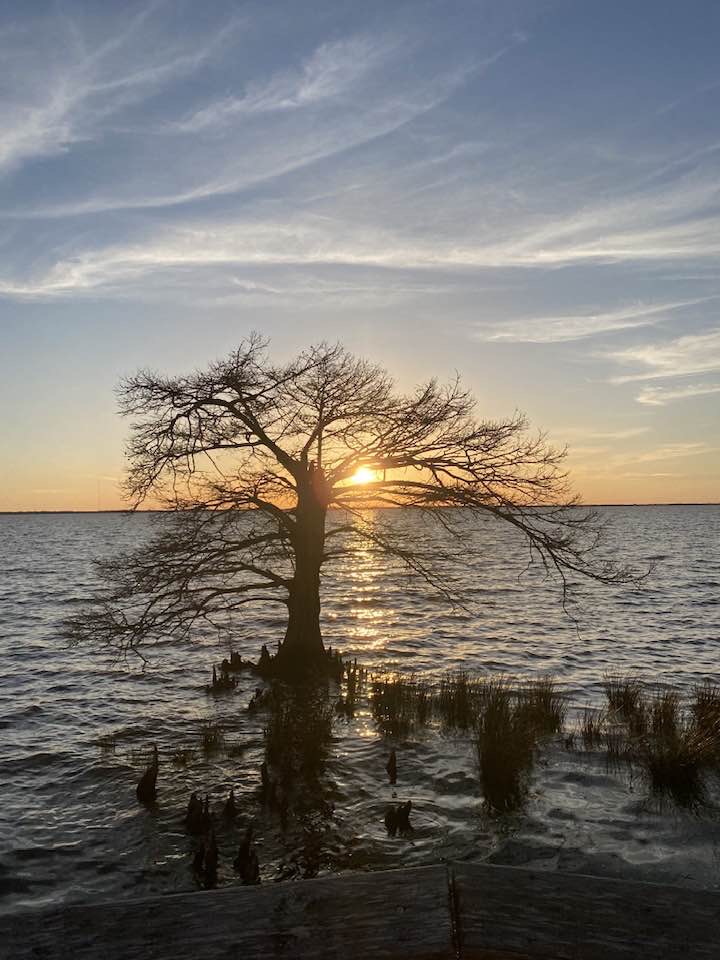
Not the trees themselves: Truly, palm trees swaying in the warm breezes on a sunny beach are some of the prettiest things you will ever see. But I don’t like seeing palm trees in the Outer Banks in North Carolina. Florida, yes, Puerto Rico, okay, but Colington Harbour? Nope. God did not design the palm tree to live in the harsh weather conditions of our barrier islands, and so people who plant them in hopes of making our chilly island more “tropical” end up having to create burlap blankets for them to wear all winter long and some don’t survive because they really don’t belong here.

You had no idea that I am so narrow minded, did you??

Palm Sunday is this Sunday, and it is one of my favorite days. While palm trees don’t belong in the Outer Banks, palm branches surely belong in the hands of young children as they parade up and down the aisles of our churches. The sweet smiles, awkward waving, and innocent cries of “ho-thanna” make the celebration complete. Our hearts join in on the declaration that Jesus is our king and deserving of a king’s entrance. We almost have to turn a blind eye to the fact that in less than a week, it will all turn dark. But on Palm Sunday, we rejoice.

Mark 11:1-11 (New International Version)

1 As they approached Jerusalem and came to Bethphage and Bethany at the Mount of Olives, Jesus sent two of his disciples, saying to them, “Go to the village ahead of you, and just as you enter it, you will find a colt tied there, which no one has ever ridden. Untie it and bring it here. If anyone asks you, ‘Why are you doing this?’ say, ‘The Lord needs it and will send it back here shortly.’”

An unbroken colt fulfilled the prophecy of Zechariah 9:9:

Rejoice greatly, Daughter Zion!
    Shout, Daughter Jerusalem!
See, your king comes to you,
    righteous and victorious,
lowly and riding on a donkey,
    on a colt, the foal of a donkey.

By choosing an unbroken animal, the Creator God in Jesus established his dominance over all the beasts of the field in one striking visual. Rather than come on a prancing stallion, as an army general might, Jesus sets the scene for the humility and servanthood that his leadership will bring.

They went and found a colt outside in the street, tied at a doorway. As they untied it, some people standing there asked, “What are you doing, untying that colt?” They answered as Jesus had told them to, and the people let them go. When they brought the colt to Jesus and threw their cloaks over it, he sat on it. Many people spread their cloaks on the road, while others spread branches they had cut in the fields. Those who went ahead and those who followed shouted,

“Hosanna!”

“Blessed is he who comes in the name of the Lord!”

10 “Blessed is the coming kingdom of our father David!”

“Hosanna in the highest heaven!”

11 Jesus entered Jerusalem and went into the temple courts. He looked around at everything, but since it was already late, he went out to Bethany with the Twelve.

The darkness that is quickly coming is prefigured in this last sentence. Jesus couldn’t stay around to enjoy his parade because “it was already late.” His appointed time was coming, shortening his moment of looking around at everything.

How will we respond to this? I suggest you take a look at your hands. Lay them open in your lap, palms up. In this position, may we ask God to give us every good gift he has planned for us as we seek the coming kingdom of our father David. And remember that in order to open your palms, you have to let go of everything else you are holding on to.

What do you need to let go in order to receive God’s blessing?
Hosanna in the Highest by Becky Strickland
Do More, Talk Less

We are rounding the corner toward Holy Week, when the events of Jesus’ last days will begin to cascade. I read recently that one third of what we read and know of Jesus’ ministry happens in this one week. It makes your head spin. But for today, as you read the plotting, the scheming, the indignant rebukes of men sitting in judgment, and the final betrayal plan, pay attention to the unnamed woman who speaks not a word, but provides the only moment of pure adoration:

Mark 14:1-11 (New International Version)

14 Now the Passover and the Festival of Unleavened Bread were only two days away, and the chief priests and the teachers of the law were scheming to arrest Jesus secretly and kill him. “But not during the festival,” they said, “or the people may riot.”

While he was in Bethany, reclining at the table in the home of Simon the Leper, a woman came with an alabaster jar of very expensive perfume, made of pure nard. She broke the jar and poured the perfume on his head.

John identifies this woman as Mary, the sister of Martha and Lazarus. She is not to be confused with the sinful woman who anointed Jesus’ feet with perfume and then wiped her tears from his feet with her hair. (See Luke 7: 37 for that story.) In this Scripture, she is observed by others who are dining at Simon the Leper’s home, and they are highly critical of her actions.

Some of those present were saying indignantly to one another, “Why this waste of perfume? It could have been sold for more than a year’s wages and the money given to the poor.” And they rebuked her harshly.

Now remember which Mary this is. This is Lazarus’ sister, who observed Jesus’ resurrecting her brother from the dead. This Mary rebuked Jesus for being late when she sent for him to come and heal her ailing brother, arriving after he had died. This Mary put her understanding of Jesus’ power in a very small box, thinking that once her brother was gone, it was over. This Mary then watched as Jesus called Lazarus to come out of the grave, proving that Jesus was the resurrection and the LIFE. So Mary knew what to do. She anointed Jesus’ body for the burial that was impending, in the full hope and expectation of the resurrection that he had promised.

“Leave her alone,” said Jesus. “Why are you bothering her? She has done a beautiful thing to me. The poor you will always have with you, and you can help them any time you want. But you will not always have me. She did what she could. She poured perfume on my body beforehand to prepare for my burial. Truly I tell you, wherever the gospel is preached throughout the world, what she has done will also be told, in memory of her.”

10 Then Judas Iscariot, one of the Twelve, went to the chief priests to betray Jesus to them. 11 They were delighted to hear this and promised to give him money. So he watched for an opportunity to hand him over.

Mary’s example encourages us to take action. To not waste time planning, talking, arguing, and debating (I’m looking at you, church committees!) but simply to do.

What is Jesus calling you to do today?

Don’t say a word.

Just do it.

Talk Less by Becky Strickland

Finish What You Started

Do you ever struggle to finish a task? Now granted, some tasks are unfinishable. Things that can’t be finished are laundry, house cleaning, the value of pi, explaining things to a toddler, and worrying about your children. Try as you might, you will never come to a place with any of those things and say, “Yay! Glad that’s over.”

We have made it to the last week of Lent. Palm Sunday is on the horizon. Next week is Holy Week, when we will take a journey with Jesus to the cross. Everything in his life has led up to this moment and the hour is almost upon him to finish what he started. I often wonder where the world would be if he had given up and walked away at any point in these last days of his life. Even his moment of hesitation in Gethsemane ended with him continuing his work until the end.

In today’s passage, we see the beginning of the end. We join Jesus and the disciples as they make their entrance into Jerusalem.

Mark 11 (Common English Bible)

When Jesus and his followers approached Jerusalem, they came to Bethphage and Bethany at the Mount of Olives. Jesus gave two disciples a task, saying to them, “Go into the village over there. As soon as you enter it, you will find tied up there a colt that no one has ridden. Untie it and bring it here. If anyone says to you, ‘Why are you doing this?’ say, ‘Its master needs it, and he will send it back right away.’”

The city was crowded with Jews from all over who had come to observe Passover. Mind you, Jesus and his friends had walked all the way there from Galilee, so it is interesting that he chooses to go the last two miles on a donkey. Do you suppose it had anything to do with the optics of that moment?

They went and found a colt tied to a gate outside on the street, and they untied it. Some people standing around said to them, “What are you doing, untying the colt?” They told them just what Jesus said, and they left them alone. They brought the colt to Jesus and threw their clothes upon it, and he sat on it. 

And so our King of Kings, the Lord of Lords chooses to ride in on the colt of a donkey. The visuals of that moment are profound. He probably had to hold his feet off the ground, given the smallness of the animal. And he deliberately chose a lowly beast of burden. Does this scene suggest that within a week’s time, he himself would become a beast of burden as he takes on the weight of the sins of the world?

Many people spread out their clothes on the road while others spread branches cut from the fields. Those in front of him and those following were shouting, “Hosanna! Blessings on the one who comes in the name of the Lord! 10 Blessings on the coming kingdom of our ancestor David! Hosanna in the highest!”

It is likely that some of the voices who hailed him as king, messiah, son of David, and healer were the same that shouted “CRUCIFY HIM” just a few days later. How fickle humanity is.

11 Jesus entered Jerusalem and went into the temple. After he looked around at everything, because it was already late in the evening, he returned to Bethany with the Twelve.

Today I invite you to contemplate the joy of this moment as the parade through Jerusalem began. This joy would eventually find its way to the empty cross and the empty tomb, praise be to God. But we all have to make our way through Good Friday before we arrive. May God grant us the same commitment that Jesus had on our behalf.

New Life by Kathy Schumacher