First Fruit
This last Fourth of July was an extremely hot day, so my husband and I opted to spend part of it watching the movie “Independence Day.” It is a blockbuster adventure about a massive alien attack on earth, and how a handful of pilots and a nerdy scientist saved the day. My pilot husband especially enjoyed that part of the plot. I thought about this movie today as I read the account from Acts about the events that happened 10 days after Jesus ascended into heaven. He had instructed his disciples to wait in Jerusalem for a gift that would come from heaven.
The scene must have looked like a modern day science fiction movie. People were milling about, having come to Jerusalem for a celebration of the Feast of the First Fruits, also known as the Pentecost. This Jewish celebration was held exactly 50 days after Passover and was well attended by pious Jews from all around. The pleasant weather and the joyful nature of the event made it very popular. First fruits represented the best of the new harvest. The finest wheat, the perfect grapes, the unblemished sheep … only the best would do. The festival was prescribed in Numbers 28:26: “‘On the day of first fruits, when you present to the Lord an offering of new grain during the Festival of Weeks, hold a sacred assembly and do no regular work” (Numbers 28:26, New International Version).
Who doesn’t like a day off of work?
Acts 2 (Common English Bible)
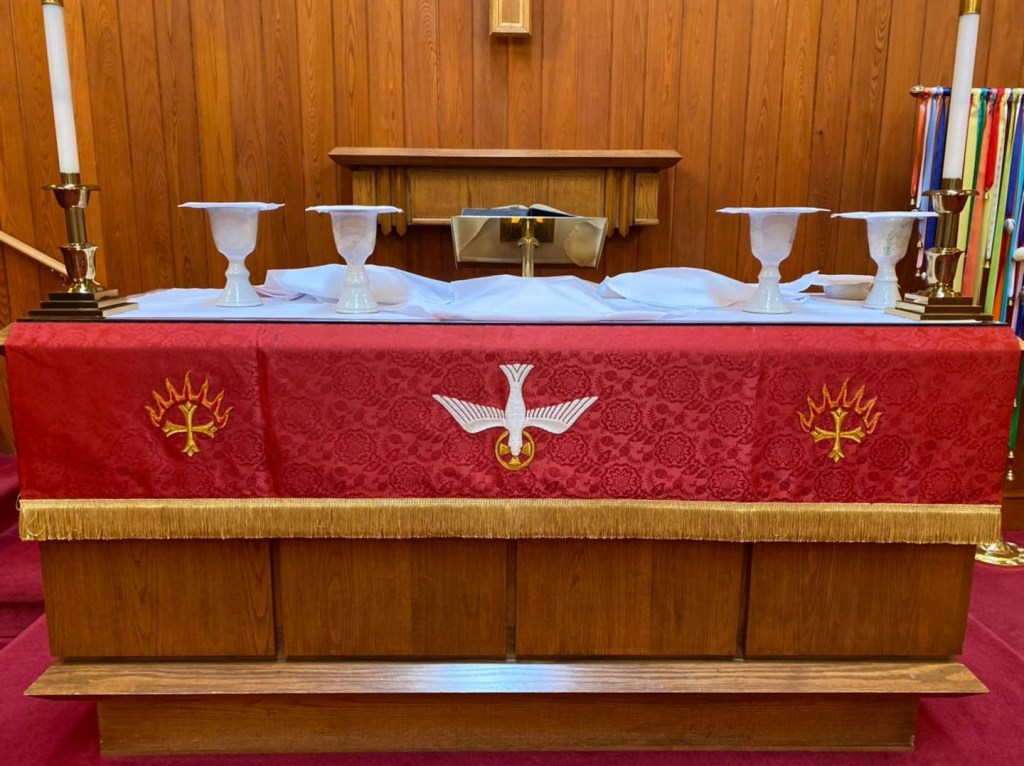
When Pentecost Day arrived, they were all together in one place. 2 Suddenly a sound from heaven like the howling of a fierce wind filled the entire house where they were sitting. 3 They saw what seemed to be individual flames of fire alighting on each one of them. 4 They were all filled with the Holy Spirit and began to speak in other languages as the Spirit enabled them to speak.
The sudden appearance of flame and wind must have been disturbing and surreal. They were anticipating the usual Temple service, replete with altar sacrifices and the presentation of crops, and now this. Can you imagine?
5 There were pious Jews from every nation under heaven living in Jerusalem. 6 When they heard this sound, a crowd gathered. They were mystified because everyone heard them speaking in their native languages. 7 They were surprised and amazed, saying, “Look, aren’t all the people who are speaking Galileans, every one of them? 8 How then can each of us hear them speaking in our native language? 9 Parthians, Medes, and Elamites; as well as residents of Mesopotamia, Judea, and Cappadocia, Pontus and Asia, 10 Phrygia and Pamphylia, Egypt and the regions of Libya bordering Cyrene; and visitors from Rome (both Jews and converts to Judaism), 11 Cretans and Arabs—we hear them declaring the mighty works of God in our own languages!”
We understand this to be a reversal of the Tower of Babel debacle from Genesis 11. In that situation, God deliberately confused all of humanity’s languages so that the people couldn’t plot and scheme by communicating with one another. Any idea of human superiority was humbled in that moment. So when the powerful word of the disciples proclaiming the good news of Jesus Christ was suddenly heard and understood in every dialect, they were surprised and bewildered. The power of the Holy Spirit came down upon them with such force that even in the midst of revelation, amazement still reigned.
12 They were all surprised and bewildered. Some asked each other, “What does this mean?” 13 Others jeered at them, saying, “They’re full of new wine!”
Some scholars see this as the fulfillment of the Levitical instructions on what to bring to the altar in order to consecrate the first fruits at Pentecost. In Leviticus 23:15-22, we see the instructions to the priest to hold up two loaves of leavened bread at the altar as a “wave offering”. Why two?
17 From wherever you live, bring two loaves made of two-tenths of an ephah of the finest flour, baked with yeast, as a wave offering of firstfruits to the Lord (Leviticus 23: 17, New International Version).
Theologian Charles Spurgeon suggested that one loaf represented the saving of Israel, and the other loaf, the saving of the Gentiles. Jesus Christ, the only son of God, was the First Fruit of heaven. And indeed, on the day of Pentecost in Acts, the church began with a mission to offer salvation to both Jew and Gentile alike.
What do you think represents your first fruit? What resource, gift, ability, or strength are you willing to commit to the Lord? Is it your very best? May we joyfully offer our very best at the altar.

The First Fruit of God by Kathy Schumacher
 At Water’s Edge