Walled In

Do you live in a gated community? I do. The access to Colington Harbour is controlled by a gate guard. You have to have a bar code on your car to get the green light to enter. Contractors may get a day pass by giving the address of their worksite. Like most gated communities, we have shared amenities like a pool, club house, tennis courts, playgrounds, and basketball courts. Neighborhoods that are gated offer their residents privacy, protection, and security behind their walls. Home owners associations are active in keeping these perks in shape on behalf of their residents.

The downside of gated communities is that they overtly establish a line where you are either in or out. This can impact the larger community in a negative way if inhabitants define neighbors as only those within the walls at the expense of folks living on the other side. It can be easy to become blind to the needs of the area if people wall in their compassion and care to only those like them.

Such was the conundrum of Jesus and a legal expert as they debated about the definition of “neighbor.” The legal expert was well versed in the rabbinical Mosaic law but very ignorant about the law of mercy. Jesus set him straight with a story that is commonly known as the parable of the Good Samaritan.

Luke 10 (Common English Bible)

25 A legal expert stood up to test Jesus. “Teacher,” he said, “what must I do to gain eternal life?”

26 Jesus replied, “What is written in the Law? How do you interpret it?”

27 He responded, “You must love the Lord your God with all your heart, with all your being, with all your strength, and with all your mind, and love your neighbor as yourself.”

The lawyer was correct in referencing Leviticus 19:15-18 and Deuteronomy 6:4-9. The rabbinical Law emphasized giving God your everything and loving people as God loves. However, he got caught up on the definition of neighbor, incorrectly assuming that the Gentiles and the pagans surely were not under the care or concern of this law. Jesus’ response of creating a parable that clearly demonstrated that everyone is our neighbor was brilliant and decisive.

28 Jesus said to him, “You have answered correctly. Do this and you will live.”

29 But the legal expert wanted to prove that he was right, so he said to Jesus, “And who is my neighbor?”

30 Jesus replied, “A man went down from Jerusalem to Jericho. He encountered thieves, who stripped him naked, beat him up, and left him near death. 31 Now it just so happened that a priest was also going down the same road. When he saw the injured man, he crossed over to the other side of the road and went on his way.32 Likewise, a Levite came by that spot, saw the injured man, and crossed over to the other side of the road and went on his way.33 A Samaritan, who was on a journey, came to where the man was. But when he saw him, he was moved with compassion. 34 The Samaritan went to him and bandaged his wounds, tending them with oil and wine. Then he placed the wounded man on his own donkey, took him to an inn, and took care of him. 35 The next day, he took two full days’ worth of wages and gave them to the innkeeper. He said, ‘Take care of him, and when I return, I will pay you back for any additional costs.’ 36 What do you think? Which one of these three was a neighbor to the man who encountered thieves?”

We can assume that the hearers at the time were scandalized by the notion of the priesthood prancing by the hurt man without so much as a backward glance. But don’t we do the same thing? Aren’t we also guilty of filling our heads with convenient excuses when we stumble upon someone in need? “Oh, somebody else will take care of this …they didn’t really ask for help … I don’t even know first aid … I’m just one person …they brought it on themselves …” And Jesus responds with a lesson on mercy. The Samaritan was able to overcome centuries of prejudice to help the man.

37 Then the legal expert said, “The one who demonstrated mercy toward him.”

Jesus told him, “Go and do likewise.”

We are called to stop and help. Jesus requires that we break down our gated walls and accept everyone in need as a neighbor. Is God calling you today to assist someone in need? Go and do likewise.

Plantation Walls by Kathy Schumacher
Love List

Raise your hand if you love a good list. I mean, who doesn’t? We all feel better when we create a list and then check things off as we accomplish them. I have even been known to write my list after I am finished a task just to check it all off. And it is fun to check out Top Ten lists and use them as a guide. My husband became a pilot at age 28 and his life was ruled by the all-important flight check lists which enabled him to do his job in the air safely. A lot of couples like a good “Honey-Do” list of chores that keeps a household running. And if it weren’t for a weekly grocery list, most of us would have to make multiple trips to the store to purchase things we forgot.

Our Scripture today is a kind of list. It gives very clear instructions on how the Israelites were to love their neighbors. From justice issues, to gossip, to holding grudges, this list is a cohesive compilation of mandates from God on how the community should behave.

Known as the “Holiness Code,” these instructions were given to Moses on Mt. Sinai after God had rescued the nation of Israel from slavery in Egypt. God began this code by stating that Israel was called to be holy “because I your God am holy” (Leviticus 19:2). This reveals both the nature and intention of God. To be holy means to be separated out and set apart. God intentionally commanded the people to be separated from the other peoples around them so that the influence of pagan ideals would not permeate into Judaism. They were called to live in that world but not be of that world, much as Jesus commands us today.

Leviticus 19 (Common English Bible)

15 You must not act unjustly in a legal case. Do not show favoritism to the poor or deference to the great; you must judge your fellow Israelites fairly. 16 Do not go around slandering your people.  Do not stand by while your neighbor’s blood is shed; I am the Lord.17 You must not hate your fellow Israelite in your heart. Rebuke your fellow Israelite strongly, so you don’t become responsible for his sin. 18 You must not take revenge nor hold a grudge against any of your people; instead, you must love your neighbor as yourself; I am the Lord.

As you read through the list, what commands stood out to you? Caring for our neighbor involves treating everyone equally, defending their lives, not taking revenge on them, or holding a grudge. This is challenging in today’s world where social media is just one big gossip fest and hating those who don’t hold your political views seems to be accepted in society. The call to be holy in today’s environment is even important than ever. People might only see Jesus in how Christians treat their neighbors, so if love isn’t found in the neighborhood, Jesus isn’t found either.

What does it mean to you to love your neighbor? May we practice this list until we get it right.

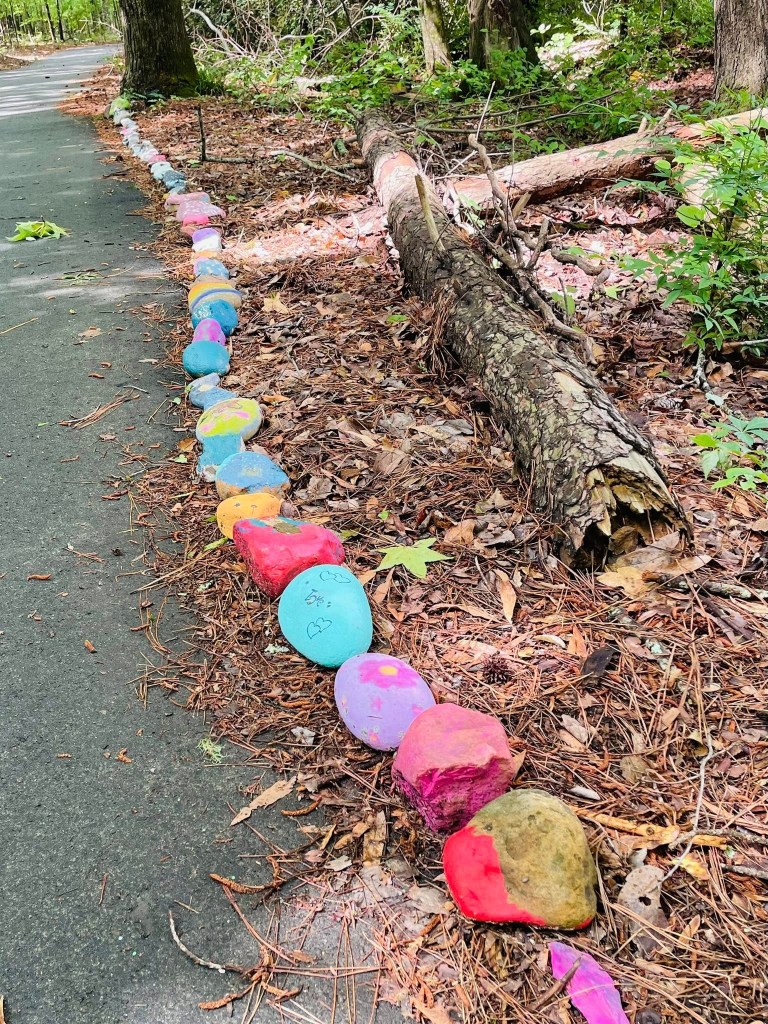
This Neighborhood Rocks! by Kathy Schumacher

Harvest Tithe

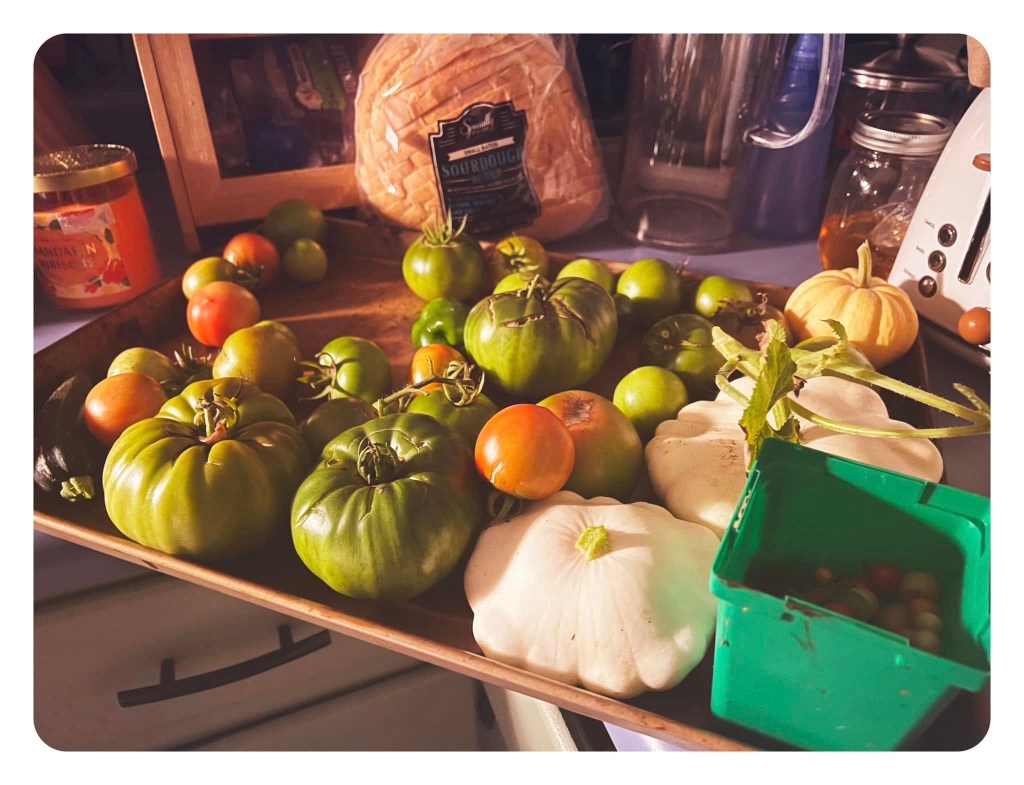
How does your community assist those in need of food and basic supplies? Here in the Outer Banks we have several options, including a Beach Food Pantry as well as a Mobile Pantry that travels from location to location. These agencies are supported by private donations and local farmers who supply fresh produce every week. Volunteers sort, bag, and assist patrons who use these agencies to make ends meet in a high cost area where housing is extremely expensive. Our United Methodist Conference also provides gleaning opportunities at nearby farms where volunteers gather up fallen produce after a harvest and deliver it to regional food banks for distribution. Gleaning is hard but rewarding work and is a favorite activity for our church youth groups.

Gleaning is a biblical concept, commanded by God in Leviticus 19:9-10:

When you harvest your land’s produce, you must not harvest all the way to the edge of your field; and don’t gather up every remaining bit of your harvest. 10 Also do not pick your vineyard clean or gather up all the grapes that have fallen there. Leave these items for the poor and the immigrant; I am the Lord your God.

This was a law of compassion, allowing the poor to work for their sustenance with dignity and without the need to ask for charity. Offered as a form of public assistance, it trained the farmer to have a generous heart and reminded those who were fortunate enough to have a field that produced crops that the field was actually the Lord’s in the first place. That is why we talk about “God’s tithe and our offering” when the plate is passed on Sunday morning in church. Everything we have belongs to God. We are only returning a small portion back to God to do God’s work in the world.

Deuteronomy 23 is a reciprocal reminder to the poor and the traveler that generosity should not be abused, but respected.

Deuteronomy 23 (Common English Bible)

24 If you go into your neighbor’s vineyard, you can eat as many grapes as you like, until full, but don’t carry any away in a basket.25 If you go into your neighbor’s grain field, you can pluck ears by hand, but you aren’t allowed to cut off any of your neighbor’s grain with a sickle.

God’s point is much the same as when manna was provided in the desert. Moses was instructed to tell the people to only gather up what was needed for one day, trusting that God would provide “our daily bread” every day. Hoarding was unnecessary in a community of faith where provisions were shared. It was this law that enabled Jesus and his disciples to pick wheat grain and eat it as they traveled through Galilee. The Pharisees accused them of breaking the sabbath law, but not of stealing.

What part of providing for the poor are you taking in your community? Are you faithfully returning God’s tithe? Is God training you to have a generous heart? Do you trust God to provide for your daily needs?

We are called to do what we can to give what is God’s to God’s people. No one should go hungry in the land of milk and honey.

Harvest in the Land O’Plenty by Becca Ziegler

You Shall Be Holy

What are your goals for your life? Do you desire to be wealthy? Faithful in your relationships? Happy? A good parent? A productive worker? Retired? Goals are like turns that show up on your GPS. As you approach an exit or turn, your GPS will show you which lane to be in so that your merge is smooth and effortless. If only turns and lane changes in life were as easy!

If we consider God’s goal for our lives as opposed to our own, we might be surprised to learn what direction he prefers for us. While our goals might be worthy, God wants so much more for us.

He wants us to be holy.

Leviticus 19 (New Revised Standard Version)

“Speak to all the congregation of the Israelites and say to them: You shall be holy, for I the Lord your God am holy.

Does that scare you a little? To be holy seems like an impossible goal. What does it mean to be holy? According to Webster’s dictionary, Holy means “Spiritually perfect or pure; untainted by evil or sin; sinless; saintly.” I can promise you this, God loves us too much to expect that of us. He would not want to set us up for failure! No, that definition relates to Jesus alone. So what else could holy mean?

15 “You shall not render an unjust judgment; you shall not be partial to the poor or defer to the great: with justice you shall judge your neighbor. 16 You shall not go around as a slanderer among your people, and you shall not stand idly by when the blood[a] of your neighbor is at stake: I am the Lord.

This sounds a little more doable. To be just, to treat people equally, to not gossip and spread lies about our neighbors, and to help when someone is in trouble … if that’s holy, we have a chance. Indeed, it fits an alternate definition from Webster: Dedicated to religious use; belonging to or coming from God; consecrated; sacred. It gives us hope to think that we might be useful to God. It speaks to the truth of our belonging to God and our coming from God. Further, we understand the word consecrated to mean “dedicated to God”, and the word sacred to mean “set apart.” Christians are indeed set apart from the rest of the world to do the work of our Lord.

17 “You shall not hate in your heart anyone of your kin; you shall reprove your neighbor, or you will incur guilt yourself. 18 You shall not take vengeance or bear a grudge against any of your people, but you shall love your neighbor as yourself: I am the Lord.

“Love your neighbor as yourself” is the gold standard for holiness. I think if we can learn to do that, we indeed will be holy.

O Holy Night by Michelle Robertson

Listen!

I have always loved the Olympic Games. It is fun to watch all the the media attention that is given to the athletes prior to the first competition. While listening to the promos and background stories one day, I discovered an acronym that threw me off for a minute. I may be the last person in the world to know what it meant. When Simone Biles was described as the “goat” of women’s gymnastics, I was a little offended on her behalf. How could that commentator have possibly compared this incomparable athelete to a barnyard animal? The next day I saw it in print, and I realized that it was spelled G.O.A.T. And of course you already know what I had to learn from Google: G.O.A.T. stands for “greatest of all time.” I guess we didn’t recognize G.O.A.T.s in the marching band when I was growing up. At least not that kind of goat.

Jesus was once asked about which of the commandments was the G.O.A.T. In the twelfth chapter of Mark, he encounters a legal expert who is hoping to trip him up with a trick question. The people around them are leaning in to hear which of the Ten Commandments Jesus will pick. But watch what Jesus does:

Mark 12 (Common English Bible)

28 One of the legal experts heard their dispute and saw how well Jesus answered them. He came over and asked him, “Which commandment is the most important of all?”

29 Jesus replied, “The most important one is Israel, listen! Our God is the one Lord, 30 and you must love the Lord your God with all your heart, with all your being, with all your mind, and with all your strength.

Jesus responds by quoting the ”Shema” from the book of Deuteronomy. The word ”shema” means to listen. There is a special meaning in this: not only does he give them the traditional faith prayer of his people, which commands them to listen, but he is also instructing the people around him to listen as he clarifies the greatest commandment. Here is the full text of the Shema:

Hear, O Israel: The Lord our God, the Lord is one.Love the Lord your God with all your heart and with all your soul and with all your strength. These commandments that I give you today are to be on your hearts. Impress them on your children. Talk about them when you sit at home and when you walk along the road, when you lie down and when you get up. Tie them as symbols on your hands and bind them on your foreheads. Write them on the doorframes of your houses and on your gates. (Deuteronomy 6:4-9 New Revised Standard Version).

Jesus instructs them to listen up! First and foremost, love God with all your heart, and soul, and strength.

Then he continues:

 31 The second is this, You will love your neighbor as yourself. No other commandment is greater than these.”

Jews familiar with Scripture would hear the echo of Leviticus:

 Leviticus 19:18; “Forget about the wrong things people do to you. Don’t try to get even. Love your neighbor as yourself. I am the Lord.” (ERV)

Jesus’ response is a beautiful rendering of the Ten Commandments in two statements. The first statement blends the first through the fourth commandments, which address our relationship with God. The second statement combines the fifth through the tenth commandments, which instruct us on how to act toward one another.

Even the legal expert was impressed!

32 The legal expert said to him, “Well said, Teacher. You have truthfully said that God is one and there is no other besides him. 33 And to love God with all of the heart, a full understanding, and all of one’s strength, and to love one’s neighbor as oneself is much more important than all kinds of entirely burned offerings and sacrifices.”

34 When Jesus saw that he had answered with wisdom, he said to him, “You aren’t far from God’s kingdom.” After that, no one dared to ask him any more questions.

In the end, loving God with all that you have and loving your neighbor with all that you are pretty much covers everything. These commandments truly are the G.O.A.T. and we are called to live by them every day.

What can you do today to share your love of God with someone? Where is God calling you to reach out to a neighbor in love and service?

Wherever God leads you, go and do it. Then you can be a goat, too.

Dolphin Tales by Michelle Robertson

Wholly People

What does it mean to be holy? In its simplest form, the word holy means to be set apart. Holy things are sacred, special, and outside of the norm of the secular world. God is holy. Worship is holy. Prayer is holy. Sacraments are holy. You are holy.

Surprised?

Think of it this way: being made in the image of God and redeemed by his blood, we have inherited a holiness that we are called to live up to on a daily basis. Being holy humans means we are called to reflect God’s holiness in everything we say, do, and think. Justice, righteousness, equity, unconditional love, forgiveness, honesty, mercy, and especially grace should be the attributes of holiness that we endeavor to live out every day.

That is what a holy human looks like. Unfortunately, those who are wholly human often succumb to anger, name-calling, deceit, bias, pettiness, prejudice, and vengeance.

Leviticus 19 (Common English Bible)

The Lord said to Moses, Say to the whole community of the Israelites: You must be holy, because I, the Lord your God, am holy.

In our pursuit of daily holiness, God is our measure and standard. Here are his rules for holiness:

15 You must not act unjustly in a legal case. Do not show favoritism to the poor or deference to the great; you must judge your fellow Israelites fairly. 16 Do not go around slandering your people. Do not stand by while your neighbor’s blood is shed; I am the Lord. 

17 You must not hate your fellow Israelite in your heart. Rebuke your fellow Israelite strongly, so you don’t become responsible for his sin. 18 You must not take revenge nor hold a grudge against any of your people; instead, you must love your neighbor as yourself; I am the Lord.

This instruction to the Israelites on how to live together is an important reminder to us as we move forward as a nation. Where is your citizenship? Is it with your political party or is it in heaven?

In a few weeks America will declare a winner. Regardless of the outcome, we are to remain holy and not hold grudges. We are to love our neighbors who vote differently. It is against God’s word to slander each other. We absolutely must NOT hate our fellow citizens in our hearts. It may be in our human nature to do these things, but as God-followers, these things cannot be our response to the election. You are commanded to love your neighbor as yourself.

Wholly human or holy human? The choice is yours.

Holy Moment by Wende Pritchard