Sacred

What is sacred to you? Are there actions, behaviors, or things that you categorize as sacred and untouchable?

Things that people find sacred include marriage vows, children, sabbath practices, the language we use when we speak of God…we can attach holiness to any number of things. When we hold something as “sacred” we indicate its value and the prominence it takes in our lives.

The temple in Jerusalem was sacred to Jesus. It was his father’s house. It was a house of worship. It was a place where God resided. It was not to be violated or used for any other purpose than the worship of God.

John 2 (Contemporary English Version)

13 Not long before the Jewish festival of Passover, Jesus went to Jerusalem. 14 There he found people selling cattle, sheep, and doves in the temple. He also saw moneychangers sitting at their tables. 15 So he took some rope and made a whip. Then he chased everyone out of the temple, together with their sheep and cattle. He turned over the tables of the moneychangers and scattered their coins.

16 Jesus said to the people who had been selling doves, “Get those doves out of here! Don’t make my Father’s house a marketplace.”

I remember a story that a former colleague once told of watching someone violate the sanctity of his church. It was at the end of a wedding, when people were still milling around the sanctuary waiting for pictures to be taken. (As a side note, I must confess that pastors often struggle with weddings and how they can become mere commercial venues for folks who have no notion of the sacredness of the space.) Such was the case that day, and my friend watched in horror as the father of the bride strode up the steps to the altar and lit a cigarette from the Christ candle. I haven’t seen this friend for over a decade, but I bet he still tells that story with the same sense of revulsion he felt when he observed it the first time.

Jesus felt the same revulsion at the loan sharks and money changers who charged exorbitant rates to lend money to people so they could buy overpriced animals for slaughter in the house that he loved. His actions that day remind us that we don’t have to put up with such violations in our sacred spots, whether they are physical locations or places in our hearts and minds. If someone is violating your spirit with their inappropriate words or behavior, throw them out of your life.

17 The disciples then remembered that the Scriptures say, “My love for your house burns in me like a fire.”

18 The Jewish leaders asked Jesus, “What miracle will you work to show us why you have done this?”

19 “Destroy this temple,” Jesus answered, “and in three days I will build it again!”

20 The leaders replied, “It took forty-six years to build this temple. What makes you think you can rebuild it in three days?”

21 But Jesus was talking about his body as a temple. 22 And when he was raised from death, his disciples remembered what he had told them. Then they believed the Scriptures and the words of Jesus.

This last part reminds us that even in his zeal to rid the temple of the merchants, Jesus ultimately acknowledges that he is the true temple. He is our church. He is our sacristy. He is our altar. Even after a temporary tear-down, he was rebuilt and raised from the dead. His words and his sacredness can never be defiled!

No matter what we build with our hands, the House of Jesus lasts forever.
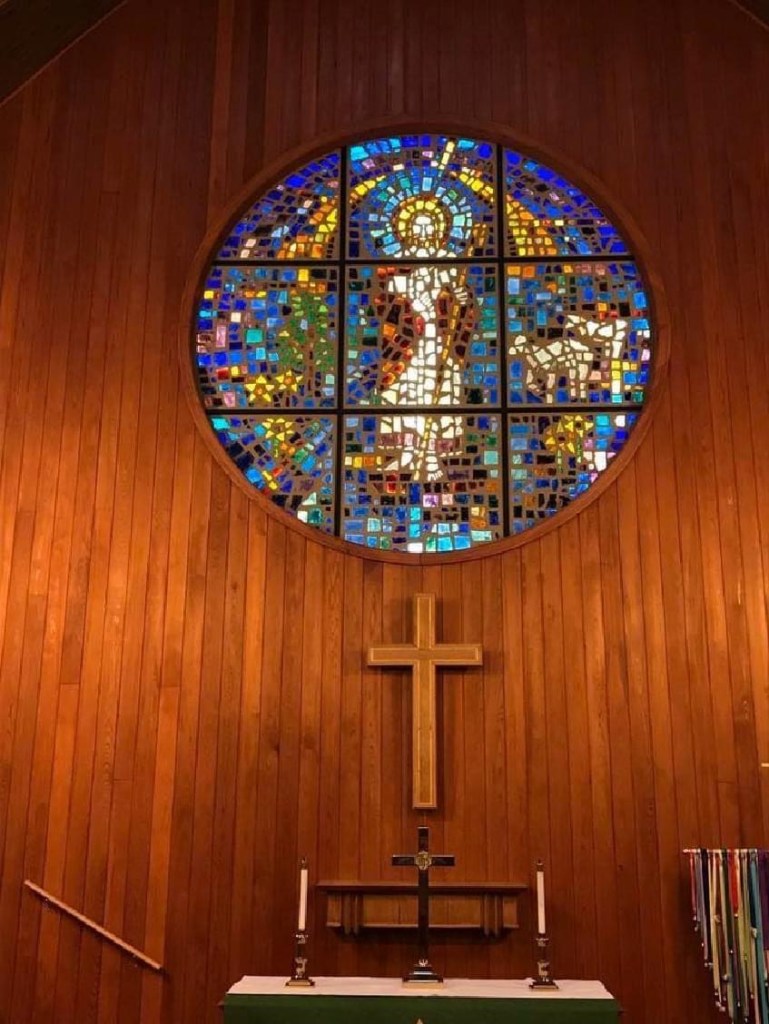
Sacred Space by Kitty Hawk United Methodist Church

The Big Ten

No, this isn’t about football, although your girl here is a fan of her college team, which happens to be in the Big Ten…which has fourteen colleges in it. Strange math, if you ask me! But it lays the foundation for today’s devotional, which starts with the premise that God created a big ten of his own, to which Jesus effectively added an expansion that enhances, but does not eliminate, the original. I am talking, of course, about the Ten Commandments.

Some people have the mistaken idea that Jesus came to eradicate the original ten. They are wrong. While Jesus spoke against the minutiae of the many laws that were extra add-ons made by the rabbis of the day, the sanctity of the original ten remains paramount to this day.

Exodus 20 (Contemporary English Version)

 God said to the people of Israel:

I am the Lord your God, the one who brought you out of Egypt where you were slaves.

Do not worship any god except me.

Do not make idols that look like anything in the sky or on earth or in the ocean under the earth. Don’t bow down and worship idols. I am the Lord your God, and I demand all your love. If you reject me, I will punish your families for three or four generations. But if you love me and obey my laws, I will be kind to your families for thousands of generations.

Do not misuse my name. I am the Lord your God, and I will punish anyone who misuses my name.

Remember that the Sabbath Day belongs to me. You have six days when you can do your work, 10 but the seventh day of each week belongs to me, your God. No one is to work on that day—not you, your children, your slaves, your animals, or the foreigners who live in your towns. 11 In six days I made the sky, the earth, the oceans, and everything in them, but on the seventh day I rested. That’s why I made the Sabbath a special day that belongs to me.

12 Respect your father and your mother, and you will live a long time in the land I am giving you.

13 Do not murder.

14 Be faithful in marriage.

15 Do not steal.

16 Do not tell lies about others.

17 Do not want anything that belongs to someone else. Don’t want anyone’s house, wife or husband, slaves, oxen, donkeys or anything else.

Seems pretty straightforward, doesn’t it? In Matthew, Jesus states that he has not come to abolish the law, but to fulfill it. Then he says this:

John 13:34 (Common English Bible)

34 “I give you a new commandment: Love each other. Just as I have loved you, so you also must love each other.

Think for a moment what the world would be like if we obeyed everything on this list. Think for a moment how different things would be if we just obeyed the new commandment given by Jesus. Wouldn’t the rest of the ten simply fall into place?

Imagine how changed your conversations would be with your family if all of the world lived under these commandments. What would your office “water cooler” conversations sound like? Not being able to lie or covet would certainly change the neighborhood. Sundays would be reverent again. Marriages would stay intact, or die trying. False idols would be forbidden and not tolerated, let alone revered. Our reverence for God would increase, as would our witness in the world. If we loved each other the way Jesus loves us, harmony would reign.

As you continue along on your Lent journey, take a look at this passage again and see how you measure up. God’s Big Ten (plus) still speak to us today. Where is God calling you to obey?

Just as I Have Loved You by Deena Sharp

Lose your Life

In an earlier devotional, I referenced the story from Greek mythology of King Midas, who was granted a wish that everything he touched would turn to gold. Then he discovered that the food he needed to live could not be consumed, as it became gold the minute he touched it. I think this is a perfect allegory for what Jesus was talking about when he said, “Why would people gain the whole world but lose their lives?” We are reminded that when we pursue worldly goods, ideas, agendas, and behaviors, we risk losing the eternal life to which all are called through Christ Jesus.

Take a look at this exchange between Jesus and his disciples:

Mark 8 (Common English Bible)

31 Then Jesus began to teach his disciples: “The Human One must suffer many things and be rejected by the elders, chief priests, and the legal experts, and be killed, and then, after three days, rise from the dead.” 32 He said this plainly. But Peter took hold of Jesus and, scolding him, began to correct him. 33 Jesus turned and looked at his disciples, then sternly corrected Peter: “Get behind me, Satan. You are not thinking God’s thoughts but human thoughts.”

Peter is admonished for thinking “human thoughts.” What human thoughts do you engage in that are ungodly? What behaviors would condemn you as someone speaking for Satan? Is Jesus trying to correct something in your life today? Say NO to yourself.

34 After calling the crowd together with his disciples, Jesus said to them, “All who want to come after me must say no to themselves, take up their cross, and follow me. 35 All who want to save their lives will lose them. But all who lose their lives because of me and because of the good news will save them. 36 Why would people gain the whole world but lose their lives?37 What will people give in exchange for their lives? 38 Whoever is ashamed of me and my words in this unfaithful and sinful generation, the Human One will be ashamed of that person when he comes in the Father’s glory with the holy angels.”

The invitation is to follow Jesus. That means saying NO to all of the unholy things we say, do, think, and participate in. Those things are not worthy of a holy life, and those things are not worthy of you. Jesus invites us to take up our cross and follow him, and in that way we will save our lives as we lose them…in other words, lose the secular lives we are living and gain eternal lives in Christ.

The call is real. The circumstance is dire. The time is upon us. Lose your life because of Jesus, and you will gain heaven itself. And that, my friends, is good news.

Take Up Your Cross

The Art of Listening

In a sermon I recently preached on the subject of prayer, I reminded the congregation that God gave us two ears and one mouth, which perhaps might be a hint that we should listen twice as much as we speak. I was applying this to prayer, but I think it could apply to everything else…our conversations, our arguments, our discussions with our family, our debates…there is nothing we do that wouldn’t be improved by more listening and less talking.

Listening is a way of God. Did you ever think about that? No matter what you take to him, he is guaranteed to listen to you. There is NOTHING you can say, no evil or destructive behavior you need to confess, no grudge so petty, no angry word expressed, that he won’t hear with loving concern. As the psalmist says, “He didn’t hide his face from me. No, he LISTENED when I cried out to him for help.”

Psalm 22 (Common English Bible)

All of you who revere the Lord—praise him!
    All of you who are Jacob’s descendants—honor him!
    All of you who are all Israel’s offspring—
        stand in awe of him!
24 Because he didn’t despise or detest
    the suffering of the one who suffered—
    he didn’t hide his face from me.
    No, he listened when I cried out to him for help.

For this alone, God is worthy of our praise. He inclines his ear to our suffering. He is found by those who seek him. He is worthy of the worship of all nations.

25 I offer praise in the great congregation
    because of you;
    I will fulfill my promises
    in the presence of those who honor God.
26 Let all those who are suffering eat and be full!
    Let all who seek the Lord praise him!
        I pray your hearts live forever!
27 Every part of the earth
    will remember and come back to the Lord;
    every family among all the nations will worship you.
28 Because the right to rule belongs to the Lord,
    he rules all nations.
29 Indeed, all the earth’s powerful
    will worship him;
    all who are descending to the dust
    will kneel before him;
    my being also lives for him.
30 Future descendants will serve him;
    generations to come will be told about my Lord.
31 They will proclaim God’s righteousness
        to those not yet born,
        telling them what God has done.

What can we do in response? We can listen in his name. We can incline our ear to suffering. We can come back to him with repentant hearts. We can refuse to hide our faces from people who need help.

We can hear the way he hears.

Find someone today who simply needs to be heard, and offer them the gift of your time and your presence. And remember to listen twice as much as you speak.

Listen Well by Michelle Robertson

Step By Step

“Step by step, inch by inch…” this phrase from an old Three Stooges movie reminds me of how some people approach faith. There is nothing wrong with a methodical process, says the Methodist minister! The blessing of pursuing incremental progress toward a goal ensures that you continue to move forward, and that’s always a good thing.

In his book based on Paul’s letter to the Philippians, “Because of This, I Rejoice,” writer Max Vincent leads us to find joy in our Lenten disciplines as we participate in the serious work of moving step by step, inch by inch toward Easter.

In discussing Paul’s approach to prayer in his letters, Vincent neatly breaks it down into four discernible steps. See if you can spot some of them in this passage:

Philippians 1:1-11 (Common English Bible)

I thank my God every time I mention you in my prayers. I’m thankful for all of you every time I pray, and it’s always a prayer full of joy. I’m glad because of the way you have been my partners in the ministry of the gospel from the time you first believed it until now. I’m sure about this: the one who started a good work in you will stay with you to complete the job by the day of Christ Jesus. I have good reason to think this way about all of you because I keep you in my heart. You are all my partners in God’s grace, both during my time in prison and in the defense and support of the gospel. God is my witness that I feel affection for all of you with the compassion of Christ Jesus.

This is my prayer: that your love might become even more and more rich with knowledge and all kinds of insight. 10 I pray this so that you will be able to decide what really matters and so you will be sincere and blameless on the day of Christ. 

11 I pray that you will then be filled with the fruit of righteousness, which comes from Jesus Christ, in order to give glory and praise to God.

Paul used a four-step method, starting with THANKSGIVING. This is key, as it focuses us on God’s activity in our lives and in the lives of the people for whom we pray. When we concentrate on thanking God for the blessings he has poured out first, it helps us focus on God’s POWER before we even begin with our list of wants and needs. Giving thanks at the beginning of each prayer puts us into a spirit of praise, joy, gratitude, and humility. By starting our prayers with words of thanksgiving for all of our blessings, we remind ourselves of how good God is.

The second step is INTERCESSION, where we petition God for the needs of others and ourselves. We ask God to intervene in our lives and our situations to bring healing, mercy, comfort, and grace. We are reminded here that we exist in fellowship and connection with others. By putting the needs of others even before our own, we again focus on the power of God, and practice the type of humility Jesus taught from the cross.

The third step is CONFESSION, a necessary part of every prayer. We confess our distance from the righteousness to which we are called. We confess our willfulness. We confess our sins. We confess it all in the sure and certain knowledge that God hears our confessions and cleanses us of our sins.

And then we finish our confession with the doxology, or a word of PRAISE. God is worthy of our praise every day, and it’s important to let him know that! We praise God, from whom all blessings flow, and that moment reminds us that we are not self-reliant, but indeed we rely on God for everything that we have and need.

Try this pattern in your prayer time this week. Remember that God ALWAYS answers our prayers, so be persistent. Prayer changes things…mostly it changes US.

Step by Step by Kathy Schumacher

In the Desert

Name something that tempts you….as in, REALLY tempts you. Something that causes you to go weak in the knees trying to resist. Money? Power? Fame? Immortality? Gossip? Drama? Chocolate-covered caramel bars? CHEEZE??

The Greek myth of King Midas comes to mind when I think of temptation. He loved and worshipped gold. Gold was his kryptonite. He was granted a wish that everything he touched might be turned into gold. What joy! What bliss! Until the very food that he needed to survive was turned into gold and he couldn’t consume it. He cursed his power then, and sought relief from that which had once tempted him so strongly.

Today we read about Christ’s forty days in the desert where he was tempted by Satan. This reading falls in the first week of Lent for a reason. We are challenged to face the things that tempt us and have the power to pull us away from observing a Holy Lent.

Mark 1 (Common English Bible)

About that time, Jesus came from Nazareth of Galilee, and John baptized him in the Jordan River. 10 While he was coming up out of the water, Jesus saw heaven splitting open and the Spirit, like a dove, coming down on him. 11 And there was a voice from heaven: “You are my Son, whom I dearly love; in you I find happiness.”

12 At once the Spirit forced Jesus out into the wilderness. 13 He was in the wilderness for forty days, tempted by Satan. He was among the wild animals, and the angels took care of him.

An oversimplification of this passage would point out that God finds happiness in all of his children at the moment of baptism. He experiences joy when we commit to a life of resisting evil in all of its forms and promise to walk a righteous path. Temptations don’t come from God. He is not trying to ensnare us, but rather will send angels to take care of us in those moments of weakness….if we allow it. Sometimes our addictions block us from receiving help.

These 40 days of Lent are an exercise against temptation…the temptation to give up on our Lenten disciplines. The temptation to step off the path of righteousness. The temptation to succumb to evil in the form of gossip, sin, anger, betrayal, and shutting out God. The temptation to withhold forgiveness.

14 After John was arrested, Jesus came into Galilee announcing God’s good news, 15 saying, “Now is the time! Here comes God’s kingdom! Change your hearts and lives, and trust this good news!”

Jesus calls us to something better. He invites us to change our hearts and lives. We are encouraged to trust the good news of his life, death, and resurrection. Don’t be tempted to do anything less….that’s how Satan wins.

Wilderness Wonderland by Mary Anne Mong Cramer

Re-Lent

It happens every year. We just get past the overindulgence of Thanksgiving gravy, Christmas pie, New Years’ toasts, Super Bowl snacks, Valentine’s chocolates, and BAM. Lent happens. This 40-day period of self examination is not designed to punish us for our self-indulgences, but rather it provides an opportunity to grow closer to God by focusing on the things that realign our priorities and our time. It is a chance to re-center our thinking. It is a chance to re-do our to-do lists and put God at the top. We worship a God of second chances, and Lent is our chance once again to shift our lives back toward God.

But more than that, Lent is about our mortality. The ashes we place on our foreheads on Ash Wednesday remind us that from the earth we have come and to the earth we return….ashes to ashes, dust to dust. This sobering season begins when the alarm has sounded, the assembly has gathered, and the day of darkness is upon us:

Joel 2 (New Revised Standard Version)

Blow the trumpet in Zion;
    sound the alarm on my holy mountain!
Let all the inhabitants of the land tremble,
    for the day of the Lord is coming, it is near—
a day of darkness and gloom,
    a day of clouds and thick darkness!
Like blackness spread upon the mountains
    a great and powerful army comes;
their like has never been from of old,
    nor will be again after them
    in ages to come.

We are invited to return…..and repent:

Yet even now, says the Lord,
    return to me with all your heart,
with fasting, with weeping, and with mourning;
13     rend your hearts and not your clothing.

The promise is offered: if we return to the Lord, he will relent from punishing. As we re-Lent, he will relent.

Return to the Lord, your God,
    for he is gracious and merciful,
slow to anger, and abounding in steadfast love,
    and relents from punishing.
14 Who knows whether he will not turn and relent,
    and leave a blessing behind him,
a grain offering and a drink offering
    for the Lord, your God?

The call is urgent to come to the altar quickly. The time is upon us to begin this process. Even the bride and bridegroom are summoned from their bedchamber to be about the Lord’s business.

15 Blow the trumpet in Zion;
    sanctify a fast;
call a solemn assembly;
16     gather the people.
Sanctify the congregation;
    assemble the aged;
gather the children,
    even infants at the breast.
Let the bridegroom leave his room,
    and the bride her canopy.

17 Between the vestibule and the altar
    let the priests, the ministers of the Lord, weep.
Let them say, “Spare your people, O Lord,
    and do not make your heritage a mockery,
    a byword among the nations.
Why should it be said among the peoples,
    ‘Where is their God?’”

Many of us will not be able to gather in an assembly tonight due to the pandemic. Some of you may have obtained ashes from your church and will participate in an Ash Wednesday service online. In any case, you are invited to contemplate taking on the spiritual disciplines of prayer, fasting, scripture reading, self-examination, repentance, meditation, and penitence. You may choose to give something up for the next six weeks so that you can focus on God in its absence. You may choose to add a new practice that would take you deeper in your discipleship. I hope reading this daily devotional will be part of your commitment! If you don’t have access to ashes, you can use water and make the sign of the cross on your forehead as a mark of your sincerity.

I pray that you will join me as we observe a Holy Lent.

Gracious and Loving God, be with us today as we contemplate those things that have pulled us away from you. Help us to return. We hear your call and we desire nothing but a right relationship with your Son. Grant us a meaningful Lent season, so that when Easter morning dawns, you will find us to be new people, made more like him and less like ourselves. AMEN

Dust to Dust by Becca Ziegler

Love to Die For

Ever wonder what your last thoughts will be just before you die? (A dark subject, I know…) I imagine our thoughts will be about our lives and our loves. We may have sadness over unfinished business, memories of happy times, or recall words we wished we had said, or not said…

They say that in the moments just before dying, your “life flashes before your eyes,” like a video stuck in rewind. How we live today will determine the content. Will it be a movie filled with joy, laughter, shared love, and warm memories? Or will it be filled with regret?

More importantly, what can you do today to change how the video will play?

It is interesting to see what thoughts Jesus had in the hours before his death. He knew that he was at the very end of his life on that last night as he sat among friends having supper:

John 13 (The Message)

 1-2 Just before the Passover Feast, Jesus knew that the time had come to leave this world to go to the Father. Having loved his dear companions, he continued to love them right to the end. It was suppertime. The Devil by now had Judas, son of Simon the Iscariot, firmly in his grip, all set for the betrayal.

“Having loved his dear companions, he continued to love them right to the end.” His last hours were filled with active love. It was this love that would see its greatest manifestation the next day on the cross. Jesus’ entire life was love in action.

3-6 Jesus knew that the Father had put him in complete charge of everything, that he came from God and was on his way back to God. So he got up from the supper table, set aside his robe, and put on an apron. Then he poured water into a basin and began to wash the feet of the disciples, drying them with his apron. When he got to Simon Peter, Peter said, “Master, you wash my feet?”

Jesus’ love was manifested that night in a beautiful act of servanthood. It did not feel right to the disciples that the Master was going to get on his knees and wash their dirty feet. It almost felt like groveling.

Jesus answered, “You don’t understand now what I’m doing, but it will be clear enough to you later.”

Peter persisted, “You’re not going to wash my feet—ever!”

Peter’s objection was in part his way of acknowledging Jesus’ authority over them. Looking at the filth on his bare feet, he cringed at the thought of his teacher, rabbi, master, and friend even touching them. But Jesus was trying to leave them with a very important message: “when you serve one another, that is when you have served me.”

Jesus said, “If I don’t wash you, you can’t be part of what I’m doing.”

“Master!” said Peter. “Not only my feet, then. Wash my hands! Wash my head!”

We need to be like Peter and take the full immersion of Jesus’ washing. Only the blood of Jesus that flowed from the cross can truly make us clean. From our head to our toes, we need to allow him to cleanse us from the inside out.

Imagine if you were ask for complete cleansing, and commit to living a life of servanthood in his example. How different would your end-of-life video look?

It’s not too late. Jesus is waiting, with his basin and towel. On the night before he died, he thought not of himself, but of YOU.

Come to the water. Jesus is ready.

The Basin and the Towel

Betrayal

Think of a time when you were betrayed. It happens to everyone sooner or later. It might be as simple as a confidence that was shared inadvertently, or as devastating as a spouse cheating on you and destroying your marriage. Maybe it happened in your family, with siblings or parents. Perhaps it was a co-worker who stabbed you in the back in order to further their career. Whatever the circumstance, betrayal is a gut-wrenching experience. You suddenly feel like the floor has dropped out from under your feet and you are riding one of those centrifugal-force carnival rides that presses you up against the wall. All you can do is wait for it to stop spinning.

Imagine being Jesus, sharing a last meal with his buds, and realizing that one of the cherished twelve was about to do that very thing:

John 12 (The Message)

21 After he said these things, Jesus became visibly upset, and then he told them why. “One of you is going to betray me.”

This tight-knit group was confused and somewhat horrified. Who, among them, could do such a thing? You probably felt the same way about your betrayer.

Note the tender care John takes to describe his own relationship with Jesus here. I love the image of him reclining next to Jesus with his head on his shoulder:

22-25 The disciples looked around at one another, wondering who on earth he was talking about. One of the disciples, the one Jesus loved dearly, was reclining against him, his head on his shoulder. Peter motioned to him to ask who Jesus might be talking about. So, being the closest, he said, “Master, who?”

Now watch what happens with the bread. In our understanding of Jesus as the Bread of Life, and realizing that this meal is the institution of Holy Communion, it is fascinating to see how bread is used here:

26-27 Jesus said, “The one to whom I give this crust of bread after I’ve dipped it.” Then he dipped the crust and gave it to Judas, son of Simon the Iscariot. As soon as the bread was in his hand, Satan entered him.

“What you must do,” said Jesus, “do. Do it and get it over with.”

28-29 No one around the supper table knew why he said this to him. Some thought that since Judas was their treasurer, Jesus was telling him to buy what they needed for the Feast, or that he should give something to the poor.

30 Judas, with the piece of bread, left. It was night.

Jesus broke the bread (his body,) dipped it in oil (an anointing,) and offered it to his betrayer. The betrayer took it, but did not consume it. Satan took that opportunity to fill the void.

Then Judas left, bread in hand.

This is what happens to us when we are offered the Word of God but fail to internalize it. It opens us up to all kinds of influences. Jesus is the Bread of Life, but in order for that take hold, you have to consume him by taking in EVERYTHING he taught, and by following the example of his life. Otherwise, you are simply getting up from the table and walking away unchanged, with the bread in your hand.

Jesus said, “Take. EAT. This is my body which is broken for you. Do this in remembrance of me.”

So eat the bread, people. Let him fully enter in to your mind, your heart and your life. He died for it, so that you might live.

The Garden of Gethsemane by Michelle Baker

Reckless Love

The first time I heard Reckless Love by Cory Asbury was at a Youth Sunday worship service several years ago. Three teenage girls sang it, and I thought it was one of the most wonderful things I had heard in a long time. Those sincere young voices are in my heart today, as we have realized that we most likely will not have our annual Youth Sunday as a live worship experience this year.

Here are the lyrics to the chorus:

Oh, the overwhelming, never-ending, reckless love of God
Oh, it chases me down, fights ’til I’m found, leaves the ninety-nine
I couldn’t earn it, and I don’t deserve it, still, You give Yourself away
Oh, the overwhelming, never-ending, reckless love of God.

Our scripture today describes Jesus’ act of reckless love as he faced his final days on earth. He was speaking to a crowd of people as his death was drawing near, and explained reckless love like a grain of wheat, which must be buried in order for it to bring forth life and multiply:

John 12 (The Message)

24-25 “Listen carefully: Unless a grain of wheat is buried in the ground, dead to the world, it is never any more than a grain of wheat. But if it is buried, it sprouts and reproduces itself many times over. In the same way, anyone who holds on to life just as it is destroys that life. But if you let it go, reckless in your love, you’ll have it forever, real and eternal.

Truly his love for us is reckless. It is never-ending and overwhelming. Here he was in his final week, feeling storm-tossed about what was about to happen. But did he think of himself? No, he thought of you. He would not ask his father to get him out of it. Instead, he invited God to use his death to display his glory.

27-28 “Right now I am storm-tossed. And what am I going to say? ‘Father, get me out of this’? No, this is why I came in the first place. I’ll say, ‘Father, put your glory on display.’”

”Father, put your glory on display.”

Jesus is committing to following through. He, who was present at the creation of the world, was willing to be falsely tried, spit upon, ridiculed, beaten, scorned, pierced, and nailed to a tree for us.

How can we possibly respond to this kind of reckless love? This is a love that you can’t earn or deserve. This is a love that chases you down. This is a love that brings the gift of eternal life.

Are you ready to stop running?

26 “If any of you wants to serve me, then follow me. Then you’ll be where I am, ready to serve at a moment’s notice. The Father will honor and reward anyone who serves me.

Then follow him.

Following Footsteps by Elaine Walls Reed

Reckless Love