Faster

Today is Ash Wednesday and many believers will commit to a form of fasting for the next 40 days of Lent. (Sundays, being the celebration of the Resurrection, are not counted in Lent.) Some might fast from food or drink. Some might fast from Social Media. Some might fast from behaviors or actions that are harmful and unproductive. Are you a Lent faster? What are you giving up this year?

Today’s lectionary passage is a fascinating look as what God desires in our fasts. The people were complaining that God did not honor or recognize their fasts. Here was God’s response. Read it through: I think you will be surprised.

Isaiah 58 (New Revised Standard Version)

Is not this the fast that I choose:
    to loose the bonds of injustice,
    to undo the straps of the yoke,
to let the oppressed go free,
    and to break every yoke?
Is it not to share your bread with the hungry
    and bring the homeless poor into your house;
when you see the naked, to cover them
    and not to hide yourself from your own kin?
Then your light shall break forth like the dawn,
    and your healing shall spring up quickly;
your vindicator shall go before you;
    the glory of the Lord shall be your rear guard.
Then you shall call, and the Lord will answer;
    you shall cry for help, and he will say, “Here I am.”

Wowzers. All the chocolate/fast food/alcohol fasts have no place on this list. Are you surprised? I think God’s mandate is clear here. Surely that’s not to say that giving up a fixation isn’t valuable, good for you, or a proper response to the call to practice disciplined self-sacrifice. Those types of commitments have great value. But focusing on these things in addition to your usual Lent habits would surely honor the type of fast God desires.

If you remove the yoke from among you,
    the pointing of the finger, the speaking of evil,

10 if you offer your food to the hungry
    and satisfy the needs of the afflicted,
then your light shall rise in the darkness
    and your gloom be like the noonday.

Acting decisively to remove the yoke of oppression and injustice. Feeding the hungry. Tending to the needs of the afflicted. Bringing the homeless poor into our homes. Clothing the naked. Stop pointing the blame finger at others. Ceasing evil talk, gossip, and hate speech. These are the things that would please the Lord this season.
11 The Lord will guide you continually
    and satisfy your needs in parched places
    and make your bones strong,
and you shall be like a watered garden,
    like a spring of water
    whose waters never fail.
12 Your ancient ruins shall be rebuilt;
    you shall raise up the foundations of many generations;
you shall be called the repairer of the breach,
    the restorer of streets to live in.

May we have a holy Lent together and heed Isaiah’s words, making a real difference in our communities and our world for the next 40 days. Are you in?

Queen Anne’s Lace by Becca Ziegler


To-Do Lists

In the year A.D. 403 a 16-year-old Christian boy from Wales was abducted by pirates and taken to Ireland where he was enslaved for five years. Eventually he escaped from this exile and joined a monastery in southern France. There he changed his name to Patrick and intended to live out his life as a monk.

But at the age of 45, God called Patrick to return to Ireland and carry the gospel to his former oppressors. Patrick went and invested the remainder of his life in serving the Irish. During the next 31 years he baptized more than 120,000 people as Christians.

In Ireland they still say of Patrick that “he found Ireland all heathen and he left it all Christian.” The church made him a saint.

While he was in his Irish exile, St. Patrick prayed for his enemies. He prayed for the prosperity of the land where he was trapped. In that exile, St. Patrick evangelized a nation. In his exile, he GOT TO WORK.

Our passage today is a letter to the Hebrew exiles in Babylon written by the prophet Jeremiah, who remained in Jerusalem. They must have been excited to receive a letter from home in their strange and foreign land! I imagine they were hoping to catch up on all the news and maybe receive a word of encouragement about God’s imminent deliverance.

Instead, they got a to-do list.

Jeremiah 29  (New International Version)

This is the text of the letter that the prophet Jeremiah sent from Jerusalem to the surviving elders among the exiles and to the priests, the prophets and all the other people Nebuchadnezzar had carried into exile from Jerusalem to Babylon. It said:

This is what the Lord Almighty, the God of Israel, says to all those I carried into exile from Jerusalem to Babylon: “Build houses and settle down; plant gardens and eat what they produce. Marry and have sons and daughters; find wives for your sons and give your daughters in marriage, so that they too may have sons and daughters. Increase in number there; do not decrease.

Wait, come again? We’re stuck here waiting for rescue and you want us to settle down? Build houses? Marry off our children?? 

To the estranged and hopeless diaspora, this letter must have come as quite a shock. Then it gets worse.

 Also, seek the peace and prosperity of the city to which I have carried you into exile. Pray to the Lord for it, because if it prospers, you too will prosper.”

So in the midst of their despair, Jeremiah instructs them to pray for their oppressor. To pray for their unwanted city. To pray for the people who are holding them captive. And in thus praying, they would also seek peace.

This abrupt message to the exiles is a good lesson for us today. Our communities live in exiles of their own making based on political divisions that have eroded our oneness. We don’t love our neighbors like we used to, based on the flags they fly and the bumper stickers they sport. Many are estranged from their extended families and even our water cooler chats at work are fraught with danger. What to do?

Build. 

Plan. 

Adapt. 

Pray. 

Seek peace in places that you aren’t expecting to find it.

Get to work!

At the appointed time, the exiles were returned to the comfort of their homes. At the appointed time, we too will be delivered from our political exiles. In the meantime, get to work on evangelizing like Patrick, planning like Jeremiah, and loving like Jesus.

Ospreys at Work by Michelle Robertson

By Our Love

Growing up in the United Methodist Church, I spent a lot of time in VBS and Youth Group settings where singing was the norm. I like to sing, so this brought me great joy, even when the songs weren’t all that good. One in particular comes to mind: Not that the lyrics were bad, but the tune was a bit dreary and dirge-like. “And They’ll Know We Are Christians by Our Love” was written by a Catholic priest in the 1960’s and became very popular, despite its f-minor tune. Do you know this song?

We are one in the Spirit, we are one in the Lord
And we pray that our unity will one day be restored
And they’ll know we are Christians by our love, by our love
Yeah they’ll know we are Christians by our love

We will work with each other, we will work side by side
And we’ll guard each man’s dignity and save each man’s pride
And they’ll know we are Christians by our love, by our love
Yeah, they’ll know we are Christians by our love.

Paul makes the same point to the church in Thessalonica. He encourages them to stand their ground in their faith and be strengthened in their love for each other:

1 Thessalonians 3 (Common English Bible)

1So when we couldn’t stand it any longer, we thought it was a good idea to stay on in Athens by ourselves, and we sent you Timothy, who is our brother and God’s coworker in the good news about Christ. We sent him to strengthen and encourage you in your faithfulness. We didn’t want any of you to be shaken by these problems. You know very well that we were meant to go through this. In fact, when we were with you, we kept on predicting that we were going to face problems exactly like what happened, as you know. That’s why I sent Timothy to find out about your faithfulness when I couldn’t stand it anymore. I was worried that the tempter might have tempted you so that our work would have been a waste of time. 6 Now Timothy has returned to us from you and has given us good news about your faithfulness and love! He says that you always have good memories about us and that you want to see us as much as we want to see you. Because of this, brothers and sisters, we were encouraged in all our distress and trouble through your faithfulness. 

For now we are alive if you are standing your ground in the Lord. How can we thank God enough for you, given all the joy we have because of you before our God? 10 Night and day, we pray more than ever to see all of you in person and to complete whatever you still need for your faith. 11 Now may our God and Father himself and our Lord Jesus guide us on our way back to you. 12 May the Lord cause you to increase and enrich your love for each other and for everyone in the same way as we also love you. 13 May the love cause your hearts to be strengthened, to be blameless in holiness before our God and Father when our Lord Jesus comes with all his people. Amen.

 Look again at those last two verses: “May the Lord cause you to increase and enrich your love for each other and for everyone in the same way as we also love you. 13 May the love cause your hearts to be strengthened, to be blameless in holiness before our God and Father when our Lord Jesus comes with all his people” (1 Thessalonians 3:12,13). We are immediately reminded of the fact that love is an essential mark of the Christian faith. Jesus says it succinctly: This is how everyone will know that you are my disciples, when you love each other” (John 13:35). Without love, we have no witness. Without holiness, we have no hope. We understand holiness to be a condition of being set apart from the world and for God and God alone. Truly this church was already experiencing alienation from their community and their neighbors, who persisted in their false idol worship. But holiness requires that we don’t look, act, behave, or think like the rest of the world.

John Wesley had a lot to say about our need for holiness. He understood holiness to be part of the way of salvation that begins with God’s wooing us through prevenient grace and ending in a state of “Christian perfection,” a phrase that describes the life-long process of justification, sanctification, and holiness. Wesley defined holiness this way: “It is purity of intention, dedicating all the life to God. It is the giving God all our heart; it is one desire and design ruling all our tempers. It is the devoting, not a part, but all, our soul, body, and substance to God.”

 Paul’s encouragement to continue their work in becoming blameless in their holiness is directly connected with his encouragement about the Second Coming. It is a good reminder to us, as we strive for that same alienation from secular behaviors and temptations, to keep our eyes looking forward and heavenward to the coming of Christ.

We live in a time when un-Christian things are being done in the name of “Christianity.” Purity of heart and intention are more important than ever if we are to woo the world for the sake of Christ. Look at your own behavior: Do people know you are Christian by your love? Are we really one in the spirit? Does our unity need to be restored?

May we be encouraged by Paul’s words today to act in ways that show the love of Christ in everything we think, say, do, and post.

By His Love by Kathy Schumacher

Rest in God’s Timing

 It is said that patience is a virtue, and many of us may feel that it is a gift from God that somehow we missed. Have I ever shared my favorite prayer with you? Its “Lord, give me patience. AND GIVE IT TO ME RIGHT NOW!” It is hard to be patient, and even harder to be patient in the face of suffering. Today we will read Paul’s letter to the Thessalonians and think about how hard it is to wait. Paul mentions that they are waiting for the son of God to return from heaven to rescue them from the coming wrath. They were suffering persecution from their neighbors, who either worshipped false idols or were Jews who were offended by their message. Amidst this, they somehow continued their good work in spreading the good news:

1 Thessalonians 1 (Common English Bible)

We always thank God for all of you when we mention you constantly in our prayers. This is because we remember your work that comes from faith, your effort that comes from love, and your perseverance that comes from hope in our Lord Jesus Christ in the presence of our God and Father. Brothers and sisters, you are loved by God, and we know that he has chosen you. We know this because our good news didn’t come to you just in speech but also with power and the Holy Spirit and with deep conviction. You know as well as we do what kind of people we were when we were with you, which was for your sake. 

You became imitators of us and of the Lord when you accepted the message that came from the Holy Spirit with joy in spite of great suffering. As a result you became an example to all the believers in Macedonia and Achaia. The message about the Lord rang out from you, not only in Macedonia and Achaia but in every place. The news about your faithfulness to God has spread so that we don’t even need to mention it. People tell us about what sort of welcome we had from you and how you turned to God from idols. As a result, you are serving the living and true God, 10 and you are waiting for his Son from heaven. His Son is Jesus, who is the one he raised from the dead and who is the one who will rescue us from the coming wrath.

Their hope and expectation of the Second Coming was commendable given the abuse and alienation they were enduring. Paul deliberately links this promise to their “turning to God from idols” (verse 9) in an effort to stem any temptation to take the easy way out and return to the idols of their neighbors. Verses 9 and 10 were written to inspire the church to see that they were no longer subject to the supposed powers of the false gods in whom they had previously believed. Instead, Paul offers reminders of their new, set-apart, and ongoing life as believers. By writing this, Paul commended both the church and “the unstoppable character of the word of God that neither difficulties nor distance can overcome.” They, like us, must be patient in the suffering as we wait for the Day of the Lord.

 This is a good reminder to rest in God’s timing. Like the Thessalonians, we wait for better times, but we are called to recognize where God is at work in our waiting. Like them, we are called to be persistent in our faith and hopeful in our expectations by being steadfast and faithful until Christ’s return. What does joy look like when we are ridiculed for our beliefs? Where is the Holy Spirit when the secular world condemns the church? How can we be patient through these times? I think we could look at the example of the Thessalonian church for encouragement. Paul loved them from the bottom of his heart. They brought much honor and joy to the early church.

May we do likewise.

Waiting for Spring by Kathy Schumacher

Self-Denial

One of our Lenten disciplines is self-denial. Other than fasting (!), this may be one of the hardest of all the practices to adopt. It is the one comprehensive discipline that really forces a change. To deny oneself means to stem all the urges we experience that lead us down the road of temptation, laziness, distraction for distraction’s sake, and greediness. What in your life has you so consumed that you neglect your personal discipleship? Is it food? Substance abuse? Social media? Hours of Netflix?

I spoke to a women’s group two weeks ago on the subject of Lent. I asked them to thoughtfully commit to three Lenten practices this year that would make a permanent difference in their walk with Christ. We talked not only about giving something up, but adding something in. One very thoughtful person told us that she knew she needed to give up her Amazon shopping habit, which had become a daily activity for her. She was almost afraid to say it out loud but she trusted her friends around her to receive this without judgement and to hold her accountable for the next six weeks. Dang, I admire this woman! I suggested she calculate the money that she would have spent and do something positive with it after Easter. I can’t wait to see how this turns out for her.

In our Scripture today, Jesus explained the upcoming crucifixion to his hard-of-hearing disciples. The most tone deaf among them was Peter, who shoved his fingers in his ears and “la-la-la’d” away the reality of what was about to happen:

Mark 8 (Common English Bible)

31 Then Jesus began to teach his disciples: “The Human One must suffer many things and be rejected by the elders, chief priests, and the legal experts, and be killed, and then, after three days, rise from the dead.” 32 He said this plainly. But Peter took hold of Jesus and, scolding him, began to correct him. 33 Jesus turned and looked at his disciples, then sternly corrected Peter: “Get behind me, Satan. You are not thinking God’s thoughts but human thoughts.”

What a rebuke! In a self-serving manner, Peter thought he could talk Jesus out of doing what Jesus knew he had to do. Jesus called him Satan and shoved away any thought that the story might have a different ending. Peter didn’t want to lose his friend and possibly face the jeers and condemnation that this “failed mission” would bring to those who remained behind. In short, Peter didn’t get it.

34 After calling the crowd together with his disciples, Jesus said to them, “All who want to come after me must say no to themselves, take up their cross, and follow me. 

Following Jesus is a process of self-denial. We are called to do God’s will at the expense of just having things our own way. We are taught to follow the commandments and to serve the Lord with gladness. We are expected to love, give, and put others first in the same way that Jesus did. We are led to deny our own desires and put Jesus’s cross on our shoulder.

35 All who want to save their lives will lose them. But all who lose their lives because of me and because of the good news will save them.36 Why would people gain the whole world but lose their lives? 37 What will people give in exchange for their lives? 38 Whoever is ashamed of me and my words in this unfaithful and sinful generation, the Human One will be ashamed of that person when he comes in the Father’s glory with the holy angels.”

Self-denial requires the courage of my retail addicted friend. Self-denial is an eye-opening experience that helps you balance your life and put your feet on the path of righteousness. Self-denial is challenging, but the reward is gaining back your life. Isn’t that worth a try?

The Father’s Glory by Hannah Cornish

Walk With Me

About a hundred years ago (!) I walked down a church aisle toward a much-too-young Navy Ensign as he stood waiting for me at the altar of the little chapel at the Philadelphia Navy Base. He was nervous, I was nervous, but we said our vows with integrity and hope, and we’ve been walking together for all these (100+) years. Walking with someone “til death do you part” is a high and holy privilege and blessing, one which I have never taken for granted. Marriage is fragile. Marriage is holy. Marriage is filled with challenges and triumphs. If you’re married and you still like your spouse, give me an “Amen!”

Life can be a series of walking with people through wilderness times. I have a dear friend with whom I have walked for over a decade through extreme life challenges. I walked through cancer with my oldest daughter. I have walked with family members who were caught up in sudden storms. Numerous people have walked the way of suffering with me over the years, and I’m sure it is the same with you. God intentionally calls us to walk beside others as we make our way through every valley and high mountain.

Today’s lectionary passage describes a time when God chose Abram to walk a new path with him. This startling invitation set into motion the beginnings of the nation of Israel and the journey of promises that led them through the Promised Land all the way to the Messiah. Notice that God first identifies himself, and then immediately issues the invitation to covenant:

Genesis 17 (Common English Bible)

17 When Abram was 99 years old, the Lord appeared to Abram and said to him, “I am El Shaddai. Walk with me and be trustworthy. I will make a covenant between us and I will give you many, many descendants.” Abram fell on his face, and God said to him, “But me, my covenant is with you; you will be the ancestor of many nations. 

There were many times when I felt that God invited me to walk with him into a new facet of ministry, but this call to Abram is mind-blowing. I can’t even imagine how he felt, and how confusing it must have been. No wonder he fell on his face!

And because I have made you the ancestor of many nations, your name will no longer be Abram but Abraham. I will make you very fertile. I will produce nations from you, and kings will come from you. I will set up my covenant with you and your descendants after you in every generation as an enduring covenant. I will be your God and your descendants’ God after you.

A change of name was in order and was significant. God identifies himself as El Shaddai and almost immediately changes Abram’s identity to Abraham. Sarai becomes Sarah, and it signified to the world that their role and purpose changed. Much like the moment of marriage where I took my husband’s last name, the old identity was severed, and a new relationship took over. While I never ceased being Fred and Nancy’s daughter, I now was marked as a member of the Haas clan and the wife of the nervous Ensign. Indeed, I made a covenant agreement to take on my new family and was identified as such.

15 God said to Abraham, “As for your wife Sarai, you will no longer call her Sarai. Her name will now be Sarah. 16 I will bless her and even give you a son from her. I will bless her so that she will become nations, and kings of peoples will come from her.”

Is God calling you to walk alongside someone who needs your love and support? Are you being invited to take on a new identity and be known in a new way? Is he inviting you to a covenant agreement with him?

Say yes. Walking with God wherever he leads you is a sure pathway to peace.

You’ll Never Walk Alone by Michelle Robertson

Preaching in Prison

For a part of my ministry, I was a regular visitor in the local jails in the towns where I have served. It began when a young church member shot a friend while playing “Russian Roulette” with a gun he had just obtained that week. Spurred on by a television show, the three friends thought it would be a fun game until my church member “playfully” shot his friend in the chest, killing him. My weekly visits with him expanded to seeing other prisoners, as Christian guards would announce “clergy visits for all” when I arrived. I heard many, many stories of regret, remorse, arrogance, evil, and bad decisions. I have a friend in the town where I lived who regularly visits young women in prison. This neglected population of the children of God need people who will come and share the love of Jesus with them.

And it is what Jesus did.

In our Scripture this morning, Peter discussed Christ’s suffering on account of all of our sins. If you look at the palms of your hands this morning and can’t make out the nail prints, be glad. Christ willingly took those scars upon his unblemished hands so that you didn’t have to. Charles Spurgeon said it beautifully: “The hem of grief’s garment is all you ever touch, but Christ wore it as his daily robe.”

Jesus went to preach to the spirits in prison so that they might understand God’s message of judgment and his triumph of good over evil through the death and resurrection of Christ:

1 Peter 3(Common English Bible)

18 Christ himself suffered on account of sins, once for all, the righteous one on behalf of the unrighteous. He did this in order to bring you into the presence of God. Christ was put to death as a human, but made alive by the Spirit. 19 And it was by the Spirit that he went to preach to the spirits in prison. 20 In the past, these spirits were disobedient—when God patiently waited during the time of Noah. Noah built an ark in which a few (that is, eight) lives were rescued through water. 21 Baptism is like that. It saves you now—not because it removes dirt from your body but because it is the mark of a good conscience toward God. Your salvation comes through the resurrection of Jesus Christ, 22 who is at God’s right side. Now that he has gone into heaven, he rules over all angels, authorities, and powers.

These particular prisoners were understood as the demons (the sons of God who were now the fallen angels) that are referenced in Genesis 6:1-2:

6 When human beings began to increase in number on the earth and daughters were born to them, the sons of God saw that the daughters of humans were beautiful, and they married any of them they chose.

So many of us live in prisons today. We live in the prison of a past we can’t shake off. We live in prisons of addiction and substance abuse. We live in a toxic relationship prison. We live in the prison of regret. We live in the prison of sin and bad choices.

Christ died so that you could be free. You don’t have to live in a prison of your own making! Your baptism provides you with the Holy Spirit power to live in your good conscience toward God, ever seeking his perfect will for your life and following his guidance and direction.

Are you imprisoned by your choices? As Peter pointed out, Christ did all of this to bring you into the presence of God. Let Christ set you free.

Freedom by Michelle Robertson

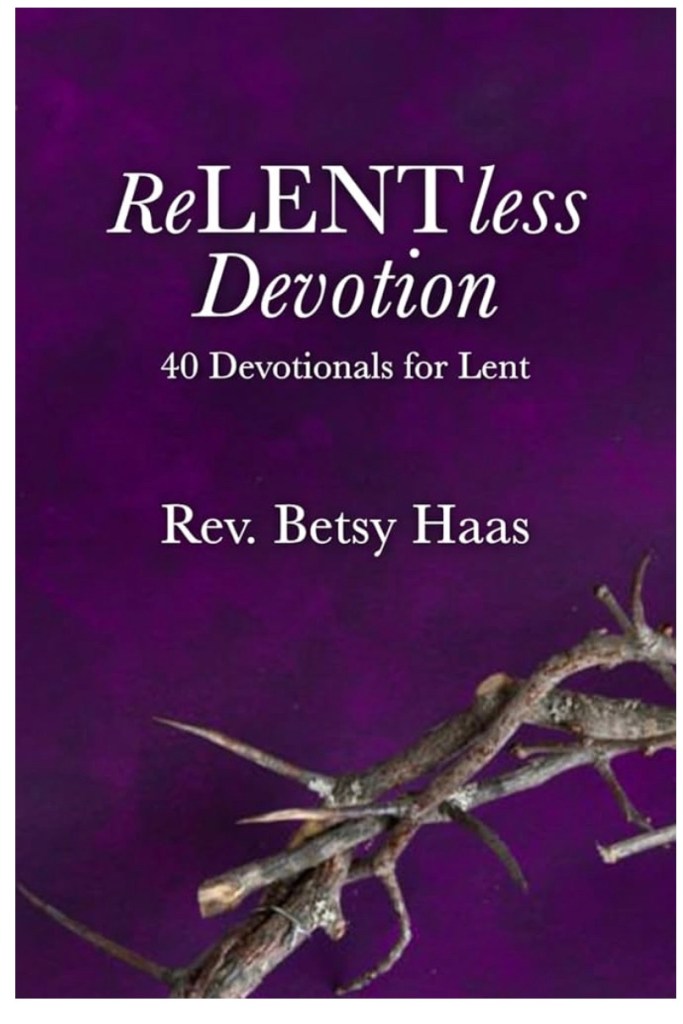
ReLENTless Devotion

I am very happy to announce that my book, ReLENTless Devotion, has just been published. This book contains 40 days of Lent devotionals and a special Easter Sunday meditation. Lent begins on February 14th this year.

The season of Lent is a time of reflection, renewal, and re-examination. God invites us to do “heart surgery” during the time between Ash Wednesday and Easter Sunday in an effort to move deeper in our relationship with Christ. As we contemplate the journey to the cross that Jesus made on our behalf, we will learn and grow through our time spent in God’s word.

God invites us to walk through these days together and remember and read the Messianic prophesies, the poetic voices of the Psalms, hear from the Gospel writers of their first-hand observations of their friend and teacher, and contemplate Jesus’ own words. Each day’s reading offers a brief Scripture, an engaging reflection, and a daily prayer. It is hoped that by the time Easter arrives, we will be rededicated in our Lenten disciplines of study, meditation, fasting, service, prayer, repentance, and self-examination.

Lent is a time to come clean with God.

I hope you will join me as we endeavor to observe a Holy Lent together this year.

ReLENTless Devotion is now available at Amazon.

Rejected and Dejected

One of the hardest parts of parenting is wanting good things for your children that they stubbornly resist. From that first turning of the head against a spoonful of mashed peas to the more serious things of setting ground rules regarding sex, cars, phone use, social media, and drugs, it is a struggle. Parents are often left with an empty feeling that no matter how hard they tried or how much they longed to protect their children, sometimes those efforts are ignored and rejected. Raising children can be filled with unexpected heart ache. Their minds and hearts can turn to stone in their resolve to do things their own way, and it is gut wrenching to watch them have to pay the consequences for their choices and behaviors. Parenting is surely not for sissies!

     Jesus must have felt that way about the stubbornness and rejection he received from his beloved Jerusalem. How often he wanted to snatch them up and shelter them in the safety of his wings, like a mother hen does with her chicks. Their refusal to receive him was heartbreaking for him. 

Matthew 23:37-38

37 “Jerusalem, Jerusalem! You who kill the prophets and stone those who were sent to you. How often I wanted to gather your people together, just as a hen gathers her chicks under her wings. But you didn’t want that. 38 Look, your house is left to you deserted.

     Scripture only mentions Jesus crying two times. Once was at the death of Lazarus, as he experienced the extreme grief of sisters Mary and Martha and felt their sorrow over his friend’s death. The other was in this moment as he looked over his beloved city Jerusalem and saw the impending destruction that would result from their rejection of him (see Luke 19:41).

     Have you ever loved someone so hard that their rejection caused you physical pain? I have a friend whose daughter was a homeless heroin addict for five years. Every day was a battle of trying to keep her mind from worrying about her daughter and giving control over to God. In the end, her daughter recovered, but the mother still wears the scars of love from that terrible time.

     Jesus’ grief is a good reminder to us that he deeply loved even those whom he rebuked. The Scriptures prior to these two verses outline his case against the Pharisees and his accusations about their sinful behavior. But even still, he loved them enough to weep over them and want to shelter and protect them.

     Jesus feels the same way about you and me. He wants to gather us up and take care of us. He wants to keep us from the harm of our own decisions and actions. He wants to fend off adversaries and help us to thrive and grow. He wants to mother us.     

Are you stubbornly refusing his love? This grieves him, yet he loves you still. It is never too late to come under his wings. There you will find security and hope.

The Shelter of His Wings by Michelle Robertson

Favored One

“Inside Out” is a wonderful movie about the exploration of emotions. We enter the world of eleven-year-old Riley, who experiences joy, fear, anger, disgust, and sadness over the prospect of moving to a new city. Along the way, young viewers learn a new vocabulary for expressing their own feelings. Some old ones do, too.

One of the blessings of the psalms is that they give voice to our many emotions. Think of them as a pre-Pixar “Inside Out”. All the “feels” are there as we see them finding expression for everything we are going through on a daily basis. The relevance of these writings is timeless.

Today’s psalm is no exception, as we see David once again fleeing for his life. This time it is his own son Absalom who was the pursuer. Absalom’s successful rebellion has driven David out of Jerusalem. In his distress, David expressed all of those emotions in just the first five verses. We see him cry out loud to God in fear. We see him disgusted with those who claim that God won’t help him. We see his anger against the many who stand against him. We see his sadness that people are talking about him. And finally, we see joy in his ability to feel confidence in his identity as a child of God, who is his shield. Can you relate to any of this? I can.

Psalm 3:1-5 (Common English Bible)

Lord, I have so many enemies!
    So many are standing against me.
So many are talking about me:
    “Even God won’t help him.” Selah

But you, Lord, are my shield!
    You are my glory!
    You are the one who restores me.
I cry out loud to the Lord,
    and he answers me from his holy mountain. Selah
I lie down, sleep, and wake up
    because the Lord helps me.

By the way, “Selah” is a device in the psalms that offers a pause. It gives the reader/singer a chance to reflect before moving on. I recently told a group at a woman’s retreat that it is like saying, “Yo!” after a meaningful phrase. But I digress.

This psalm gives us permission to feel all those same things. Joy, sadness, anger, disgust, and fear are just some of the emotions we can run through on a daily basis. How we handle those feelings is an indication of where we are on our walk with Jesus. 

David handled his emotions with the confidence of a favored son. Do you know that you are God’s favored as well? And like David, God will answer us when we cry out, whether in silent prayer or by raising our voices and shouting to the heavens.

And don’t miss David’s dismissal of the people who talked behind his back and assumed that because of his past sin record, God would not come to his aid. David responds with a great big “But” and counters that God is his shield, his glory, and is the one who restores him. David knew that he was not defined by his past mistakes, but rather was defined by the future glory that came with his repentance and God’s forgiveness. Do you know that as well, or are you letting your past define your present?

Psalm 3 is a beautiful reminder of God’s continuing presence in our every emotion. It is a clear declaration that God’s mercy is always available to us when we cry out to our mighty God. 

Need help? Your Shield stands at the ready.

God’s Glory by Becca Ziegler