I Am the Truth


Today’s Scripture is a continuation of our study this week of Jesus’ “Farewell Discourse,” which runs through John 16:33. Jesus’ crucifixion, resurrection, and ascension were imminent, and he explained the significance of the events that were about to unfold and tried to direct his disciples to the life they would soon be living without him. If the first verses of John 14 sounds familiar to you, it is because they come from one of the preferred readings in our United Methodist funeral liturgy. If you’ve been to funerals in your church, you most likely have heard this passage read.

In a very real sense, Jesus was preaching his own funeral.

John 14 (The Message)

1-4 “Don’t let this rattle you. You trust God, don’t you? Trust me. There is plenty of room for you in my Father’s home. If that weren’t so, would I have told you that I’m on my way to get a room ready for you? And if I’m on my way to get your room ready, I’ll come back and get you so you can live where I live. And you already know the road I’m taking.”

Thomas said, “Master, we have no idea where you’re going. How do you expect us to know the road?”

6-7 Jesus said, “I am the Road, also the Truth, also the Life. No one gets to the Father apart from me. If you really knew me, you would know my Father as well. From now on, you do know him. You’ve even seen him!”

We struggle today with finding and knowing the truth about many things. Biased news reporting, social media substituting for “truth,” bent politicians who habitually lie to keep their power … what is truth, and where can we find it? John would point us back to the only absolute truth, which happened when the Father was revealed in the Son. It is an everlasting truth, and the only truth we can count on.

The epiphany Jesus hoped to reveal in that moment was that he was the incarnate God, the Word of God made flesh, and in him all truth could be known. The word “truth” in this passage is taken from the Hebrew understanding of truth, which implies an intentional commitment and connection to God’s righteousness and the absolute guarantee of God’s promises. God’s steadfast love was fulfilled in Jesus on the cross, where the truth of God’s plan of salvation was finally revealed. Thus nobody gets to the Father without Jesus, as it took knowing the son to understand the father.

The mystery of the incarnation confused the disciples and may be confusing to us as well. We can see by Thomas and Philip’s questions that the truth of Jesus’ relationship with his father was still troublesome. John 3:16 assures us that God loved the world so much that God sent his only son. But in the moment of standing in front of this man named Jesus who had been their friend and had led them for three years, the disciples still couldn’t receive or process the truth.

So Jesus asked them simply to trust him. To trust what they could not see; to trust what they could not know; to trust what they could not understand. God-made-flesh is a beautiful mystery that requires faith and an unencumbered belief, because seeing it is not possible. Perhaps that is the best kind of epiphany: One we see with our heart, not our eyes.
Do you believe Jesus is the only way to the Father? Do you trust him with all your heart?

God’s Beauty by Michelle Robertson


I Am the Way

This week we are going to study Jesus’ Farewell Discourse from John 14. As we move though Lent to Easter, we want to be focused on Jesus’ last weeks, activities, and words. Today we will consider what Jesus meant when he told his disciples that he was “the way” to the Father:

John 14 (Common English Bible)

14 “Don’t be troubled. Trust in God. Trust also in me. My Father’s house has room to spare. If that weren’t the case, would I have told you that I’m going to prepare a place for you? When I go to prepare a place for you, I will return and take you to be with me so that where I am you will be too.You know the way to the place I’m going.”

Thomas asked, “Lord, we don’t know where you are going. How can we know the way?”

Jesus answered, “I am the way, the truth, and the life. No one comes to the Father except through me. If you have really known me, you will also know the Father. From now on you know him and have seen him.”

  Jesus is the way to the Father just as surely as the front door is the way into the house. Because of that one, single, profound action of taking the sins of the world upon himself, Jesus is the only way. Without that moment, our sins would never be forgiven. In its essence, sin is separation from God. Without Jesus, there is no entryway of repentance/forgiveness/grace. All who believe in him will be saved.

We can see in this passage that even toward the end of his ministry, Jesus still struggled with his disciples for understanding and acceptance. He was not the Messiah they had been looking for, and so they still were unsure about exactly who Jesus was. The mystery of the incarnation was still confusing to them. How could Jesus really be the Son of God?

The disciples didn’t yet know the end of the story, but we do. We see all the promises of God, the foretelling of the prophets, and the works of Jesus himself come together in this passage and we know without a doubt that Jesus made good on his word. He returned to the Father to get the house ready for our arrival. And because he lives, we shall live also.

We can glean a deeper meaning from “way” by studying John’s use of the word “hodos.” Hodos is more than just finding a route to a location, but rather a way of living that leads to eternity. In the Psalms, the word “way” is used as a metaphor to describe a life lived in accordance to doing the will and desire of God. Thus the “way” describes a person of faith’s connection to God.1 Jesus is not just the path, but the lifestyle that must be adopted in order to reach the Father. Jesus’ proclamation that he is going before us to prepare things is a direct invitation to follow him in all of his “ways” by following his teachings and example.

In John 15, Jesus makes the way crystal clear: “This is my commandment: love each other just as I have loved you” (John 15:12). When we love each other in the way that Jesus loves us, we know our feet are on the right path.What is God asking you to do in order to follow his way? Is there someone you need to forgive? Is there a task yet undone, or some loose end to tie up?

 I hope this brings you a moment of joy today. Even when things seem very dark in this world, knowing that Jesus is holding the front door of heaven open gives us strength for today and bright hope for tomorrow. Jesus reminds us that he is in the Father and the Father is in him: This is the way. Is God asking you to prepare yourself for the home Jesus has prepared for you? Best get to it. You know the way.

The Way by Kathy Schumacher

Self-Denial

One of our Lenten disciplines is self-denial. Other than fasting (!), this may be one of the hardest of all the practices to adopt. It is the one comprehensive discipline that really forces a change. To deny oneself means to stem all the urges we experience that lead us down the road of temptation, laziness, distraction for distraction’s sake, and greediness. What in your life has you so consumed that you neglect your personal discipleship? Is it food? Substance abuse? Social media? Hours of Netflix?

I spoke to a women’s group two weeks ago on the subject of Lent. I asked them to thoughtfully commit to three Lenten practices this year that would make a permanent difference in their walk with Christ. We talked not only about giving something up, but adding something in. One very thoughtful person told us that she knew she needed to give up her Amazon shopping habit, which had become a daily activity for her. She was almost afraid to say it out loud but she trusted her friends around her to receive this without judgement and to hold her accountable for the next six weeks. Dang, I admire this woman! I suggested she calculate the money that she would have spent and do something positive with it after Easter. I can’t wait to see how this turns out for her.

In our Scripture today, Jesus explained the upcoming crucifixion to his hard-of-hearing disciples. The most tone deaf among them was Peter, who shoved his fingers in his ears and “la-la-la’d” away the reality of what was about to happen:

Mark 8 (Common English Bible)

31 Then Jesus began to teach his disciples: “The Human One must suffer many things and be rejected by the elders, chief priests, and the legal experts, and be killed, and then, after three days, rise from the dead.” 32 He said this plainly. But Peter took hold of Jesus and, scolding him, began to correct him. 33 Jesus turned and looked at his disciples, then sternly corrected Peter: “Get behind me, Satan. You are not thinking God’s thoughts but human thoughts.”

What a rebuke! In a self-serving manner, Peter thought he could talk Jesus out of doing what Jesus knew he had to do. Jesus called him Satan and shoved away any thought that the story might have a different ending. Peter didn’t want to lose his friend and possibly face the jeers and condemnation that this “failed mission” would bring to those who remained behind. In short, Peter didn’t get it.

34 After calling the crowd together with his disciples, Jesus said to them, “All who want to come after me must say no to themselves, take up their cross, and follow me. 

Following Jesus is a process of self-denial. We are called to do God’s will at the expense of just having things our own way. We are taught to follow the commandments and to serve the Lord with gladness. We are expected to love, give, and put others first in the same way that Jesus did. We are led to deny our own desires and put Jesus’s cross on our shoulder.

35 All who want to save their lives will lose them. But all who lose their lives because of me and because of the good news will save them.36 Why would people gain the whole world but lose their lives? 37 What will people give in exchange for their lives? 38 Whoever is ashamed of me and my words in this unfaithful and sinful generation, the Human One will be ashamed of that person when he comes in the Father’s glory with the holy angels.”

Self-denial requires the courage of my retail addicted friend. Self-denial is an eye-opening experience that helps you balance your life and put your feet on the path of righteousness. Self-denial is challenging, but the reward is gaining back your life. Isn’t that worth a try?

The Father’s Glory by Hannah Cornish

Forsaken, Yet …

Have you ever felt betrayed or forsaken? Life can be full of little rejections and large betrayals that leave us feeling adrift and unloved. Abandonment by family or friends is a terrible blow that can leave you so far down, you can’t even imagine getting up again. Have you ever experienced that? I have.

King David certainly felt this way, as his life was filled with strife and trials, mostly of his own making. In our Psalm today, he cried out to God about his plight, and began with the terrible cry, “My God, my God, why have you forsaken me?” (Psalm 22:1) It is one thing to be forgotten by a friend or undermined by a colleague, but to feel that God has abandoned you is a soul-shattering thing. Yet these very words were uttered by our Lord on the cross in his moment of agony.

But in the second half of this psalm, David has come around to the reality that God never leaves us or forsakes us. He gives us permission to feel this way for a time, but strongly asserts that God never despises or abhors us in our times of sin and trial: God will never hide his face from us, and always hears us.

Psalm 22 (New King James Version)

I will declare Your name to My brethren;
In the midst of the assembly I will praise You.
23 You who fear the Lord, praise Him!
All you descendants of Jacob, glorify Him,
And fear Him, all you offspring of Israel!
24 For He has not despised nor abhorred the affliction of the afflicted;
Nor has He hidden His face from Him;
But when He cried to Him, He heard.

I think this says a lot about doubt. Some people believe that doubting God is a sin. David says otherwise. This psalm assures us that there will be times when we are unsure of God’s activity in our mess, but we are never forsaken. Everyone who seeks God will find God. The poor and the prosperous alike will eat and be satisfied:

25 My praise shall be of You in the great assembly;
I will pay My vows before those who fear Him.
26 The poor shall eat and be satisfied;
Those who seek Him will praise the Lord.
Let your heart live forever!

27 All the ends of the world
Shall remember and turn to the Lord,
And all the families of the [nations
Shall worship before You.
28 For the kingdom is the Lord’s,
And He rules over the nations.

29 All the prosperous of the earth
Shall eat and worship;
All those who go down to the dust
Shall bow before Him,
Even he who cannot keep himself alive.

In the end, God is God. Jesus promised us at his own leaving that he is with us always, even to the very ends of the earth. So if you are struggling with your faith today, take heart! God is here. God is with you. God is working things out for you.

30 A posterity shall serve Him.
It will be recounted of the Lord to the next generation,
31 They will come and declare His righteousness to a people who will be born,
That He has done this.

So while you wait in your trial, take time to remember God’s righteousness. Bow before him and worship his name. You are precious to him, and he will never abandon you.

God With Us by Michelle Robertson

Walk With Me

About a hundred years ago (!) I walked down a church aisle toward a much-too-young Navy Ensign as he stood waiting for me at the altar of the little chapel at the Philadelphia Navy Base. He was nervous, I was nervous, but we said our vows with integrity and hope, and we’ve been walking together for all these (100+) years. Walking with someone “til death do you part” is a high and holy privilege and blessing, one which I have never taken for granted. Marriage is fragile. Marriage is holy. Marriage is filled with challenges and triumphs. If you’re married and you still like your spouse, give me an “Amen!”

Life can be a series of walking with people through wilderness times. I have a dear friend with whom I have walked for over a decade through extreme life challenges. I walked through cancer with my oldest daughter. I have walked with family members who were caught up in sudden storms. Numerous people have walked the way of suffering with me over the years, and I’m sure it is the same with you. God intentionally calls us to walk beside others as we make our way through every valley and high mountain.

Today’s lectionary passage describes a time when God chose Abram to walk a new path with him. This startling invitation set into motion the beginnings of the nation of Israel and the journey of promises that led them through the Promised Land all the way to the Messiah. Notice that God first identifies himself, and then immediately issues the invitation to covenant:

Genesis 17 (Common English Bible)

17 When Abram was 99 years old, the Lord appeared to Abram and said to him, “I am El Shaddai. Walk with me and be trustworthy. I will make a covenant between us and I will give you many, many descendants.” Abram fell on his face, and God said to him, “But me, my covenant is with you; you will be the ancestor of many nations. 

There were many times when I felt that God invited me to walk with him into a new facet of ministry, but this call to Abram is mind-blowing. I can’t even imagine how he felt, and how confusing it must have been. No wonder he fell on his face!

And because I have made you the ancestor of many nations, your name will no longer be Abram but Abraham. I will make you very fertile. I will produce nations from you, and kings will come from you. I will set up my covenant with you and your descendants after you in every generation as an enduring covenant. I will be your God and your descendants’ God after you.

A change of name was in order and was significant. God identifies himself as El Shaddai and almost immediately changes Abram’s identity to Abraham. Sarai becomes Sarah, and it signified to the world that their role and purpose changed. Much like the moment of marriage where I took my husband’s last name, the old identity was severed, and a new relationship took over. While I never ceased being Fred and Nancy’s daughter, I now was marked as a member of the Haas clan and the wife of the nervous Ensign. Indeed, I made a covenant agreement to take on my new family and was identified as such.

15 God said to Abraham, “As for your wife Sarai, you will no longer call her Sarai. Her name will now be Sarah. 16 I will bless her and even give you a son from her. I will bless her so that she will become nations, and kings of peoples will come from her.”

Is God calling you to walk alongside someone who needs your love and support? Are you being invited to take on a new identity and be known in a new way? Is he inviting you to a covenant agreement with him?

Say yes. Walking with God wherever he leads you is a sure pathway to peace.

You’ll Never Walk Alone by Michelle Robertson

VaLENTine

The confluence of Ash Wednesday falling on Valentine’s Day is an interesting thing for believers. I have seen pictures of foreheads decorated with ash hearts rather than the traditional ash crosses as a way to merge the two. Churches have had to consider the timing of an evening Ash Wednesday service that now falls on one of the busiest restaurant nights of the year. Can romance and repentance fill the same spot? For me, the clash of two unlikely events is more practical. What if my husband decides to give me a heart-shaped box filled with chocolates, and I have decided to give up chocolate for Lent? Do I eat the entire box on the way to church? If you know me, you know I’m up for it!

Yet both events focus our attention on love, and that’s never a bad thing.

Our reading on this Ash Wednesday is the traditional call to repentance that Lent emphasizes. Remember the Lent is the 40 day period of preparation for the celebration of Easter. (There are actually 46 days between Ash Wednesday and Easter Sunday. We are invited to cease our Lenten practices on the Sundays, as Sunday is always a celebration of the resurrection. Thus, I could conceivably eat my chocolates on those six Sundays.)

Lent invites us to fast, pray, read Scripture, meditate, serve, give, worship, repent, and go through a process of self-examination. These Lenten disciplines, if practiced with dedication, will deepen our spiritual understanding and appreciation of the sacrifice that Jesus made on our behalf on the cross.

Joel2 (Common English Bible)

 Blow the horn in Zion;
    give a shout on my holy mountain!
Let all the people of the land tremble,
    for the day of the Lord is coming.
It is near—
    a day of darkness and no light,
    a day of clouds and thick darkness!
Like blackness spread out upon the mountains,
    a great and powerful army comes,
        unlike any that has ever come before them,
        or will come after them in centuries ahead.

Immediately we feel the dark intensity of the season falling upon us. Lent is serious. Lent is somber. Lent is sacred.

12 Yet even now, says the Lord,
    return to me with all your hearts,
        with fasting, with weeping, and with sorrow;
13 tear your hearts
        and not your clothing.
    Return to the Lord your God,
        for he is merciful and compassionate,
        very patient, full of faithful love,
            and ready to forgive.

And yet, we are invited to return with all our hearts. If Lent is a process of asking God to do “heart surgery” on us, it is also a time to realize that his great Surgeon’s hands will also repair and restore.

14 Who knows whether he will have a change of heart
    and leave a blessing behind him,
    a grain offering and a drink offering
            for the Lord your God?
15 Blow the horn in Zion;
        demand a fast;
        request a special assembly.

16 Gather the people;
        prepare a holy meeting;
        assemble the elders;
        gather the children,
            even nursing infants.
Let the groom leave his room
        and the bride her chamber.

I pray that you will join a gathering of people tonight in a church that is having an Ash Wednesday service. I promise you, there is no better way to begin Lent.

17 Between the porch and the altar
        let the priests, the Lord’s ministers, weep.
    Let them say, “Have mercy, Lord, on your people,
        and don’t make your inheritance a disgrace,
        an example of failure among the nations.
    Why should they say among the peoples,
        ‘Where is their God?’”

We will find God together every day in this season. May we practice a holy Lent together.

Return to Me by Hannah Cornish

Eternal Covenant

Think for a moment about your deepest loyalty. Is it a person, place, or thing? Is the connection so strong, absolutely nothing could make you betray or walk away from it? People feel loyal to many things: institutions, marriages, family, ideals, their country, their church … what is it for you?

Today we are stepping into the “Way-back Machine” and traveling all the way back to the time of Noah and the great flood. There are many lessons in this passage, but I want to focus on our understanding of the word “covenant.” At its core, a covenant relationship expresses a connection so powerful, nothing could break it. It is a reciprocal promise, an unbreakable trust, an iron-clad commitment, and a loyalty so concrete, both parties can count on it indefinately .

Genesis9 (Common English Bible)

8-11 Then God spoke to Noah and his sons: “I’m setting up my covenant with you including your children who will come after you, along with everything alive around you—birds, farm animals, wild animals—that came out of the ship with you. I’m setting up my covenant with you that never again will everything living be destroyed by floodwaters; no, never again will a flood destroy the Earth.”

12-16 God continued, “This is the sign of the covenant I am making between me and you and everything living around you and everyone living after you. I’m putting my rainbow in the clouds, a sign of the covenant between me and the Earth. From now on, when I form a cloud over the Earth and the rainbow appears in the cloud, I’ll remember my covenant between me and you and everything living, that never again will floodwaters destroy all life. When the rainbow appears in the cloud, I’ll see it and remember the eternal covenant between God and everything living, every last living creature on Earth.”

17 And God said, “This is the sign of the covenant that I’ve set up between me and everything living on the Earth.”

After making the violent but necessary correction of flooding his creation, God starts humanity over again on the basis of a covenant. He makes an indelible promise that no matter how bad things get, he won’t destroy all life again. People might argue that we are living in bad times right now and deserve punishment, but our covenant God has promised not to destroy his creation, but to redeem it. Indeed, he went on to send his only Son for that very purpose. His rock-solid promises are just that: rock solid.

We don’t have anything in life that is as immovable as our God. Institutions will fail. People will let you down. Relationships change. Ideals waver and fade under pressure. Everything is dust in the wind … except God.

I hope that brings you comfort today. Our covenant God will never leave us or forsake us. There is nothing we can do that would separate us from his great love through Jesus Christ.

Romans 8 (Common English Bible)

35 Who will separate us from Christ’s love? Will we be separated by trouble, or distress, or harassment, or famine, or nakedness, or danger, or sword?36 As it is written,

We are being put to death all day long for your sake.
    We are treated like sheep for slaughter.

37 But in all these things we win a sweeping victory through the one who loved us. 38 I’m convinced that nothing can separate us from God’s love in Christ Jesus our Lord: not death or life, not angels or rulers, not present things or future things, not powers 39 or height or depth, or any other thing that is created.

Nothing.

Even when we break the covenant with him, we can always return and come back. This is the way of repentance. True repentance restores the covenant, through the forgiveness of sins.

Have you walked away from your covenant God? Come home, rebel.

The Way Back by Hannah Cornish

ReLENTless Devotion

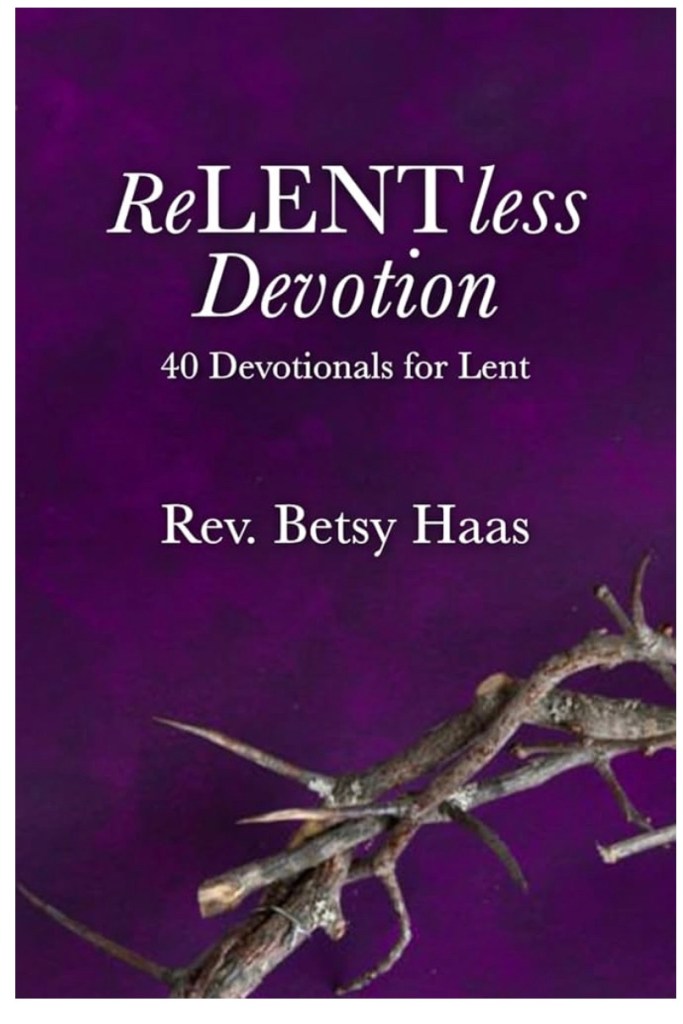
I am very happy to announce that my book, ReLENTless Devotion, has just been published. This book contains 40 days of Lent devotionals and a special Easter Sunday meditation. Lent begins on February 14th this year.

The season of Lent is a time of reflection, renewal, and re-examination. God invites us to do “heart surgery” during the time between Ash Wednesday and Easter Sunday in an effort to move deeper in our relationship with Christ. As we contemplate the journey to the cross that Jesus made on our behalf, we will learn and grow through our time spent in God’s word.

God invites us to walk through these days together and remember and read the Messianic prophesies, the poetic voices of the Psalms, hear from the Gospel writers of their first-hand observations of their friend and teacher, and contemplate Jesus’ own words. Each day’s reading offers a brief Scripture, an engaging reflection, and a daily prayer. It is hoped that by the time Easter arrives, we will be rededicated in our Lenten disciplines of study, meditation, fasting, service, prayer, repentance, and self-examination.

Lent is a time to come clean with God.

I hope you will join me as we endeavor to observe a Holy Lent together this year.

ReLENTless Devotion is now available at Amazon.

Inch by Inch

“Step by step, inch by inch…” this phrase from an old Three Stooges movie reminds me of how some people approach faith. There is nothing wrong with a methodical process, says the Methodist minister! Did you know that the term “Methodist” was given to the Wesley brothers at Oxford? The other students used it as a term of derision, noting how methodical the brothers were in their piety. Centuries later, it is still our identifying characteristic. We proudly approach our faith in a methodical way. Pursuing incremental progress toward a goal ensures that you continue to move forward, and that’s a good thing.

We are invited to practice spiritual disciplines as we participate in the serious work of moving step by step, inch by inch toward the goal of growing closer to God. Lent is not quite over yet!

Today’s reading introduces us to a step-by-step approach to prayer.

Philippians 1:1-6 (Common English Bible)


1 From Paul and Timothy, slaves of Christ Jesus.

To all those in Philippi who are God’s people in Christ Jesus, along with your supervisors and servants.

May the grace and peace from God our Father and the Lord Jesus Christ be with you.

I thank my God every time I mention you in my prayers. I’m thankful for all of you every time I pray, and it’s always a prayer full of joy. I’m glad because of the way you have been my partners in the ministry of the gospel from the time you first believed it until now. 

I’m sure about this: the one who started a good work in you will stay with you to complete the job by the day of Christ Jesus.

Paul was methodical in his prayers and always started with thanksgiving, as we see here. This is key, as it focuses us on God’s activity in our lives and in the lives of the people for whom we pray. When we concentrate on thanking God first for the blessings that are poured out, it helps us focus on God’s power before we even begin with our list of wants and needs. Giving thanks at the beginning of each prayer puts us in a spirit of praise, joy, gratitude, and humility. We remember how good God is.

The second step is intercession, where we “mention others” and petition God for the needs of others and ourselves. We ask God to intervene in our lives and our situations to bring healing, mercy, comfort, and grace. We are reminded that we exist in fellowship and connection with others. By putting the needs of others before our own, we focus on the mercy of God, and practice the type of humility Jesus taught from the cross.

A natural third step is confession, a necessary part of every prayer. We confess our distance from the righteousness to which we are called. We confess our willfulness. We confess our sins. We confess it all in the sure and certain knowledge that God hears our confessions and cleanses us of our sins. Confession focuses our attention on the forgiveness of God.

And then we finish with a doxology, or a word of praise. God is worthy of our praise every day, and it’s important to let God know that! We praise God, from whom all blessings flow, and that moment reminds us that we are not self-reliant, but indeed we rely on God for everything that we have and need. Praise focuses us on the joyfulness of worshipping God.

Try this pattern in your prayer time this week. Remember that God always answers our prayers, so be persistent. Prayer changes things…mostly it changes us.

Praise God from Whom all Blessings Flow by Michelle Robertson

The Promise of Joy

Let’s start today’s devotional with a riddle. Question: A cowboy rides into town on Friday and stays for three days. He rides out on Friday. How is this possible?

Answer: His horse’s name is Friday.

Groan!

Today’s reading is like a stepping into a riddle that Jesus gave his disciples just before the events of the crucifixion took place. Question: How can Jesus promise that in a little while they will no longer see him but then again in a little while they will see him? Answer: Jesus will be crucified and die, and so they won’t see him. But then he will be resurrected, so they will see him again, and their joy will be made complete. That joy will be so sure, nobody will be able to take it away from them, or us, ever again.

John 16:17-22 (Common English Bible)

17 Some of Jesus’ disciples said to each other, “What does he mean: ‘Soon you won’t see me, and soon after that you will see me’ and ‘Because I’m going to the Father’? 18 What does he mean by ‘soon’? We don’t understand what he’s talking about.”

19 Jesus knew they wanted to ask him, so he said, “Are you trying to find out from each other what I meant when I said, ‘Soon you won’t see me, and soon after that you will see me’? 20 I assure you that you will cry and lament, and the world will be happy. You will be sorrowful, but your sorrow will turn into joy. 

21 When a woman gives birth, she has pain because her time has come. But when the child is born, she no longer remembers her distress because of her joy that a child has been born into the world. 22 In the same way, you have sorrow now; but I will see you again, and you will be overjoyed. No one takes away your joy.

 Of all of God’s promises to us, this promise of eternal life through the birth, death, and resurrection of Christ is the one we can count on the most. There is no riddle to this. This promise comes with a washing away of our sins that is so complete we are made into a new creation. This promise comes with the guarantee that the troubles and the burdens of this world will be lifted from us, and we will walk in the purity of God’s grace. This promise comes with the certainty that we will sit at Jesus’ feet in eternity and bask in the glow of his teachings. This promise seals us as children of God. 

And so the sorrows of the world will be turned into joy. Notice that the promise is not that sorrow is replaced by joy, but it will be changed into joy, which carries with it the promise of being able to forget what the sorrow even was once it is no more. Like a mother in labor, the pain and sorrow of giving birth turns into the joy of holding a new life in your arms. This was my experience, and I was grateful for the “obstetrical amnesia” that turned pain into joy, … which was the only reason I had a second child!

What does this say to you today? Are you carrying a deep sorrow that you desperately need to turn over to the Lord? Jesus’ promise that he would see his disciples again turned out to be true. When he appeared to them in the Upper Room and on the shore of the sea of Tiberias, they were filled with a permanent joy that obliterated all of their sadness and confusion at his death. It is important to note that none of them ever wrote about Jesus’ death with regret. Their words reflect the great joy that the resurrection brought to the world. There is no riddle in that.

One of Jesus’ last promises was that he will be with us always, even to the end of the earth. That is one promise we can count on. Jesus is here; Jesus is near; bring your sorrow to him that you may find joy.

Waves of Joy by Michelle Robertson