If you read these devotionals on a regular basis, you have hopefully noticed that this space is a politics-free sanctuary. Indeed, my intent is to make Scripture approachable and understandable so that readers may form theologically-based opinions about every facet of life. But I have to share something that I heard recently. A friend who was very disappointed in the recent Presidential election commented to me that this election has made her long for the Second Coming of Christ. She then chuckled ruefully and went on to say, “and he better come back by January 19th!” I am sad that she feels that way, but I found it interesting that in her disappointment, her thoughts turned so quickly to the Second Coming. Sometimes the things that stress us the most are the ones that drive us back to God, and that’s never a bad thing.
I am not making light of anyone’s feelings about the election. But truly, all of our attention in every season of life should be focused on the Second Coming. We are citizens of heaven, and a better way of governance will be ours when we enter those gates. Christ the King will reign and all of our inadequate human leaders on every side and in every nation will fade away and become a thing of the past, not to be remembered or revered. Won’t that indeed be a wonderful day? All nations, races, and peoples will gather before one throne and worship the one true king. These present situations are something that just must be endured until then.
John 18 (The Message)
33 Pilate went back into the palace and called for Jesus. He said, “Are you the ‘King of the Jews’?”
34 Jesus answered, “Are you saying this on your own, or did others tell you this about me?”
35 Pilate said, “Do I look like a Jew? Your people and your high priests turned you over to me. What did you do?”
36 “My kingdom,” said Jesus, “doesn’t consist of what you see around you. If it did, my followers would fight so that I wouldn’t be handed over to the Jews. But I’m not that kind of king, not the world’s kind of king.”
Jesus’ kingdom will look nothing like the kingdoms of this world. His statement that his followers would only “fight for him” if his kingdom was like those of earth is a direct indication that his kingdom will not have warring, fighting, or violence. There is no kingdom on earth that can boast that.
He is not that kind of king.
37 Then Pilate said, “So, are you a king or not?”
Jesus answered, “You tell me. Because I am King, I was born and entered the world so that I could witness to the truth. Everyone who cares for truth, who has any feeling for the truth, recognizes my voice.”
Christ will reign over all the earth in due time. That is the truth. We who care for the truth and have any feeling for the truth recognize the voice of our one true king. And so we wait for righteousness, justice, and peace.
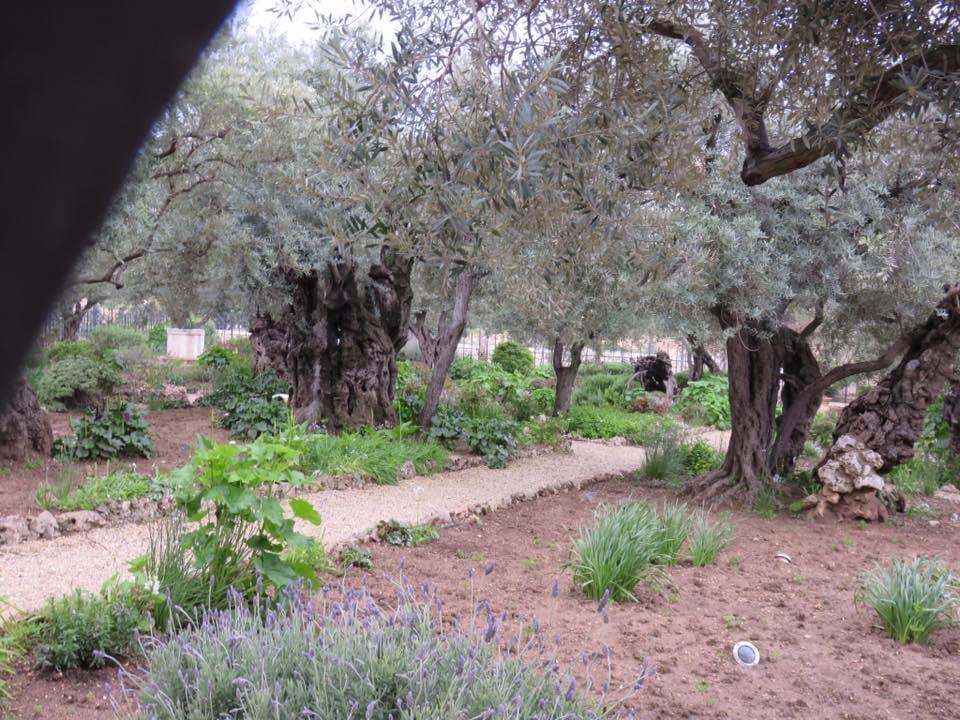
18 Jesus, having prayed this prayer, left with his disciples and crossed over the brook Kidron at a place where there was a garden. He and his disciples entered it.
2-4 Judas, his betrayer, knew the place because Jesus and his disciples went there often. So Judas led the way to the garden, and the Roman soldiers and police sent by the high priests and Pharisees followed. They arrived there with lanterns and torches and swords. Jesus, knowing by now everything that was imploding on him, went out and met them. He said, “Who are you after?”
They answered, “Jesus the Nazarene.”
5-6 He said, “That’s me.” The soldiers recoiled, totally taken aback. Judas, his betrayer, stood out like a sore thumb.
7 Jesus asked again, “Who are you after?”
They answered, “Jesus the Nazarene.”
8-9 “I told you,” said Jesus, “that’s me. I’m the one. So if it’s me you’re after, let these others go.” (This validated the words in his prayer, “I didn’t lose one of those you gave.”)
10 Just then Simon Peter, who was carrying a sword, pulled it from its sheath and struck the Chief Priest’s servant, cutting off his right ear. Malchus was the servant’s name.
11 Jesus ordered Peter, “Put back your sword. Do you think for a minute I’m not going to drink this cup the Father gave me?”
12-14 Then the Roman soldiers under their commander, joined by the Jewish police, seized Jesus and tied him up. They took him first to Annas, father-in-law of Caiaphas. Caiaphas was the Chief Priest that year. It was Caiaphas who had advised the Jews that it was to their advantage that one man die for the people.
15-16 Simon Peter and another disciple followed Jesus. That other disciple was known to the Chief Priest, and so he went in with Jesus to the Chief Priest’s courtyard. Peter had to stay outside. Then the other disciple went out, spoke to the doorkeeper, and got Peter in.
17 The young woman who was the doorkeeper said to Peter, “Aren’t you one of this man’s disciples?”
He said, “No, I’m not.”
18 The servants and police had made a fire because of the cold and were huddled there warming themselves. Peter stood with them, trying to get warm.
The Interrogation
19-21 Annas interrogated Jesus regarding his disciples and his teaching. Jesus answered, “I’ve spoken openly in public. I’ve taught regularly in meeting places and the Temple, where the Jews all come together. Everything has been out in the open. I’ve said nothing in secret. So why are you treating me like a traitor? Question those who have been listening to me. They know well what I have said. My teachings have all been aboveboard.”
22 When he said this, one of the policemen standing there slapped Jesus across the face, saying, “How dare you speak to the Chief Priest like that!”
23 Jesus replied, “If I’ve said something wrong, prove it. But if I’ve spoken the plain truth, why this slapping around?”
24 Then Annas sent him, still tied up, to the Chief Priest Caiaphas.
25 Meanwhile, Simon Peter was back at the fire, still trying to get warm. The others there said to him, “Aren’t you one of his disciples?”
He denied it, “Not me.”
26 One of the Chief Priest’s servants, a relative of the man whose ear Peter had cut off, said, “Didn’t I see you in the garden with him?”
27 Again, Peter denied it. Just then a rooster crowed.
The King of the Jews
28-29 They led Jesus then from Caiaphas to the Roman governor’s palace. It was early morning. They themselves didn’t enter the palace because they didn’t want to be disqualified from eating the Passover. So Pilate came out to them and spoke. “What charge do you bring against this man?”
30 They said, “If he hadn’t been doing something evil, do you think we’d be here bothering you?”
31-32 Pilate said, “You take him. Judge him by your law.”
The Jews said, “We’re not allowed to kill anyone.” (This would confirm Jesus’ word indicating the way he would die.)
33 Pilate went back into the palace and called for Jesus. He said, “Are you the ‘King of the Jews’?”
34 Jesus answered, “Are you saying this on your own, or did others tell you this about me?”
35 Pilate said, “Do I look like a Jew? Your people and your high priests turned you over to me. What did you do?”
36 “My kingdom,” said Jesus, “doesn’t consist of what you see around you. If it did, my followers would fight so that I wouldn’t be handed over to the Jews. But I’m not that kind of king, not the world’s kind of king.”
37 Then Pilate said, “So, are you a king or not?”
Jesus answered, “You tell me. Because I am King, I was born and entered the world so that I could witness to the truth. Everyone who cares for truth, who has any feeling for the truth, recognizes my voice.”
38-39 Pilate said, “What is truth?”
Then he went back out to the Jews and told them, “I find nothing wrong in this man. It’s your custom that I pardon one prisoner at Passover. Do you want me to pardon the ‘King of the Jews’?”
40 They shouted back, “Not this one, but Barabbas!” Barabbas was a Jewish freedom fighter.
The Thorn Crown of the King
19 1-3 So Pilate took Jesus and had him whipped. The soldiers, having braided a crown from thorns, set it on his head, threw a purple robe over him, and approached him with, “Hail, King of the Jews!” Then they greeted him with slaps in the face.
4-5 Pilate went back out again and said to them, “I present him to you, but I want you to know that I do not find him guilty of any crime.” Just then Jesus came out wearing the thorn crown and purple robe.
Pilate announced, “Here he is: the Man.”
6 When the high priests and police saw him, they shouted in a frenzy, “Crucify! Crucify!”
Pilate told them, “You take him. You crucify him. I find nothing wrong with him.”
7 The Jews answered, “We have a law, and by that law he must die because he claimed to be the Son of God.”
8-9 When Pilate heard this, he became even more scared. He went back into the palace and said to Jesus, “Where did you come from?”
Jesus gave no answer.
10 Pilate said, “You won’t talk? Don’t you know that I have the authority to pardon you, and the authority to—crucify you?”
11 Jesus said, “You haven’t a shred of authority over me except what has been given you from heaven. That’s why the one who betrayed me to you has committed a far greater fault.”
12 At this, Pilate tried his best to pardon him, but the Jews shouted him down: “If you pardon this man, you’re no friend of Caesar’s. Anyone setting himself up as ‘king’ defies Caesar.”
13-14 When Pilate heard those words, he led Jesus outside. He sat down at the judgment seat in the area designated Stone Court (in Hebrew, Gabbatha). It was the preparation day for Passover. The hour was noon. Pilate said to the Jews, “Here is your king.”
15 They shouted back, “Kill him! Kill him! Crucify him!”
Pilate said, “I am to crucify your king?”
The high priests answered, “We have no king except Caesar.”
16-19 Pilate caved in to their demand. He turned him over to be crucified.
The Crucifixion
They took Jesus away. Carrying his cross, Jesus went out to the place called Skull Hill (the name in Hebrew is Golgotha), where they crucified him, and with him two others, one on each side, Jesus in the middle. Pilate wrote a sign and had it placed on the cross. It read:
jesus the nazarene the king of the jews.
20-21 Many of the Jews read the sign because the place where Jesus was crucified was right next to the city. It was written in Hebrew, Latin, and Greek. The Jewish high priests objected. “Don’t write,” they said to Pilate, “‘The King of the Jews.’ Make it, ‘This man said, “I am the King of the Jews.”’”
23-24 When they crucified him, the Roman soldiers took his clothes and divided them up four ways, to each soldier a fourth. But his robe was seamless, a single piece of weaving, so they said to each other, “Let’s not tear it up. Let’s throw dice to see who gets it.” This confirmed the Scripture that said, “They divided up my clothes among them and threw dice for my coat.” (The soldiers validated the Scriptures!)
24-27 While the soldiers were looking after themselves, Jesus’ mother, his aunt, Mary the wife of Clopas, and Mary Magdalene stood at the foot of the cross. Jesus saw his mother and the disciple he loved standing near her. He said to his mother, “Woman, here is your son.” Then to the disciple, “Here is your mother.” From that moment the disciple accepted her as his own mother.
28 Jesus, seeing that everything had been completed so that the Scripture record might also be complete, then said, “I’m thirsty.”
29-30 A jug of sour wine was standing by. Someone put a sponge soaked with the wine on a javelin and lifted it to his mouth. After he took the wine, Jesus said, “It’s done . . . complete.” Bowing his head, he offered up his spirit.
31-34 Then the Jews, since it was the day of Sabbath preparation, and so the bodies wouldn’t stay on the crosses over the Sabbath (it was a high holy day that year), petitioned Pilate that their legs be broken to speed death, and the bodies taken down. So the soldiers came and broke the legs of the first man crucified with Jesus, and then the other. When they got to Jesus, they saw that he was already dead, so they didn’t break his legs. One of the soldiers stabbed him in the side with his spear. Blood and water gushed out.
35 The eyewitness to these things has presented an accurate report. He saw it himself and is telling the truth so that you, also, will believe.
36-37 These things that happened confirmed the Scripture, “Not a bone in his body was broken,” and the other Scripture that reads, “They will stare at the one they pierced.”
* * *
38 After all this, Joseph of Arimathea (he was a disciple of Jesus, but secretly, because he was intimidated by the Jews) petitioned Pilate to take the body of Jesus. Pilate gave permission. So Joseph came and took the body.
39-42 Nicodemus, who had first come to Jesus at night, came now in broad daylight carrying a mixture of myrrh and aloes, about seventy-five pounds. They took Jesus’ body and, following the Jewish burial custom, wrapped it in linen with the spices. There was a garden near the place he was crucified, and in the garden a new tomb in which no one had yet been placed. So, because it was Sabbath preparation for the Jews and the tomb was convenient, they placed Jesus in it.
There is no need for commentary today. Just read this scripture and let it resonate in your soul. Read it all the way through. Don’t skim or stop because it’s long. Take your place with the others in the crowd. Warm yourself by the fire. Stand at the foot of the cross and see what happens.
See you on the other side.
John 18 (New Revised Standard Version)
18 When Jesus had finished praying, he and his disciples crossed the Kidron Valley and went into a garden. 2 Jesus had often met there with his disciples, and Judas knew where the place was.
3-5 Judas had promised to betray Jesus. So he went to the garden with some Roman soldiers and temple police, who had been sent by the chief priests and the Pharisees. They carried torches, lanterns, and weapons. Jesus already knew everything that was going to happen, but he asked, “Who are you looking for?”
They answered, “We are looking for Jesus from Nazareth!”
Jesus told them, “I am Jesus!” 6 At once they all backed away and fell to the ground.
7 Jesus again asked, “Who are you looking for?”
“We are looking for Jesus from Nazareth,” they answered.
8 This time Jesus replied, “I have already told you that I am Jesus. If I am the one you are looking for, let these others go. 9 Then everything will happen, just as I said, ‘I did not lose anyone you gave me.’”
10 Simon Peter had brought along a sword. He now pulled it out and struck at the servant of the high priest. The servant’s name was Malchus, and Peter cut off his right ear. 11 Jesus told Peter, “Put your sword away. I must drink from the cup that the Father has given me.”
Jesus Is Brought to Annas
12 The Roman officer and his men, together with the temple police, arrested Jesus and tied him up. 13 They took him first to Annas, who was the father-in-law of Caiaphas, the high priest that year. 14 This was the same Caiaphas who had told the Jewish leaders, “It is better if one person dies for the people.”
Peter Says He Doesn’t Know Jesus
15 Simon Peter and another disciple followed Jesus. That disciple knew the high priest, and he followed Jesus into the courtyard of the high priest’s house. 16 Peter stayed outside near the gate. But the other disciple came back out and spoke to the girl at the gate. She let Peter go in, 17 but asked him, “Aren’t you one of that man’s followers?”
“No, I am not!” Peter answered.
18 It was cold, and the servants and temple police had made a charcoal fire. They were warming themselves around it, when Peter went over and stood near the fire to warm himself.
Jesus Is Questioned by the High Priest
19 The high priest questioned Jesus about his followers and his teaching. 20 But Jesus told him, “I have spoken freely in front of everyone. And I have always taught in our meeting places and in the temple, where all of our people come together. I have not said anything in secret. 21 Why are you questioning me? Why don’t you ask the people who heard me? They know what I have said.”
22 As soon as Jesus said this, one of the temple police hit him and said, “That’s no way to talk to the high priest!”
23 Jesus answered, “If I have done something wrong, say so. But if not, why did you hit me?” 24 Jesus was still tied up, and Annas sent him to Caiaphas the high priest.
Peter Again Denies that He Knows Jesus
25 While Simon Peter was standing there warming himself, someone asked him, “Aren’t you one of Jesus’ followers?”
Again Peter denied it and said, “No, I am not!”
26 One of the high priest’s servants was there. He was a relative of the servant whose ear Peter had cut off, and he asked, “Didn’t I see you in the garden with that man?”
27 Once more Peter denied it, and right then a rooster crowed.
Jesus Is Tried by Pilate
28 It was early in the morning when Jesus was taken from Caiaphas to the building where the Roman governor stayed. But the crowd waited outside. Any of them who had gone inside would have become unclean and would not be allowed to eat the Passover meal.
29 Pilate came out and asked, “What charges are you bringing against this man?”
30 They answered, “He is a criminal! That’s why we brought him to you.”
31 Pilate told them, “Take him and judge him by your own laws.”
The crowd replied, “We are not allowed to put anyone to death.” 32 And so what Jesus said about his death would soon come true.
33 Pilate then went back inside. He called Jesus over and asked, “Are you the king of the Jews?”
34 Jesus answered, “Are you asking this on your own or did someone tell you about me?”
35 “You know I’m not a Jew!” Pilate said. “Your own people and the chief priests brought you to me. What have you done?”
36 Jesus answered, “My kingdom doesn’t belong to this world. If it did, my followers would have fought to keep me from being handed over to the Jewish leaders. No, my kingdom doesn’t belong to this world.”
37 “So you are a king,” Pilate replied.
“You are saying that I am a king,” Jesus told him. “I was born into this world to tell about the truth. And everyone who belongs to the truth knows my voice.”
38 Pilate asked Jesus, “What is truth?”
Jesus Is Sentenced to Death
Pilate went back out and said, “I don’t find this man guilty of anything! 39 And since I usually set a prisoner free for you at Passover, would you like for me to set free the king of the Jews?”
40 They shouted, “No, not him! We want Barabbas.” Now Barabbas was a terrorist.
19 Pilate gave orders for Jesus to be beaten with a whip. 2 The soldiers made a crown out of thorn branches and put it on Jesus. Then they put a purple robe on him. 3 They came up to him and said, “Hey, you king of the Jews!” They also hit him with their fists.
4 Once again Pilate went out. This time he said, “I will have Jesus brought out to you again. Then you can see for yourselves that I have not found him guilty.”
5 Jesus came out, wearing the crown of thorns and the purple robe. Pilate said, “Here is the man!”
6 When the chief priests and the temple police saw him, they yelled, “Nail him to a cross! Nail him to a cross!”
Pilate told them, “You take him and nail him to a cross! I don’t find him guilty of anything.”
7 The crowd replied, “He claimed to be the Son of God! Our Jewish Law says that he must be put to death.”
8 When Pilate heard this, he was terrified. 9 He went back inside and asked Jesus, “Where are you from?” But Jesus did not answer.
10 “Why won’t you answer my question?” Pilate asked. “Don’t you know that I have the power to let you go free or to nail you to a cross?”
11 Jesus replied, “If God had not given you the power, you couldn’t do anything at all to me. But the one who handed me over to you did something even worse.”
12 Then Pilate wanted to set Jesus free. But the crowd again yelled, “If you set this man free, you are no friend of the Emperor! Anyone who claims to be a king is an enemy of the Emperor.”
13 When Pilate heard this, he brought Jesus out. Then he sat down on the judge’s bench at the place known as “The Stone Pavement.” In Aramaic this pavement is called “Gabbatha.” 14 It was about noon on the day before Passover, and Pilate said to the crowd, “Look at your king!”
15 “Kill him! Kill him!” they yelled. “Nail him to a cross!”
“So you want me to nail your king to a cross?” Pilate asked.
The chief priests replied, “The Emperor is our king!” 16 Then Pilate handed Jesus over to be nailed to a cross.
Jesus Is Nailed to a Cross
Jesus was taken away, 17 and he carried his cross to a place known as “The Skull.” In Aramaic this place is called “Golgotha.” 18 There Jesus was nailed to the cross, and on each side of him a man was also nailed to a cross.
19 Pilate ordered the charge against Jesus to be written on a board and put above the cross. It read, “Jesus of Nazareth, King of the Jews.” 20 The words were written in Hebrew, Latin, and Greek.
The place where Jesus was taken wasn’t far from the city, and many of the Jewish people read the charge against him. 21 So the chief priests went to Pilate and said, “Why did you write that he is King of the Jews? You should have written, ‘He claimed to be King of the Jews.’”
22 But Pilate told them, “What is written will not be changed!”
23 After the soldiers had nailed Jesus to the cross, they divided up his clothes into four parts, one for each of them. But his outer garment was made from a single piece of cloth, and it did not have any seams. 24 The soldiers said to each other, “Let’s not rip it apart. We will gamble to see who gets it.” This happened so that the Scriptures would come true, which say,
“They divided up my clothes and gambled for my garments.”
The soldiers then did what they had decided.
25 Jesus’ mother stood beside his cross with her sister and Mary the wife of Clopas. Mary Magdalene was standing there too. 26 When Jesus saw his mother and his favorite disciple with her, he said to his mother, “This man is now your son.” 27 Then he said to the disciple, “She is now your mother.” From then on, that disciple took her into his own home.
The Death of Jesus
28 Jesus knew that he had now finished his work. And in order to make the Scriptures come true, he said, “I am thirsty!” 29 A jar of cheap wine was there. Someone then soaked a sponge with the wine and held it up to Jesus’ mouth on the stem of a hyssop plant. 30 After Jesus drank the wine, he said, “Everything is done!” He bowed his head and died.
A Spear Is Stuck in Jesus’ Side
31 The next day would be both a Sabbath and the Passover. It was a special day for the Jewish people, and they did not want the bodies to stay on the crosses during that day. So they asked Pilate to break the men’s legs and take their bodies down. 32 The soldiers first broke the legs of the other two men who were nailed there. 33 But when they came to Jesus, they saw that he was already dead, and they did not break his legs.
34 One of the soldiers stuck his spear into Jesus’ side, and blood and water came out. 35 We know this is true, because it was told by someone who saw it happen. Now you can have faith too. 36 All this happened so that the Scriptures would come true, which say, “No bone of his body will be broken” 37 and, “They will see the one in whose side they stuck a spear.”
Jesus Is Buried
38 Joseph from Arimathea was one of Jesus’ disciples. He had kept it secret though, because he was afraid of the Jewish leaders. But now he asked Pilate to let him have Jesus’ body. Pilate gave him permission, and Joseph took it down from the cross.
39 Nicodemus also came with about seventy-five pounds of spices made from myrrh and aloes. This was the same Nicodemus who had visited Jesus one night. 40 The two men wrapped the body in a linen cloth, together with the spices, which was how the Jewish people buried their dead. 41 In the place where Jesus had been nailed to a cross, there was a garden with a tomb that had never been used. 42 The tomb was nearby, and since it was the time to prepare for the Sabbath, they were in a hurry to put Jesus’ body there.



 At Water’s Edge