Birthright
I came upon a woman in the hair salon this week who was seated on the couch with her foot propped up. She wore a black orthopedic boot on her injured foot, and I saw crutches waiting along the wall for her. I expressed sympathy for her situation and then heard the whole story of how she slipped on the ice and fell down some stairs last February, Because she was gripping the railing, her entire body twisted, dislocating her ankle and tearing the tendons. The long months between then and now were filled with physical therapy, surgery, more injury to her hip and knee ligaments as her body accommodated the ankle injury, etc. It reminded me of the classic children’s book, “If You Give a Mouse a Cookie,” where each decision resulted in a further consequence that had to be dealt with. I certainly sympathized, as I have been there myself with injuries. The day I saw her was the first day she could drive by herself in six months, and she is beginning to see the light at the end of the tunnel.
In our lectionary passage today, we see Jacob at a similar junction in his life. He was the younger of two sons of Isaac but had connived and deceived his father into giving him the birthright that was legally Esau’s. The birthright gave the eldest son control of the land and the family’s fortunes. Once that word was spoken, there was no turning back for any of them. Like the mouse’s cookie, the deception led to further consequences. Esau was angry and wanted revenge, and Jacob’s place as birthright-holder meant that he could not take a wife from among the Canaanites were they lived. For both reasons, Isaac sent Jacob away and Jacob found himself without a home or a family around him.
Genesis 28 (Common English Bible)
10 Jacob left Beer-sheba and set out for Haran. 11 He reached a certain place and spent the night there. When the sun had set, he took one of the stones at that place and put it near his head. Then he lay down there. 12 He dreamed and saw a raised staircase, its foundation on earth and its top touching the sky, and God’s messengers were ascending and descending on it. 13 Suddenly the Lord was standing on it and saying, “I am the Lord, the God of your father Abraham and the God of Isaac. I will give you and your descendants the land on which you are lying. 14 Your descendants will become like the dust of the earth; you will spread out to the west, east, north, and south. Every family of earth will be blessed because of you and your descendants.
The legal implication of the stolen birthright meant that Jacob would now become the patriarch of Israel, and his life was forever changed. But as we read it, we realize that it was God’s plan all along for the younger brother to usurp the older one. The mouse got his cookie, the glass of milk, a napkin, and the land of milk and honey.
15 I am with you now, I will protect you everywhere you go, and I will bring you back to this land. I will not leave you until I have done everything that I have promised you.”
When Jacob was scheming for his father’s inheritance, he never imagined what would happen next. Did God approve of his lie? Nope. Did God use all things for the good of Israel? Always. Remember, Esau sold his priceless birthright for a mere bowl of stew. If we think that little of the enormous blessings God has bestowed upon us, we too will pay the consequences. The continuing damage to our environment comes to mind. We have failed to take good care of God’s creation and the evidence of our grabbing the cookie with disregard to the planet is all around us in the form of unbearable heat waves, polluted air and oceans, toxic spills, out of control wild fires, and other environmental disasters. We have forsaken the birthright of our beautiful earth.
16 When Jacob woke from his sleep, he thought to himself, The Lord is definitely in this place, but I didn’t know it.
So here’s the good news. Even when we are in a spiral of bad decisions, the consequences of someone else’s actions, or things that are plummeting out of control, the Lord is still with us. Sometimes we are like Jacob when we are dealing with things, and we don’t know that the Lord is there.
Are you in such a place right now? Take heart. The Lord is definitely in that place with you, even if you didn’t know it.
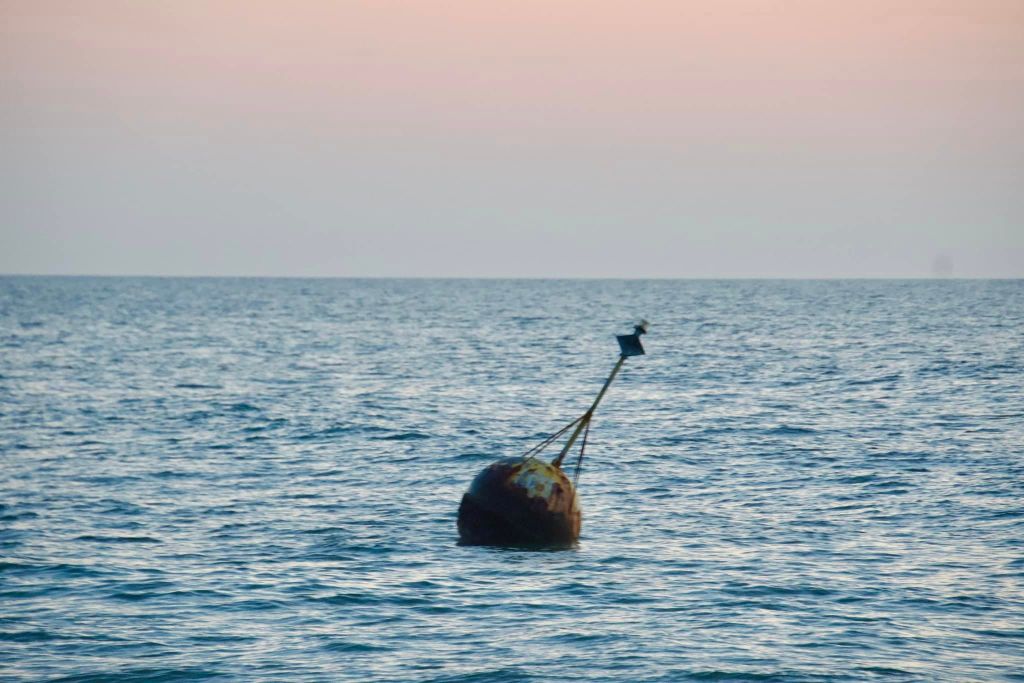
The Lord is in This Place by Michelle Robertson
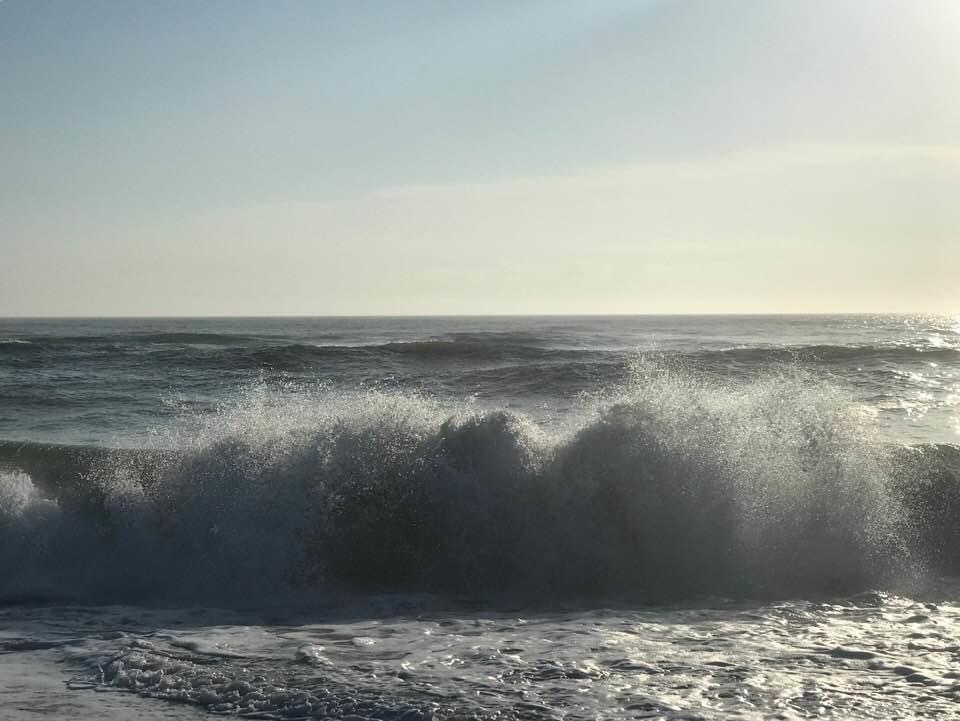
 At Water’s Edge