“Here!”

I recently had a fun conversation with a friend from my old church about Christmas Eve services. We were a large church that became huge on Christmas Eve, and at one point we had to offer four services to accommodate all of the worshippers. Calculating the amount of people that I personally would serve at one of three communion stations, my friend estimated that I would need to say, “the body and blood of Christ given to you” several hundred times that night. At our pre-Christmas Eve dinner with church members at our favorite Mexican restaurant, somebody suggested that for the ones gathered there, I could save myself and simply say, “Here!” That got a good laugh. Unfortunately, my oldest daughter was seated at the end of the table and missed the conversation. So imagine her surprise (and displeasure!) when she came forward in Mom’s line and was met with, “Here!”

Think for a moment about the power of taking communion. I bet you have received it in many places and in many forms, from the casual retreat setting to the most formal of presentations in a church. I once took communion at Notre Dame cathedral in Paris, which may count as the most elaborate setting for communion. But probably the most profound communions I have received have been the day I was confirmed in my childhood church in Gibbsboro, N.J., the first time I served it as a newly ordained pastor at my church in Peachtree City, GA, and serving my grandson his first ever communion in the downstairs hallway of the church. Communion is one of two sacraments in the United Methodist Church, and truly is the place were God meets us right where we are. I hope you feel the power and the presence of the Holy Spirit every time you receive the body and blood of Christ, given for you.

Our passage today marks the moment when the Last Supper became the Lord’s Supper from that night until eternity. Read it and feast:

Mark 14 (New International Version)

12 On the first day of the Festival of Unleavened Bread, when it was customary to sacrifice the Passover lamb, Jesus’ disciples asked him, “Where do you want us to go and make preparations for you to eat the Passover?”

13 So he sent two of his disciples, telling them, “Go into the city, and a man carrying a jar of water will meet you. Follow him. 14 Say to the owner of the house he enters, ‘The Teacher asks: Where is my guest room, where I may eat the Passover with my disciples?’ 15 He will show you a large room upstairs, furnished and ready. Make preparations for us there.”

16 The disciples left, went into the city and found things just as Jesus had told them. So they prepared the Passover.

17 When evening came, Jesus arrived with the Twelve. 18 While they were reclining at the table eating, he said, “Truly I tell you, one of you will betray me—one who is eating with me.”

19 They were saddened, and one by one they said to him, “Surely you don’t mean me?”

20 “It is one of the Twelve,” he replied, “one who dips bread into the bowl with me. 21 The Son of Man will go just as it is written about him. But woe to that man who betrays the Son of Man! It would be better for him if he had not been born.”

22 While they were eating, Jesus took bread, and when he had given thanks, he broke it and gave it to his disciples, saying, “Take it; this is my body.”

23 Then he took a cup, and when he had given thanks, he gave it to them, and they all drank from it.

24 “This is my blood of the covenant, which is poured out for many,” he said to them. 25 “Truly I tell you, I will not drink again from the fruit of the vine until that day when I drink it new in the kingdom of God.”

26 When they had sung a hymn, they went out to the Mount of Olives.

Amidst the disciples’ confusion, Judas’ betrayal, the ritual remembrance of the Passover, (when God delivered his children from death at the last plague in Egypt) and the gathering of friends for one last meal, Jesus abruptly breaks the bread and raises the cup, instituting the new covenant and the Eucharist.

When we gather in our churches tomorrow night for Maundy Thursday services, we will remember this exact moment. “Maundy” comes from the Latin word for “mandate, command” and refers to the new commandment that followed this evening’s actions, as recorded in John 13:34-35 34 “A new command I give you: Love one another. As I have loved you, so you must love one another. 35 By this everyone will know that you are my disciples, if you love one another.”

How well do we follow that new commandment? Do we live up to our communion invitation to participate in Christ by loving as he loved?

I hope you are able to attend a Maundy Thursday service. When you receive that broken body and shed blood, remember the new covenant. Then go out and be the new covenant for the world.
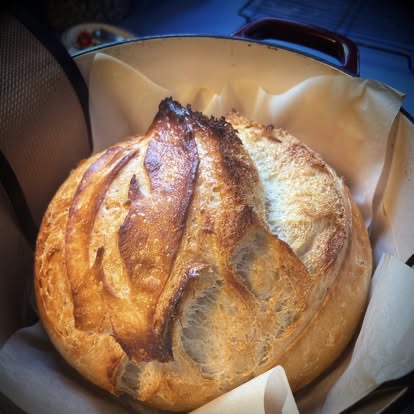
This is my body, broken for you … by Becca Ziegler


Crossing the Finish Line

One of the blessings of observing Lent for six weeks is the focused anticipation of Easter. Some of us anticipate it with the breathless excitement of a child waiting for her Easter basket full of jelly beans. Some of us anticipate it like a child attending an Easter egg hunt….we know there are hidden treats there somewhere, but we are still looking through the high grass. Most of us just want the six weeks of self-deprivation to end.

Whatever your perspective is as we begin this last week of Lent, Easter is coming. The hour approaches. The finish line is in sight! The culmination of this season of disciplined waiting is about to end.

How are you doing?

Have you kept up with the commitments you made on Ash Wednesday to be more diligent in your fasting, prayer, scripture reading, meditation, repentance, worship, and serving?

Yeah, me neither.

You might be like me. I have been satisfactory in one area. I picked up two Cokesbury contracts this Lent, so I am writing and studying Scripture for hours on end. But I totally bombed in another. I committed to not snacking in the evening and that has been a big fail. My definition of “evening” keeps getting pushed back…all the way to midnight.

Today’s Scripture is a glimpse of how Jesus spent his last hours before the crucifixion. Notice his complete and total commitment to what was about to happen.

John 12 (English Standard Version)


20 
Now among those who went up to worship at the feast were some Greeks. 21 So these came to Philip, who was from Bethsaida in Galilee, and asked him, “Sir, we wish to see Jesus.” 22 Philip went and told Andrew; Andrew and Philip went and told Jesus. 23 And Jesus answered them, “The hour has come for the Son of Man to be glorified. 24 Truly, truly, I say to you, unless a grain of wheat falls into the earth and dies, it remains alone; but if it dies, it bears much fruit. 25 Whoever loves his life loses it, and whoever hates his life in this world will keep it for eternal life. 26 If anyone serves me, he must follow me; and where I am, there will my servant be also. If anyone serves me, the Father will honor him.

The hour has come. This must be finished. A grain of wheat must die in the ground to produce seed for the fruit. You must die to your life to produce seed for eternal life. Jesus invites us to follow him in this last hour.

27 “Now is my soul troubled. And what shall I say? ‘Father, save me from this hour’? But for this purpose I have come to this hour. 28 Father, glorify your name.” Then a voice came from heaven: “I have glorified it, and I will glorify it again.” 29 The crowd that stood there and heard it said that it had thundered. Others said, “An angel has spoken to him.” 30 Jesus answered, “This voice has come for your sake, not mine. 31 Now is the judgment of this world; now will the ruler of this world be cast out. 32 And I, when I am lifted up from the earth, will draw all people to myself.” 33 He said this to show by what kind of death he was going to die.

Jesus didn’t waver at the end. Neither should we. Let us push on with our Lent practices and finish strong. Remember that the whole point of Lent is to bring us closer and deeper into God’s Holy presence. It’s not so much about “giving up” as it is “focusing in” on who God is and whose we are. That focus allows God to be glorified in our lives and the crowd of people around us will know we are Christ-followers by our example.

The finish line is in sight! No turning back.

Almost There

Do More, Talk Less

We are rounding the corner toward Holy Week, when the events of Jesus’ last days will begin to cascade. I read recently that one third of what we read and know of Jesus’ ministry happens in this one week. It makes your head spin. But for today, as you read the plotting, the scheming, the indignant rebukes of men sitting in judgment, and the final betrayal plan, pay attention to the unnamed woman who speaks not a word, but provides the only moment of pure adoration:

Mark 14:1-11 (New International Version)

14 Now the Passover and the Festival of Unleavened Bread were only two days away, and the chief priests and the teachers of the law were scheming to arrest Jesus secretly and kill him. “But not during the festival,” they said, “or the people may riot.”

While he was in Bethany, reclining at the table in the home of Simon the Leper, a woman came with an alabaster jar of very expensive perfume, made of pure nard. She broke the jar and poured the perfume on his head.

John identifies this woman as Mary, the sister of Martha and Lazarus. She is not to be confused with the sinful woman who anointed Jesus’ feet with perfume and then wiped her tears from his feet with her hair. (See Luke 7: 37 for that story.) In this Scripture, she is observed by others who are dining at Simon the Leper’s home, and they are highly critical of her actions.

Some of those present were saying indignantly to one another, “Why this waste of perfume? It could have been sold for more than a year’s wages and the money given to the poor.” And they rebuked her harshly.

Now remember which Mary this is. This is Lazarus’ sister, who observed Jesus’ resurrecting her brother from the dead. This Mary rebuked Jesus for being late when she sent for him to come and heal her ailing brother, arriving after he had died. This Mary put her understanding of Jesus’ power in a very small box, thinking that once her brother was gone, it was over. This Mary then watched as Jesus called Lazarus to come out of the grave, proving that Jesus was the resurrection and the LIFE. So Mary knew what to do. She anointed Jesus’ body for the burial that was impending, in the full hope and expectation of the resurrection that he had promised.

“Leave her alone,” said Jesus. “Why are you bothering her? She has done a beautiful thing to me. The poor you will always have with you, and you can help them any time you want. But you will not always have me. She did what she could. She poured perfume on my body beforehand to prepare for my burial. Truly I tell you, wherever the gospel is preached throughout the world, what she has done will also be told, in memory of her.”

10 Then Judas Iscariot, one of the Twelve, went to the chief priests to betray Jesus to them. 11 They were delighted to hear this and promised to give him money. So he watched for an opportunity to hand him over.

Mary’s example encourages us to take action. To not waste time planning, talking, arguing, and debating (I’m looking at you, church committees!) but simply to do.

What is Jesus calling you to do today?

Don’t say a word.

Just do it.

Talk Less by Becky Strickland