Another Route
I admire those of you who make New Year’s Resolutions. Doing this is a process of introspection, self-awareness, and determination. My daughter and her friends spend New Year’s Eve playing games while they contemplate last year’s resolutions and then commit to new ones. Declaring your resolutions in a friend group is a process of accountability, which is always wise when trying to set goals. Others can help us reach our objectives by holding us accountable for what we decided. Believe it or not, Lent is quickly approaching, and the season invites us to a spiritual accountability. This is the right time to make changes.
Many of our resolutions involve stopping a behavior and choosing a healthier path. We commit to stop over-eating, drinking, smoking, using recreational drugs, swearing, spending, cheating … name a vice, and it is sure to be on someone’s list of things they have resolved to quit in the New Year.
If you need to stop something, consider the end of this very familiar passage from the second Chapter of Matthew:
Matthew 2 (Common English Bible)
After Jesus was born in Bethlehem in the territory of Judea during the rule of King Herod, magi came from the east to Jerusalem. 2 They asked, “Where is the newborn king of the Jews? We’ve seen his star in the east, and we’ve come to honor him.”
3 When King Herod heard this, he was troubled, and everyone in Jerusalem was troubled with him. 4 He gathered all the chief priests and the legal experts and asked them where the Christ was to be born. 5 They said, “In Bethlehem of Judea, for this is what the prophet wrote:
6 You, Bethlehem, land of Judah,
by no means are you least among the rulers of Judah,
because from you will come one who governs,
who will shepherd my people Israel.”
Let’s pause here and take note of a few things. The rulership of King Herod suggests that this event happened about two years after Jesus’ birth. That knocks our nativity sets out of whack, doesn’t it? Posing the Wise Men around the infant king in his manger isn’t quite accurate, as he would have been a run-around-toddler at the time.
This Herod was Herod the Great. Bible scholar D.A. Carson writes this about Herod: “He was wealthy, politically gifted, intensely loyal, an excellent administrator, and clever enough to remain in the good graces of successive Roman emperors. His famine relief was superb and his building projects (including the temple, begun 20 B.C.) were admired even by his foes. But he loved power, inflicted incredibly heavy taxes on the people, and resented the fact that many Jews considered him a usurper. In his last years, suffering an illness that compounded his paranoia, he turned to cruelty and in fits of rage and jealousy killed close associates.” Herod died in 4 A.D., and we can assume that the Magi came to him just before his death when his paranoia was at its peak.
Also, the word “magi” is from the Greek “majoi,” which translates to astronomer. So our carols about these men being kings is a little off, perhaps a reference to Old Testament writings that prophesied that kings would come to worship the Messiah. Being astronomers is an important part of the story: They were men who studied the stars. God sent them a star. God will always speak to us in our own medium when he wants our attention. Where in your life is God speaking to you?
7 Then Herod secretly called for the magi and found out from them the time when the star had first appeared. 8 He sent them to Bethlehem, saying, “Go and search carefully for the child. When you’ve found him, report to me so that I too may go and honor him.” 9 When they heard the king, they went; and look, the star they had seen in the east went ahead of them until it stood over the place where the child was. 10 When they saw the star, they were filled with joy. 11 They entered the house and saw the child with Mary his mother. Falling to their knees, they honored him. Then they opened their treasure chests and presented him with gifts of gold, frankincense, and myrrh. 12 Because they were warned in a dream not to return to Herod, they went back to their own country by another route.
Verse 12 is the most important part for us today. They went back to their homes by another route. When we encounter God, we rarely keep going in the same direction, but rather leave our current path and start a whole new trajectory.
Where is God calling you to go home by a new route? You are not meant to stay the same after a ‘come to Jesus’ moment. What new route will you take this year?
Whatever it is, wherever you go, follow his star.
(Lent begins on February 14. I have just published a book of Lent devotionals, ReLENTless Devotion available at Amazon. Take a look!)

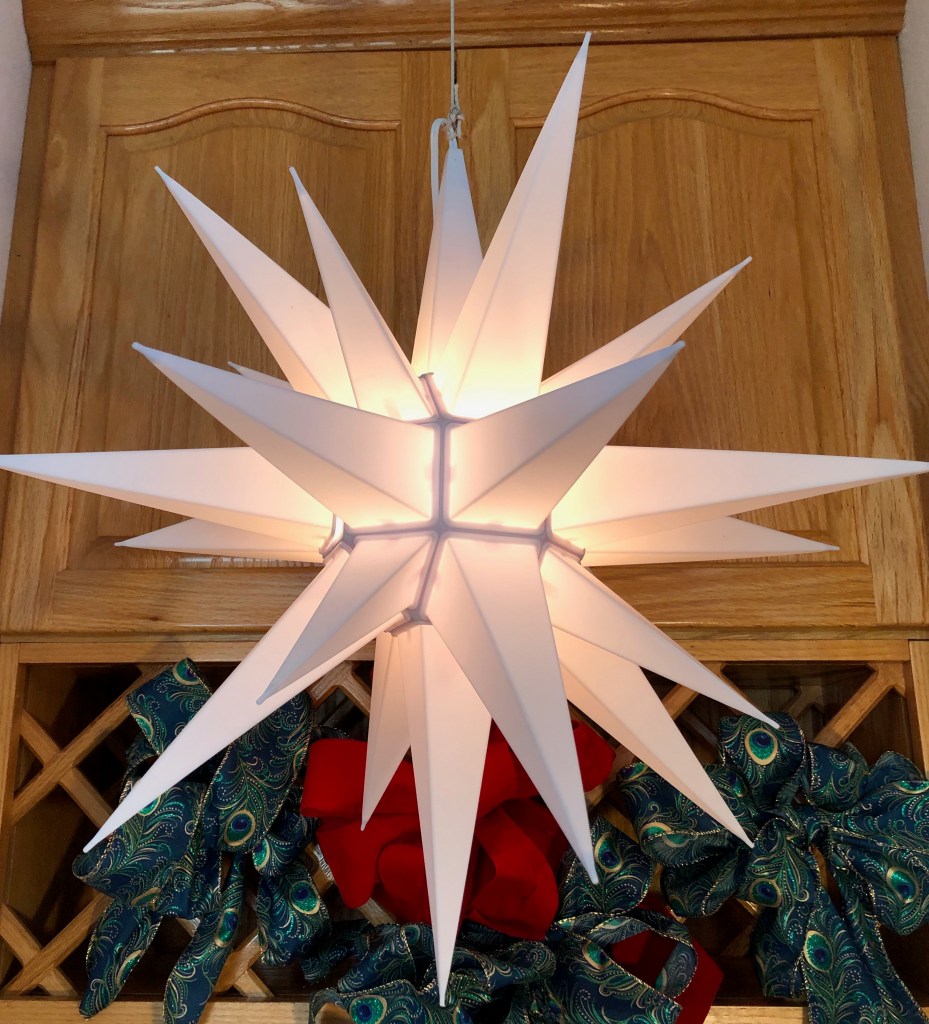
Star of Wonder by Michelle Robertson
 At Water’s Edge