There is a classic Dionne Warwick song that says “What the world needs now is love, sweet love.” This is biblical. This will preach. This is a timeless reminder that God is love, and the world needs him now more that ever. Fight me on this.
But I also contend that what the world needs now is peace. Peace is a by-product of love, of course, and so it follows that if we have love, we can find peace. But warring countries can agree to peace without loving each other. Warring spouses can find peace when love is thin. Warring siblings can set aside ego and unmet needs in the name of peace. You can have peace without love, because peace is a choice. It’s an attitude. It’s a relinquishing of self for a greater good.
Now we are going to talk about a well-known and well-loved passage without focusing on the person in the story. This borders on the blasphemous, but hang in there with me. This is the story of ”doubting Thomas” and he deserves the spotlight.
But today, I want us to focus on what Jesus says…three times. Once to introduce the idea, the second for repetition, and the third to drive home the point in case you missed it the first two times. Can you spot what Jesus says three times?
John 20 (Common English Bible)
19 It was still the first day of the week. That evening, while the disciples were behind closed doors because they were afraid of the Jewish authorities, Jesus came and stood among them. He said, “Peace be with you.”
20 After he said this, he showed them his hands and his side. When the disciples saw the Lord, they were filled with joy. 21 Jesus said to them again, “Peace be with you.
As the Father sent me, so I am sending you.” 22 Then he breathed on them and said, “Receive the Holy Spirit. 23 If you forgive anyone’s sins, they are forgiven; if you don’t forgive them, they aren’t forgiven.”
Jesus appears to Thomas and the disciples
24 Thomas, the one called Didymus, one of the Twelve, wasn’t with the disciples when Jesus came. 25 The other disciples told him, “We’ve seen the Lord!”
But he replied, “Unless I see the nail marks in his hands, put my finger in the wounds left by the nails, and put my hand into his side, I won’t believe.”
26 After eight days his disciples were again in a house and Thomas was with them. Even though the doors were locked, Jesus entered and stood among them. He said, “Peace be with you.”
Peace be with you. That was the message Jesus drove home above and beyond the message of doubt vs. faith, miraculous signs, Thomas’ awakening, and believing without seeing. Those are important teachings, there is no doubt. But why do you suppose Jesus repeats, “Peace be with you” three times?
He understood then and understands now that his absence brings a lack of peace. He knows that in those days when the disciples were locked behind a door, unsure of what had happened and scared to death, they would have no peace.
Neither do we, when we are locked behind doors of addiction, betrayal, abandonment, depression, grief, frustrations, and hardship. In the absence of alleluias, in the void that his departure created, in the confusion of life without him, there is no peace.
It is the same for us. When we turn our backs on our faith and wander away into oblivions of our own making, we notice the absence of any form of peace in our minds.
But Christ calls us back
He invites us to touch, see, and feel him. He invites us to enter into his presence. He challenges us to believe, even when we can’t see the blessing of his presence in our situation.
27 Then he said to Thomas, “Put your finger here. Look at my hands. Put your hand into my side. No more disbelief. Believe!”
28 Thomas responded to Jesus, “My Lord and my God!”
29 Jesus replied, “Do you believe because you see me? Happy are those who don’t see and yet believe.”
30 Then Jesus did many other miraculous signs in his disciples’ presence, signs that aren’t recorded in this scroll. 31 But these things are written so that you will believe that Jesus is the Christ, God’s Son, and that believing, you will have life in his name.
We are invited to have life in Jesus’ name. It is the only way to have hope, salvation, eternity in heaven, and peace on earth.
What changes do you need to make to have peace? Where is God calling you to lay down “self” and embrace his Son? Can you believe without seeing?
Both the Old and New Testaments have a lot to say on the subject of unity. A study of this topic reveals that it is part of God’s design for his creation that his people will live together in harmony. He designed us to need each other. When you explore spiritual gifts as outlined in Romans 12, you can see his big plan…each one of us is a part of a greater whole. Each must do his part for the entire body to function well. This requires that we work together toward the mission that God has given us.
God also made each one of us to be unique. Our diversity can be our greatest strength, yet it is often our diversity that tears us apart. Free will affords us the opportunity to think differently, read differently, interpret differently, respond differently, and form different opinions and passions than our fellow believers.
Many think that in our current culture, unity is impossible to achieve. I disagree.
My cockeyed optimism leads me to hope that we can celebrate our differences as we work toward a mutual goal. Sometimes that requires people to focus on the singular mission and lay down the differences that separate us.
Other times that requires a clean and healthy separation of groups so that different-leaning sides might each prosper toward the singular goal, in a “divide and conquer” kind of way.
Psalm 133 elevates the unity of families. Living together as one is likened to expensive oil lavished upon a leader’s head…so lavish that it drips even down to the collar.
Psalm 133 (Common English Bible)
Look at how good and pleasing it is when families live together as one! 2 It is like expensive oil poured over the head, running down onto the beard— Aaron’s beard!— which extended over the collar of his robes.
This ability to live together as one is as pleasing as a refreshing dew streaming on a mountain, and forecasts the blessing of eternal life.
3 It is like the dew on Mount Hermon streaming down onto the mountains of Zion, because it is there that the Lord has commanded the blessing: everlasting life.
Living together as one does not imply robotic thinking of a singular hive-mentality. It is presumed that within the camp there will be different needs, different graces, different opinions, and different abilities. But when the families commit to finding the oneness of a common goal, it is pleasing and good.
All believers share a common goal: to proclaim Christ crucified. Every camp is called to make disciples of Jesus Christ. We are all tasked with baptizing, teaching his commandments, and telling everything we know about his salvation.
God so loved the WORLD (in all of its diversity) that he gave his only Son. That is our story and our mission. May we learn to set our differences aside as we focus on the unity of our calling.
That the World Through Him Might be Saved by Michelle Robertson
Several decades ago I worked as a Resident Advisor in a dormitory at my alma mater. It was a wonderful job that actually prepared me for being a pastor. Resident Advisors were required to do an impressive amount of training that focused on peer counseling, active listening, leadership skills, personnel management, and personal skills development. The training was intended to make us better at assisting the students who were in our care.
All of the RAs in my all-female dorm were teamed with RAs in an all-male dorm under the supervision of a graduate student who was our Coordinator. One year the residence hall leadership decided it would be good to send us to a nearby camp on the weekend prior to the opening of school for some team-building. We hiked, cooked, discussed, listened, and it was all going swimmingly well…right up to the point when they announced that our final activity would be spelunking.
Having grown up eleven miles from Philadelphia in a thriving suburb, this girl didn’t know what spelunking was. But the area in central Pennsylvania where my university is located is well-known for its vast mountains, hills, valleys, and caves. Yes, we were going to explore a deep underground cave together.
This was when I learned for the first time in my young adult life that I have a pretty significant case of claustrophobia. It was not a good time to learn that.
It was in the final passage to the last underground chamber when the darkness overcame me and I froze. Inching along on my belly in a cold passage (where the space was so tight I could not lift my head up without the Pom Pom of my knit cap touching the ceiling) was my undoing. Fortunately, the only person behind me was the coordinator, and she knew what to do. The two of us backed up until we were in a space large enough to sit up and trade places. Then she passed me to catch up to the others and complete the trek. I sat in the darkness alone and had to wait for them to come back out before we could all make our way up to the surface.
I probably wasn’t alone in the ink for more than 5 minutes, and I could hear them exploring the final chamber. But the isolation and fear that I felt seemed to last more than 5 days.
1 John 1:1 (Common English Bible)
1 We announce to you what existed from the beginning, what we have heard, what we have seen with our eyes, what we have seen and our hands handled, about the word of life. 2 The life was revealed, and we have seen, and we testify and announce to you the eternal life that was with the Father and was revealed to us. 3 What we have seen and heard, we also announce it to you so that you can have fellowship with us. Our fellowship is with the Father and with his Son, Jesus Christ. 4 We are writing these things so that our joy can be complete.
The message: God is light
5 This is the message that we have heard from him and announce to you: “God is light and there is no darkness in him at all.”
Sometimes on Sundays after worship, someone will ask me where I learned how to pray. I am sure it was in that cave as a frightened nineteen-year old. I had enough “church“ in me to know that I needed the light to come right away to take away the darkness. Jesus sat beside me in the cold and comforted me until it was time to climb back up toward the light.
6 If we claim, “We have fellowship with him,” and live in the darkness, we are lying and do not act truthfully. 7 But if we live in the light in the same way as he is in the light, we have fellowship with each other, and the blood of Jesus, his Son, cleanses us from every sin.
There are many seasons of life that come at us with the threat of darkness. Losing a child, losing a home, losing a job, losing a marriage…any loss is a dark place to be. But when we turn our faces heavenward and seek out the Light of the World, eventually our eyes will adjust to the dawn of redemption and hope.
So keep climbing, my friends. Set your face toward the light of the Son. God is light and there is no darkness in him at all.
I have a clergy friend who used to dread the week after Easter. He works primarily in music and drama ministries and has coined the phrase P.E.D. He feels that the worst part of Easter is the Post Easter Depression that falls on church folks. All the preparation and excitement of musicals, dramas, Easter egg hunts, special children’s sermons, the rush of Holy Week activities, etc. amp us up into a high frenzy of spiritual energy. When it is finally all over, a kind of confetti-scattered, chocolate-smeared, post-party-clean-up lethargy comes over us and we just want to sit still for a moment.
But when we catch our breath, we realize that Easter isn’t just a day. Indeed, Easter is a state of mind. It is an attitude. It is a lifestyle.
How interesting it is, then, to look back at the people who were present at the Resurrection. What effect did the Resurrection have on the culture of their time? How did Jesus’ followers react? What happened to them?
In the 4th chapter of Acts, Luke describes a radical, new Easter People:
Acts 4 (The Message)
32-33 The whole congregation of believers was united as one—one heart, one mind! They didn’t even claim ownership of their own possessions. No one said, “That’s mine; you can’t have it.” They shared everything. The apostles gave powerful witness to the resurrection of the Master Jesus, and grace was on all of them.
If Easter is meant to do one thing, it is to unite believers. Easter calls us to be of one heart and one mind. Even more challenging, Easter calls us to share what we have with those who have not. That is our witness to the power of the resurrection. Easter People realize that it’s not about them, but rather it is about grace poured out unconditionally to everyone.
34-35 And so it turned out that not a person among them was needy. Those who owned fields or houses sold them and brought the price of the sale to the apostles and made an offering of it. The apostles then distributed it according to each person’s need.
Are you one of the Easter People? Where is God calling you to sacrifice and share with someone who is needy? What exactly does the resurrection mean to you? Are there needy people in your community who could experience grace through your generosity?
Let us strive to celebrate Easter all year by being the one-heart, one-mind kind of believers. Maybe this year we can turn our Post Easter Depression into People Eastering Deliberately.
There is no need for commentary today. Just read this scripture and let it resonate in your soul. Read it all the way through. Don’t skim or stop because it’s long. Take your place with the others in the crowd. Warm yourself by the fire. Stand at the foot of the cross and see what happens.
See you on the other side.
John 18 (New Revised Standard Version)
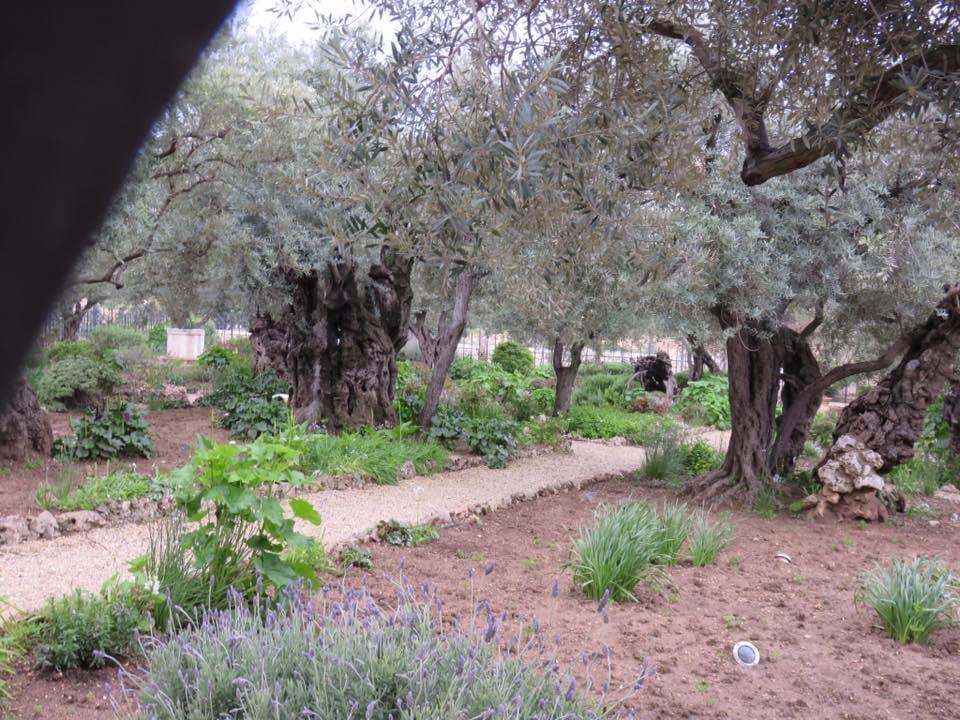
18 When Jesus had finished praying, he and his disciples crossed the Kidron Valley and went into a garden. 2 Jesus had often met there with his disciples, and Judas knew where the place was.
3-5 Judas had promised to betray Jesus. So he went to the garden with some Roman soldiers and temple police, who had been sent by the chief priests and the Pharisees. They carried torches, lanterns, and weapons. Jesus already knew everything that was going to happen, but he asked, “Who are you looking for?”
They answered, “We are looking for Jesus from Nazareth!”
Jesus told them, “I am Jesus!” 6 At once they all backed away and fell to the ground.
7 Jesus again asked, “Who are you looking for?”
“We are looking for Jesus from Nazareth,” they answered.
8 This time Jesus replied, “I have already told you that I am Jesus. If I am the one you are looking for, let these others go. 9 Then everything will happen, just as I said, ‘I did not lose anyone you gave me.’”
10 Simon Peter had brought along a sword. He now pulled it out and struck at the servant of the high priest. The servant’s name was Malchus, and Peter cut off his right ear. 11 Jesus told Peter, “Put your sword away. I must drink from the cup that the Father has given me.”
Jesus Is Brought to Annas
12 The Roman officer and his men, together with the temple police, arrested Jesus and tied him up. 13 They took him first to Annas, who was the father-in-law of Caiaphas, the high priest that year. 14 This was the same Caiaphas who had told the Jewish leaders, “It is better if one person dies for the people.”
Peter Says He Doesn’t Know Jesus
15 Simon Peter and another disciple followed Jesus. That disciple knew the high priest, and he followed Jesus into the courtyard of the high priest’s house. 16 Peter stayed outside near the gate. But the other disciple came back out and spoke to the girl at the gate. She let Peter go in, 17 but asked him, “Aren’t you one of that man’s followers?”
“No, I am not!” Peter answered.
18 It was cold, and the servants and temple police had made a charcoal fire. They were warming themselves around it, when Peter went over and stood near the fire to warm himself.
Jesus Is Questioned by the High Priest
19 The high priest questioned Jesus about his followers and his teaching. 20 But Jesus told him, “I have spoken freely in front of everyone. And I have always taught in our meeting places and in the temple, where all of our people come together. I have not said anything in secret. 21 Why are you questioning me? Why don’t you ask the people who heard me? They know what I have said.”
22 As soon as Jesus said this, one of the temple police hit him and said, “That’s no way to talk to the high priest!”
23 Jesus answered, “If I have done something wrong, say so. But if not, why did you hit me?” 24 Jesus was still tied up, and Annas sent him to Caiaphas the high priest.
Peter Again Denies that He Knows Jesus
25 While Simon Peter was standing there warming himself, someone asked him, “Aren’t you one of Jesus’ followers?”
Again Peter denied it and said, “No, I am not!”
26 One of the high priest’s servants was there. He was a relative of the servant whose ear Peter had cut off, and he asked, “Didn’t I see you in the garden with that man?”
27 Once more Peter denied it, and right then a rooster crowed.
Jesus Is Tried by Pilate
28 It was early in the morning when Jesus was taken from Caiaphas to the building where the Roman governor stayed. But the crowd waited outside. Any of them who had gone inside would have become unclean and would not be allowed to eat the Passover meal.
29 Pilate came out and asked, “What charges are you bringing against this man?”
30 They answered, “He is a criminal! That’s why we brought him to you.”
31 Pilate told them, “Take him and judge him by your own laws.”
The crowd replied, “We are not allowed to put anyone to death.” 32 And so what Jesus said about his death would soon come true.
33 Pilate then went back inside. He called Jesus over and asked, “Are you the king of the Jews?”
34 Jesus answered, “Are you asking this on your own or did someone tell you about me?”
35 “You know I’m not a Jew!” Pilate said. “Your own people and the chief priests brought you to me. What have you done?”
36 Jesus answered, “My kingdom doesn’t belong to this world. If it did, my followers would have fought to keep me from being handed over to the Jewish leaders. No, my kingdom doesn’t belong to this world.”
37 “So you are a king,” Pilate replied.
“You are saying that I am a king,” Jesus told him. “I was born into this world to tell about the truth. And everyone who belongs to the truth knows my voice.”
38 Pilate asked Jesus, “What is truth?”
Jesus Is Sentenced to Death
Pilate went back out and said, “I don’t find this man guilty of anything! 39 And since I usually set a prisoner free for you at Passover, would you like for me to set free the king of the Jews?”
40 They shouted, “No, not him! We want Barabbas.” Now Barabbas was a terrorist.
19 Pilate gave orders for Jesus to be beaten with a whip. 2 The soldiers made a crown out of thorn branches and put it on Jesus. Then they put a purple robe on him. 3 They came up to him and said, “Hey, you king of the Jews!” They also hit him with their fists.
4 Once again Pilate went out. This time he said, “I will have Jesus brought out to you again. Then you can see for yourselves that I have not found him guilty.”
5 Jesus came out, wearing the crown of thorns and the purple robe. Pilate said, “Here is the man!”
6 When the chief priests and the temple police saw him, they yelled, “Nail him to a cross! Nail him to a cross!”
Pilate told them, “You take him and nail him to a cross! I don’t find him guilty of anything.”
7 The crowd replied, “He claimed to be the Son of God! Our Jewish Law says that he must be put to death.”
8 When Pilate heard this, he was terrified. 9 He went back inside and asked Jesus, “Where are you from?” But Jesus did not answer.
10 “Why won’t you answer my question?” Pilate asked. “Don’t you know that I have the power to let you go free or to nail you to a cross?”
11 Jesus replied, “If God had not given you the power, you couldn’t do anything at all to me. But the one who handed me over to you did something even worse.”
12 Then Pilate wanted to set Jesus free. But the crowd again yelled, “If you set this man free, you are no friend of the Emperor! Anyone who claims to be a king is an enemy of the Emperor.”
13 When Pilate heard this, he brought Jesus out. Then he sat down on the judge’s bench at the place known as “The Stone Pavement.” In Aramaic this pavement is called “Gabbatha.” 14 It was about noon on the day before Passover, and Pilate said to the crowd, “Look at your king!”
15 “Kill him! Kill him!” they yelled. “Nail him to a cross!”
“So you want me to nail your king to a cross?” Pilate asked.
The chief priests replied, “The Emperor is our king!” 16 Then Pilate handed Jesus over to be nailed to a cross.
Jesus Is Nailed to a Cross
Jesus was taken away, 17 and he carried his cross to a place known as “The Skull.” In Aramaic this place is called “Golgotha.” 18 There Jesus was nailed to the cross, and on each side of him a man was also nailed to a cross.
19 Pilate ordered the charge against Jesus to be written on a board and put above the cross. It read, “Jesus of Nazareth, King of the Jews.” 20 The words were written in Hebrew, Latin, and Greek.
The place where Jesus was taken wasn’t far from the city, and many of the Jewish people read the charge against him. 21 So the chief priests went to Pilate and said, “Why did you write that he is King of the Jews? You should have written, ‘He claimed to be King of the Jews.’”
22 But Pilate told them, “What is written will not be changed!”
23 After the soldiers had nailed Jesus to the cross, they divided up his clothes into four parts, one for each of them. But his outer garment was made from a single piece of cloth, and it did not have any seams. 24 The soldiers said to each other, “Let’s not rip it apart. We will gamble to see who gets it.” This happened so that the Scriptures would come true, which say,
“They divided up my clothes and gambled for my garments.”
The soldiers then did what they had decided.
25 Jesus’ mother stood beside his cross with her sister and Mary the wife of Clopas. Mary Magdalene was standing there too. 26 When Jesus saw his mother and his favorite disciple with her, he said to his mother, “This man is now your son.” 27 Then he said to the disciple, “She is now your mother.” From then on, that disciple took her into his own home.
The Death of Jesus
28 Jesus knew that he had now finished his work. And in order to make the Scriptures come true, he said, “I am thirsty!” 29 A jar of cheap wine was there. Someone then soaked a sponge with the wine and held it up to Jesus’ mouth on the stem of a hyssop plant. 30 After Jesus drank the wine, he said, “Everything is done!” He bowed his head and died.
A Spear Is Stuck in Jesus’ Side
31 The next day would be both a Sabbath and the Passover. It was a special day for the Jewish people, and they did not want the bodies to stay on the crosses during that day. So they asked Pilate to break the men’s legs and take their bodies down. 32 The soldiers first broke the legs of the other two men who were nailed there. 33 But when they came to Jesus, they saw that he was already dead, and they did not break his legs.
34 One of the soldiers stuck his spear into Jesus’ side, and blood and water came out. 35 We know this is true, because it was told by someone who saw it happen. Now you can have faith too. 36 All this happened so that the Scriptures would come true, which say, “No bone of his body will be broken” 37 and, “They will see the one in whose side they stuck a spear.”
Jesus Is Buried
38 Joseph from Arimathea was one of Jesus’ disciples. He had kept it secret though, because he was afraid of the Jewish leaders. But now he asked Pilate to let him have Jesus’ body. Pilate gave him permission, and Joseph took it down from the cross.
39 Nicodemus also came with about seventy-five pounds of spices made from myrrh and aloes. This was the same Nicodemus who had visited Jesus one night. 40 The two men wrapped the body in a linen cloth, together with the spices, which was how the Jewish people buried their dead. 41 In the place where Jesus had been nailed to a cross, there was a garden with a tomb that had never been used. 42 The tomb was nearby, and since it was the time to prepare for the Sabbath, they were in a hurry to put Jesus’ body there.
There was a time in the late 1990’s when the World Series of Poker took over people’s imagination. It was a clever production on ESPN, with under-the-table cameras revealing people’s cards, overhead cameras showing the entire table and chip count, flashy graphics, and lively play-by-play commentary. It was where viewers learned the phrase “all in.” All in refers to when a player with a great hand pushes all of his or her chips across the table at once, betting their entire winnings on one single hand in a go-for-broke moment.
We continue our study of John 13 today as we dive deeper into the Last Supper. The moment has arrived when Jesus decides to wash the feet of his disciples. It was a shocking moment for them. Foot washing was a common practice of hospitality in that time. Hosts would often offer this service with a basin and towel to travelers who had walked long, dusty roads. But for Jesus, their teacher, rabbi, and master to perform such an act was startling, to say the least.
What exactly was Jesus doing?
John 13 (The Message)
13 1-2 Just before the Passover Feast, Jesus knew that the time had come to leave this world to go to the Father. Having loved his dear companions, he continued to love them right to the end. It was suppertime. The Devil by now had Judas, son of Simon the Iscariot, firmly in his grip, all set for the betrayal.
3-6 Jesus knew that the Father had put him in complete charge of everything, that he came from God and was on his way back to God. So he got up from the supper table, set aside his robe, and put on an apron. Then he poured water into a basin and began to wash the feet of the disciples, drying them with his apron. When he got to Simon Peter, Peter said, “Master, you wash my feet?”
It was a lesson in both humility and leadership. Jesus was setting the example of servant leadership by kneeling before his followers and performing this act of grace. He was teaching them that their role in the kingdom would be to do likewise…to love his followers, to care for their needs, and to never let their position overshadow the mission.
7 Jesus answered, “You don’t understand now what I’m doing, but it will be clear enough to you later.”
8 Peter persisted, “You’re not going to wash my feet—ever!”
Jesus said, “If I don’t wash you, you can’t be part of what I’m doing.”
9 “Master!” said Peter. “Not only my feet, then. Wash my hands! Wash my head!”
Peter comes out of his initial confusion with a proclamation of wanting to be all in for Jesus. Once he figures out what is happening, he pushes his chips across the table and wagers his entire being on that single act of grace.
How about you? Are you all in for Jesus? Or are you withholding something?
Many of us want to live lives that are sold out to his mission, but truth be told, there is some withholding going on. We hold back our resources, ignoring the call to tithe. We hold back our service, busying ourselves with pleasure pursuits. We hold back our openness to the marginalized. We hold back our unconditional love and judge others who offend or frighten us. In the end, very few of us are truly all in.
Today is a day to change that. When you figure out what it is that you are withholding from God, let go of it in the name of Jesus. It is never too late to push it all across the table and give it up for the kingdom.
Jesus calls us to be part of everything he is doing.
Have you ever been betrayed by someone you loved? There are few things in life that can crush us the way that betrayal does. When you love someone deeply and have come to trust them with all of your intimate thoughts, your faults, your hopes, your insecurities, your future, etc. and then they turn on you like a rabid dog, it hurts deeply. I have known this pain. I’m sure you have, too.
So did Jesus.
As we make our way closer to the crucifixion, our text today drops us directly into the moment at the Last Supper when things came to a head. Jesus told his disciples to remember him in the future whenever they took the bread and shared the cup. As he distributed these things that would become the elements of Communion for believers, he looked around the table at his friends.
Imagine how close they all were at that point. They had worked together with Jesus for three long, hard years. They had gone without the necessities of life. They had left their homes, families, and vocations. They had suffered hunger and ridicule. They had bonded like brothers.
And then, betrayal happened.
John 13 (Common English Bible)
21 After he said these things, Jesus was deeply disturbed and testified, “I assure you, one of you will betray me.”
22 His disciples looked at each other, confused about which of them he was talking about.23 One of the disciples, the one whom Jesus loved, was at Jesus’ side. 24 Simon Peter nodded at him to get him to ask Jesus who he was talking about. 25 Leaning back toward Jesus, this disciple asked, “Lord, who is it?”
We have to ask ourselves the same thing today. Lord, who is it….is it I? Have I betrayed you?
We betray our Lord when we dismiss the sacrifice that he made on our behalf and pursue worldly things. When we neglect worship, forget to pray, leave our Bibles to gather dust on the shelf, fail to teach our children how to be disciples, ignore his commandments, and fall short in serving the poor and the hungry in his name, we betray him. When we turn away from these things, we are just like the one who sold him out that night.
The good news is, God is always a God of second chances. It is never too late to start again. Where is God calling you back? It’s time to come home to him.
If you have ever raised a teenager, you may have gone through a period when said teenager decided that you know absolutely nothing. When we parent our toddlers and elementary-age children, we are the authority on everything. Then something strange happens when they enter Middle School…suddenly our parental brains empty of every last bit of knowledge as theirs fill up with all kinds of wisdom. Things we say to them at this point come off as sheer silliness and we are downright stupid in their eyes.
Luckily they grow out of that somewhere around the first year of college, when we miraculously become smart again.
Such is the case today in Paul’s letter to the church in Corinth. He writes to them about the way the truth of Jesus Christ is perceived by its critics:
1 Corinthians 1 (The Message)
18-21 The Message that points to Christ on the Cross seems like sheer silliness to those hellbent on destruction, but for those on the way of salvation it makes perfect sense. This is the way God works, and most powerfully as it turns out. It’s written,
I’ll turn conventional wisdom on its head, I’ll expose so-called experts as shams.
So where can you find someone truly wise, truly educated, truly intelligent in this day and age? Hasn’t God exposed it all as pretentious nonsense? Since the world in all its fancy wisdom never had a clue when it came to knowing God, God in his wisdom took delight in using what the world considered stupid—preaching, of all things!—to bring those who trust him into the way of salvation.
He was addressing the culture of his time over 2,000 years ago, but the same teaching applies to today. The cross indeed is foolishness to those who have not received it. Knowing Jesus, it turns out, is a spiritual knowledge born of experience rather than a scholarly, intellectual pursuit. You can read all you want to about Christ, but until you accept him as Savior and Lord, you will never really know him.
22-25 While Jews clamor for miraculous demonstrations and Greeks go in for philosophical wisdom, we go right on proclaiming Christ, the Crucified. Jews treat this like an anti-miracle—and Greeks pass it off as absurd. But to us who are personally called by God himself—both Jews and Greeks—Christ is God’s ultimate miracle and wisdom all wrapped up in one. Human wisdom is so cheap, so impotent, next to the seeming absurdity of God. Human strength can’t begin to compete with God’s “weakness.”
Is today the day when you will accept Christ as your Lord and Savior? Are you being called to humble yourself in his sight and receive him as your personal redeemer? If you’ve been thinking about this for awhile but haven’t experienced it yet, today is your day. You are one prayer away from salvation.
Each one of us who has already made this commitment is personally called by God himself to tell others about Christ, God’s “ultimate miracle and wisdom all wrapped up in one.” The way to do that is to tell your personal story. How do you know Jesus? Go and tell. You never know what seeds you will sow.
Have you ever found yourself doing something over and over, and not even knowing why? I remember reading a sermon illustration many years ago about a young wife who was preparing her first Christmas dinner for her new husband. She took a beautiful, large, honeyed ham and promptly cut both ends off. Then she placed it in her roasting pan, covered it with foil, and put it in the oven.
Her husband watched this with interest. “Why do you cut the ends off?” he asked. She hesitated for a moment, and then replied, “I’m not sure. It’s the way my mother always did it.” Finally, her curiosity got the better of her and she called her mother and asked why they always cut the ends off of the ham. Did it help it cook better? Did it add to the flavor? Did they prefer the ends to be crispy?
Her mother laughed and replied, “Oh, none of those reasons. I had to cut the ends off because my pan was always too small to fit the whole thing.”
Sometimes it helps to know the why.
We have talked a lot about the “who” of Christmas, the “where” of Christmas, the “how” of Christmas, and even the “what” of Christmas. Did you ever think about the “why?”
Titus 3 (Contemporary English Version)
God our Savior showed us how good and kind he is. 5 He saved us because of his mercy, and not because of any good things that we have done.
This passage helps us to uncover why Jesus was born. He came to save us because he is good, kind, and filled with mercy. But most importantly, he came to save us because we could not save ourselves. We are saved by grace through faith, and not by ANYTHING we can do on our own.
Do you get that? You can’t be “good enough.” Thankfully, that also means that you can be “bad enough” to not qualify for God’s grace. You can’t earn it or be ineligible to receive it….thanks be to God for that.
God washed us by the power of the Holy Spirit. He gave us new birth and a fresh beginning. 6 God sent Jesus Christ our Savior to give us his Spirit.
7 Jesus treated us much better than we deserve. He made us acceptable to God and gave us the hope of eternal life.
Why was Jesus born on that first Christmas? To make us acceptable to God and to give us hope for eternal life. He cleanses us of our sin and gives us new birth through water and the spirit.
The best part of it all is that we’ve been given something so much better than we deserve. Thanks be to God!
Jesus is the Light of the World by Cheryl Lynn Smith
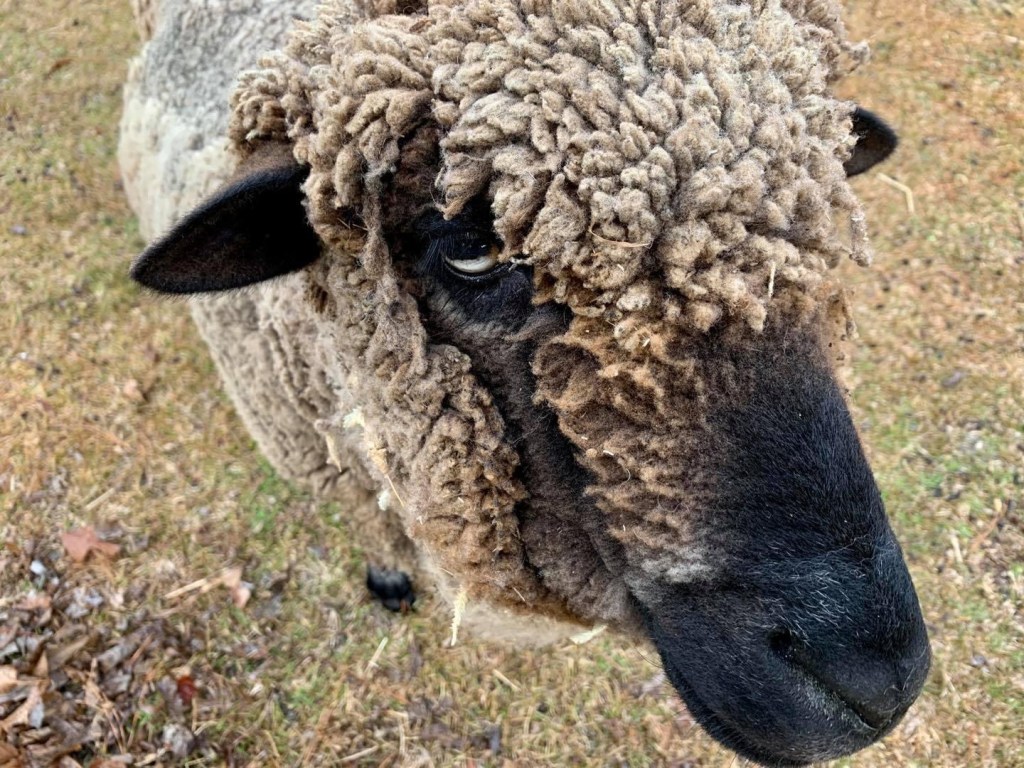
Last week I had the extraordinary opportunity to film a children’s sermon in a sheep pasture, surrounded by live sheep. This is a first for ya girl. It was a beautiful and startling experience. The plan was for me to sit on a chair in the middle of the open field and read a little story that I had written about Jesus’ birth as told from the perspective of the animals at the manger.
Cue the sheep!
So the kind sheep handler positioned the flock just off camera and was ready to spread out their feed around my chair. The idea was that when the camera rolled, they would be surrounding me as I read, peacefully eating at my feet. It almost went like that. Almost.
The sheep were apparently excited by my reading, which of course included a perspective from one of their own…a sheep named Shirley…who, it turned out, speaks with a British accent for some reason. Or maybe it was the snack being strewn about. In any case, when the camera rolled and the feed was distributed, they charged hard…so hard that my camera girl almost got sideswiped. And then as soon as the snack was gone, so were the sheep. I was alone in the pasture. Two of them eventually returned to give me the side-eye, but that was it.
When I returned home, my dog went nuts. Apparently the sheep residue that I brought in on my shoes was quite the treat for her overactive nose. How beautiful are the feet that announce the good news of the sheep pasture!
In our passage today, the prophet Isaiah raises up the beauty of the messengers who bring good news. The Messiah is coming! Lift up your voices and sing:
Isaiah 52 (New Revised Standard Version)
How beautiful upon the mountains are the feet of the messenger who announces peace, who brings good news, who announces salvation, who says to Zion, “Your God reigns.”
8 Listen! Your sentinels lift up their voices, together they sing for joy; for in plain sight they see the return of the Lord to Zion. 9 Break forth together into singing, you ruins of Jerusalem; for the Lord has comforted his people, he has redeemed Jerusalem.
Jesus came to redeem his people….ALL his people. With the birth of the Messiah, the entire world saw the salvation of God in one holy birth. The message of peace that Jesus brought is a message of hope for the world, and that message is as beautiful today as it was the very first time when cows, donkeys, and fleeting sheep heard it in a little town called Bethlehem.
10 The Lord has bared his holy arm before the eyes of all the nations; and all the ends of the earth shall see the salvation of our God.
And the glory of the Lord was revealed! So go and share the good news….your God reigns.






 At Water’s Edge