Word Choice
Word choice is important. I remember seeing those words written in red ink on my essays in school and that lesson is still with me to this day. Selecting proper and effective words to communicate a thought can make a huge difference. For example, has someone ever said to you after an argument, “I’m sorry you were hurt.” Think about what that means. It certainly doesn’t mean “I’m sorry I hurt you.” The arguer is shirking their responsibility for your pain.
When we receive the offering on Sunday mornings, we are careful to invite the congregation to worship with the giving of “God’s tithe” and our offerings. Right away we set up a Biblical expectation of what might go into the plate. Returning a portion of God’s provision every Sunday is not an act of generosity, it is an act of obedience that says two things. First, we understand the directive in Deuteronomy 14:22 to set aside a tithe, defined as one-tenth, of the crops each harvest and return it to God. Second, it acknowledges that apart from God, we have nothing. God gave us our resources in the first place, so a tithe is just returning back to God what belongs to God.
We can clearly see in the psalmist’s word choices in our Scripture today that he fully understood that God was the giver of all things. This song of gratitude reinforces that all good things come from God. The psalmist expresses thanks for the fact that God actively listens every time he calls on God’s name and is grateful that God is a breaker of the chains that had once bound him.
Psalm 116 ( Common English Bible)
What can I give back to the Lord
for all the good things he has done for me?
13 I’ll lift up the cup of salvation.
I’ll call on the Lord’s name.
14 I’ll keep the promises I made to the Lord
in the presence of all God’s people.
15 The death of the Lord’s faithful
is a costly loss in his eyes.
16 Oh yes, Lord, I am definitely your servant!
I am your servant and the son of your female servant—
you’ve freed me from my chains.
17 So I’ll offer a sacrifice of thanksgiving to you,
and I’ll call on the Lord’s name.
18 I’ll keep the promises I made to the Lord
in the presence of all God’s people,
19 in the courtyards of the Lord’s house,
which is in the center of Jerusalem.
Praise the Lord!
As a servant of the Lord, the psalmist offers a sacrifice of thanksgiving as he received the cup of salvation. This is a clue about the fact that this song was used at Passover, when Jews celebrated their deliverance from slavery in Egypt. Indeed, Psalms 113-118 are referred to as the “Egyptian Hallel Psalms” and are sung before and after the Seder meal.
We remember that Jesus was observing the Seder at the Last Supper on the night that he was betrayed and arrested. Thus was can be assured that Jesus and his disciples sang these prophetic and triumphant verses as Jesus raised the cup of salvation in that ritual moment. Then he became the cup of salvation of the New Covenant for the world with his death on cross and his resurrection three days later.
Are you bound in chains today? Do you need deliverance? This psalm is a beautiful reminder that the cup of salvation is offered to everyone, every day. When we call out to God, we are never ignored. We can be thankful that everything we have is a gift from God, including our salvation. Thanks be to God!
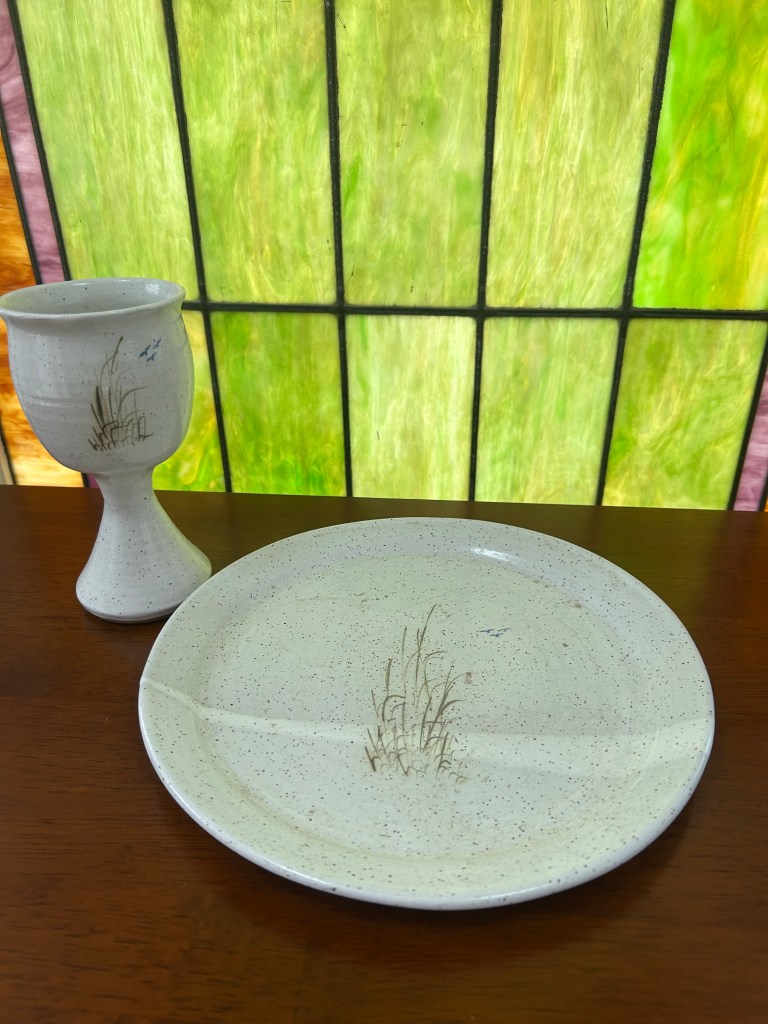
Cup of Salvation

