Out Loud

I will never forget the first time my prospective husband met my parents. He and I met at the beginning of my freshman year of college. Courtship was going very well, so I decided to bring him home to meet my family. That’s when he got the full picture of what he was getting into. We stepped inside the door and I yelled at the top of my lungs, “I’M HOOOOMME!!” I noticed him flinching, but I thought nothing of it. Then my mother responded full volume from upstairs: “I’LL BE DOWN IN A MINUTE!” and my dad hollered up from the basement, “BE RIGHT THERE!” I think the poor boy’s ears were bleeding. He looked at me and said, “Oh, good Lord. I’m dating the LOUD family.” Yup.

Being loud and articulate was how I was raised. There are times when we have to be loud in order to accomplish something that “quiet” can’t do. The writer of Psalm 77 agrees:

Psalm 77 (Common English Bible)

I cry out loud to God—
    out loud to God so that he can hear me!
During the day when I’m in trouble I look for my Lord.
    At night my hands are still outstretched and don’t grow numb;
        my whole being refuses to be comforted.
I remember God and I moan.
    I complain, and my spirit grows tired. Selah

We raise our voices because we want to the heard. But as I read this, I wonder: do we ever really need to be loud with God?

It is obvious that the psalmist is in some kind of deep distress. He extends his arms in prayer and supplication night after night. The cause of his anguish is not known, but it is bad enough to have kept him awake at night and eventually rendered him speechless:

You’ve kept my eyelids from closing.
    I’m so upset I can’t even speak.
5
 I think about days long past;
    I remember years that seem an eternity in the past.
I meditate with my heart at night;
    I complain, and my spirit keeps searching:

In his rumination, he began to question everything he knew and understood about God. This is not uncommon when the answers to our prayers are not coming as fast as we would like. Have you ever felt that way? Do you ever wonder “when will this torment end?”

“Will my Lord reject me forever?
    Will he never be pleased again?
Has his faithful love come to a complete end?
    Is his promise over for future generations?
Has God forgotten how to be gracious?
    Has he angrily stopped up his compassion?” Selah
10 It’s my misfortune, I thought,
    that the strong hand of the Most High is different now.

Fortunately for us, the psalmist finds a way out.

He remembered.

11 But I will remember the Lord’s deeds;
    yes, I will remember your wondrous acts from times long past.
12 I will meditate on all your works;
    I will ponder your deeds.
13 God, your way is holiness!
    Who is as great a god as you, God?
14 You are the God who works wonders;
    you have demonstrated your strength among all peoples.
15 With your mighty arm you redeemed your people;
    redeemed the children of Jacob and Joseph. 
Selah

And with the memories of all the great things God had done for Israel, he recalled God’s strength and his mighty arm. He recalled the great miracle of the parting of the Red Sea and how God delivered Moses, Aaron, and the entire nation:

16 The waters saw you, God—
    the waters saw you and reeled!
        Even the deep depths shook!
17 The clouds poured water,
    the skies cracked thunder;
        your arrows were flying all around!
18 The crash of your thunder was in the swirling storm;
    lightning lit up the whole world;
        the earth shook and quaked.
19 Your way went straight through the sea;
    your pathways went right through the mighty waters.
        But your footprints left no trace!
20 You led your people like sheep
    under the care of Moses and Aaron
.

So, here’s what I think. When you are in deep trouble, get loud. Go ahead and yell. Beat your fists on your chest. Weep and wail away until it’s out of your system.

If you still feel as though God has abandoned you, stop yelling and remember God’s goodness. Make a list of God’s miracles. Will any of this change God? Nope. But when you remember God’s unlimited power and strength by making an inventory of what God has done, you will be changed.

And that makes all the difference.

Night into Day by Michelle Robertson

No Shame in this Game

My local theater is showing a movie called “Call Sign Romeo.” It was completely filmed on the Outer Banks, taking advantage of our picturesque vistas and vibrant sunsets. It tells the story of a young high school wrestler who lives in a state of perpetual motion as he navigates the treacherous waters of school sports, big dreams, young romance, and his own sense of importance as he learns the value of “we over me.” His desire to one day become a Navy fighter pilot like his deceased father undergirds his ambition, which is often derailed by his arrogance and ego. This coming-of-age story is wonderfully told by a local doctor-turned-screenwriter, with a lot of local kids and adult actors filling the screen with great enthusiasm and sincerity.

Our hero learns the hard way that life is a team sport. He realizes that he will keep faltering and failing as long as he puts his faith only in himself while excluding the others around him. When he matures enough to put his team first and becomes a true leader, his own goals are met.

There is no shame in that game.

God calls all of us into this team sport called life together. We find ourselves on the wrestling mat over and over again, hoping to do better than we did in the last match.

We wrestle with temptation.

We wrestle with addiction.

We wrestle with entitlement and self-righteousness.

We wrestle with the need to be right.

We wrestle with depression, grief, and inertia.

What are you wrestling with today?

In the book of Romans, Paul talks about what happens when the constant wrestling with daily problems overwhelms us. Do we give in? Or do we endure?

Romans 5 (Common English Bible)

5 Therefore, since we have been made righteous through his faithfulness, we have peace with God through our Lord Jesus Christ. We have access by faith into this grace in which we stand through him, and we boast in the hope of God’s glory. 

When we boast in our own accomplishments, we reap the results that ego-driven behavior usually produces. That kind of emptiness is not what Christ intends for us. But when we boast in the hope of God’s glory, we acknowledge his power and might over our circumstances and claim that in all things, he works for our good. Even our problems.

But not only that! We even take pride in our problems, because we know that trouble produces endurance, endurance produces character, and character produces hope. This hope doesn’t put us to shame, because the love of God has been poured out in our hearts through the Holy Spirit, who has been given to us.

What problem is plaguing you today? Are you in trouble? Have you surrounded yourself with effective teammates? You can rest in the knowledge that trouble produces endurance, endurance produces character, and all of these things lead you to HOPE. All you have to do is to yield to God. God has a future planned for you and it is a future with HOPE! (Jeremiah 29:11).

So, if you feel as though life is slamming you down and you’re trapped in a “Whizzer” (look it up!), hang on. God is on the mat with you and your faith in him will help you to prevail.

Hope in Glory by Michelle Robertson

When You’re Scared

When was the last time you were afraid of something? Fear can affect us both mentally and physically. You can feel lightheaded, you probably feel your heart racing, maybe you experience a panic attack, or realize that your stomach is suddenly upset … the body manifests a multitude of reactions to fear.

Our 100 lb. dog had surgery last week that made her very wobbly when she came out of anesthesia. We had difficulty getting her in the van and up the stairs, resulting in her losing control of her back legs and possibly pulling a muscle or a tendon. For the next few days, she was afraid of steps. We realized this halfway up an exterior staircase at my father-in-law’s cottage, where her fear caused her to slip through the opening between steps . Fortunately she is large enough that she didn’t fall through, but she froze and refused to go any higher. It was a scary moment for the four of us as we tried to get her up the rest of the staircase. My heart was racing for the next 30 minutes. Being afraid is very strongly connected with feeling out of control, and nobody likes being out of control.

Today we read about the famous and successful Old Testament prophet, Elijah. We harken back to a time when right after a major victory, Elijah suddenly felt afraid and out of control:

I Kings 19:1-8 (Common English Bible)

19 Ahab told Jezebel all that Elijah had done, how he had killed all Baal’s prophets with the sword. Jezebel sent a messenger to Elijah with this message: “May the gods do whatever they want to me if by this time tomorrow I haven’t made your life like the life of one of them.”

Elijah was terrified. He got up and ran for his life. He arrived at Beer-sheba in Judah and left his assistant there. He himself went farther on into the desert a day’s journey. He finally sat down under a solitary broom bush. He longed for his own death: “It’s more than enough, Lord! Take my life because I’m no better than my ancestors.” He lay down and slept under the solitary broom bush.

The contrast between the events in the previous passage, where Elijah single-handedly defeated the prophets of Baal, and this image of him cowering under a broom bush longing for death is stunning. It is a good reminder to us that even the strongest and most calm warrior can succumb to fear. The struggle is real.

Then suddenly a messenger tapped him and said to him, “Get up! Eat something!” Elijah opened his eyes and saw flatbread baked on glowing coals and a jar of water right by his head. He ate and drank, and then went back to sleep. The Lord’s messenger returned a second time and tapped him. “Get up!” the messenger said. “Eat something, because you have a difficult road ahead of you.” Elijah got up, ate and drank, and went refreshed by that food for forty days and nights until he arrived at Horeb, God’s mountain.

I love the interaction between the angel and Elijah. This angel wasn’t playin’. “Get up! Get up!” We think that someone having an “angelic voice” is a pleasant thing, but that is not what Elijah experienced. No, this angel sounded like a bullhorn in the pre-dawn hours that jolts you awake with its urgency.

“Get up!”

Is God calling you to get up and get moving? Is he trying to awaken you to an urgent situation that requires you to do something? Is the alarm clock going off and alerting you to change your behavior, your attitude, or your thoughts before it’s too late?

Wake up and eat the flatbread! You see, when God tells us to get up and get going, he always provides sustenance for the task and the journey.

So that thing that you have been avoiding, that idea that frightens the heck out of you, or that calling that has you wishing for the broom tree comes with the guarantee of God’s presence and provision.

You don’t have to be afraid.

Wake Up Call by Michelle Robertson

Pentecost Lament

This Pentecost hit me like a linebacker running full speed. I know it is just a combination of world and personal events, but reading once again about the unifying power of the Holy Spirit as it came upon the disciples gathered together in Jerusalem left me with more despair than I expected.

Pentecost is usually a time of great celebration, as we say “Happy Birthday” to the church. It is usually a time of remembering how the miracle of the flame and wind endowed everyone with the ability to speak and hear each other’s language, which resulted in a common understanding and a common purpose. It is usually a time for us to reflect on the empowering of ordinary people to proclaim the Good News in ways that others could hear, regardless of nationality or race.

It is usually a time of hope.

Let’s go back and remember how it went:

Acts 2 (Common English Bible)

 When Pentecost Day arrived, they were all together in one place. Suddenly a sound from heaven like the howling of a fierce wind filled the entire house where they were sitting. They saw what seemed to be individual flames of fire alighting on each one of them. They were all filled with the Holy Spirit and began to speak in other languages as the Spirit enabled them to speak.

We don’t speak each other’s language anymore. In our country, we watch in horror as school children are murdered under their desks so that an 18-year-old can exercise his “right” to an assault weapon. We watch as politicians make decisions (or refuse to act) based on winning their next campaign rather than what is right for those who elected them. Even in my denomination, we mourn the inevitable separation that is now in motion because we can’t agree anymore. Where is the unity to which we are called? These are dark times everywhere you turn.

Listen to how great a miracle this was:

There were pious Jews from every nation under heaven living in Jerusalem. When they heard this sound, a crowd gathered. They were mystified because everyone heard them speaking in their native languages. They were surprised and amazed, saying, “Look, aren’t all the people who are speaking Galileans, every one of them? How then can each of us hear them speaking in our native language? Parthians, Medes, and Elamites; as well as residents of Mesopotamia, Judea, and Cappadocia, Pontus and Asia, 10 Phrygia and Pamphylia, Egypt and the regions of Libya bordering Cyrene; and visitors from Rome (both Jews and converts to Judaism), 11 Cretans and Arabs—we hear them declaring the mighty works of God in our own languages!” 12 They were all surprised and bewildered. Some asked each other, “What does this mean?” 

And then came the inevitable pre-internet trolls:

13 Others jeered at them, saying, “They’re full of new wine!”

Then Peter set them straight:

14 Peter stood with the other eleven apostles. He raised his voice and declared, “Judeans and everyone living in Jerusalem! Know this! Listen carefully to my words! 15 These people aren’t drunk, as you suspect; after all, it’s only nine o’clock in the morning!

(This obviously was centuries before the invention of the early morning tailgate for a noon college football game.)

16 Rather, this is what was spoken through the prophet Joel:

17 In the last days, God says,
I will pour out my Spirit on all people.
    Your sons and daughters will prophesy.
    Your young will see visions.
    Your elders will dream dreams.
18     Even upon my servants, men and women,
        I will pour out my Spirit in those days,
        and they will prophesy.
19 I will cause wonders to occur in the heavens above
    and signs on the earth below,
        blood and fire and a cloud of smoke.
20 The sun will be changed into darkness,
    and the moon will be changed into blood,
        before the great and spectacular day of the Lord comes.
21 And everyone who calls on the name of the Lord will be saved.

And this is where we find our word of hope in the midst of our lament. Peter begins with Joel’s quote about “the last days.” Neither Joel nor Peter were living in the last days. Are we?

God promises that he will pour his Spirit out again and prophesy, visions, and dreams will spring forth. The heavens will produce wonders too terrifying to imagine but then the spectacular day of the Lord’s coming will finally happen.

And the best news of all: everyone who calls on the name of the Lord will be saved. Hallelujah!

So there is hope after all! Jesus will come to redeem his people and the stupidity of this world will cease when he takes his throne.

Lord, hasten that day.

The Lord Reigns by Shirley Simpkins

The Long and Winding Road

The three-mile road that leads to my home in Colington Harbour is under construction. It is a winding and dangerous two-lane road, and we are finally going to have it widened. Apparently, some of the more extreme curves will be taken out, making it safer for travel. I keep telling myself that this is good news as I sit in stopped traffic as we maneuver around large teams of construction workers. The good news is it will only take two years!

Lord, have mercy.

I was thinking about this as I sat there the other day and I remembered a time not too long ago when the road was almost guaranteed to be empty. When we all went under stay-at-home orders at the beginning of the pandemic, it would not be unusual for me to get all the way from my house to the church in Kitty Hawk on Sunday morning (to preach via Facebook live to a cell phone on a tripod in an empty sanctuary) without passing a single car. Now THAT was weird. The desolation of the road made me feel a desolation in my soul. 

One of my favorite post-apocalyptic movies is “Omega Man.” It is the story of a vaccine scientist named Dr. Robert Neville, who is the last human survivor of a germ-war pandemic that has wiped out humanity. There are other survivors, no longer human, who have turned into violent anti-technology and anti-science mutant-predators. They hunt Neville at night using primitive weapons. Neville eventually finds a small group of two adults and a few children who somehow have a natural immunity. But in the beginning of the movie, he has lived in his generator-powered apartment for three years without seeing a single human being.

The opening scenes are absolutely haunting. Filmed in 1971, the director took shots of Los Angeles’ empty business district from a helicopter early on a Sunday morning, inserted still shots where people had been erased from the film, and cut to empty back-lot scenes to create a shocking vision of a post-apocalyptic city. 

The phrase “desolate road” caught my attention in today’s reading. I have come to realize after decades of bible study that it is often in these overlooked details that the story takes on life. Take a look:

Acts 8 (The Message)

26-28 Later God’s angel spoke to Philip: “At noon today I want you to walk over to that desolate road that goes from Jerusalem down to Gaza.” He got up and went. He met an Ethiopian eunuch coming down the road. The eunuch had been on a pilgrimage to Jerusalem and was returning to Ethiopia, where he was minister in charge of all the finances of Candace, queen of the Ethiopians. He was riding in a chariot and reading the prophet Isaiah.

Thus the scene is set. A member of the queen’s court, a busy man indeed, has been to the buzzing city of Jerusalem on a pilgrimage. He has been looking for something. He was wealthy enough to be riding in a chariot. He is a man versed in the Hebrew writings, and is reading Isaiah. This wealthy, educated, privileged man is traveling back from the Temple to his palace along a desolate road, and THAT is where he finds what he had been looking for.

29-30 The Spirit told Philip, “Climb into the chariot.” Running up alongside, Philip heard the eunuch reading Isaiah and asked, “Do you understand what you’re reading?”

31-33 He answered, “How can I without some help?” and invited Philip into the chariot with him. 

I love the weird friendliness of this exchange. Was it normal to invite some random guy running beside your chariot to jump in and chat? Or do you suppose the Holy Spirit had something to do with it? Surely Philip had been led there by the Holy Spirit, but we get the sense that the eunuch was also being led in this exchange.

The passage he was reading was this:

As a sheep led to slaughter,
    and quiet as a lamb being sheared,
He was silent, saying nothing.
    He was mocked and put down, never got a fair trial.
But who now can count his kin
    since he’s been taken from the earth?

34-35 The eunuch said, “Tell me, who is the prophet talking about: himself or some other?” Philip grabbed his chance. Using this passage as his text, he preached Jesus to him.

And so on this desolate road, we see a beautiful example of something Methodists call “prevenient grace.” Prevenient grace is the grace that goes before us, wooing us to God before we are aware of our need for him, or have any idea how to find him. Prevenient grace led Philip to the desolate road. Prevenient grace opened the eunuch’s mind and heart to receive him there. And as soon as the moment was right, Philip preached Jesus to him.

Such beauty can be born from desolation! And oh, how we needed to hear that this morning as we look down the empty roads of life. Are you traveling a desolate road? You aren’t alone.

Jesus is already on this road, having come before you. You can take heart that no matter what illness, tragedy, death, or terrible situation you are facing, you travel with the angels who have been sent to guide you. By God’s grace, you will get through it. Thanks be to God.

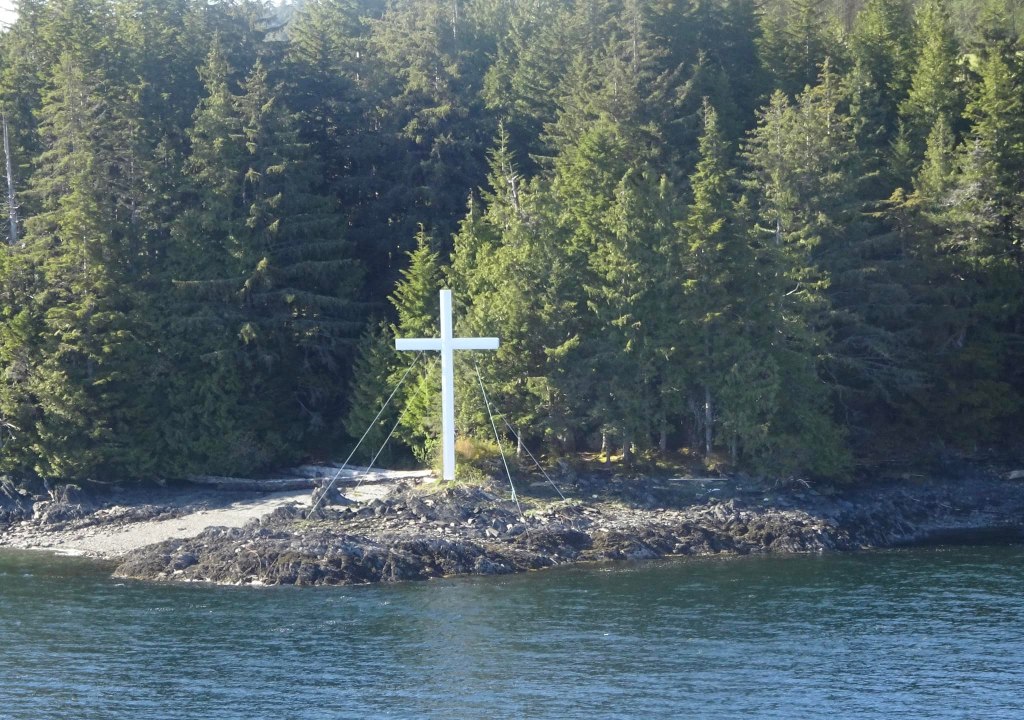
Desolate Glacier

Second Chance God

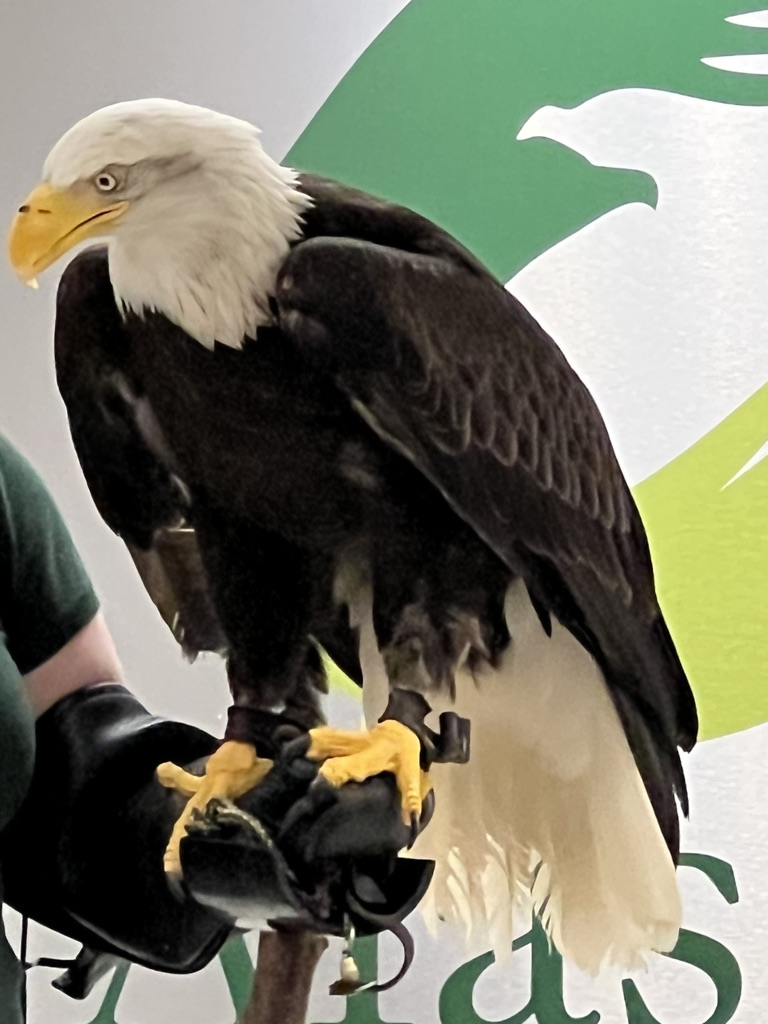
Meet Rain.

Rain is a very large bald eagle who lives in Sitka, Alaska. She was brought to the Alaska Raptor Center after being found on the ground in Juneau. As soon as the vet got close to Rain, she discovered the cause of Rain’s injury by the way Rain smelled. Rain had flown too close to a power line and had been electrocuted. Her right wingtip was burned.

They were able to surgically remove the damaged wing tip, but after weeks of flying lessons, it was determined that Rain would only ever be able to fly/hop short distances. She would not survive being released back into her forest, which is the goal of the Raptor center. Every year they rehabilitate over 200 damaged eagles, owls, hawks, etc. with the goal of sending them back home safely.

So, what about the ones who will never fly again?

This remarkable facility has a “Raptor-in-Residence” program where birds who can’t be returned to their natural habitats are allowed to live out a full life at this 17-acre aviary oasis. They are well cared for and well fed. And it was apparent that they are also very, very well loved by the staff and volunteers who work there.

In Rain’s case, it was discovered that she seemed to like being around people. During all of her recovery and flight training, she responded well to her handlers and displayed a calm curiosity about the humans around her. So, Rain now serves as a Raptor rehab resident and participates in their educational efforts with visitors and school children. She sits calmly on her trainer’s arm perch and looks around at the visitors with a curiosity usually reserved for cats. She also enjoys the salmon treats that the trainer gives her throughout the talk. What a life! 

When I met Rain, I was instantly reminded of these beautiful words from the book of Isaiah:

Isaiah 40:31  (Common English Bible)

But those who hope in the Lord will renew their strength;
they will fly up on wings like eagles;
they will run and not be tired;
they will walk and not be weary.

Have you ever been “burned” by flying too close to something dangerous? Are you exhausted with things right now? Has your strength run out?

Remember Rain. She is a reminder that those who hope in the Creator will be renewed, strengthened, and won’t grow weary. And don’t forget this: God is a God of second chances. He has a plan for your life, and it is a plan to give you a future with hope (Jeremiah 29:11).

May you soar like an eagle today!

Rain by Kenn Haas Jr.

Pay Attention

Today we return to last week’s passage from the book of Acts that took us on a fantastic voyage: one that began with a dream and ended with meeting a fascinating woman named Lydia. Come on board as we travel with Paul, Silas, Luke, and the other disciples on their first trip to Europe, where they covered impossible distances by ship and on foot:

Acts 16 (The Message)

9-10 That night Paul had a dream: A Macedonian stood on the far shore and called across the sea, “Come over to Macedonia and help us!” The dream gave Paul his map. We went to work at once getting things ready to cross over to Macedonia. All the pieces had come together. We knew now for sure that God had called us to preach the good news to the Europeans.

11-12 Putting out from the harbor at Troas, we made a straight run for Samothrace. The next day we tied up at New City and walked from there to Philippi, the main city in that part of Macedonia and, even more importantly, a Roman colony. We lingered there several days.

This second missionary journey took them to the major ports and cities of modern-day Greece. Along the way they converted many people from all kinds of backgrounds: Jews, pagans, soldiers, women, gentiles … the list was endless. The good news was brought to people who were hungry for the truth and Europe was forever changed.

One such person was Lydia. Lydia was a businesswoman originally from Thyatira. 

13-14 On the Sabbath, we left the city and went down along the river where we had heard there was to be a prayer meeting. We took our place with the women who had gathered there and talked with them. One woman, Lydia, was from Thyatira and a dealer in expensive textiles, known to be a God-fearing woman. As she listened with intensity to what was being said, the Master gave her a trusting heart—and she believed!

Taking these points in order of their appearance, here is what we know about Lydia:

  1. She was at a prayer meeting
  2. She was from Thyatira, in modern-day Turkey, and had come to Philippi, presumably to ply her trade.
  3. She was a dealer in expensive textiles, known in other translations as a “seller of purple.” Thus, she was a successful businesswoman.
  4. She was a God-fearing woman, meaning a gentile who believed in the one God.
  5. She opened her heart to pay attention and God answered by giving her a trusting and believing heart.

Let us not miss that first point. She was at a prayer meeting. Everything good begins with prayer!

15 After she was baptized, along with everyone in her household, she said in a surge of hospitality, “If you’re confident that I’m in this with you and believe in the Master truly, come home with me and be my guests.” We hesitated, but she wouldn’t take no for an answer.

And so, after her conversion, she used her influence to baptize everyone in her household and then serve Paul’s missionary team. Her household would have consisted of her family and all of the employees in her textile trade. That is a lot of influence, especially for a woman in a strongly patriarchal world.

Lydia reminds us that women have served in ministry for centuries. Indeed, the very first preachers of the gospel were women, as the “Marys” were the first to leave the empty tomb and share the good news of the resurrection. Women have prayed, taught, preached, baptized, served, led, and advanced the mission of Jesus Christ since the beginning.

The question this leaves us today is this: is God calling you to be like Lydia? Is it time to immerse yourself in prayer? Is he directing you to use your resources and influence to lead others to him? Are you willing to open up your home to provide hospitality to someone who needs it … perhaps a homeless person, a refugee, a jobless relative?

Lydia is a wonderful example of what happens when we “open our hearts to pay attention.”

Are you paying attention?

Purple Joy by Michelle Robertson

Map Dreams

Have you ever had a dream that pointed you in the right direction toward something that had been eluding you? It is said that during our sleep, the subconscious processes events of the day and attempts to untangle them. Perhaps that is the goal of that persistent dream we all have where we are taking a final for a class we never attended. Our brains are still trying to deal with decades of test anxiety. In my persistent dream, I am late and I can’t find my way to church on Sunday morning and sometimes I can’t find my shoes. Last night I had this dream with an interesting and horrifying twist … I couldn’t find a cup of coffee. I was lost on a boardwalk of some kind, trying to find my way to the theater where we were holding the church service. I saw myself in a mirror and realized that I had no make-up on, and very mean people refused to help me. Worst of all, someone offered me a cup of coffee that turned out to be salsa with cilantro. Kid you not. It was a nightmare.

Today’s Scripture comes from the book of Acts and describes a fantastic voyage that begins with a dream. In this case, the dream points Paul’s gang toward a new adventure:

Acts 16 (The Message)

9-10 That night Paul had a dream: A Macedonian stood on the far shore and called across the sea, “Come over to Macedonia and help us!” The dream gave Paul his map. We went to work at once getting things ready to cross over to Macedonia. All the pieces had come together. We knew now for sure that God had called us to preach the good news to the Europeans.

Peterson has a way with words, and the image of the dream giving Paul a map is lovely. It makes one wonder if daydreams accomplish the same thing. It is often in these moments of musing that we relax enough to allow the Holy Spirit to guide us toward some God-objective that we have been resisting. It is also a good reminder that God is constantly trying to order our steps toward a goal that he has set out for us to achieve.

11-12 Putting out from the harbor at Troas, we made a straight run for Samothrace. The next day we tied up at New City and walked from there to Philippi, the main city in that part of Macedonia and, even more importantly, a Roman colony. We lingered there several days.

Let’s talk about the geography of this adventure. I just spent 22 hours in four airplanes coming home from a trip, so I am more than a little intrigued with Paul’s travel. Think of it! It boggles the mind. This part of Paul’s journey is considered to be his second missionary journey, which took him from Asia to Europe for the first time. During this trip he visited the major cities of modern-day Greece, covering hundreds of miles by ship and on foot. Here is a good article and map that shows this journey in purple.

How far would YOU go to deliver the good news of the gospel?

Paul’s journey continues. We will simply read the rest of this passage for now, but we’ll come back next week for the “rest of the story,” where we will talk more in depth about Lydia and what she symbolizes.

13-14 On the Sabbath, we left the city and went down along the river where we had heard there was to be a prayer meeting. We took our place with the women who had gathered there and talked with them. One woman, Lydia, was from Thyatira and a dealer in expensive textiles, known to be a God-fearing woman. As she listened with intensity to what was being said, the Master gave her a trusting heart—and she believed!

15 After she was baptized, along with everyone in her household, she said in a surge of hospitality, “If you’re confident that I’m in this with you and believe in the Master truly, come home with me and be my guests.” We hesitated, but she wouldn’t take no for an answer.

Is God showing you a map of some kind? Do your dreams nudge you in a direction that is more in line with God’s will than your present trajectory? Are you resisting a change of course? Where are you going with your life? Paul’s example is to follow God’s map wherever it may lead us.

May God give you fair winds and following seas as you pursue his dream for your life.

Finding Direction by Gerry Knorr

Make Every Minute Count

One of the things I encourage all my bible study participants to do is to read a passage in multiple translations. I recently met with a seminary student and made the same suggestion for sermon preparation. Doing this will ensure that your understanding of a passage is expanded. And sometimes, you come up with something quite unexpected!

Our passage from Ephesians today made me laugh out loud when I read it in the Contemporary English Version. I was not expecting to see something as forthright as “don’t be stupid.” As we say in the church, that will preach! How many times have you heard that said in an argument, or as your teenager is leaving the house with your car keys in his hand, or even to yourself as you are contemplating making a questionable choice? “Don’t be stupid” is wisdom for (and from!) the ages.

Paul loved the church in Ephesus, and was constantly praying and advising them in their new life as followers of Jesus. His recommendations in the fifth chapter are as relevant today as they were to the early church: 

Ephesians 5 (Contemporary English Version)

15 Act like people with good sense and not like fools. 16 These are evil times, so make every minute count. 

Let’s pause here and consider this. Do you think we are also living in evil times? Sadly, I think the case can be made that we are. This makes the rest of what Paul had to say even more important.

17 Don’t be stupid. Instead, find out what the Lord wants you to do. 18 Don’t destroy yourself by getting drunk, but let the Spirit fill your life. 19 When you meet together, sing psalms, hymns, and spiritual songs, as you praise the Lord with all your heart. 20 Always use the name of our Lord Jesus Christ to thank God the Father for everything.

Find out what the Lord wants you to do. That is good advice for us today. What is God calling you to do in this evil time? What is he calling the church to do? Surely our infighting grieves his heart. What would the church look like if we would simply focus on singing psalms, hymns, and spiritual songs, and confine ourselves to praising the Lord with all our hearts?

God calls us today to act like people with good sense. That might require change. That might require remaining silent. That might require articulating your position in calm, even tones.

I recently had a debate with someone whose passion was so great, she could not listen to my heart as I tried to articulate my position. The sting of that is still with me. Was it worth it to compromise our relationship with strident words that landed nowhere? My position was unchanged after the conversation, but my feelings for her were. This is a good reminder that in every conversation, we should put the relationship, not the topic, first. We don’t know how many more conversations we will have with someone. Good sense dictates that we don’t squander a moment with someone we care about.

Paul is right. We need to make every minute count.

So let us take this as our marching orders and go out and seize the day….and don’t be stupid!

Thank God for Everything by Kathy Schumacher

Finders, Seekers

Do you remember a time when you couldn’t pick up your phone to access a global source of information in a matter of seconds? We are so accustomed to having a map, dictionary, encyclopedia, calculator, instant news, weather, etc. at our finger tips, it’s no wonder we freak out when we lose our smart phones or worse, drop them in the toilet.

Yes, I’ve done that.

Twice.

I haven’t the foggiest notion of how Google works, but I do know that you have to frame your search inquiry correctly to get the results you want. As search engines evolve and algorithms track your previous searches, it gets easier to find things out. For example, I do so many searches for Scriptures that Scripture references now pop up whenever I type in a few words. Alexa listens to our conversations and then an ad for that very thing magically pops up on our FaceBook feed. We are living in a time when artificial intelligence not only responds to our inquires, but actually directs our behavior. Big Brother is not just watching us, he has moved into the guest room and has commandeered the best fluffy comforter and the biggest bathroom in the house.

But none of this happens until you initiate a request for a response. You start the process by seeking something: a product, an answer, a direction … you seek, and Google finds.

I wonder if the Wisemen would have found Jesus faster if they had Google Maps and a Star Finder app.

Last Christmas someone sent me a card that read, “Wise people still seek him.” I love that. Whenever we stretch out an arm to shade our eyes and cast our vision outward, we can easily find God. He is never far away from our presence, and longs to be found.

He can be found in the eyes of a homeless man looking for help. He can be heard in the cries of a child separated from her family at our nation’s border. He can be felt in the palm of a dying grandmother, longing for one last hand-holding with her grandson. He can be seen in the Sunday morning choir as they stand to bring their harmony into worship. God can be found in God’s people everywhere: all we have to do is look.

In seminary, a professor taught me that the Bible is God’s love letter to his people. In Scripture, we find not just the answers to the complexity of the world and beyond, but the Answer to everything in Christ Jesus.

The Old Testament is the search. The New Testament brings the answer.

Hebrews 11 The Message (MSG)

11 1-2 The fundamental fact of existence is that this trust in God, this faith, is the firm foundation under everything that makes life worth living. It’s our handle on what we can’t see. The act of faith is what distinguished our ancestors, set them above the crowd.

3 By faith, we see the world called into existence by God’s word, what we see created by what we don’t see.

6 And why? Because anyone who wants to approach God must believe both that he exists and that he cares enough to respond to those who seek him.

Anyone who wants to approach God must believe that God cares enough to respond to those who SEEK him. Ask, knock, and seek, and you will find.

Psalm 105 English Standard Version (ESV)

1 Oh give thanks to the Lord; call upon his name;

    make known his deeds among the peoples!

2  Sing to him, sing praises to him;

    tell of all his wondrous works!

3  Glory in his holy name;

    let the hearts of those who seek the Lord rejoice!

4 Seek the Lord and his strength;

    seek his presence continually!

Got questions? Need answers? Feeling empty and long to be made full?

Seek God today. He will be found.

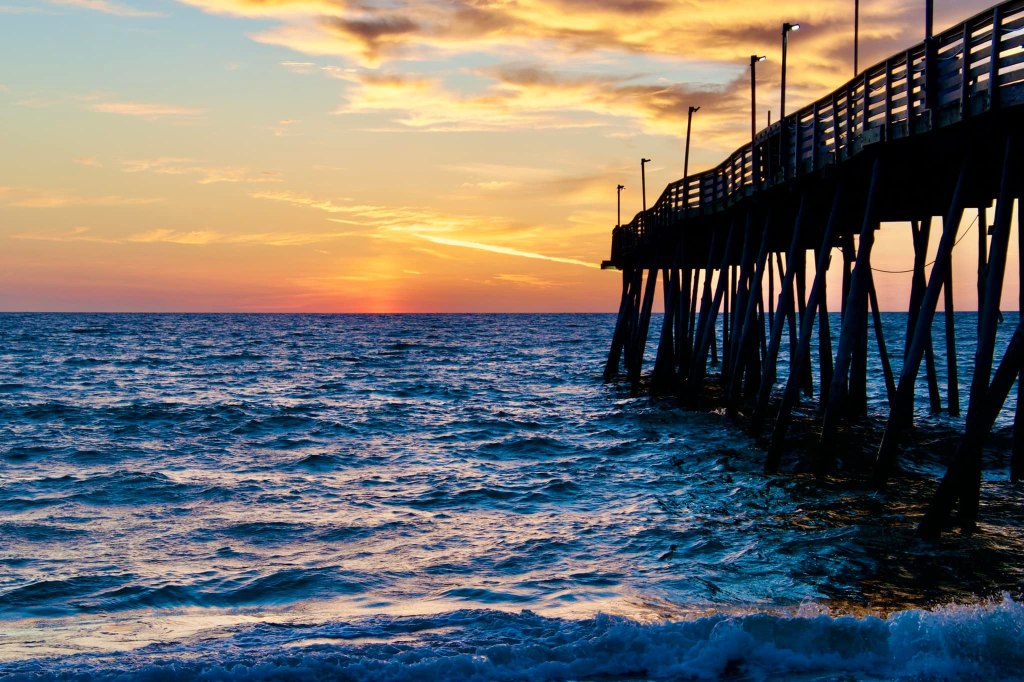
Sunrise Reflections by Michelle Robertson