Second-Hand Faith

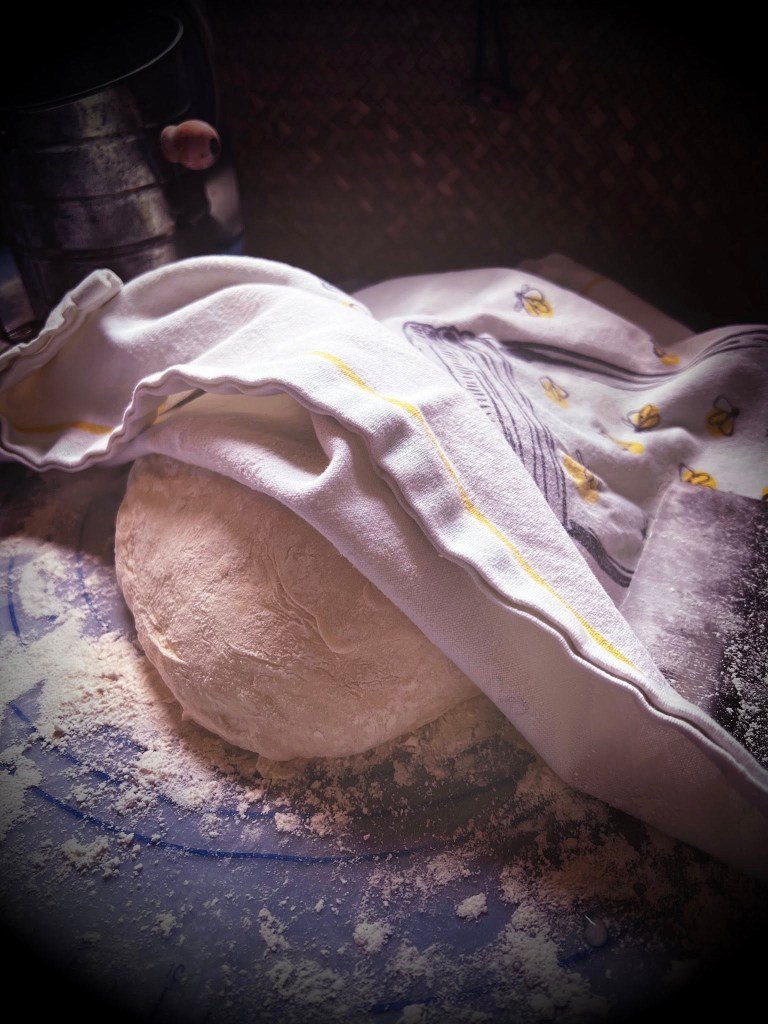
Have you ever felt like your provisions have run out? Have you run out of patience, out of luck, out of energy, out of hope, or out of strength? Has something depleted your jar? 

Some of us feel drained because of addiction, a bad marriage, a rebellious teenager, a financial worry, etc. If this is you, listen up: This Scripture from 1 Kings is a reminder that when you put your trust in God, your jar will be filled to overflowing and you will never run out again. 

 Elijah’s story is set against the backdrop of the reign of the evil Ahab, king of the northern Israel. King Ahab was an idolater who worshiped false gods. God sent Elijah to Ahab to tell him that a drought was coming because of Ahab’s sin. Indeed, the drought that came lasted over three years.

 It was during this time that Elijah approached a widow for a meal, and she responded that she has nothing baked, and only enough meal and oil for one last supper. You see, she was so focused on her scarcity that she could not see the abundance that was standing right before her. She could not see that this Man of God had been sent directly to her for some purpose:

1 Kings 17: 8-16

The Lord’s word came to Elijah: Get up and go to Zarephath near Sidon and stay there. I have ordered a widow there to take care of you. 10 Elijah left and went to Zarephath. As he came to the town gate, he saw a widow collecting sticks. He called out to her, “Please get a little water for me in this cup so I can drink.” 11 She went to get some water. He then said to her, “Please get me a piece of bread.”

12 “As surely as the Lord your God lives,” she replied, “I don’t have any food; only a handful of flour in a jar and a bit of oil in a bottle. Look at me. I’m collecting two sticks so that I can make some food for myself and my son. We’ll eat the last of the food and then die.”

13 Elijah said to her, “Don’t be afraid! Go and do what you said. Only make a little loaf of bread for me first. Then bring it to me. You can make something for yourself and your son after that. 14 This is what Israel’s God, the Lord, says: The jar of flour won’t decrease and the bottle of oil won’t run out until the day the Lord sends rain on the earth.” 15 The widow went and did what Elijah said. So the widow, Elijah, and the widow’s household ate for many days. 16 The jar of flour didn’t decrease nor did the bottle of oil run out, just as the Lord spoke through Elijah.

Do you ever find yourself focusing on what you lack, rather than what God provides? When any kind of loss comes into our lives, it is easy to focus on what we don’t have, rather than what God will provide. The widow discovered that God provides for us in ways that we might never expect, and God uses ordinary people and ordinary things. 

 I think part of the widow’s struggle was based on the fact that she had a second-hand faith. Did you notice her response when Elijah asked for a piece of bread? Look at verse 12:  “She said, “I swear, as surely as your God lives, I don’t have so much as a biscuit.” As surely as your God lives. Not as my God lives, not as our God lives but as your God lives.

 She gives an intellectual assent to the existence of God, but has no personal relationship with God, calling him Elijah’s God. This is second-hand faith … God exists, but I don’t know him personally. There are people in our pews who don’t own their faith. They attend because of family pressure, societal expectations, or simply habit. But they haven’t made that crucial step of accepting Christ as their personal Savior.

Have you?

 No one should settle for a spiritual life that is a second-hand reflection of what someone else believes. When we give ourselves wholly to Jesus, we receive first-hand faith. God fills us up with grace that never runs out!

God Provides by Michelle Robertson

P.E.D.

I have a clergy friend who used to dread the week after Easter. He works primarily in music and drama ministries and has coined the phrase P.E.D. He feels that the worst part of Easter is the Post Easter Depression that falls on church folks. All the preparation and excitement of musicals, dramas, Easter egg hunts, special children’s sermons, the rush of Holy Week activities, etc. amp us up into a high frenzy of spiritual energy. When it is finally all over, a kind of confetti-scattered, chocolate-smeared, post-party-clean-up lethargy comes over us and we just want to sit still for a moment.

But when we catch our breath, we realize that Easter isn’t just a day. Indeed, Easter is a state of mind. It is an attitude. It is a lifestyle.

How interesting it is, then, to look back at the people who were present at the Resurrection. What effect did the Resurrection have on the culture of their time? How did Jesus’ followers react? What happened to them?

In the 4th chapter of Acts, Luke describes a radical, new Easter People:

Acts 4 (The Message)

32-33 The whole congregation of believers was united as one—one heart, one mind! They didn’t even claim ownership of their own possessions. No one said, “That’s mine; you can’t have it.” They shared everything. The apostles gave powerful witness to the resurrection of the Master Jesus, and grace was on all of them.

If Easter is meant to do one thing, it is to unite believers. Easter calls us to be of one heart and one mind. Even more challenging, Easter calls us to share what we have with those who have not. That is our witness to the power of the resurrection. Easter People realize that it’s not about them, but rather it is about grace poured out unconditionally to everyone.

34-35 And so it turned out that not a person among them was needy. Those who owned fields or houses sold them and brought the price of the sale to the apostles and made an offering of it. The apostles then distributed it according to each person’s need.

Are you one of the Easter People? Where is God calling you to sacrifice and share with someone who is needy? What exactly does the resurrection mean to you? Are there needy people in your community who could experience grace through your generosity?

Let us strive to celebrate Easter all year by being the one-heart, one-mind kind of believers. Maybe this year we can turn our Post Easter Depression into People Eastering Deliberately.

He Is Risen in Me by Michelle Robertson

Be Reckless

The first time I heard Reckless Love by Cory Asbury was at a Youth Sunday worship service several years ago. Three teenage girls sang it, and I thought it was one of the most wonderful things I had heard in a long time. Those sincere young voices are in my heart today as we consider the reckless love of Good Friday.

Here are the lyrics to the chorus:

Oh, the overwhelming, never-ending, reckless love of God
Oh, it chases me down, fights ’til I’m found, leaves the ninety-nine
I couldn’t earn it, and I don’t deserve it, still, You give Yourself away
Oh, the overwhelming, never-ending, reckless love of God.

Our Scripture today describes Jesus’ act of reckless love as he faced his final days on earth. He was speaking to a crowd of people as his death was drawing near, and explained reckless love like a grain of wheat, which must be buried in order for it to bring forth life and multiply:

John 12 (The Message)

24-25 “Listen carefully: Unless a grain of wheat is buried in the ground, dead to the world, it is never any more than a grain of wheat. But if it is buried, it sprouts and reproduces itself many times over. In the same way, anyone who holds on to life just as it is destroys that life. But if you let it go, reckless in your love, you’ll have it forever, real and eternal.

Truly his love for us is reckless. It is never-ending and overwhelming. Here he was in his final week, feeling storm-tossed about what was about to happen. But did he think of himself? No, he thought of you. He would not ask his father to get him out of it. Instead, he invited God to use his death to display his glory.

27-28 “Right now I am storm-tossed. And what am I going to say? ‘Father, get me out of this’? No, this is why I came in the first place. I’ll say, ‘Father, put your glory on display.’”

”Father, put your glory on display.”

Jesus is committing to following through. He, who was present at the creation of the world, was willing to be falsely tried, spit upon, ridiculed, beaten, scorned, pierced, and nailed to a tree for us.

How can we possibly respond to this kind of reckless love? How can we honor Jesus’ death with our lives? This is a love that you can’t earn or deserve. This is a love that chases you down. This is a love that brings the gift of eternal life.

Are you ready to stop running?

26 “If any of you wants to serve me, then follow me. Then you’ll be where I am, ready to serve at a moment’s notice. The Father will honor and reward anyone who serves me.

Then follow him.

Reckless Love by Kitty Hawk United Methodist Church

The Power of Broken Things

Have you ever heard the old saying that in order to make an omelette, you have to break a few eggs? People say this to comfort us when we are feeling broken by life. It suggests that in our breaking, we can become something new … a more refined version of ourselves, if you will. But breaking is hard work, and recovering is even harder. Good omelettes take time to perfect.

Now think about the broken bread that we receive at communion. There is such power in watching the loaf being torn in half! I bet you have received communion in many places and in many forms, from the casual retreat setting to the most formal of presentations in a church. I once took communion at Notre Dame cathedral in Paris, which may count as the most elaborate setting for communion. But probably the most profound communion experiences I have had were the day I was confirmed in my childhood church in Gibbsboro, N.J., the first time I served it as a newly ordained pastor at my church in Peachtree City, GA, and the communion settings of the Walk to Emmaus retreats. Communion is one of two sacraments in the United Methodist Church and truly is the place where God meets us right where we are. I hope you feel the power and the presence of the Holy Spirit every time you receive the body and blood of Christ, given for you.

Our passage today marks the moment when the Last Supper became the Lord’s Supper for all eternity. Read it and feast:

Mark 14 (New International Version)

12 On the first day of the Festival of Unleavened Bread, when it was customary to sacrifice the Passover lamb, Jesus’ disciples asked him, “Where do you want us to go and make preparations for you to eat the Passover?”

13 So he sent two of his disciples, telling them, “Go into the city, and a man carrying a jar of water will meet you. Follow him. 14 Say to the owner of the house he enters, ‘The Teacher asks: Where is my guest room, where I may eat the Passover with my disciples?’ 15 He will show you a large room upstairs, furnished and ready. Make preparations for us there.”

16 The disciples left, went into the city and found things just as Jesus had told them. So they prepared the Passover.

17 When evening came, Jesus arrived with the Twelve. 18 While they were reclining at the table eating, he said, “Truly I tell you, one of you will betray me—one who is eating with me.”

19 They were saddened, and one by one they said to him, “Surely you don’t mean me?”

20 “It is one of the Twelve,” he replied, “one who dips bread into the bowl with me. 21 The Son of Man will go just as it is written about him. But woe to that man who betrays the Son of Man! It would be better for him if he had not been born.”

22 While they were eating, Jesus took bread, and when he had given thanks, he broke it and gave it to his disciples, saying, “Take it; this is my body.”

23 Then he took a cup, and when he had given thanks, he gave it to them, and they all drank from it.

24 “This is my blood of the covenant, which is poured out for many,” he said to them. 25 “Truly I tell you, I will not drink again from the fruit of the vine until that day when I drink it new in the kingdom of God.”

26 When they had sung a hymn, they went out to the Mount of Olives.

Amidst the disciples’ confusion, Judas’ betrayal, the ritual remembrance of the Passover (when God delivered his children from death at the last plague in Egypt),and the gathering of friends for one last meal, Jesus abruptly broke the bread and raised the cup, instituting the new covenant and the Eucharist. When we gather in our churches tomorrow night for Maundy Thursday services, we will remember this exact moment. “Maundy” comes from the Latin word for “mandate, command” and refers to the new commandment that followed this evening’s actions, as recorded in John 13:34-35 34 “A new command I give you: Love one another. As I have loved you, so you must love one another. 35 By this everyone will know that you are my disciples, if you love one another.”

How well do we follow that new commandment? Do we live up to our communion invitation to participate in Christ by loving as he loved?

I hope you are able to attend a Maundy Thursday service. When you receive that broken body and shed blood, remember the new covenant.

Then go out and be the new covenant for the world. It is your mandate.

Take and Eat by Becca Ziegler

Unridden

Sometimes I wish I had named this blog “Things I Never Noticed Before”. I realize that is a clunky and uninspiring name, but it would have been a very accurate description of what happens every time I sit down to write a devotional. I start to read the Scripture and some small and often obscure thing jumps up and presents itself, forcing me to take notice. I have discovered over the many years of reading and writing that it is often the case that previously unnoticed things are full of rich meaning.

Today’s passage tells the familiar story of Jesus’ triumphal entry in to Jerusalem just days before his capture and crucifixion. We celebrate this story on Palm Sunday, as the people who gathered to welcome him waved palm branches and shouted “Hosanna! Blessed is the one who comes in the name of the Lord.” Their jubilation was short lived, as this event was the catalyst for everything that happened leading up to his death.

The thing that caught my eye with the reading is the mention of the colt that was chosen for Jesus to ride. Notice that Jesus specified that the colt must be one that no one has ever ridden:

Luke 19 (Common English Bible)

29 As Jesus came to Bethphage and Bethany on the Mount of Olives, he gave two disciples a task. 30 He said, “Go into the village over there. When you enter it, you will find tied up there a colt that no one has ever ridden. Untie it and bring it here. 31 If anyone asks, ‘Why are you untying it?’ just say, ‘Its master needs it.’” 32 Those who had been sent found it exactly as he had said.

33 As they were untying the colt, its owners said to them, “Why are you untying the colt?”

34 They replied, “Its master needs it.” 35 They brought it to Jesus, threw their clothes on the colt, and lifted Jesus onto it. 36 As Jesus rode along, they spread their clothes on the road.

This tiny detail and the few verses afforded to the colt are curious to me. The fact that Jesus instructed the disciples to respond “Its master needs it” was not too strange, as it was common for colts to be rented or borrowed. This suggests that an arrangement had been made ahead of time and Jesus was now just collecting his Uber. The fact that Jesus selected a colt over a horse is also not surprising. Kings arrived on war horses with a great flourish of trumpets and fuss. Jesus arrived in the manner of a man of peace, like a merchant or priest would have. He chose to humble himself in this moment even though the crowd recognized him for the king that he was. He was fulfilling the prophecy in Zechariah 9:9 which reads:

Rejoice greatly, Daughter Zion.
        Sing aloud, Daughter Jerusalem.
Look, your king will come to you.
        He is righteous and victorious.
        He is humble and riding on an ass,
            on a colt, the offspring of a donkey.

So, what can we make of the fact that Jesus requested a colt that had never been ridden? One scholar suggests that our Lord was looking for a seat of authority that was his and his alone. He wanted the undivided loyalty of this beast of burden as he rode into the cheering crowds and for all intents and purposes was riding to his death. I wonder if it is a nod to his mother’s purity. He was born of the Virgin Mary and so this critical mode of transportation and presentation needed to be alike with her. One would think that a colt that hadn’t been broken might have bucked and kicked but having the Prince of Peace as its first rider prevented that from happening.

37 As Jesus approached the road leading down from the Mount of Olives, the whole throng of his disciples began rejoicing. They praised God with a loud voice because of all the mighty things they had seen. 38 They said,

“Blessings on the king who comes in the name of the Lord.
    Peace in heaven and glory in the highest heavens.”

39 Some of the Pharisees from the crowd said to Jesus, “Teacher, scold your disciples! Tell them to stop!”

40 He answered, “I tell you, if they were silent, the stones would shout.”

In any case, this passage invites us to offer our King a humble and pure act of service. This one single act of this little colt remains part of Jesus’ story for eternity. Is God calling you to a single act of humble obedience? Where can you be part of our Lord’s story? May we find our way today!

Hosanna Tree by Becca Ziegler


Fill the House

If your life was a fragrance, what would it smell like? Would it be scented with florals of joy and contentment? Would it be like the salt air rushing through a car window going at high speed? Would it be a calming botanical? Would it smell like fear and stress? We all carry a ‘scent of being’ that is perceived by others … not an actual “smell” but an experience of presence. I have a colleague whose ‘scent’ might be described as steady sandalwood. His smooth and unhurried approach to life makes people relax in his presence. What is your life fragrance?

Today’s passage takes us to a time when the scent of a fragrant offering filled an entire house. The physical smell came from a jar of expensive perfume. But look to see the other scents that arose from the compassion of Mary and the treachery of Judas:

John 12 ( Common English Bible)

12 Six days before Passover, Jesus came to Bethany, home of Lazarus, whom Jesus had raised from the dead. Lazarus and his sisters hosted a dinner for him. Martha served and Lazarus was among those who joined him at the table. Then Mary took an extraordinary amount, almost three-quarters of a pound, of very expensive perfume made of pure nard. She anointed Jesus’ feet with it, then wiped his feet dry with her hair. The house was filled with the aroma of the perfume. Judas Iscariot, one of his disciples (the one who was about to betray him), complained,“This perfume was worth a year’s wages! Why wasn’t it sold and the money given to the poor?” (He said this not because he cared about the poor but because he was a thief. He carried the money bag and would take what was in it.)

Mary’s love for Jesus was expressed in this extraordinarily expensive gift of pure nard. Both John and Mark use the adjective pistikos to describe this, suggesting that the oil had been extracted from the exotic pistachio nut. Perfumes and oils served as currency due to their value and portability. Mary’s act was a humble expression of her devotion to Jesus. When a guest arrived in a home, their feet were usually washed in water by a servant or slave. The head was then dabbed with a tiny portion of perfume. Mary’s extreme gift was given without any sense of self-consciousness: Jewish women never let their hair down in public, so her decision to use her hair as a towel was a true mark of her unabashed love for her Savior.

Judas, on the other hand, stunk of greed and deception. John carefully explained to us that Judas didn’t care for the poor but objected to the lovely act because he was a thief. The value of the perfume was one year’s worth of wages, 300 denarii, and we can imagine that with his objection he was calculating the cost of the waste and how much he could have skimmed for himself.

Then Jesus said, “Leave her alone. This perfume was to be used in preparation for my burial, and this is how she has used it. You will always have the poor among you, but you won’t always have me.”

Jesus reminds them, and us, that we always have an obligation to take care of the poor. There will always be poor people who need our help. But he would not take away from Mary’s prevenient burial anointing. The fragrance of her gift filled the house as a witness and testimony to her adoration.

What fragrance fills your house today? May it be pleasing to God.

Filled with Fragrance by Kathy Schumacher

Second Chance

Being a pastor for several decades has allowed me to be present with people in the holy time of their death. I have been given the privilege of ministering to families during these moments, and I truly feel God’s spirit there. I was once interviewed by a troop of Girl Scouts who asked me about my favorite aspect of pastoring, and they were very surprised when I responded that “ministry with the dying” was where I felt closest to God. They asked me if it was easier after someone had been sick for a long time or when it happened all of a sudden, and there really is no answer for that. But when we experience the sudden death of a loved one, the shock and incomprehensible nature of what has occurred can leave us disoriented, in denial, and unable to move forward for a very long time. A factor in that disorientation can be the loved one’s lack of preparation for their death, making it a sticky tar pit of overwhelming red tape, paperwork, and details that are almost impossible to wade through. This bodes the question of us today: Are you prepared? What will happen to your loved ones if you were to die tomorrow?

Today’s lectionary reading begins with a startling description of two types of “sudden death.” One occurred by the evil hand of Pilate when he slaughtered Galilean jews who were on their way to bring their sacrifices to the temple in Jerusalem. The second involved the sudden death of innocent bystanders when the tower of Siloam fell on them. Jesus responded to his questioners by pointing out that both cases sound a warning blast about our need to change our hearts and lives immediately. He reasoned that anyone might die in the same state of unreadiness, so repentance is the only way to be prepared.

Luke 13 (Common English Bible)

13 Some who were present on that occasion told Jesus about the Galileans whom Pilate had killed while they were offering sacrifices.He replied, “Do you think the suffering of these Galileans proves that they were more sinful than all the other Galileans? No, I tell you, but unless you change your hearts and lives, you will die just as they did. What about those eighteen people who were killed when the tower of Siloam fell on them? Do you think that they were more guilty of wrongdoing than everyone else who lives in Jerusalem? No, I tell you, but unless you change your hearts and lives, you will die just as they did.”

There was a pervasive thought at the time that suffering and death were a punishment for sinful behavior, while those who were good received only blessings and long life. Jesus assured them that this is not the case, and they must all turn away and choose real change in their lives by offering God true repentance.

Jesus uses two Greek words for repentance in this passage. In verse 3 he speaks of the need for “continuing” repentance and in verse 5 he refers to the need for a “once and for all” repentance. His point was that we may all die at sometime without warning, so repentance must be our first priority.

Jesus told this parable: “A man owned a fig tree planted in his vineyard. He came looking for fruit on it and found none. He said to his gardener, ‘Look, I’ve come looking for fruit on this fig tree for the past three years, and I’ve never found any. Cut it down! Why should it continue depleting the soil’s nutrients?’ The gardener responded, ‘Lord, give it one more year, and I will dig around it and give it fertilizer. Maybe it will produce fruit next year; if not, then you can cut it down.’”

The parable that he tells after this offers them an invitation to be truly ready to die. Like the fig tree, many of them (and us) have failed to bear God’s fruit. God always comes looking for fruit!

Galatians 5 (Common English Bible)

2But the fruit of the Spirit is love, joy, peace, patience, kindness, goodness, faithfulness, 23 gentleness, and self-control. There is no law against things like this.

God-as-Gardner is patient and comes every year to help the tree grow. He waters it with his word and fertilizes it with his spirit. He offers a second chance. But God-as-Vineyard Owner has a limit: At some point, no more chances will come. Look at the list again. Are you bearing God’s fruit in your life? What needs to change?

The lesson here? Sudden death doesn’t get a second chance. Don’t delay your repentance. It is time to turn around and turn your life over to God.

Don’t Delay by Michelle Robertson

God’s Mother-heart

I have always appreciated the (few) references in the Bible that depict the female qualities of God. I was made in God’s image, so when I see a passage that reflects my gender, I feel deeply connected with my Creator. Surely male images of God abound, so when an image of God’s mother-heart pop up, it delights me.

In today’s passage we see Jesus’ desire to be like a mother hen to her vulnerable children. Oh, how he longed to gather up his chicks and keep them safe under his wings! I love the feel of that. Surely we all would like to be part of his brood, huddling in the warmth and safety of his protection.

The brood at the time of this writing was in deep trouble. Luke records the events that happened toward the end of Jesus’ ministry when Herod was seeking to kill him. Jesus steadfastly kept to his father’s agenda of healing and demon-casting. He knew his time would come in Jerusalem, and not before then.

Luke 13 (The Message)

31 Just then some Pharisees came up and said, “Run for your life! Herod’s got your number. He’s out to kill you!”

32-35 Jesus said, “Tell that fox that I’ve no time for him right now. Today and tomorrow I’m busy clearing out the demons and healing the sick; the third day I’m wrapping things up. Besides, it’s not proper for a prophet to come to a bad end outside Jerusalem.

Then Jesus’ thoughts turned to his beloved city, the city of David built on a hill for all to see. He knew his ministry would end here, as it had for many of the prophets who preceded him in that great city. His crucifixion would result in great turmoil for the city and especially for his followers, and he desired to gather them up. But they refused to be gathered.

Jerusalem, Jerusalem, killer of prophets,
    abuser of the messengers of God!
How often I’ve longed to gather your children,
    gather your children like a hen,
Her brood safe under her wings—
    but you refused and turned away!
And now it’s too late: You won’t see me again
    until the day you say,
        ‘Blessed is he
        who comes in
        the name of God.’”

Just as Jesus longed to gather up the Jews, he longs to gather us up as well. He offers the protection and shelter of his wings and promises the mother-love that we need to thrive. Will you turn away, or come?

Safe by Michelle Robertson

Faster

Today is Ash Wednesday and many believers will commit to a form of fasting for the next 40 days of Lent. (Sundays, being the celebration of the Resurrection, are not counted in Lent.) Some might fast from food or drink. Some might fast from Social Media. Some might fast from behaviors or actions that are harmful and unproductive. Are you a Lent faster? What are you giving up this year?

Today’s lectionary passage is a fascinating look as what God desires in our fasts. The people were complaining that God did not honor or recognize their fasts. Here was God’s response. Read it through: I think you will be surprised.

Isaiah 58 (New Revised Standard Version)

Is not this the fast that I choose:
    to loose the bonds of injustice,
    to undo the straps of the yoke,
to let the oppressed go free,
    and to break every yoke?
Is it not to share your bread with the hungry
    and bring the homeless poor into your house;
when you see the naked, to cover them
    and not to hide yourself from your own kin?
Then your light shall break forth like the dawn,
    and your healing shall spring up quickly;
your vindicator shall go before you;
    the glory of the Lord shall be your rear guard.
Then you shall call, and the Lord will answer;
    you shall cry for help, and he will say, “Here I am.”

Wowzers. All the chocolate/fast food/alcohol fasts have no place on this list. Are you surprised? I think God’s mandate is clear here. Surely that’s not to say that giving up a fixation isn’t valuable, good for you, or a proper response to the call to practice disciplined self-sacrifice. Those types of commitments have great value. But focusing on these things in addition to your usual Lent habits would surely honor the type of fast God desires.

If you remove the yoke from among you,
    the pointing of the finger, the speaking of evil,

10 if you offer your food to the hungry
    and satisfy the needs of the afflicted,
then your light shall rise in the darkness
    and your gloom be like the noonday.

Acting decisively to remove the yoke of oppression and injustice. Feeding the hungry. Tending to the needs of the afflicted. Bringing the homeless poor into our homes. Clothing the naked. Stop pointing the blame finger at others. Ceasing evil talk, gossip, and hate speech. These are the things that would please the Lord this season.
11 The Lord will guide you continually
    and satisfy your needs in parched places
    and make your bones strong,
and you shall be like a watered garden,
    like a spring of water
    whose waters never fail.
12 Your ancient ruins shall be rebuilt;
    you shall raise up the foundations of many generations;
you shall be called the repairer of the breach,
    the restorer of streets to live in.

May we have a holy Lent together and heed Isaiah’s words, making a real difference in our communities and our world for the next 40 days. Are you in?

Queen Anne’s Lace by Becca Ziegler

The Shelter of Lent

It’s that time of year again, folks, where we are invited to deepen our faith, expand our discipleship, increase our discipline, and enlarge our response to God’s will and God’s word. Yes, Lent is upon us. In two days many will gather to observe Ash Wednesday, the quiet, dark, formal beginning of the season. Lent is the 40 days of preparation for the Easter celebration, and we are invited to practice a Holy Lent by fasting, repenting, studying, examining, praying, worshipping, self-denying, sacrificing, and focusing our whole attention on becoming more faithful in our ways, words, and deeds.

There have been many years when the oncoming of Lent made me silently groan. It is an intentionally dark season, and it is intentionally hard. We do this in contemplation of Good Friday, when Jesus hung on the cross for our sins in an intentionally dark and hard moment. He did that for us. How can we turn away from the Lenten disciplines that are intentionally dark and hard so that we emerge on Easter stronger, better, and more committed?

As much as we groan, we must.

Today’s lectionary passage gave me pause. It signals our transition into Lent, and it offers a completely new idea: Lent is a shelter, a refuge, and a safe place.

Think about the previous Lent seasons. Did you benefit from that special Lent study? Did giving something up for 40 days bring clarity of mind? Did your prayer life grow? Did you emerge stronger?

I hope the answer is yes. But in the meantime, let us contemplate the safe and secure fortress that Lent can be if we give ourselves over to it completely.

Psalm 91 (New Revised Standard Version)

You who live in the shelter of the Most High,
    who abide in the shadow of the Almighty,
will say to the Lord, “My refuge and my fortress;
    my God, in whom I trust.”

Because you have made the Lord your refuge,
    the Most High your dwelling place,
10 no evil shall befall you,
    no scourge come near your tent.

11 For he will command his angels concerning you
    to guard you in all your ways.
12 On their hands they will bear you up,
    so that you will not dash your foot against a stone.
13 You will tread on the lion and the adder;
    the young lion and the serpent you will trample under foot.

14 Those who love me, I will deliver;
    I will protect those who know my name.
15 When they call to me, I will answer them;
    I will be with them in trouble;
    I will rescue them and honor them.
16 With long life I will satisfy them
    and show them my salvation.

Focusing our attention on Lent will help us take our eyes off the troubles, trials, and temptations of the world. God dwells in Lent, and wherever God dwells, there is protection. May we enter joyfully, expectantly, and hopefully.

Shelter by Michelle Robertson