Pick it Up

Today’s devotional is the continuation of our lesson on 2 Kings 2, found here. To recap, Elijah is about to be called up to heaven, and his mentee Elisha is getting ready to continue ministry without his esteemed mentor and friend. Just before Elijah leaves, he asks young Elisha what he can do for him before he is taken. Elisha doesn’t ask for wealth, or fame, or prosperity, or authority: He simply asks for a “double portion” of the spirit of God that has empowered the great prophet to do ministry under very adverse circumstances.

2 Kings 2 (New International Version)

When they had crossed, Elijah said to Elisha, “Tell me, what can I do for you before I am taken from you?”

“Let me inherit a double portion of your spirit,” Elisha replied.

1“You have asked a difficult thing,” Elijah said, “yet if you see me when I am taken from you, it will be yours—otherwise, it will not.”

Up to this point, Elijah has been unsuccessfully trying to shake off Elisha. Twice he has asked him to remain behind so he can go along to do God’s bidding. Three times Elisha refused and pledged to never leave Elijah’s side. He knows what is coming. Everyone knows what is coming. But his perseverance and faithfulness pass the test and he was at Elijah’s side when Elijah was taken up to heaven in a whirlwind:

11 As they were walking along and talking together, suddenly a chariot of fire and horses of fire appeared and separated the two of them, and Elijah went up to heaven in a whirlwind. 12 Elisha saw this and cried out, “My father! My father! The chariots and horsemen of Israel!” And Elisha saw him no more. Then he took hold of his garment and tore it in two.

Verse 11 records that they were walking along and talking together. Oh, to be a fly on that wall and listen in! What could they have discussed, I wonder? The apostasy of Israel? How to dodge and eliminate corrupt kings? How to perform miracles? How to call down fire?

Whatever the content, we can safely assume that this conversation was a “passing down of the mantle” moment for them, as Elijah imparted wisdom and instruction to his young protégée. But don’t miss what happens immediately after Elijah was taken:

13 Elisha then picked up Elijah’s cloak that had fallen from him and went back and stood on the bank of the Jordan. 14 He took the cloak that had fallen from Elijah and struck the water with it. “Where now is the Lord, the God of Elijah?” he asked. When he struck the water, it divided to the right and to the left, and he crossed over.

After rending his clothes in two, (a common sign of grief and sorrow in those times) he picked up Elijah’s cloak. Remember that this is the same cloak that Elijah used earlier in the chapter to part the waters. Elisha now uses the same cloak to divide the water so that he can continue his journey, performing his first miracle within minutes of Elijah’s departure.

15 The company of the prophets from Jericho, who were watching, said, “The spirit of Elijah is resting on Elisha.”

That action solidified his new status as Elijah’s successor, and those watching immediately saw that the spirit of God had effectively been passed from the older man to the younger man. But let’s not miss the fact that Elisha had to pick up the cloak. It didn’t fall around his shoulders as Elijah was riding off in a fiery chariot. Elijah didn’t carefully place it on him before leaving. No, it fell to the ground, and it was up to Elisha to pick it up. Only then did the spirit of Elijah rest upon him.

I think we all want God’s power to bring needed change into our lives. We all want to get over our addictions, move past our grievances, feel happier, succeed in life, raise amazing kids, have fulfilling marriages … and these things are possible, but only if we choose to pick up the cloak and submit to God’s way of resolving these things. And remember that in order to pick something up, we have to empty our hands of stuff we are holding on to, like old resentments, bad habits, unconfessed sin, things that happened in the past, and especially the need to be in control.

A double portion of God’s power and strength is available to anyone. Will you open your hands to receive it?

Morning’s Glow by Michelle Robertson

The Double Portion

A long time ago I served a large church that had a sizable youth group. One of the many programs the church offered to support these kids was called ”The Elijah Project.” This program paired youth with willing adult volunteers who signed up to serve as “spiritual mentors.” It was a great way for our older folks to connect with the teenagers and offer their love, wisdom, prayer, and friendship. One volunteer took it to the extreme and started inline roller skating with his youth partner. That was a great idea until he fell and broke his ankle, but the bond that was established lasted well into the teenager’s adulthood.

It was called the Elijah Project in honor of the wonderful example of mentoring that we discover in the 2 Kings. Elijah was a spiritual mentor to Elisha, and the bond between them was strong. They were inseparable, as we will see in today’s passage.

2 Kings 2:1-9 (New International Version)

2 When the Lord was about to take Elijah up to heaven in a whirlwind, Elijah and Elisha were on their way from Gilgal.Elijah said to Elisha, “Stay here; the Lord has sent me to Bethel.”

But Elisha said, “As surely as the Lord lives and as you live, I will not leave you.” So they went down to Bethel.

The company of the prophets at Bethel came out to Elisha and asked, “Do you know that the Lord is going to take your master from you today?”

“Yes, I know,” Elisha replied, “so be quiet.”

Elijah is known as one of Israel’s greatest prophets. He called down fire to defeat the prophets of Baal, escaped from the evil Queen Jezebel, prophesied a three-year drought, spoke against the apostasy of Israel and its corrupt kings, and was fed by ravens in the desert. He took on the task of mentoring Elisha, who in his own right became one of Israel’s greatest prophets and miracle workers. Elisha was completely devoted to Elijah and never left his side.

Then Elijah said to him, “Stay here, Elisha; the Lord has sent me to Jericho.”

And he replied, “As surely as the Lord lives and as you live, I will not leave you.” So they went to Jericho.

The company of the prophets at Jericho went up to Elisha and asked him, “Do you know that the Lord is going to take your master from you today?”

“Yes, I know,” he replied, “so be quiet.”

Elisha’s humanity in this moment is evident. The prophets are telling him a truth he doesn’t want to face, so basically he tells them to shut up. How often do we stick our fingers in our ears against an impending truth that we’re not ready to face? Col. Jessup was right. We can’t handle the truth.

Then Elijah said to him, “Stay here; the Lord has sent me to the Jordan.”

And he replied, “As surely as the Lord lives and as you live, I will not leave you.”So the two of them walked on.

Fifty men from the company of the prophets went and stood at a distance, facing the place where Elijah and Elisha had stopped at the Jordan. Elijah took his cloak, rolled it up and struck the water with it. The water divided to the right and to the left, and the two of them crossed over on dry ground.

If your memory of Moses is kicking in about now, you are correct in thinking that there are many similarities between him and Elijah. Both met God at Mt. Sinai. Both were empowered by God to separate the waters. Both were chased out of their countries by pagan kings, wandered in the wilderness for forty days, and fasted for forty days. Both were cherished and powerful prophets of God.

When they had crossed, Elijah said to Elisha, “Tell me, what can I do for you before I am taken from you?”

“Let me inherit a double portion of your spirit,” Elisha replied.

This request is bold, audacious, or brilliant … or maybe all three. We can understand it better if we consider a few things. First, he may have been referring to receiving the portion of inheritance that would naturally come to the first born son, as outlined in Deuteronomy 21:17. In effect, then, he is asking to be considered as Elijah’s successor in ministry, just as a first born son has the right to expect. Second, we know from 1 Kings 19:19 that Elisha had already been designated as Elijah’s successor. So this request for a double portion of God’s spirit as it had been manifested in Elijah is a way of asking for the strength and the spiritual power fulfill that calling.

Let’s stop there and ask ourselves if we have asked God for the spiritual power to fulfill his will for our lives. This is an important question that leads us to another important question: Have you accepted God’s will for your life? Are you willing to “go where sent”? Is God calling you to change your attitude, behavior, habits, etc.?

Elisha gives us a beautiful example of submission. In that single request for a double portion, he demonstrated his humble willingness to do the task for which he has been called and indicated that he wants to do it all in God’s power. Indeed, Elijah indicated that he has asked a difficult thing. It’s not difficult by any means for God to give a double portion, but it is difficult to ask for it, because asking means you are willing to take on the responsibility that comes along with it.

We will stop there for today and pick up the rest of this amazing story next time. But for now, I leave you with this: God is calling. Are you willing?

Give us your double portion, Lord!

Double Portion of Wonder by Michelle Robertson

Find Rest

Like the rest of the world, my family has dealt with the “crud” since before Christmas. It was a full blown assault on the sinuses, throat, and chest for a week, and when that passed, all that was left was the cough. The cough decided to extend its visit and take up residency in our lungs. For weeks, my husband and I have shared a nightcap of NyQuil at bedtime and laid our heads on our pillows and hoped it would work. Many nights, rest only came in between fits of coughing. I have, however, perfected the art of sleeping upright with my head elevated on two pillows and a cough drop lodged between my cheek and my gums. Oy!

David’s psalm really resonated with me this morning as the cough is finally waning and rest has returned. He speaks of finding rest in God only, and I can relate. Rest in this context is a complete cessation of the mental and emotional turmoil that agitates us to the point that it prevents any real rejuvenation of the mind and soul.

Have you ever had a night/week/month like that?

Psalm 62 (Common English Bible)

Oh, I must find rest in God only,
    because my hope comes from him!
Only God is my rock and my salvation—
    my stronghold!—I will not be shaken.
My deliverance and glory depend on God.
    God is my strong rock.
    My refuge is in God.
All you people: Trust in him at all times!
    Pour out your hearts before him!
    God is our refuge!
 Selah

Right off the bat we see a connection between rest and hope. I think that is important. In those middle of the night awakenings, when we mull over problems, offenses, despair, grief, and grievances, hope has remained asleep and does not assert itself to say, “Enough! We will sort this out tomorrow.”

Hope reminds us that God is our rock and salvation. Hope tells us we will not be shaken. Hope proclaims that God is our refuge, and we can trust that!

Human beings are nothing but a breath.
    Human beings are nothing but lies.
    They don’t even register on a scale;
    taken all together they are lighter than a breath!
10 Don’t trust in violence;
    don’t set false hopes in robbery.
When wealth bears fruit,
    don’t set your heart on it.

David reminds us that people do not deserve the trust that God does, and in the end, God is the only one we can count on. David rebukes his enemies and says that when we take matters into our own hands it often does not work out well. The only thing we should set our hearts on is God’s strength.

11 God has spoken one thing—
    make it two things—
    that I myself have heard:
    that strength belongs to God,
12     and faithful love comes from you, my Lord—
    and that you will repay
    everyone according to their deeds.

There is something charming and conversational in verse 11 where David says, “God has spoken one thing … make that two things…” That made me smile, as it sounds like a middle schooler urgently making a case on why they should be allowed to do something. There is a familiar humanity to that way of speaking. Indeed, David is trying to persuade us that God is our strength and faithful love. That deserves a second try!

Is God your rock? Do you have hope? Are you tired and need the kind of rest that can only be found in God? When you lay your head on the pillow tonight, give it all over to him and dwell in his hope. If you can do that, I bet you’ll find peace.

Refuge by Wende Pritchard

Lent Begins Feb. 14th

Are you ready to enter into a season of reflection and rededication? Lent is that beautiful season when we slow our pace a bit and retool our spirits. Following the Lenten Disciplines of study, meditation, self-examination, self-denial, repentance, fasting, prayer, and worship will bring us closer to God.

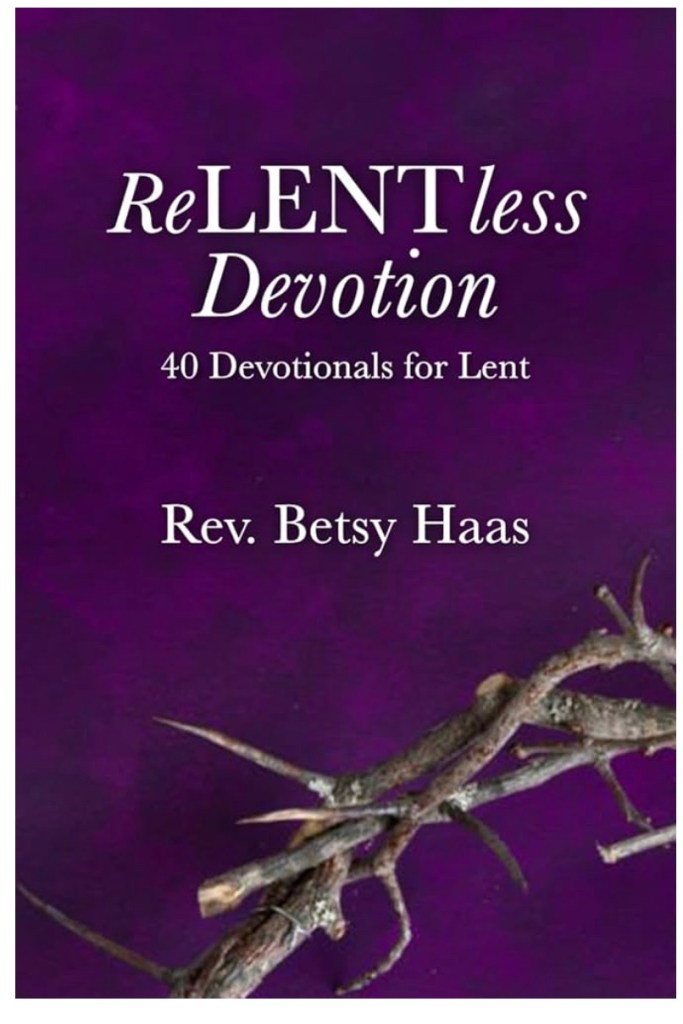
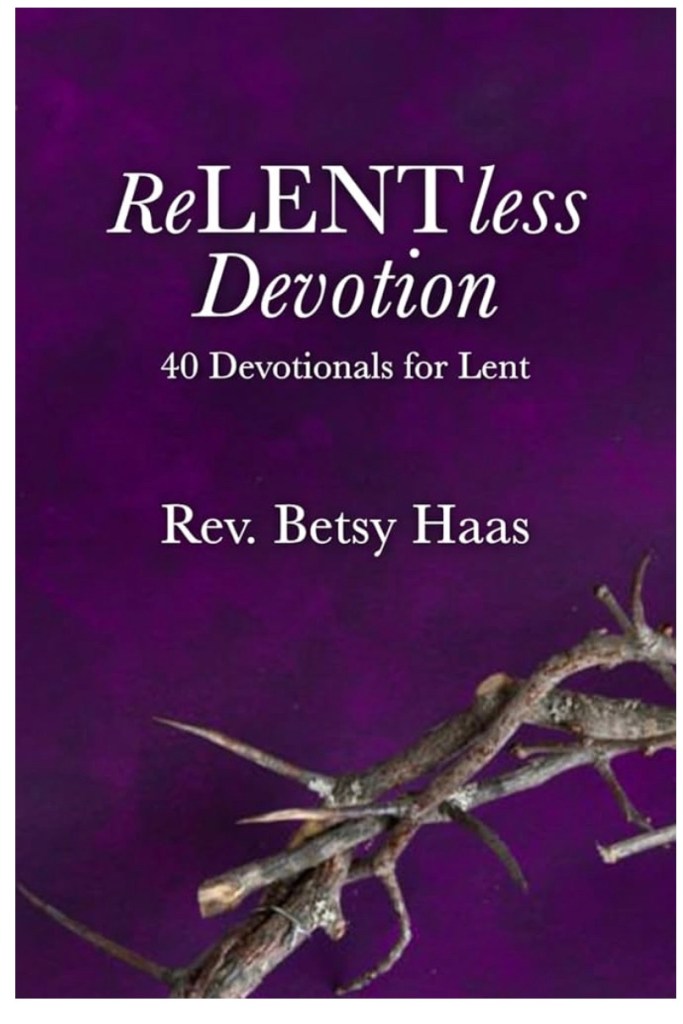
I invite you to journey to the cross with me this year. ReLENTless Devotion is a 40 day devotional book that will take us all the way to Easter. Come along, and let’s get there together! ReLENTless Devotion is available at Amazon.

Being Known

Have you ever had a conversation with a family member or an old friend that left you feeling complete? Being heard by someone who knows you to the depth of your soul can be a beautifully satisfying experience. Last week I had a conversation with my cousin that just filled my heart with joy. It wasn’t the subject that made me happy; indeed, we were discussing her parents’ health issues and frustrations with the hospital care they were receiving. But the familiarity of her voice in my ear filled my heart. She is younger than me, so I have known her all her life. She has known me all her life. In the absence of my immediate family, she is the only one left who knows me so well and for so long.

It is a comfort to be known in such a way.

Our lectionary passage reminds us today that we are deeply, intimately, and completely known by God. Think about that for a moment. The one who created the entire universe(s) knows you from the inside-out! He knows your thoughts, your plans, and even the things you say even before you say them (ruh roh …):

Psalm 139 (Common English Bible)

Lord, you have examined me.
    You know me.
You know when I sit down and when I stand up.
    Even from far away, you comprehend my plans.

You study my traveling and resting.
    You are thoroughly familiar with all my ways.
There isn’t a word on my tongue, Lord,
    that you don’t already know completely.
You surround me—front and back.
    You put your hand on me.
That kind of knowledge is too much for me;
    it’s so high above me that I can’t reach it.

Intimidated yet? It is strange to think we are THAT well known. This is a reminder that we should order our thoughts and our plans according to God’s word, as there is no escaping his presence in any aspect of what we are doing. But this also brings a comfort to us, as it assures us that we are never alone, even in the darkest moments.

13 You are the one who created my innermost parts;
    you knit me together while I was still in my mother’s womb.
14 I give thanks to you that I was marvelously set apart.
    Your works are wonderful—I know that very well.

I love the thought that God knit us together in our mother’s wombs, knowing and forming our bones and our embryos. It suggests to me that God knew us even before our mothers did, which is a comfort of a sort when you lose your mother here on earth. There still is One who knows us, who never leaves us, and who loves us with a mother’s love.

15 My bones weren’t hidden from you
    when I was being put together in a secret place,
    when I was being woven together in the deep parts of the earth.
16 Your eyes saw my embryo,
    and on your scroll every day was written that was being formed for me,
    before any one of them had yet happened.
17 God, your plans are incomprehensible to me!
    Their total number is countless!
18 If I tried to count them—they outnumber grains of sand!
    If I came to the very end—I’d still be with you.

“I’d still be with you.” The psalmist ends his song with this beautiful thought. We can never go away from God’s presence or his love. Even in our loneliest times, even in seasons of abandonment and betrayal from those we love, God remains.

I hope that gives you comfort today! It might be a good day to reach out to an old friend, a cousin, or your mom if you can, and offer thanks for knowing them, and being known.

Your Works Are Wonderful by Michelle Robertson

Nothing Good

Have you ever been made to feel uncomfortable about your hometown or home state? Perhaps it has a questionable reputation or a funny name (I’m looking at you, Intercourse, PA) that makes it easy for people to joke about. When I was a student at Penn State, being from New Jersey often felt that way. There was a Saturday Night Live skit that was popular at the time, where Joe Piscapo would say, “I’m fruhm Joisey! Are you fruhm Joisey, too?” and I heard that a lot. Then I would be asked what Turnpike exit I lived near, as though New Jersey was just a turnpike for the real people to traverse as they traveled to more interesting places. As if!

I wonder if Jesus felt that way, being from Nazareth.

John 1 (Common English Bible)

43 The next day Jesus wanted to go into Galilee, and he found Philip. Jesus said to him, “Follow me.” 44 Philip was from Bethsaida, the hometown of Andrew and Peter.

45 Philip found Nathanael and said to him, “We have found the one Moses wrote about in the Law and the Prophets: Jesus, Joseph’s son, from Nazareth.”

46 Nathanael responded, “Can anything from Nazareth be good?”

Nazareth is the place where Jesus grew up, and was a small, nondescript town with a population of about 200-400 people. Nathanael’s derogatory remark reveals his own prejudice about this little nothing of a place. Nazareth was southwest of the Sea of Galilee, located north of Jerusalem, well beyond Samaria. Being so small, and not adjacent to major cities, it was the last place one would expect anything interesting to happen. I suppose that calling someone a “Nazarene” would have been like referring to them as a “bumpkin,” or even a “hillbilly.”

Nathanael’s question is pretty sarcastic. He assumes that Nazareth couldn’t produce anything of worth, let alone the Messiah.

But notice this: Philip’s response was not to rebuke Nathanael, but simply to invite. 

Philip said, “Come and see.”

47 Jesus saw Nathanael coming toward him and said about him, “Here is a genuine Israelite in whom there is no deceit.”

48 Nathanael asked him, “How do you know me?”

Jesus answered, “Before Philip called you, I saw you under the fig tree.”

49 Nathanael replied, “Rabbi, you are God’s Son. You are the king of Israel.”

50 Jesus answered, “Do you believe because I told you that I saw you under the fig tree? You will see greater things than these! 51 I assure you that you will see heaven open and God’s angels going up to heaven and down to earth on the Human One.

There is much to be learned from Philip’s response. What a beautiful example of how to witness to a skeptic! He doesn’t argue, he simple invites. Being invitational when it comes to sharing the Gospel is the best way, I believe. Bible-thumping, loud proclamations, self-righteous posts, and every other presentation that excludes those who haven’t yet heard or are filled with doubt is not the way to win others to Christ.

Philip chose wisely in this conversation, and so should we. How can you be winsome and invitational in your own speech? Jesus invites us to follow him. May we invite others in the same way.

Come and see!

Come and See by Kathy Schumacher

A Changed Life

The new year comes with the hope and promise of much needed change for many people. It is a ‘clean slate’ kind of opportunity … a chance for a 12-month do-over or a much needed reset. Whether it’s a decision to get in shape, be kinder, give more, drink less, or be more mindful of your spiritual life, a lot of folks are using the change of the year to trigger a change of the life. Our lectionary passage today speaks directly into that mindset as we contemplate baptism and what happens in that most sacred act.

You will find that each denomination has its own take on baptism, and people differ on whether or not it should be infants, professing adults, or anyone at any age. I don’t think God cares about our delineations. Baptism is a moment of being named and claimed by God, and the water washing symbolizes a fresh start and the cleansing of sin, whether it is personal sin (as for an adult) or original sin (as for an infant). Baptism is about life-change. We baptize in Jesus’ name and remember that he was once baptized, too.

Mark 1 (The Message)

4-6 John the Baptizer appeared in the wild, preaching a baptism of life-change that leads to forgiveness of sins. People thronged to him from Judea and Jerusalem and, as they confessed their sins, were baptized by him in the Jordan River into a changed life. John wore a camel-hair habit, tied at the waist with a leather belt. He ate locusts and wild field honey.

One thing that is unique about United Methodism is that we do not re-baptize, like some of our friends in other denominations do. For us, the fact that God is the agent in our baptisms means that it is a ‘one and done’ affair. We don’t need to re-do what God did. But surely sin can wreck our good intentions, and repentant Methodists are invited to re-dedicate their baptism, an action that says that while God didn’t fail, we did. It can be a very healing and cleansing thing to re-dedicate your baptism and know that your repentance and God’s forgiveness, sealed at the cross, can bring you to a fresh start toward a changed life.

7-8 As he preached he said, “The real action comes next: The star in this drama, to whom I’m a mere stagehand, will change your life. I’m baptizing you here in the river, turning your old life in for a kingdom life. His baptism—a holy baptism by the Holy Spirit—will change you from the inside out.”

Eugene Peterson’s portrayal of John declaring that he is a mere stagehand is so charming, isn’t it? We’re all just stagehands in this beautiful production. There are some pastors out there who would do well to remember this. Jesus is the only star in this drama.

9-11 At this time, Jesus came from Nazareth in Galilee and was baptized by John in the Jordan. The moment he came out of the water, he saw the sky split open and God’s Spirit, looking like a dove, come down on him. Along with the Spirit, a voice: “You are my Son, chosen and marked by my love, pride of my life.”

I believe that God says the same to us. You are my child. You are chosen. You are marked by my love. I’m so proud of you!

Are you baptized? Are you in need of a re-dedication or re-baptism in order to start all over again? I encourage you to run, don’t walk, to your nearest church and find a preacher with a pitcher or a pool. If you’re resolved to change your life from the inside out in this new year, there is no better way to begin.

Looking for a Lent devotional book? ReLENTless Devotion is now available at Amazon.

Come to the Waters by Michelle Robertson

ReLENTless Devotion

I am very happy to announce that my book, ReLENTless Devotion, has just been published. This book contains 40 days of Lent devotionals and a special Easter Sunday meditation. Lent begins on February 14th this year.

The season of Lent is a time of reflection, renewal, and re-examination. God invites us to do “heart surgery” during the time between Ash Wednesday and Easter Sunday in an effort to move deeper in our relationship with Christ. As we contemplate the journey to the cross that Jesus made on our behalf, we will learn and grow through our time spent in God’s word.

God invites us to walk through these days together and remember and read the Messianic prophesies, the poetic voices of the Psalms, hear from the Gospel writers of their first-hand observations of their friend and teacher, and contemplate Jesus’ own words. Each day’s reading offers a brief Scripture, an engaging reflection, and a daily prayer. It is hoped that by the time Easter arrives, we will be rededicated in our Lenten disciplines of study, meditation, fasting, service, prayer, repentance, and self-examination.

Lent is a time to come clean with God.

I hope you will join me as we endeavor to observe a Holy Lent together this year.

ReLENTless Devotion is now available at Amazon.

Refugee Lord

Our magi story continues today in the book of Matthew. In a stunning turn of events, Joseph and Mary are forced to flee to Egypt in order to save their son from being murdered. Insane Herod, in his deep paranoia, ordered the slaughter of every child in Bethlehem under the age of two in an attempt to snuff out the child-king of the Jews. This is truly a “read it and weep” scenario:

Matthew 2 (Common English Bible)

13 When the magi had departed, an angel from the Lord appeared to Joseph in a dream and said, “Get up. Take the child and his mother and escape to Egypt. Stay there until I tell you, for Herod will soon search for the child in order to kill him.” 14 Joseph got up and, during the night, took the child and his mother to Egypt. 15 He stayed there until Herod died. This fulfilled what the Lord had spoken through the prophet: I have called my son out of Egypt.

I can’t imagine how terrifying it was for Mary and Joseph to have to escape in the middle of the night to a foreign country. I can’t imagine the trauma they suffered as they crossed that border with little supplies … probably not much more than the clothes on their backs. What did they eat? How did they sleep? Where did they get water?

Egypt was a logical place to go, as it was a border country that was outside of Herod’s jurisdiction. It was under Roman rule but contained a large population of Jews. Joseph’s quick response to the angel shows us that he understood how far he would have to go to ensure the freedom and safety of his little boy. Any parent would do the same.

Wouldn’t you?

Murder of the Bethlehem children

16 When Herod knew the magi had fooled him, he grew very angry. He sent soldiers to kill all the children in Bethlehem and in all the surrounding territory who were two years old and younger, according to the time that he had learned from the magi. 17 This fulfilled the word spoken through Jeremiah the prophet:

18 A voice was heard in Ramah,
    weeping and much grieving.
        Rachel weeping for her children,
            and she did not want to be comforted,
                because they were no more.

Jeremiah 31:15 records the mothers of Israel, embodied in Rachel, weeping over their children during the time when the nation of Judah was carried into captivity. There was then a great mourning in the tribes of Benjamin and Judah for their children who were slain or taken into captivity. History was repeated as mothers wept again in Jesus’ time.

Return from Egypt

19 After King Herod died, an angel from the Lord appeared in a dream to Joseph in Egypt. 20 “Get up,” the angel said, “and take the child and his mother and go to the land of Israel. Those who were trying to kill the child are dead.” 21 Joseph got up, took the child and his mother, and went to the land of Israel. 22 But when he heard that Archelaus ruled over Judea in place of his father Herod, Joseph was afraid to go there. Having been warned in a dream, he went to the area of Galilee. 23 He settled in a city called Nazareth so that what was spoken through the prophets might be fulfilled: He will be called a Nazarene.

Scholars are unsure about how long Jesus and his parents stayed in Egypt. It could have been a few months or as long as 7 years. In any case, they made a home there until it was safe to return across the border to their homeland.

This passage begs many questions for us today. Our Lord and his parents were homeless for a good portion of his childhood. How should we respond? Is God calling us to care for the homeless in our communities? And our Lord and his parents were refugees. They were allowed safe passage across a border where they found freedom and safety. How should we respond? Is God calling us to care for refugees and immigrants in his name?

I pray that this part of Jesus’ story leaves a mark on your heart today, and I pray that together, we remember and honor our Refugee Lord in ways that are meaningful and tangible in our own communities.

Escape by Becca Ziegler

Another Route

I admire those of you who make New Year’s Resolutions. Doing this is a process of introspection, self-awareness, and determination. My daughter and her friends spend New Year’s Eve playing games while they contemplate last year’s resolutions and then commit to new ones. Declaring your resolutions in a friend group is a process of accountability, which is always wise when trying to set goals. Others can help us reach our objectives by holding us accountable for what we decided. Believe it or not, Lent is quickly approaching, and the season invites us to a spiritual accountability. This is the right time to make changes.

Many of our resolutions involve stopping a behavior and choosing a healthier path. We commit to stop over-eating, drinking, smoking, using recreational drugs, swearing, spending, cheating … name a vice, and it is sure to be on someone’s list of things they have resolved to quit in the New Year.

If you need to stop something, consider the end of this very familiar passage from the second Chapter of Matthew:

Matthew 2 (Common English Bible)

After Jesus was born in Bethlehem in the territory of Judea during the rule of King Herod, magi came from the east to Jerusalem. They asked, “Where is the newborn king of the Jews? We’ve seen his star in the east, and we’ve come to honor him.”

When King Herod heard this, he was troubled, and everyone in Jerusalem was troubled with him. He gathered all the chief priests and the legal experts and asked them where the Christ was to be born. They said, “In Bethlehem of Judea, for this is what the prophet wrote:

You, Bethlehem, land of Judah,
        by no means are you least among the rulers of Judah,
            because from you will come one who governs,
            who will shepherd my people Israel.”

Let’s pause here and take note of a few things. The rulership of King Herod suggests that this event happened about two years after Jesus’ birth. That knocks our nativity sets out of whack, doesn’t it? Posing the Wise Men around the infant king in his manger isn’t quite accurate, as he would have been a run-around-toddler at the time.

This Herod was Herod the Great. Bible scholar D.A. Carson writes this about Herod: “He was wealthy, politically gifted, intensely loyal, an excellent administrator, and clever enough to remain in the good graces of successive Roman emperors. His famine relief was superb and his building projects (including the temple, begun 20 B.C.) were admired even by his foes. But he loved power, inflicted incredibly heavy taxes on the people, and resented the fact that many Jews considered him a usurper. In his last years, suffering an illness that compounded his paranoia, he turned to cruelty and in fits of rage and jealousy killed close associates.”  Herod died in 4 A.D., and we can assume that the Magi came to him just before his death when his paranoia was at its peak.

Also, the word “magi” is from the Greek “majoi,” which translates to astronomer. So our carols about these men being kings is a little off, perhaps a reference to Old Testament writings that prophesied that kings would come to worship the Messiah. Being astronomers is an important part of the story: They were men who studied the stars. God sent them a star. God will always speak to us in our own medium when he wants our attention. Where in your life is God speaking to you?

Then Herod secretly called for the magi and found out from them the time when the star had first appeared. He sent them to Bethlehem, saying, “Go and search carefully for the child. When you’ve found him, report to me so that I too may go and honor him.” When they heard the king, they went; and look, the star they had seen in the east went ahead of them until it stood over the place where the child was. 10 When they saw the star, they were filled with joy. 11 They entered the house and saw the child with Mary his mother. Falling to their knees, they honored him. Then they opened their treasure chests and presented him with gifts of gold, frankincense, and myrrh. 12 Because they were warned in a dream not to return to Herod, they went back to their own country by another route.

Verse 12 is the most important part for us today. They went back to their homes by another route. When we encounter God, we rarely keep going in the same direction, but rather leave our current path and start a whole new trajectory.

Where is God calling you to go home by a new route? You are not meant to stay the same after a ‘come to Jesus’ moment. What new route will you take this year?

Whatever it is, wherever you go, follow his star.

(Lent begins on February 14. I have just published a book of Lent devotionals, ReLENTless Devotion available at Amazon. Take a look!)

Star of Wonder by Michelle Robertson