Look Me

Our two-year-old grand-twins have reached the stage of wanting our attention when they do things they have just learned. FaceTime has enabled us to participate in their toddler Olympics, and we always know we are in for a show when they interrupt their mother by yelling, “PAPA! NANA! PAPA! NANA! WATCH ME! WATCH ME!” This continues until we yell, “WE’RE WATCHING! SHOW ME! SHOW ME!” They’ll peer intently into the phone until they have ascertained that we are indeed watching, and then perform twirls, spins, running around the house in circles, rolling a ball, etc. while yelling, “LOOK ME! LOOK ME!” It’s exhausting. Not for them, for us.

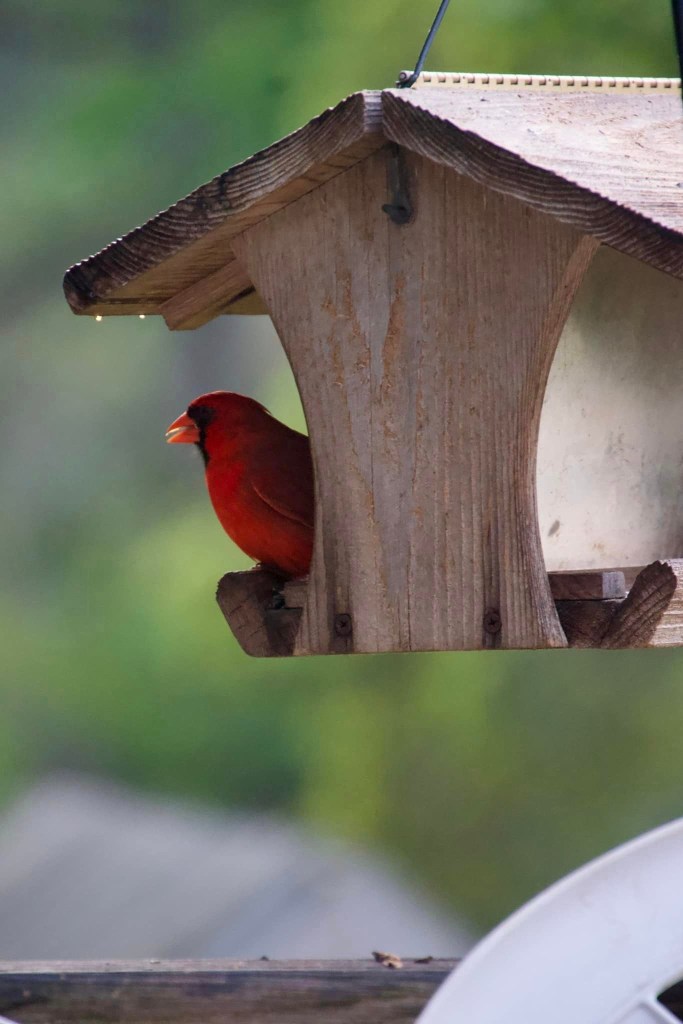
Today’s psalm is very interesting in its format. Before you read the whole thing, take a look at the beginning of each sentence. Do you see this pattern? Tell me. Show me. Deliver me. Teach me. Guide me. Make me. Bring me. And finally: Wipe out my enemies. Destroy my attackers. This use of verbal directives is striking! Do you get the sense that the psalmist has a very deep and personal relationship with God (so much so that he comes off as a little bossy!) and that he fully and completely believes God is able to do all these things? I do. With the intensity of a toddler, he demands our attention.

It probably comes as no surprise then to learn that this is a psalm of David.

Now that we’ve looked at the beginning phases, let’s isolate the phrases that follow the words “because” or “for.” You’ll see this pattern emerge: I trust you. I offer my life up to you. You are my God. You are righteous. You offer me faithful love. I am your servant. The demands at the beginning of each sentence are softened by the assurances of David’s covenantal relationship with a God who loves him completely. Our toddlers make their demands for our attention based on the deep and sure knowledge that we love and adore them.

Psalm 143 (Common English Bible)

Tell me all about your faithful love come morning time,
    because I trust you.
Show me the way I should go,
    because I offer my life up to you.
Deliver me from my enemies, Lord!
    I seek protection from you.
10 Teach me to do what pleases you,
    because you are my God.

Verse 10 reveals the basis of David’s pleas. He asks God to guide him by God’s good spirit into a good land. Remembering that the concept of the Holy Spirit is a New Testament thing, this wording speaks to David’s deep understanding of the many layers of God. God as warrior, God as protector, God as deliverer, God as Spirit. David understood the width, depth, height, and dimensions of the God he loved. Do you know God this well?

Guide me by your good spirit
        into good land.
11 Make me live again, Lord, for your name’s sake.
    Bring me out of distress because of your righteousness.
12 Wipe out my enemies because of your faithful love.
    Destroy everyone who attacks me,
        because I am your servant

If you felt bold enough to list your petitions to God today, what would you say? What aspects of God’s relationship with you would you base your pleas on? Do you ask to be led by God’s good Spirit? May we approach our Lord with the assurance and directness of twin toddlers.

Look me, Lord!

Look Me!
House of Prayer

Does your church have a prayer room? One of the first things I did when I was appointed to my last church was clean out the unused library behind the sanctuary and have the Trustees designate it as a prayer room. The newly organized prayer ministry outfitted it with couches, a kneeler, and good lighting. We set up a table that held Sunday morning prayer requests and a sign-in book for prayer ministry volunteers so that we could gauge the use of the room. In no time we realized that people used the room all week long, enjoying a quiet space to pray deliberately for the concerns of the church, the town, the nation, and the world.

The importance of people praying regularly for their church, their staff, one another, and for concerns beyond the local congregation cannot be overstated. Since we opened the prayer room, we have gone through unexpected leadership changes, the pandemic, financial uncertainty, deaths of key leaders, painful disaffiliation conversations, and even hurricanes, yet we are still strong and standing.

That’s what prayer can do.

We continue our study of Isaiah 56 today. In this portion, Isaiah continued to prophesy about the place immigrants would have in God’s kingdom. God promised that those who serve and love him, keep the Sabbath holy, and who hold fast to his covenant will be brought into God’s holy mountain and enter God’s house of prayer.

Isaiah 56 (Common English Bible)

The immigrants who have joined me,
    serving me and loving my name, becoming my servants,
    everyone who keeps the Sabbath without making it impure,
    and those who hold fast to my covenant:
    I will bring them to my holy mountain,
    and bring them joy in my house of prayer.
    I will accept their entirely burned offerings and sacrifices on my altar.

If the phrase “house of prayer” sounds familiar, you may be remembering Jesus’ overturning of the marketplace tables in the Temple: “He said to them, “It’s written, My house will be called a house of prayer. But you’ve made it a hideout for crooks”  (Matthew 21:13). Yikes! Jesus ain’t playin’, friends. Those who sought to cheat the worshippers and profit by overcharging for the approved sacrificial animals were cast out from the Temple court. God does have a limit to how much will be tolerated.

The church is designed to be a house of prayer for all peoples. What are you doing to ensure that all peoples are welcomed in? Will you join God in the work of gathering up the outcasts?

   My house will be known as a house of prayer for all peoples,
        says the Lord God,
    who gathers Israel’s outcasts.
I will gather still others to those I have already gathered.

How can our churches be more open to strangers?

Maybe we should start with prayer.

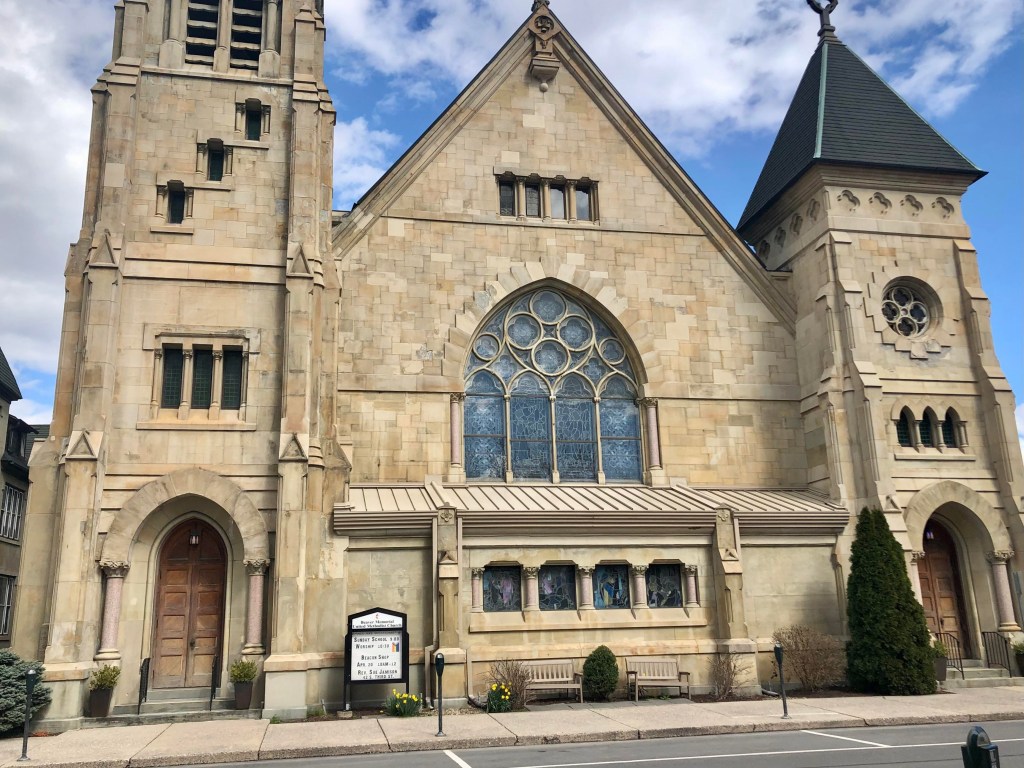
United Methodist House of Prayer, Lewisburg, PA by Alan Janesch

Recipe For Happiness

I met with a frustrated spouse last week who outlined a list of grievances that she is experiencing in her marriage and ended with, “I’m just not happy.” She and her husband are starting marriage counseling, so I feel hopeful that the issues will be discussed and resolved. But the conversation made me ponder the subject of happiness. I believe she was honest in what she said, but it made me concerned for folks who pin all their happiness on one relationship with another person. Are there things we can do apart from our relationships that would bring happiness into our lives so that when those relationships go through rough patches, we can still find joy?

What does the Bible say about happiness?

Then I stumbled upon this nugget from Isaiah. The Old Testament prophet spent his career warning Israel about apostasy and their standing as God’s people. But did you know he also offers a recipe for happiness?

Isaiah 56 (Common English Bible)

The Lord says:
    Act justly and do what is righteous,
    because my salvation is coming soon,
    and my righteousness will be revealed.
Happy is the one who does this,
    the person who holds it fast,
    who keeps the Sabbath, not making it impure,
    and avoids doing any evil.

Act justly. Do what is righteous. Anticipate the coming salvation. Hold fast to God’s promises. Keep the Sabbath holy. Avoid doing evil. If you meditate on that list of ingredients, you can see how happiness would follow. And God goes on to ensure that his listeners understood that this recipe is not just restricted to the Jews but is available to anyone.

Don’t let the immigrant who has joined with the Lord say,
    “The Lord will exclude me from the people.”
    And don’t let the eunuch say,
        “I’m just a dry tree.”
The Lord says:
    To the eunuchs who keep my sabbaths,
    choose what I desire,
    and remain loyal to my covenant.

We get a foretaste of the New Covenant in these verses regarding immigrants and eunuchs. These people certainly represented those outcast from Jewish society. Eunuchs were denied full participation in the temple rituals, according to Leviticus 21:17-20. God is saying very clearly that while society may deny them inclusion, all are welcome in God’s temple and courts. God is also saying that while you may feel outcast, the word of God is higher and stronger than your feelings.

Indeed when Jesus arrived, he opened up his ministry to the outcasts first.
    In my temple and courts, I will give them
    a monument and a name better than sons and daughters.
    I will give to them an enduring name
    that won’t be removed.

Isaiah’s prophecy of a time when all would be welcome at the temple found its home in Jesus. He ate with sinners, healed the Gentiles, fed the poor and marginalized, and died for us all. His Temple is for the world.

Have you ever felt outcast in your community? Have you ever been shunned by family, neighbors, or the church? Are you lacking happiness in your life? Check the recipe again and see if you can spot a missing ingredient, starting with keeping the Sabbath.

May we open the doors wide for all to come in and taste and see that the Lord is good.

Happiness Pancakes by Mary Anne Mong

Rear Views

I joined the modern age of backup cameras in cars a few years ago. My latest car is the first one I’ve driven to have this feature, so my tendency is still to put the car in reverse, throw my right arm over the back of the passenger seat, twist my body around, and watch the driveway behind me as I back out. It took months to remember to look forward to see the dashboard screen’s display from the backup camera. After a few months of trying to only look forward at the screen, I gave up. The helpful red/yellow/green lines indicating my trajectory seem to just add to my disorientation, so unless I hear the “beep beep” indicating that I’m too close to something, I just turn my head toward the back of the car and look out the rear window. Old school? You betcha. On the other hand, I haven’t run over anything.

Our passage in Joel made me think of looking behind you in order to steer in the direction you want to go. Looking through the back window is helpful in reverse, but the only way to move forward is to look ahead. Yet I have to look back to get away from the house, so every trip starts that way. It was the same with the tiny nation of Judah as they were being assaulted from a terrible army from the North. Their own apostasy had pulled them farther and farther away from God and their position as God’s inheritance was in jeopardy due to their sins. Before they could move forward, God forced them to look back.

Joel 2 (Common English Bible)

Between the porch and the altar
        let the priests, the Lord’s ministers, weep.
    Let them say, “Have mercy, Lord, on your people,
        and don’t make your inheritance a disgrace,
        an example of failure among the nations.
    Why should they say among the peoples,
        ‘Where is their God?’”

The priests were instructed to pray “between the porch and the altar,” indicating that they were to lead the people in a prayer of repentance as they cried out to God for mercy. This prayer needed to happen before the priest even entered the Temple, as he was crossing the “porch” where the people waited to get in. Joel 2 is often used at the beginning of Lent when the church is called to gather together for forty days. We are invited to return to God with all our hearts, with fasting, with weeping, and with sorrow. The Hebrew word for “repent” is the same as the Hebrew word for “to turn.” We understand repentance as a turning completely away from the sin you have been involved in and turning toward God. Joel instructs the people to repent, and then envisions the Lord responding with passion and pity. The people and the land will be restored.

1Then the Lord became passionate about this land, and had pity on his people.

19 The Lord responded to the people:
See, I am sending you
    the corn, new wine, and fresh oil,
        and you will be fully satisfied by it;
    and I will no longer make you
        a disgrace among the nations.

20 I will remove the northern army far from you
    and drive it into a dried-up and desolate land,
        its front into the eastern sea,
        and its rear into the western sea.
    Its stench will rise up;
        its stink will come to the surface.
The Lord is about to do great things!

Everything will be restored: The corn, the new wine, the reputation among nations they had enjoyed, the bounty of the land … God will not withhold anything.
21 Don’t fear, fertile land;
    rejoice and be glad,
    for the Lord is about to do great things!

This is exactly what happens when we look behind us for any remaining sin, confess it and repent, and then look forward to God’s forgiveness. What unspoken sin are you holding on to today?

What unspoken sin is holding on to you today?

Give it up, Turn and return to your merciful, loving, and forgiving God. The Lord is about to do great things!

Great Things by Michelle Robertson

Heaven Opens

What do you believe happens in baptism? Your answer will likely reflect your denomination’s beliefs on the subject. In the United Methodist church, we believe this about baptism:

Christ constitutes the church as his body by the power of the Holy Spirit (1 Corinthians 12:13, 27). The church draws new people into itself as it seeks to remain faithful to its commission to proclaim and exemplify the gospel. Baptism is the sacrament of initiation and incorporation into the body of Christ. (United Methodist Church Book of Discipline, paragraph 216, page 156.)

So, we understand the sacrament of baptism to be a beginning point, or an “initiation” into the household of God, from which we will grow in our understanding of God, increase our faith, participate in the life of the church, and confirm our hope for the kingdom of heaven as it is on earth.

In our passage from Luke today, we observe Jesus’ baptism, which was also an initiation point for him. His ministry began in that moment. Heaven was opened and the Holy Spirit descended on him with power and purpose:

Luke 3 (Common English Bible)

21 When everyone was being baptized, Jesus also was baptized. While he was praying, heaven was opened 22 and the Holy Spirit came down on him in bodily form like a dove. And there was a voice from heaven: “You are my Son, whom I dearly love; in you I find happiness.”

Immediately the Spirit led him straight into Faith Formation Bootcamp, where he had the opportunity to grow in his knowledge of God and have his strength and purpose defined by his battle with the devil there.

Jesus’ temptation

4 Jesus returned from the Jordan River full of the Holy Spirit, and was led by the Spirit into the wilderness.

After completing his cross-fit strength training, he immediately went about the task of telling the people who he was, and more importantly, whose he was.

Jesus announces good news to the poor

14 Jesus returned in the power of the Spirit to Galilee, and news about him spread throughout the whole countryside.

Are you baptized? For what purpose? Are you actively engaged in your own Faith Formation Bootcamp, or are you ignoring your mission and allowing others to do the work of the kingdom?

All of us are called to God’s purpose, which is confirmed through our baptism. Heaven opened up the day you were baptized! God looked upon the baptismal waters and claimed you by saying, “You are mine. In you, I find happiness.”

Like Jesus, we have work to do. Let’s get to it!

Come to the Water by Colin Snider

First Fruit

This last Fourth of July was an extremely hot day, so my husband and I opted to spend part of it watching the movie “Independence Day.” It is a blockbuster adventure about a massive alien attack on earth, and how a handful of pilots and a nerdy scientist saved the day. My pilot husband especially enjoyed that part of the plot. I thought about this movie today as I read the account from Acts about the events that happened 10 days after Jesus ascended into heaven. He had instructed his disciples to wait in Jerusalem for a gift that would come from heaven.

The scene must have looked like a modern day science fiction movie. People were milling about, having come to Jerusalem for a celebration of the Feast of the First Fruits, also known as the Pentecost. This Jewish celebration was held exactly 50 days after Passover and was well attended by pious Jews from all around. The pleasant weather and the joyful nature of the event made it very popular. First fruits represented the best of the new harvest. The finest wheat, the perfect grapes, the unblemished sheep … only the best would do. The festival was prescribed in Numbers 28:26: “‘On the day of first fruits, when you present to the Lord an offering of new grain during the Festival of Weeks, hold a sacred assembly and do no regular work” (Numbers 28:26, New International Version).

Who doesn’t like a day off of work?

Acts 2 (Common English Bible)

When Pentecost Day arrived, they were all together in one place. Suddenly a sound from heaven like the howling of a fierce wind filled the entire house where they were sitting. They saw what seemed to be individual flames of fire alighting on each one of them. They were all filled with the Holy Spirit and began to speak in other languages as the Spirit enabled them to speak.

The sudden appearance of flame and wind must have been disturbing and surreal. They were anticipating the usual Temple service, replete with altar sacrifices and the presentation of crops, and now this. Can you imagine?

There were pious Jews from every nation under heaven living in Jerusalem. When they heard this sound, a crowd gathered. They were mystified because everyone heard them speaking in their native languages. They were surprised and amazed, saying, “Look, aren’t all the people who are speaking Galileans, every one of them? How then can each of us hear them speaking in our native language? Parthians, Medes, and Elamites; as well as residents of Mesopotamia, Judea, and Cappadocia, Pontus and Asia, 10 Phrygia and Pamphylia, Egypt and the regions of Libya bordering Cyrene; and visitors from Rome (both Jews and converts to Judaism), 11 Cretans and Arabs—we hear them declaring the mighty works of God in our own languages!” 

We understand this to be a reversal of the Tower of Babel debacle from Genesis 11. In that situation, God deliberately confused all of humanity’s languages so that the people couldn’t plot and scheme by communicating with one another. Any idea of human superiority was humbled in that moment. So when the powerful word of the disciples proclaiming the good news of Jesus Christ was suddenly heard and understood in every dialect, they were surprised and bewildered. The power of the Holy Spirit came down upon them with such force that even in the midst of revelation, amazement still reigned.

12 They were all surprised and bewildered. Some asked each other, “What does this mean?” 13 Others jeered at them, saying, “They’re full of new wine!”

Some scholars see this as the fulfillment of the Levitical instructions on what to bring to the altar in order to consecrate the first fruits at Pentecost. In Leviticus 23:15-22, we see the instructions to the priest to hold up two loaves of leavened bread at the altar as a “wave offering”. Why two?

17 From wherever you live, bring two loaves made of two-tenths of an ephah of the finest flour, baked with yeast, as a wave offering of firstfruits to the Lord (Leviticus 23: 17, New International Version).

Theologian Charles Spurgeon suggested that one loaf represented the saving of Israel, and the other loaf, the saving of the Gentiles. Jesus Christ, the only son of God, was the First Fruit of heaven. And indeed, on the day of Pentecost in Acts, the church began with a mission to offer salvation to both Jew and Gentile alike.

What do you think represents your first fruit? What resource, gift, ability, or strength are you willing to commit to the Lord? Is it your very best? May we joyfully offer our very best at the altar.

The First Fruit of God by Kathy Schumacher

Dependence

Can dogs tell time? I think they can. Every evening at exactly 6:00 my very large Labrador Retriever named Georgia arises from her nap and stares me down until I get up and feed her dinner. Exactly at 6:00! Georgia and I have a mutually dependent relationship. I depend on her for her unconditional love expressed through tail wags, and she depends on me for everything in her life: her health and well-being, her sustenance, her shelter, her playtime … just as I depend on God for these things. The first line of Psalm 104, attributed to David, says it all. “All your creations wait for you to give them their food on time.” David was a keen observer of the nature that surrounded him. This verse made me laugh, thinking of how our pets know it’s time to eat. Does your pet do that?

Psalm 104 (Common English Bible)

All your creations wait for you
    to give them their food on time.
28 When you give it to them, they gather it up;
    when you open your hand, they are filled completely full!
29 But when you hide your face, they are terrified;
    when you take away their breath,
    they die and return to dust.
30 When you let loose your breath, they are created,
    and you make the surface of the ground brand-new again.

A better translation of “on time” in verse 1 is “in God’s timing.” This alludes to the fact that we are completely dependent on God to provide for us, and it only happens in God’s time. That is an important concept to understand as we mature in our faith. Our daily bread will always be offered to keep us going, but there are other things that we need to wait on God to provide, such as resolutions to our conflicts, answers to prayer, and receiving provision only when we are able to manage it. And sometimes that provision comes in ways we didn’t expect. In those moments we must allow God to be God and give us what we need rather than what we want. When we pray for healing and it comes in the form of death, this is a bitter pill to take. When we pray for help with a marriage that is falling apart and God delivers us through divorce, we have to accept God’s wisdom. When we pray for things we can’t handle, God’s withholding is for our own good.

Verse 28 reminds us that when God provides, we are called to “gather it up.” Like chickens in the barnyard who scatter at the farmer’s feet to receive the corn, we have to come to God in an attitude of humble gratitude for whatever God sees fit to provide. We need both wisdom and effort when it comes to receiving our Lord’s merciful gifts, knowing that everything we are being given comes from God’s goodness and God’s wisdom, which is much higher than our own.

Recognizing our dependance on God is a reason to sing. The Spirit is ready and able to create new things in us and for us with every breath. May we sing to the Lord as long as we live, and may our whole beings bless the Lord.

31 Let the Lord’s glory last forever!
    Let the Lord rejoice in all he has made!
32 He has only to look at the earth, and it shakes.
    God just touches the mountains, and they erupt in smoke.

33 I will sing to the Lord as long as I live;
    I will sing praises to my God while I’m still alive.
34 Let my praise be pleasing to him;
    I’m rejoicing in the Lord!
35 Let sinners be wiped clean from the earth;
    let the wicked be no more.
But let my whole being bless the Lord!
    Praise the Lord!

God Provides by Michelle Robertson

Last, But Not Least

Today we will finish our look into Psalm 63. You’ll recall that King David wrote this in a wilderness of despair, as he was fleeing from his son’s attempted coup. In this bleak situation, he sought God and was able to praise him despite his situation. Perhaps it was easier for David to do this because he had come to know God’s lovingkindness first hand:

Psalm 63 (Common English Bible)

Because Your lovingkindness is better than life,
My lips shall praise You.
Thus I will bless You while I live;
I will lift up my hands in Your name.
My soul shall be satisfied as with marrow and fatness,
And my mouth shall praise You with joyful lips.

The Hebrew word for lovingkindness in this passage is hesed. Hesed is one of the most fundamental characteristics of God, consistent with what we know about His covenantal nature. Hesed is “wrapping up in itself all the positive attributes of God: love, covenant faithfulness, mercy, grace, kindness, loyalty–in short, acts of devotion and loving-kindness that go beyond the requirements of duty,” elaborates Bible scholar Darrell L. Bock.

Throughout the Hebrew Bible, we see hesed translated in a number of different ways; steadfast love, mercy, kindness, and goodness. While these synonyms develop our understanding, they only just skim the surface of this multifaceted, rich word. It isn’t a romantic kind of love: indeed it is love in action, love given to the undeserving, love that is loyal to the point that it will never leave you. 

David learned about God’s deep well of hesed for him over the many trials and tribulations of his life. This “man after God’s own heart” pretty much broke all the 10 commandments during his lifetime, including adultery and murder, and yet could say in this moment that God’s hesed/lovingkindness is better than life itself, providing a feast of marrow and fat in the barren wilderness. 

Hesed was a mark of the early church. In the early times, there was a growing recognition of the uniqueness of the church in the general population because of the way Christians treated one another. Tertullian, who is called the Father of Western Theology, said, 

“It is our care for the helpless, our practice of lovingkindness, that brands us in the eyes of many of our opponents. ‘Look!’ they say. ‘How they love one another! Look how they are prepared to die for one another’ ”

It was the same reaction of the unbelieving Greek writer Lucian (a.d. 120–200) upon observing the warm fellowship of Christians: 

“It is incredible to see the fervor with which the people of that religion help each other in their wants. They spare nothing. Their first legislator [Jesus] has put it into their heads that they are brethren.”

I have a question for you this morning. Do you think that the church is still known for its extreme lovingkindness today? Do you think the secular world looks at us and can see how we help each other, sparing nothing, acting like brethren ready to die for one another? Or does the world see our in-fighting, our angry, accusing social media posts, and our schisms instead? Would they know we are Christians by our love today?

Church, this is a challenge to pick up the mantle of lovingkindness that David was writing about. We have received the greatest gift of God’s lovingkindness in the form of Jesus, who poured out hesed on the cross so that we might receive his love and his forgiveness of sins.

That is who we need to be to the world.

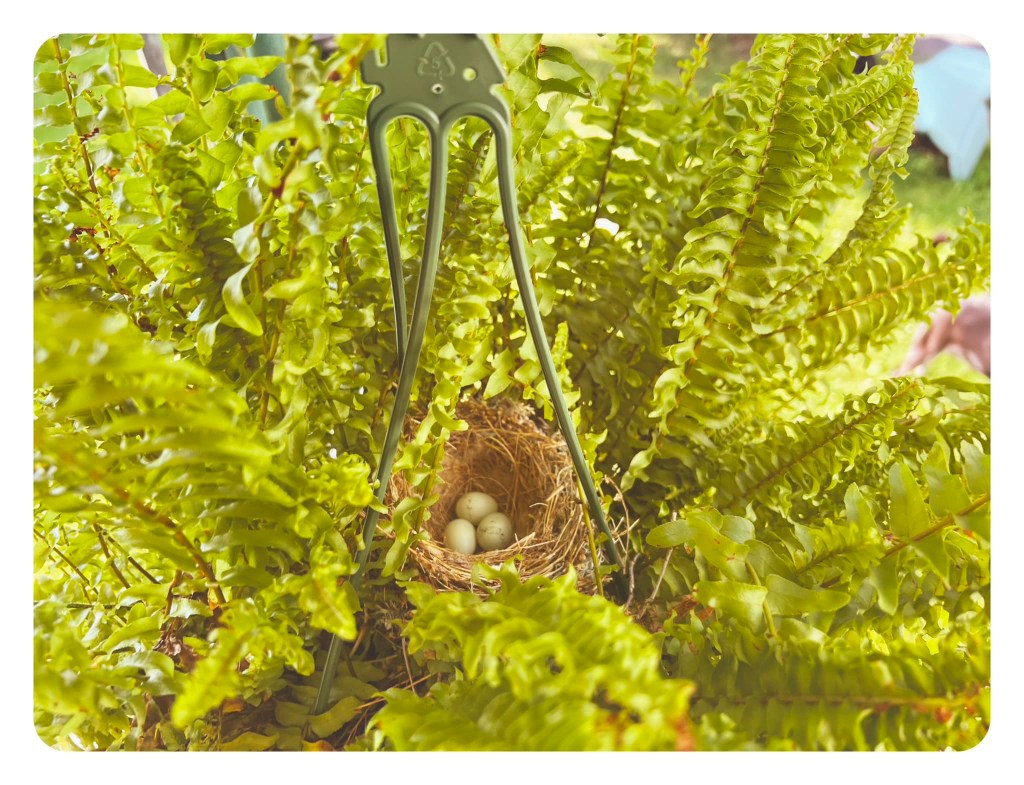
Ready to Hatch by Becca Ziegler

Next Things Next

Our last devotional focused on Psalm 63, a “psalm of David when he was in the wilderness of Judah.” Scholars estimate that David wrote about 73 psalms, so in addition to his other gifts of shepherding, leading a country, slaying giants, and establishing Jerusalem as the center of religious authority in Israel, he also was quite a proliferate poet. This particular psalm is striking in that it was written after he had fled Jerusalem when his son Absalom organized a coup and tried to have him killed. David had been king of Israel for over 30 years at this point, but when Prince Absalom raised an army against him, he fled east from Jerusalem to the other side of the Jordan river and ended up in the arid desert.

This isn’t David’s first time in the wilderness. As a young shepherd boy, he would drive his flock in the spring to graze on the grass and flowers that grew there during the brief rainy season. It was in this wilderness period that David practiced his rock-slinging and his hunting skills. He also meditated on the beauty of God’s creation and practiced his poetry, penning such phrases in Psalm 23:

“the Lord is my Shepherd, I shall not want. He makes me lie down in green pastures he leads me beside the still waters.”

His second time in the wilderness was when crazy King Saul was trying to kill him. He found protection and solitude there, writing in Psalm 57: 

Be merciful to me, O God; be merciful to me,
    for in you my soul takes refuge;
in the shadow of your wings I will take refuge,
    until the destroying storms pass by.
I cry to God Most High,
    to God who fulfills his purpose for me.
He will send from heaven and save me;
    he will put to shame those who trample on me. 
God will send forth his steadfast love and his faithfulness.

So here he is on his third venture to the wilderness. He is totally cut off from the sanctuary in Jerusalem, where he longs to be. His need to worship makes his soul thirst and his flesh long for God’s presence in the sanctuary.  See verse 2:

Psalm 63 (Common English Bible)

O God, You are my God;
Early will I seek You;
My soul thirsts for You;
My flesh longs for You
In a dry and thirsty land
Where there is no water.

So I have looked for You in the sanctuary,
To see Your power and Your glory.

Because Your lovingkindness is better than life,
My lips shall praise You.
Thus I will bless You while I live;
I will lift up my hands in Your name.
My soul shall be satisfied as with marrow and fatness,
And my mouth shall praise You with joyful lips.

I have to say that when I read that verse, I was immediately reminded of how much we all longed for our sanctuaries during the pandemic. My church worshipped in a lot of weird places back then. Our first time worshipping over at an elementary school ball field parking lot was so hot, my cell phone stopped working and the live Facebook feed cut out. Then we moved over to the front lawn of our church and ladies wearing sandals discovered how many ant hills we have over there.

Probably my favorite non-sanctuary place was when the other pastor and I drove over to Island Farm on Roanoke Island, a working farm of horses, cows, and sheep. We filmed our Christmas Eve service there. I read a children’s story I had written for the service with the sheep gathered all around me, which was great until the handler worried that they were wandering out of the camera frame, so she threw some sheep food at my feet. Have you ever been rushed by 10 hungry sheep? On camera?? Boy was I longing for the Sanctuary on that day! And then there was the pre-dawn taping over in the creepy cemetery for the Easter Sunday service … suffice it to say, I missed the four walls of my church and I bet you missed your church, too. But those months taught us how to worship anywhere. David missed his sanctuary, and did you notice what he did? He immediately began to worship and praise exactly where he was.

This is something we all learn in the wilderness. Sometimes you experience a wilderness in your soul where joy and praise seem impossible. Some of you are in a wilderness right now. It may be a wilderness of confusion. It may be a wilderness of addiction. It may be a wilderness of extreme disappointment, physical ailments, loss of hope … we’ve all been in that dry desert at one point in our lives. But like David, you have to learn how to worship and praise exactly where you are.

I talked with a relative this week who is in a desert like this. Her 88-year-old parents are both suddenly failing. For months now she has been running from one hospital to another, from nursing home to hospice, and battling red tape and Medicare systems that offer no help. She is in a desert of despair. 

I spoke with one of my daughter’s friends who is struggling with a recent miscarriage and a life-long estrangement from her mother. She has no mother to turn to as she deals with her loss. She is in a desert of loneliness.

A former church member got in touch with me recently to seek advice about her crumbling marriage. Her husband struggles with an addiction to pornography that has completely eroded their intimacy. She is in a desert of mis-trust and insecurity.

David’s ability to worship in his desert is an inspiration and a challenge.

What is your wilderness today? Can you pause for a moment and seek God, even in the bleak dry place you are in?

Remember that God is even in your harshest moments. Just go find him.

Early I Will Seek Him by Faye Gardner

First Things First

I want to start today by taking a little survey. I am interested to know what the first thing is you do every morning. Not about multiple trips to the loo, but when you are finally up and about, what is the first thing you do?

I get coffee. My first act of the day is to tumble out of bed, stumble to the kitchen, pour myself a cup of ambition, then yawn and stretch and try to come alive. From that point I usually write for a few hours, walk the dog, go for a run, etc. but nothing happens until I have consumed that first cup of joe.

Apparently I am in good company. According to a survey done in January, over 73% of Americans drink coffee first thing in the morning. 51% purchase coffee from a coffee shop, 48% report that Starbucks coffee is their favorite brand, followed by Dunkin and Folgers. The survey also noted that 25% of people like to sip on espresso martinis, although maybe not first thing in the morning!! And weirdly, 16% of coffee drinkers prefer decaf, and for the life of me, I can’t figure out why. It’s like eating a reduced fat Oreo. Why?? Just why??

We’re talking about early morning habits this morning because today we are reading Psalm 63. David the poet-king clearly stated his early morning habit at the very beginning of this beautiful psalm. Early in the morning, David rises and seeks God:

Psalm 63 (NKJV) A Psalm of David when he was in the wilderness of Judah.

O God, You are my God;
Early will I seek You;
My soul thirsts for You;
My flesh longs for You
In a dry and thirsty land
Where there is no water.

So I have looked for You in the sanctuary,
To see Your power and Your glory.

Because Your lovingkindness is better than life,
My lips shall praise You.
Thus I will bless You while I live;
I will lift up my hands in Your name.
My soul shall be satisfied as with marrow and fatness,
And my mouth shall praise You with joyful lips.

When I remember You on my bed,
I meditate on You in the night watches.
Because You have been my help,
Therefore in the shadow of Your wings I will rejoice.
My soul follows close behind You;
Your right hand upholds me.

But those who seek my life, to destroy it,
Shall go into the lower parts of the earth.
10 They shall fall by the sword;
They shall be a portion for jackals.

11 But the king shall rejoice in God;
Everyone who swears by Him shall glory;
But the mouth of those who speak lies shall be stopped.

This reference to seeking God early in the morning has made Psalm 63 a daily morning reading in the Eastern Orthodox Church for centuries.

I want to ask you something. What would your day be like if you sought God first thing every morning? Do you think the day might take shape differently? And what if those 73% of Americans reached for the Word of God first thing every day instead of coffee? What if we thirsted and longed for God the same way we thirst and long for coffee? Do you think that would make a difference in how people behave? I do. Perhaps we could be like our Eastern Orthodox friends and get up every morning and read this psalm aloud to start our day.

We’ll unpack this psalm over the next two devotionals, but for now, go back and read this psalm out loud. Perhaps we could make a practice of reading it out loud every morning and see how it shapes our day.

Are you in?

Early Rising by Michelle Robertson