One of our Lenten disciplines is self-denial. Other than fasting (!), this may be one of the hardest of all the practices to adopt. It is the one comprehensive discipline that really forces a change. To deny oneself means to stem all the urges we experience that lead us down the road of temptation, laziness, distraction for distraction’s sake, and greediness. What in your life has you so consumed that you neglect your personal discipleship? Is it food? Substance abuse? Social media? Hours of Netflix?
I spoke to a women’s group two weeks ago on the subject of Lent. I asked them to thoughtfully commit to three Lenten practices this year that would make a permanent difference in their walk with Christ. We talked not only about giving something up, but adding something in. One very thoughtful person told us that she knew she needed to give up her Amazon shopping habit, which had become a daily activity for her. She was almost afraid to say it out loud but she trusted her friends around her to receive this without judgement and to hold her accountable for the next six weeks. Dang, I admire this woman! I suggested she calculate the money that she would have spent and do something positive with it after Easter. I can’t wait to see how this turns out for her.
In our Scripture today, Jesus explained the upcoming crucifixion to his hard-of-hearing disciples. The most tone deaf among them was Peter, who shoved his fingers in his ears and “la-la-la’d” away the reality of what was about to happen:
Mark 8 (Common English Bible)
31 Then Jesus began to teach his disciples: “The Human One must suffer many things and be rejected by the elders, chief priests, and the legal experts, and be killed, and then, after three days, rise from the dead.” 32 He said this plainly. But Peter took hold of Jesus and, scolding him, began to correct him. 33 Jesus turned and looked at his disciples, then sternly corrected Peter: “Get behind me, Satan. You are not thinking God’s thoughts but human thoughts.”
What a rebuke! In a self-serving manner, Peter thought he could talk Jesus out of doing what Jesus knew he had to do. Jesus called him Satan and shoved away any thought that the story might have a different ending. Peter didn’t want to lose his friend and possibly face the jeers and condemnation that this “failed mission” would bring to those who remained behind. In short, Peter didn’t get it.
34 After calling the crowd together with his disciples, Jesus said to them, “All who want to come after me must say no to themselves, take up their cross, and follow me.
Following Jesus is a process of self-denial. We are called to do God’s will at the expense of just having things our own way. We are taught to follow the commandments and to serve the Lord with gladness. We are expected to love, give, and put others first in the same way that Jesus did. We are led to deny our own desires and put Jesus’s cross on our shoulder.
35 All who want to save their lives will lose them. But all who lose their lives because of me and because of the good news will save them.36 Why would people gain the whole world but lose their lives? 37 What will people give in exchange for their lives? 38 Whoever is ashamed of me and my words in this unfaithful and sinful generation, the Human One will be ashamed of that person when he comes in the Father’s glory with the holy angels.”
Self-denial requires the courage of my retail addicted friend. Self-denial is an eye-opening experience that helps you balance your life and put your feet on the path of righteousness. Self-denial is challenging, but the reward is gaining back your life. Isn’t that worth a try?
Have you ever felt betrayed or forsaken? Life can be full of little rejections and large betrayals that leave us feeling adrift and unloved. Abandonment by family or friends is a terrible blow that can leave you so far down, you can’t even imagine getting up again. Have you ever experienced that? I have.
King David certainly felt this way, as his life was filled with strife and trials, mostly of his own making. In our Psalm today, he cried out to God about his plight, and began with the terrible cry, “My God, my God, why have you forsaken me?” (Psalm 22:1) It is one thing to be forgotten by a friend or undermined by a colleague, but to feel that God has abandoned you is a soul-shattering thing. Yet these very words were uttered by our Lord on the cross in his moment of agony.
But in the second half of this psalm, David has come around to the reality that God never leaves us or forsakes us. He gives us permission to feel this way for a time, but strongly asserts that God never despises or abhors us in our times of sin and trial: God will never hide his face from us, and always hears us.
Psalm 22 (New King James Version)
I will declare Your name to My brethren; In the midst of the assembly I will praise You. 23 You who fear the Lord, praise Him! All you descendants of Jacob, glorify Him, And fear Him, all you offspring of Israel! 24 For He has not despised nor abhorred the affliction of the afflicted; Nor has He hidden His face from Him; But when He cried to Him, He heard.
I think this says a lot about doubt. Some people believe that doubting God is a sin. David says otherwise. This psalm assures us that there will be times when we are unsure of God’s activity in our mess, but we are never forsaken. Everyone who seeks God will find God. The poor and the prosperous alike will eat and be satisfied:
25 My praise shall be of You in the great assembly; I will pay My vows before those who fear Him. 26 The poor shall eat and be satisfied; Those who seek Him will praise the Lord. Let your heart live forever!
27 All the ends of the world Shall remember and turn to the Lord, And all the families of the [nations Shall worship before You. 28 For the kingdom is the Lord’s, And He rules over the nations.
29 All the prosperous of the earth Shall eat and worship; All those who go down to the dust Shall bow before Him, Even he who cannot keep himself alive.
In the end, God is God. Jesus promised us at his own leaving that he is with us always, even to the very ends of the earth. So if you are struggling with your faith today, take heart! God is here. God is with you. God is working things out for you.
30 A posterity shall serve Him. It will be recounted of the Lord to the next generation, 31 They will come and declare His righteousness to a people who will be born, That He has done this.
So while you wait in your trial, take time to remember God’s righteousness. Bow before him and worship his name. You are precious to him, and he will never abandon you.
About a hundred years ago (!) I walked down a church aisle toward a much-too-young Navy Ensign as he stood waiting for me at the altar of the little chapel at the Philadelphia Navy Base. He was nervous, I was nervous, but we said our vows with integrity and hope, and we’ve been walking together for all these (100+) years. Walking with someone “til death do you part” is a high and holy privilege and blessing, one which I have never taken for granted. Marriage is fragile. Marriage is holy. Marriage is filled with challenges and triumphs. If you’re married and you still like your spouse, give me an “Amen!”
Life can be a series of walking with people through wilderness times. I have a dear friend with whom I have walked for over a decade through extreme life challenges. I walked through cancer with my oldest daughter. I have walked with family members who were caught up in sudden storms. Numerous people have walked the way of suffering with me over the years, and I’m sure it is the same with you. God intentionally calls us to walk beside others as we make our way through every valley and high mountain.
Today’s lectionary passage describes a time when God chose Abram to walk a new path with him. This startling invitation set into motion the beginnings of the nation of Israel and the journey of promises that led them through the Promised Land all the way to the Messiah. Notice that God first identifies himself, and then immediately issues the invitation to covenant:
Genesis 17 (Common English Bible)
17 When Abram was 99 years old, the Lord appeared to Abram and said to him, “I am El Shaddai. Walk with me and be trustworthy. 2 I will make a covenant between us and I will give you many, many descendants.” 3 Abram fell on his face, and God said to him, 4 “But me, my covenant is with you; you will be the ancestor of many nations.
There were many times when I felt that God invited me to walk with him into a new facet of ministry, but this call to Abram is mind-blowing. I can’t even imagine how he felt, and how confusing it must have been. No wonder he fell on his face!
5 And because I have made you the ancestor of many nations, your name will no longer be Abram but Abraham. 6 I will make you very fertile. I will produce nations from you, and kings will come from you. 7 I will set up my covenant with you and your descendants after you in every generation as an enduring covenant. I will be your God and your descendants’ God after you.
A change of name was in order and was significant. God identifies himself as El Shaddai and almost immediately changes Abram’s identity to Abraham. Sarai becomes Sarah, and it signified to the world that their role and purpose changed. Much like the moment of marriage where I took my husband’s last name, the old identity was severed, and a new relationship took over. While I never ceased being Fred and Nancy’s daughter, I now was marked as a member of the Haas clan and the wife of the nervous Ensign. Indeed, I made a covenant agreement to take on my new family and was identified as such.
15 God said to Abraham, “As for your wife Sarai, you will no longer call her Sarai. Her name will now be Sarah. 16 I will bless her and even give you a son from her. I will bless her so that she will become nations, and kings of peoples will come from her.”
Is God calling you to walk alongside someone who needs your love and support? Are you being invited to take on a new identity and be known in a new way? Is he inviting you to a covenant agreement with him?
Say yes. Walking with God wherever he leads you is a sure pathway to peace.
For a part of my ministry, I was a regular visitor in the local jails in the towns where I have served. It began when a young church member shot a friend while playing “Russian Roulette” with a gun he had just obtained that week. Spurred on by a television show, the three friends thought it would be a fun game until my church member “playfully” shot his friend in the chest, killing him. My weekly visits with him expanded to seeing other prisoners, as Christian guards would announce “clergy visits for all” when I arrived. I heard many, many stories of regret, remorse, arrogance, evil, and bad decisions. I have a friend in the town where I lived who regularly visits young women in prison. This neglected population of the children of God need people who will come and share the love of Jesus with them.
And it is what Jesus did.
In our Scripture this morning, Peter discussed Christ’s suffering on account of all of our sins. If you look at the palms of your hands this morning and can’t make out the nail prints, be glad. Christ willingly took those scars upon his unblemished hands so that you didn’t have to. Charles Spurgeon said it beautifully: “The hem of grief’s garment is all you ever touch, but Christ wore it as his daily robe.”
Jesus went to preach to the spirits in prison so that they might understand God’s message of judgment and his triumph of good over evil through the death and resurrection of Christ:
1 Peter 3(Common English Bible)
18 Christ himself suffered on account of sins, once for all, the righteous one on behalf of the unrighteous. He did this in order to bring you into the presence of God. Christ was put to death as a human, but made alive by the Spirit. 19 And it was by the Spirit that he went to preach to the spirits in prison. 20 In the past, these spirits were disobedient—when God patiently waited during the time of Noah. Noah built an ark in which a few (that is, eight) lives were rescued through water. 21 Baptism is like that. It saves you now—not because it removes dirt from your body but because it is the mark of a good conscience toward God. Your salvation comes through the resurrection of Jesus Christ, 22 who is at God’s right side. Now that he has gone into heaven, he rules over all angels, authorities, and powers.
These particular prisoners were understood as the demons (the sons of God who were now the fallen angels) that are referenced in Genesis 6:1-2:
6 When human beings began to increase in number on the earth and daughters were born to them, 2 the sons of God saw that the daughters of humans were beautiful, and they married any of them they chose.
So many of us live in prisons today. We live in the prison of a past we can’t shake off. We live in prisons of addiction and substance abuse. We live in a toxic relationship prison. We live in the prison of regret. We live in the prison of sin and bad choices.
Christ died so that you could be free. You don’t have to live in a prison of your own making! Your baptism provides you with the Holy Spirit power to live in your good conscience toward God, ever seeking his perfect will for your life and following his guidance and direction.
Are you imprisoned by your choices? As Peter pointed out, Christ did all of this to bring you into the presence of God. Let Christ set you free.
The confluence of Ash Wednesday falling on Valentine’s Day is an interesting thing for believers. I have seen pictures of foreheads decorated with ash hearts rather than the traditional ash crosses as a way to merge the two. Churches have had to consider the timing of an evening Ash Wednesday service that now falls on one of the busiest restaurant nights of the year. Can romance and repentance fill the same spot? For me, the clash of two unlikely events is more practical. What if my husband decides to give me a heart-shaped box filled with chocolates, and I have decided to give up chocolate for Lent? Do I eat the entire box on the way to church? If you know me, you know I’m up for it!
Yet both events focus our attention on love, and that’s never a bad thing.
Our reading on this Ash Wednesday is the traditional call to repentance that Lent emphasizes. Remember the Lent is the 40 day period of preparation for the celebration of Easter. (There are actually 46 days between Ash Wednesday and Easter Sunday. We are invited to cease our Lenten practices on the Sundays, as Sunday is always a celebration of the resurrection. Thus, I could conceivably eat my chocolates on those six Sundays.)
Lent invites us to fast, pray, read Scripture, meditate, serve, give, worship, repent, and go through a process of self-examination. These Lenten disciplines, if practiced with dedication, will deepen our spiritual understanding and appreciation of the sacrifice that Jesus made on our behalf on the cross.
Joel2 (Common English Bible)
Blow the horn in Zion; give a shout on my holy mountain! Let all the people of the land tremble, for the day of the Lord is coming. It is near— 2 a day of darkness and no light, a day of clouds and thick darkness! Like blackness spread out upon the mountains, a great and powerful army comes, unlike any that has ever come before them, or will come after them in centuries ahead.
Immediately we feel the dark intensity of the season falling upon us. Lent is serious. Lent is somber. Lent is sacred.
12 Yet even now, says the Lord, return to me with all your hearts, with fasting, with weeping, and with sorrow; 13 tear your hearts and not your clothing. Return to the Lord your God, for he is merciful and compassionate, very patient, full of faithful love, and ready to forgive.
And yet, we are invited to return with all our hearts. If Lent is a process of asking God to do “heart surgery” on us, it is also a time to realize that his great Surgeon’s hands will also repair and restore.
14 Who knows whether he will have a change of heart and leave a blessing behind him, a grain offering and a drink offering for the Lord your God? 15 Blow the horn in Zion; demand a fast; request a special assembly. 16 Gather the people; prepare a holy meeting; assemble the elders; gather the children, even nursing infants. Let the groom leave his room and the bride her chamber.
I pray that you will join a gathering of people tonight in a church that is having an Ash Wednesday service. I promise you, there is no better way to begin Lent.
17 Between the porch and the altar let the priests, the Lord’s ministers, weep. Let them say, “Have mercy, Lord, on your people, and don’t make your inheritance a disgrace, an example of failure among the nations. Why should they say among the peoples, ‘Where is their God?’”
We will find God together every day in this season. May we practice a holy Lent together.
Think for a moment about your deepest loyalty. Is it a person, place, or thing? Is the connection so strong, absolutely nothing could make you betray or walk away from it? People feel loyal to many things: institutions, marriages, family, ideals, their country, their church … what is it for you?
Today we are stepping into the “Way-back Machine” and traveling all the way back to the time of Noah and the great flood. There are many lessons in this passage, but I want to focus on our understanding of the word “covenant.” At its core, a covenant relationship expresses a connection so powerful, nothing could break it. It is a reciprocal promise, an unbreakable trust, an iron-clad commitment, and a loyalty so concrete, both parties can count on it indefinately .
Genesis9 (Common English Bible)
8-11 Then God spoke to Noah and his sons: “I’m setting up my covenant with you including your children who will come after you, along with everything alive around you—birds, farm animals, wild animals—that came out of the ship with you. I’m setting up my covenant with you that never again will everything living be destroyed by floodwaters; no, never again will a flood destroy the Earth.”
12-16 God continued, “This is the sign of the covenant I am making between me and you and everything living around you and everyone living after you. I’m putting my rainbow in the clouds, a sign of the covenant between me and the Earth. From now on, when I form a cloud over the Earth and the rainbow appears in the cloud, I’ll remember my covenant between me and you and everything living, that never again will floodwaters destroy all life. When the rainbow appears in the cloud, I’ll see it and remember the eternal covenant between God and everything living, every last living creature on Earth.”
17 And God said, “This is the sign of the covenant that I’ve set up between me and everything living on the Earth.”
After making the violent but necessary correction of flooding his creation, God starts humanity over again on the basis of a covenant. He makes an indelible promise that no matter how bad things get, he won’t destroy all life again. People might argue that we are living in bad times right now and deserve punishment, but our covenant God has promised not to destroy his creation, but to redeem it. Indeed, he went on to send his only Son for that very purpose. His rock-solid promises are just that: rock solid.
We don’t have anything in life that is as immovable as our God. Institutions will fail. People will let you down. Relationships change. Ideals waver and fade under pressure. Everything is dust in the wind … except God.
I hope that brings you comfort today. Our covenant God will never leave us or forsake us. There is nothing we can do that would separate us from his great love through Jesus Christ.
Romans 8 (Common English Bible)
35 Who will separate us from Christ’s love? Will we be separated by trouble, or distress, or harassment, or famine, or nakedness, or danger, or sword?36 As it is written,
We are being put to death all day long for your sake. We are treated like sheep for slaughter.
37 But in all these things we win a sweeping victory through the one who loved us. 38 I’m convinced that nothing can separate us from God’s love in Christ Jesus our Lord: not death or life, not angels or rulers, not present things or future things, not powers 39 or height or depth, or any other thing that is created.
Nothing.
Even when we break the covenant with him, we can always return and come back. This is the way of repentance. True repentance restores the covenant, through the forgiveness of sins.
Have you walked away from your covenant God? Come home, rebel.
Today’s lectionary passage from Mark 9 describes the amazing Transfiguration of Christ high atop Mount Tabor. This Sunday will be Transfiguration Sunday in our churches, and many of you will hear the following passage read aloud as the text for the sermon. Most pastors will emphasize the revelation of Jesus in that moment as the King of Glory. The transformation that took place visibly changed Jesus right before his friend’s eyes. Indeed, in that moment, Jesus went from a weary, dusty rabbi who had just climbed up a mountain to something ethereal and blindingly white. But for today, let’s focus on Peter, James, and John.
A commentator that I read made a passing remark about the three disciples, saying we assume that these three were selected to witness this historic event because of their boldness of witness and their leadership skills, but he (the commentator) thought it was also possible that Jesus selected them to make the journey because they were trouble makers and couldn’t be trusted to be left behind. That made me laugh out loud. I know trouble makers like that! I’ve been a trouble maker like that. How about you?
I am deeply inspired by the late John Lewis, the stalwart civil rights activist, human rights advocate, politician, protester, voter registration pioneer, and leader in the cause for equality, jobs, and freedom. He coined the phrase “good trouble” to encourage people to speak up and speak out for the cause of justice in America. He was a trouble maker, too.
Mark 9:2-9 (Common English Bible)
2 Six days later Jesus took Peter, James, and John, and brought them to the top of a very high mountain where they were alone. He was transformed in front of them, 3 and his clothes were amazingly bright, brighter than if they had been bleached white. 4 Elijah and Moses appeared and were talking with Jesus. 5 Peter reacted to all of this by saying to Jesus, “Rabbi, it’s good that we’re here. Let’s make three shrines—one for you, one for Moses, and one for Elijah.” 6 He said this because he didn’t know how to respond, for the three of them were terrified.
Peter’s humanity in this moment takes all of us back to that place where we found ourselves in a startling situation and had no idea how to respond. His outburst is silly in hindsight, but who could blame him? Nothing like this had ever happened to this humble fisherman before, and he was confused.
But maybe there was something else going on. The Transfiguration happened just after Jesus had been explaining his impending crucifixion on a cross to the disciples. They loved him and didn’t want to accept that this would be the end of their three-year missionary journey. Surely, they didn’t want to see their friend and leader suffer and die in the way he predicted. So perhaps Peter saw this as a short-cut to glory. Why go through the horrible beating and death on a cross if glory could be had so easily? It was happening right in front of them! Couldn’t they just stay there and bask in the reflected glow of the King’s radiance, and skip the suffering part?
Many times we, too, want to take the short cut that would prevent us from having to suffer. Avoiding real issues, ignoring warning signs, looking the other way, glossing over what is really happening, are all things we do to avoid walking the way of suffering. Ask any family dealing with addiction and they will outline all the shortcuts they tried to take to avoid the reality of their loved one’s addiction. But sometimes, we must suffer in order to get to the other side of something.
7 Then a cloud overshadowed them, and a voice spoke from the cloud, “This is my Son, whom I dearly love. Listen to him!” 8 Suddenly, looking around, they no longer saw anyone with them except Jesus.
9 As they were coming down the mountain, he ordered them not to tell anyone what they had seen until after the Human One had risen from the dead.
Verse 7 resonates with what God said at Jesus’ baptism, but with a twist. He affirms Jesus as his beloved son and then adds “Listen to him!”
Let that be our focus today. Listen to him. Ask him for help along the way of suffering. See him for the King of Glory that he really is. Listen, and then go out and make some “good trouble” for the Lord.
Last Sunday, I had the privilege of preaching for my lovely friend Gina, who was on a well-deserved cruise with her husband as they celebrated their anniversary. I have preached for her before, and it is a complete joy. Her congregation is warm, inviting, engaged, and one of the strongest examples of contributing to local mission and ministry that we have in our conference. Her lay people lead the worship service with expertise and practice, reading Scripture, offering prayers, singing, playing, and generally running the show (as laity should) except for the sermon. One of my favorite moments is watching the little acolyte come up from her pew, pull out a step stool, and offer the prayer for the offering at the lectern. This child isn’t even ten years old, and she leads worship.
Another favorite moment is watching the Children’s Sermon. A young mom came forward and sat with the children gathered around her and began to talk about flashlights. The flashlight she brought had a very dull beam, so she made talked to the children about the importance of batteries, needing to re-charge when they go weak, and things work better when they are fully powered. At the end, she pulled out fresh batteries and allowed the kids to help her put them in the flashlight.
The contrast between the dull light from a flashlight that needs a new charge and the blinding beam that the new batteries provided was startling and instructive.
We all have moments where we need to re-charge, get fresh batteries, take a break, go on a trip with our spouse, or just have a lie-abed day. But work pressures, a society that promotes workaholism, and the demands and needs of others often prevent us from getting the rejuvenation that we need.
In our passage today, Paul addressed his church at Corinth and encouraged them to keep shining their light into a darkness of unbelievers. He warned them about people who prefer to follow their “god of darkness” and look away from a Truth they can’t see. He called the unbelievers “stone-blind:”
2 Corinthians 4 (The Message)
3-4 If our Message is obscure to anyone, it’s not because we’re holding back in any way. No, it’s because these other people are looking or going the wrong way and refuse to give it serious attention. All they have eyes for is the fashionable god of darkness. They think he can give them what they want, and that they won’t have to bother believing a Truth they can’t see. They’re stone-blind to the dayspring brightness of the Message that shines with Christ, who gives us the best picture of God we’ll ever get.
5-6 Remember, our Message is not about ourselves; we’re proclaiming Jesus Christ, the Master. All we are is messengers, errand runners from Jesus for you. It started when God said, “Light up the darkness!” and our lives filled up with light as we saw and understood God in the face of Christ, all bright and beautiful.
As errand runners for Jesus, we are charged with shining his light into the darkness of the world. Our lives are filled up with light and it is incumbent upon us to use our flashlight like an usher in a dark theater, directing people to the safety and joy of God’s presence. But we can’t do that if we allow our batteries to be drained beyond repair.
How about you? Are you fully charged up and ready to lead others into the dayspring brightness of Christ? Or do you need power down and recharge? We all know that stopping to recharge gives us strength and energy to move forward. A small moment of self-care can make a world of difference.
May God rejuvenate us as we do the errands of serving, worshipping, and loving his Son.
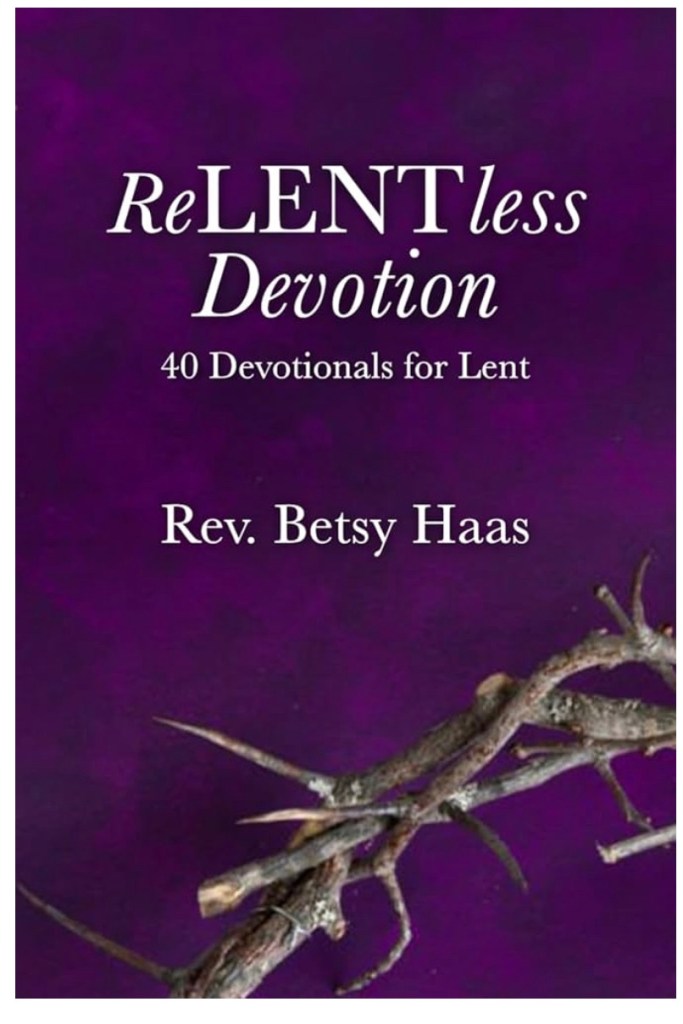
This ReLENTless Devotion Small Group Leader’s Guide gives you six weeks of discussion questions intended to spur conversation and reflection in your small group. Lent begins on a Wednesday, so you will have to establish the “weeks” according to which day of the week your small group meets. This guide gives you forty days of questions so that you can break it down into six weeks depending on your group’s schedule. Schedule your weeks so that students will have read each day before they come into class and provide them with a schedule before you begin so that they understand which days will be discussed each week. You should finish the study the week before Easter.
(Day One: Ash Wednesday) Lent is a holy season and we are meant to approach it in a somber and quiet way. It is a time to “come clean” with God by practicing the traditional Lenten disciplines: study, meditation, fasting, prayer, worship, giving, self-examination, repentance, and serving. Go over this list carefully with your class and ask them to choose at least three of the disciplines to which they will faithfully and intentionally commit. All of the disciplines should be practiced, but by choosing three, students will focus their attention on the things that God is calling them to observe the most. Have them turn to page 4 and write down their three things. These are personal, but some folks might be willing to share what they wrote down and why. By naming them out loud, there will be a sense of accountability in the group.
(Day Two) What does it mean to be God’s treasure? Have you ever struggled to believe this?
(Day Three) Andrew brought Peter to meet this new rabbi, and the world was changed. Who is God calling you to bring to Jesus? Write down their name on page 11 and begin praying for ways to be invitational. Can you invite them to church on Easter? Make a plan!
(Day Four) Psalm 84 invites us to stay on the “upright walk”. What does that mean? Can you give examples of someone who walks it? Why do people stray? Are you struggling with temptation? Write down a temptation on page 15 and commit to walking away from it.
(Day Five) Is it a sin to be tempted? What tempts you? How can we become strong against our temptations and say, “Beat it, Satan”?
(Day Six) Jesus’ death on the cross is an invitation to let things die in our lives that prevent us from living as whole disciples. What is God asking you to die to today? Sometimes holding on to things like regret, sin, the past, grudges, hatred, prejudices, bad memories, etc. prevent us from experiencing the peace that Jesus desires for us. What do you need to let go of in order to embrace the freedom that he died to give you? Write your answer on page 23.
(Day Seven) Paul writes that people who cause divisions by bringing stupid controversies, worthless dissensions, and unprofitable quarrels are “perverted and sinful”. What does this say about our current situation? How should this inform our use of news media outlets and social media?
(Day Eight) What are the golden calves that people worship today? What idols do you worship? Does society need a do-over? Where in your life did you get a second chance that you didn’t deserve? Do you need one today?
(Day Nine) Are you stubborn? Have you ever been betrayed? Has God ever helped you release a long-held grievance? How did it make you feel to be released? Share stories of redemption today with your class.
(Day Ten) What do you think the world thirsts for the most? Do we pursue the things that bring true joy? Do you know someone who is very low right now who could use a cup of effervescent Jesus? Write down their name on page 40 and find a way this week to be Living Water to them.
(Day Eleven) Today’s lesson focuses on acts of service. Have a discussion in class about an act of service you all can do together. Make a commitment and make a plan!
(Day Twelve) What happened to Israel when they rebelled against God? Have you, or someone you love, ever rebelled against God’s will? Often the teenage years are times of acts of rebellion. Some of us never grow out of it. What is God’s response?
(Day Thirteen) Define sin (separation from God). Define repentance (returning to God). Since all have sinned and fallen short of the glory of God, why do we feel justified in judging other people’s sin? What does it mean to be forgiven?
(Day Fourteen) Psalm 150 is a final word on praising God. Think about your own devotional life. Do you stop your busy day and simply praise God? Are your prayers more praise or petition? How can you change that?
(Day Fifteen) Why do you think Nicodemus sought out Jesus at night? Have you ever been uncomfortable about your faith? Do Christians ever feel condemned by society for standing up for our beliefs? How can you be an appealing witness to the truth of Christ?
(Day Sixteen) Have you ever struggled with accepting God’s timing in a situation where you longed for a quick answer or a resolution? Tell your story.
(Day Seventeen) Have you ever needed God to turn a situation around for you? Do you have enemies? What needs turned around today in your life?
(Day Eighteen) Today’s lesson asks a very hard question. Does your judgment of others negate the call to be the unconditional love of Christ to the world? Are you a Pharisee in the way you view people?
(Day Nineteen) Talk about a time when you were misunderstood or unfairly criticized or attacked. How did you feel?
(Day Twenty) When have you experienced a hurtful truth? How did you handle it?
(Day Twenty-One) Define the word “sanctification” (the process of becoming holy). Sin often begins with “flirting” with a little temptation. What can we do when that happens?
(Day Twenty-Two) Make a list of things that people long for in life. Do you long for a relationship with God in the same way? Have you ever been taunted by your enemies? What happened?
(Day Twenty-Three) What did Paul mean when he said that the message of the cross was foolishness? Are you sold out to the Lord? What does a sold-out life look like?
(Day Twenty-Four) Today’s lesson challenges us to do one thing that reflects God’s compassion for the world. Discuss things the class can do. Write your answers on page 95 and check back next week to see how your students did with the challenge.
(Day Twenty-Five) Discuss the difference between the power of the law versus the power of the spirit. Paul warns that being absorbed with the “self” can result in ignoring God. Can you give an example of this?
(Day Twenty-Six) Has God ever given you something you didn’t want? What happened?
(Day Twenty-Seven) We can be guilty of cherry-picking God’s instructions and following the easy ones. What are the hard things God commands? Are you ignoring something that God is telling you to do?
(Day Twenty-Eight) Have you ever experienced hurt from a church? What can you do, as a parishioner, to make church feel warm and invitational to everyone?
(Day Twenty-Nine) Discuss what it means to “fear” God. Is this fear a good or a bad thing?
(Day Thirty) How can we help others see the spiritual truth of the risen Lord? Do you ever suffer from “spiritual blindness”? Do you believe in miracles?
(Day Thirty-One) Today’s lesson challenges us to step out of our comfort zone and invite others to Christ. Name reasons why people are reluctant to evangelize. Can you overcome these things and make a plan to invite a neighbor to church on Easter?
(Day Thirty-Two) Learning how to worship God in the storm takes practice. Ask your class if anyone can share an example of a time when they were able to praise God in a time of terrible distress. Invite them to share their stories.
(Day Thirty-Three) Sometimes we long for the simplicity and ease of the past. But longing for the things of old prevents us from seeking God in the present. Can you think of examples of this? Were the “good old days” really that good? Can we find ways to experience God in the “good now days”?
(Day Thirty-Four) When have you felt like you were walking in a desert alone? Where was God in that moment? Share your experience.
(Day Thirty-Five) Define the word “entitlement”. Do we live in an entitled society? What are you willing to lose in order to gain Christ?
(Day Thirty-Six) Today’s lesson addresses suffering. Think of a time when you suffered. How were you delivered? Can you share your story?
(Day Thirty-Seven) We are moving closer and closer to the crucifixion this week. Jesus invites us to “walk in the light” and be “children of the light”. How can we do that?
(Day Thirty-Eight) This reading falls on Maundy Thursday. Invite your class to talk about what happened on Maundy Thursday, and if they attended a Maundy Thursday service, invite them to share their reactions to it.
(Day Thirty-Nine) Jesus willingly took on the “cup of wrath” for our sins. Discuss what that means. As we mark the day of the crucifixion, look back to the three Lenten disciplines each student committed to and recorded on page 4 of their books. Ask them how they did and invite them to consider making these things a life-long habit rather than a Lent exercise.
(Day Forty) On Holy Saturday, we experience the silence that Jesus’ death brought to the earth. On Easter, we will celebrate his resurrection, but on this day, we experience the void he left. Describe a time in your life when you were keenly aware of a void that the death of a loved one made in your heart. What does the resurrection say to those moments of deep loss?
An Easter Sunday Meditation Ask your class for their insights from this meditation. What parts resonated with them?
Leaders: I hope this guide was helpful. Thank you so much for your willingness to lead! And bless you to bits for using ReLENTless Devotion. May God add his blessing to the reading and hearing of his Word.
When I was about four years old, I had an accident that almost cost me my sight. My mother was cleaning the wall oven in our kitchen with an Easy-Off product that was very caustic. She was applying it to the open door of the oven with the brush-in-the-lid applicator when I quietly came around the corner and startled her. The brush flicked a gob of oven cleaner straight into my eye, burning my eyeball in an instant.
Mom was amazingly good at thinking on her feet, and grabbed the glass of water I had in my hand and flushed my eye. She then ran me to the tub and flushed out the eye even more, amidst my howls and screams. I think I may have been in more danger of drowning than losing my sight at that point. Then she wrapped me in a towel and ran five blocks with me to our local GP. My father had taken our only car to work that day, and the doctor’s practice was located in an addition to his house.
He filled my eyes with some kind of dye to assess the damage. This is my only memory of the event … the rest of it is only known to me through hearing the story told. I have a clear memory of sitting on his examination table in the dark with my eyes closed. Naturally I had kept them shut as much as possible during the entire ordeal, with my right eye feeling as though it was on fire. They had to cajole me into opening them, and when I finally did, the darkened room was a lovely shade of blue, due to the dye. The doctor was using an ophthalmoscope, moving it back and forth to assess the damage. As I looked at my mother’s anxious face, haloed in blue, I said to her, ”Mommy! You are so pretty in blue!” Thus they knew that my sight had survived the ordeal. I got my lollipop, and we walked home.
Sight, in all of its many forms, is a precious thing.
Today’s passage tells the story of a blind man who is healed by Jesus, Son of David:
Mark 10 (New International Version)
46 Then they came to Jericho. As Jesus and his disciples, together with a large crowd, were leaving the city, a blind man, Bartimaeus (which means “son of Timaeus”), was sitting by the roadside begging. 47 When he heard that it was Jesus of Nazareth, he began to shout, “Jesus, Son of David, have mercy on me!”
48 Many rebuked him and told him to be quiet, but he shouted all the more, “Son of David, have mercy on me!”
This an interesting detail that Mark thoughtfully included. This entire community knew the man. He sat in the same place every day, begging for enough coins to sustain him. And yet the minute he has a chance to be healed, they shushed him.
Sometimes society likes to keep its status quo by silencing those who sit at the bottom of the class structure. The hungry, the poor, the disabled, the homeless, the immigrant, the mentally ill … aren’t we guilty of looking the other way and just wishing they wouldn’t bother us?
49 Jesus stopped and said, “Call him.”
This is exactly what we are meant to do as well. Call over the ones who are hurting. Call over the ones who need help. Call over the ones who need JESUS.
So they called to the blind man, “Cheer up! On your feet! He’s calling you.” 50 Throwing his cloak aside, he jumped to his feet and came to Jesus.
Again, Mark blesses us with detail. Don’t you love it when they say to the blind man, ”Cheer up!”? What a happy moment. They know what is coming. They know the next part of the story. They know what their savior can do.
Do you?
And don’t miss the detail of the man throwing his cloak aside. It is very probable that this is this man’s only possession. Think about that! Would you be willing to give up everything you owned to have an encounter Jesus? The rich young ruler couldn’t. (Mark 10:17-31)
51 “What do you want me to do for you?” Jesus asked him.
The blind man said, “Rabbi, I want to see.”
52 “Go,” said Jesus, “your faith has healed you.” Immediately he received his sight and followed Jesus along the road.
Perhaps the greatest teaching in this passage is found in the newly-sighted man’s response. The minute he finally saw Jesus, he followed him.
Can you see Jesus actively working in your life? Do you need to be healed? Would you give up everything to follow him?
As we ponder these things today, may God grant us wisdom and insight into everything he is doing in our lives.
Open your eyes! Jesus is calling.
Ocean Lace by Michelle Robertson
Are you looking for a Lent devotional book? Look here.









 At Water’s Edge