Post-Pandemic Plans

My husband just made a reservation at a favorite restaurant in Disney World for September. It is a reservation that in normal times is impossible to get, especially for a popular time in the evening, but it’s ours now. The thing I love the most about this is that we are starting to think in concrete terms about life AP….After Pandemic.

It is good to do this. Our patient watching-and-waiting is energized when we allow ourselves to think about life getting back to normal. We may still be staying at home in September, but it sure feels good to look ahead and dream.

This morning’s reading is just like that. Isaiah, the renowned Old Testament prophet, was also in a watching-and-waiting place. It was during the time when Israel was divided into a Northern Kingdom (Israel) and a Southern Kingdom (Judah). Isaiah watched as the Northern Kingdom was overrun by the Assyrians, and the Israelites were captured and taken to places far away. Judah is hanging on for now, and in the midst of this, Isaiah writes this beautiful vision of a post-diaspora celebration where all the people of the world will come to feast in Jerusalem:

Isaiah 25 (The Message)

But here on this mountain, God-of-the-Angel-Armies
    will throw a feast for all the people of the world,
A feast of the finest foods, a feast with vintage wines,
    a feast of seven courses, a feast lavish with gourmet desserts.
And here on this mountain, God will banish
    the pall of doom hanging over all peoples,

The shadow of doom darkening all nations.
    Yes, he’ll banish death forever.
And God will wipe the tears from every face.
    He’ll remove every sign of disgrace
From his people, wherever they are.
    Yes! God says so!

9-10 Also at that time, people will say,
    “Look at what’s happened! This is our God!
We waited for him and he showed up and saved us!
    This God, the one we waited for!
Let’s celebrate, sing the joys of his salvation.
    God’s hand rests on this mountain!”

Oh, how this resonates today! We long for God to come and remove the shadow of doom, the PALL of doom, from our world today. We long to be able to gather together, to lay down our masks and gloves, and to feast on the finest foods and vintage wines.

The time is coming. God will wipe the tears from every face. He will remove every sign of this pandemic from his people, wherever they are. God’s hand rests on his creation, and he will show up and save us, in his time.

What are your post-pandemic dreams? What is the first thing you want to do when the restrictions are lifted and the danger has passed? What do you miss the most? Dream and plan, friends! It is good for your soul.

But for now, we wait.

And as we wait, remember this: we are one day closer to the end of this thing. Thanks be to God.

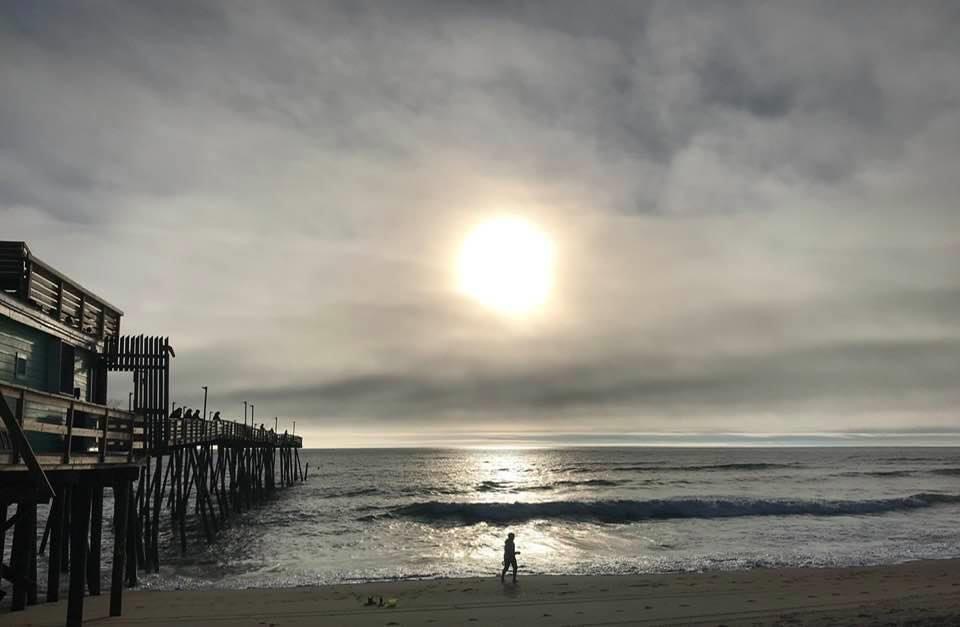
Watching and Waiting. Photo by Michelle Robertson

Flat Bread

My father-in-law has been a widower for eight years. Among the many impressive skills he has acquired in that time is baking. He didn’t have much time to hone this skill in the thirty years that he was serving the country as an active duty Navy officer, but now he has taught himself how to make lovely bread.

The quarantine challenged this recently when his stores of yeast diminished. He found some tucked away in the garage, but like most things tucked away in garages, it perhaps had been there from the time they moved into that house…in the 80‘s. Old yeast is flat yeast, and does not do what yeast was created to do: produce light, raised, airy bread.

1 Corinthians 5 (The Message)

6-8 Your flip and callous arrogance in these things bothers me. You pass it off as a small thing, but it’s anything but that. Yeast, too, is a “small thing,” but it works its way through a whole batch of bread dough pretty fast. So get rid of this “yeast.”

Our true identity is flat and plain, not puffed up with the wrong kind of ingredient. The Messiah, our Passover Lamb, has already been sacrificed for the Passover meal, and we are the Unraised Bread part of the Feast.

So let’s live out our part in the Feast, not as raised bread swollen with the yeast of evil, but as flat bread—simple, genuine, unpretentious.

Paul is being pretty harsh with the church at Corinth. He spends a great deal of this letter chastising them for practices they have adopted which are not in keeping with his teaching. Particularly in this instance, he is reprimanding them for their “puffed up boasting” in the resurrection. Humility is the way, he counsels. Christ looks for followers who are simple, genuine, and unpretentious.

Can you think of a time in your life where your arrogant boasting got you into trouble? Did you suffer the consequences of your own puffed up ego? Are you suffering from someone’s narcissism, and feeling the pain of being around a person who thinks way more highly of themselves than they ought? And by default, seems to think nothing of you?

The Enemy just loves flattery. So do we. When we allow ourselves to be puffed up, we lose sight of everything that has value: simplicity, selflessness, genuine caring for others, and the humble attitude that our Savior took on.

So be like Jesus. Humble yourself in the sight of the Lord, and HE will lift you up. Quit believing your own press, and look outside of yourself.

Humility and servanthood are the best kinds of yeast we can spread throughout our community. When people see THAT kind of bread, they can’t wait to get to the table.

Bread from the Holy Land by Michelle Baker

Believing is Seeing

Have you ever missed out on something really, really big because you were simply in the wrong place at the wrong time? Some of you will remember that actress Christine Lahti missed receiving her Golden Globe award for Chicago Hope because when it was announced she was….wait for it….in the bathroom. That could so easily be me.

Our scripture today takes us to the evening of the Resurrection. The disciples had scattered and were hiding behind a locked door in a house. Then the best thing happened! Jesus joined them. Note that the first words out of his mouth as our resurrected Lord were, “Peace to you.”

John 20 (The Message)

19-20 Later on that day, the disciples had gathered together, but, fearful of the Jews, had locked all the doors in the house. Jesus entered, stood among them, and said, “Peace to you.” Then he showed them his hands and side.

20-21 The disciples, seeing the Master with their own eyes, were exuberant. Jesus repeated his greeting: “Peace to you. Just as the Father sent me, I send you.”

Peace to you…peace to you. Boy, we need to hear those words right now. The disciples were able to see Jesus with their own EYES. Can you imagine that? They were huddled together in fear of their lives, likely discussing all the events that had happened in the last week, and surely some of them were struggling to understand and accept their new normal. In the midst of that, came Jesus.

22-23 Then he took a deep breath and breathed into them. “Receive the Holy Spirit,” he said. “If you forgive someone’s sins, they’re gone for good. If you don’t forgive sins, what are you going to do with them?”

24-25 But Thomas, sometimes called the Twin, one of the Twelve, was not with them when Jesus came. The other disciples told him, “We saw the Master.”

Indeed, Thomas was the Christine Lahti of the resurrection. This poor guy had probably run the other way after the crucifixion and missed the big reveal.

He said what many of us say today:

But he said, “Unless I see the nail holes in his hands, put my finger in the nail holes, and stick my hand in his side, I won’t believe it.”

“Unless God heals my son, I won’t believe in him.”

“Why would a powerful God allow this horrific pandemic to happen? I don’t believe in a so-called loving God that would do this.“

“Evil people are committing terrible acts all over the world: there is no God.”

When we hold up our own litmus test of what a living God should look like, we are likely to be disappointed. God rarely conforms to our narrow version of him.

Eight days later, Jesus appeared to them again. This time, Thomas got the memo and saw Jesus with his own eyes. And don’t miss this important point: eight days later, Thomas had enough faith to show up again….

29 Jesus said, “So, you believe because you’ve seen with your own eyes. Even better blessings are in store for those who believe without seeing.”

That’s us, folks. Even BETTER blessings are in store for those who believe without seeing. So when you have doubt, and you will, remember all those around you who have never seen, but still believe. Remember Thomas. Listen to their stories and testimonies, bury your heart in God’s Word, and receive the Holy Spirit’s guidance. Ask God to help you in your unbelief. Be a Believing Thomas.

We Walk by Faith, Not by Sight by Elaine Walls Reed

He is Risen!

Happy Easter, beloved readers! I am breaking my sabbath practice of not posting on Sunday to share this beautiful Outer Banks Easter sunrise picture. May your Easter celebration be holy, happy, and draw you closer to one another and our Savior. He is risen, indeed!

Easter Sunrise by Wende Pritchard

Completed

We have finally arrived. Today is Good Friday, the last weekday of our journey through Lent. As a child, I used to wonder why we called it “Good.” It seemed to me the day Jesus died on the cross was anything but good. Easter Sunday? Good. Birthdays? Good. Last day of school? Very good. But the crucifixion? Not so good.

Some believe that it is a variation of “God’s Friday.” In Germany, it is called Karfreitag, or “Sorrowful Friday.” Of course what remains good about today is that God’s plan to save humanity could only come through Jesus’ willing sacrifice, which brought eternal life to everyone. Even though it was horrific by any measure, God indeed used Jesus’ death for the “good of those who love him.” (Romans 8:28)

John 19 (The Message)

28 Jesus, seeing that everything had been completed so that the Scripture record might also be complete, then said, “I’m thirsty.”

29-30 A jug of sour wine was standing by. Someone put a sponge soaked with the wine on a javelin and lifted it to his mouth. After he took the wine, Jesus said, “It’s done . . . complete.” Bowing his head, he offered up his spirit.

Note that the scripture reads that he offered up his spirit. It wasn’t taken or forced from him, but he offered it. Can you imagine? He did that for you.

38 After all this, Joseph of Arimathea (he was a disciple of Jesus, but secretly, because he was intimidated by the Jews) petitioned Pilate to take the body of Jesus. Pilate gave permission. So Joseph came and took the body.

Take a look at the detail in the descriptions of Joseph of Arimathea and Nicodemus (below). Joseph was a “secret” disciple, because he was intimidated by the Jews. Nicodemus, however, has made the leap from first coming to Jesus in the dark of night to now being able to come in the broad daylight. What are we meant to learn?

Be Nicodemus. Stand in the light and proclaim Christ as Lord. Don’t be intimidated by the secular world or the scorn of non-believers. Share your faith openly and boldly. You have a story to tell….because it doesn’t end with Good Friday.

39-42 Nicodemus, who had first come to Jesus at night, came now in broad daylight carrying a mixture of myrrh and aloes, about seventy-five pounds. They took Jesus’ body and, following the Jewish burial custom, wrapped it in linen with the spices. There was a garden near the place he was crucified, and in the garden a new tomb in which no one had yet been placed. So, because it was Sabbath preparation for the Jews and the tomb was convenient, they placed Jesus in it.

But for today, we leave Jesus in the tomb. You have to go through Good Friday to get to Easter Sunday.

On this day of sorrows, be mindful of everything it cost our Lord to purchase your salvation. He loves you that much.

It is finished.

The Garden Tomb by Faye Gardner

Love to Die For

Ever wonder what your last thoughts will be just before you die? (A dark subject, I know…) I imagine our thoughts will be about our lives and our loves. We may have sadness over unfinished business, memories of happy times, or recall words we wished we had said, or not said…

They say that in the moments just before dying, your “life flashes before your eyes,” like a video stuck in rewind. How we live today will determine the content. Will it be a movie filled with joy, laughter, shared love, and warm memories? Or will it be filled with regret?

More importantly, what can you do today to change how the video will play?

It is interesting to see what thoughts Jesus had in the hours before his death. He knew that he was at the very end of his life on that last night as he sat among friends having supper:

John 13 (The Message)

 1-2 Just before the Passover Feast, Jesus knew that the time had come to leave this world to go to the Father. Having loved his dear companions, he continued to love them right to the end. It was suppertime. The Devil by now had Judas, son of Simon the Iscariot, firmly in his grip, all set for the betrayal.

“Having loved his dear companions, he continued to love them right to the end.” His last hours were filled with active love. It was this love that would see its greatest manifestation the next day on the cross. Jesus’ entire life was love in action.

3-6 Jesus knew that the Father had put him in complete charge of everything, that he came from God and was on his way back to God. So he got up from the supper table, set aside his robe, and put on an apron. Then he poured water into a basin and began to wash the feet of the disciples, drying them with his apron. When he got to Simon Peter, Peter said, “Master, you wash my feet?”

Jesus’ love was manifested that night in a beautiful act of servanthood. It did not feel right to the disciples that the Master was going to get on his knees and wash their dirty feet. It almost felt like groveling.

Jesus answered, “You don’t understand now what I’m doing, but it will be clear enough to you later.”

Peter persisted, “You’re not going to wash my feet—ever!”

Peter’s objection was in part his way of acknowledging Jesus’ authority over them. Looking at the filth on his bare feet, he cringed at the thought of his teacher, rabbi, master, and friend even touching them. But Jesus was trying to leave them with a very important message: “when you serve one another, that is when you have served me.”

Jesus said, “If I don’t wash you, you can’t be part of what I’m doing.”

“Master!” said Peter. “Not only my feet, then. Wash my hands! Wash my head!”

We need to be like Peter and take the full immersion of Jesus’ washing. Only the blood of Jesus that flowed from the cross can truly make us clean. From our head to our toes, we need to allow him to cleanse us from the inside out.

Imagine if you were ask for complete cleansing, and commit to living a life of servanthood in his example. How different would your end-of-life video look?

It’s not too late. Jesus is waiting, with his basin and towel. On the night before he died, he thought not of himself, but of YOU.

Come to the water. Jesus is ready.

The Basin and the Towel

Betrayal

Think of a time when you were betrayed. It happens to everyone sooner or later. It might be as simple as a confidence that was shared inadvertently, or as devastating as a spouse cheating on you and destroying your marriage. Maybe it happened in your family, with siblings or parents. Perhaps it was a co-worker who stabbed you in the back in order to further their career. Whatever the circumstance, betrayal is a gut-wrenching experience. You suddenly feel like the floor has dropped out from under your feet and you are riding one of those centrifugal-force carnival rides that presses you up against the wall. All you can do is wait for it to stop spinning.

Imagine being Jesus, sharing a last meal with his buds, and realizing that one of the cherished twelve was about to do that very thing:

John 12 (The Message)

21 After he said these things, Jesus became visibly upset, and then he told them why. “One of you is going to betray me.”

This tight-knit group was confused and somewhat horrified. Who, among them, could do such a thing? You probably felt the same way about your betrayer.

Note the tender care John takes to describe his own relationship with Jesus here. I love the image of him reclining next to Jesus with his head on his shoulder:

22-25 The disciples looked around at one another, wondering who on earth he was talking about. One of the disciples, the one Jesus loved dearly, was reclining against him, his head on his shoulder. Peter motioned to him to ask who Jesus might be talking about. So, being the closest, he said, “Master, who?”

Now watch what happens with the bread. In our understanding of Jesus as the Bread of Life, and realizing that this meal is the institution of Holy Communion, it is fascinating to see how bread is used here:

26-27 Jesus said, “The one to whom I give this crust of bread after I’ve dipped it.” Then he dipped the crust and gave it to Judas, son of Simon the Iscariot. As soon as the bread was in his hand, Satan entered him.

“What you must do,” said Jesus, “do. Do it and get it over with.”

28-29 No one around the supper table knew why he said this to him. Some thought that since Judas was their treasurer, Jesus was telling him to buy what they needed for the Feast, or that he should give something to the poor.

30 Judas, with the piece of bread, left. It was night.

Jesus broke the bread (his body,) dipped it in oil (an anointing,) and offered it to his betrayer. The betrayer took it, but did not consume it. Satan took that opportunity to fill the void.

Then Judas left, bread in hand.

This is what happens to us when we are offered the Word of God but fail to internalize it. It opens us up to all kinds of influences. Jesus is the Bread of Life, but in order for that take hold, you have to consume him by taking in EVERYTHING he taught, and by following the example of his life. Otherwise, you are simply getting up from the table and walking away unchanged, with the bread in your hand.

Jesus said, “Take. EAT. This is my body which is broken for you. Do this in remembrance of me.”

So eat the bread, people. Let him fully enter in to your mind, your heart and your life. He died for it, so that you might live.

The Garden of Gethsemane by Michelle Baker

Reckless Love

The first time I heard Reckless Love by Cory Asbury was at a Youth Sunday worship service several years ago. Three teenage girls sang it, and I thought it was one of the most wonderful things I had heard in a long time. Those sincere young voices are in my heart today, as we have realized that we most likely will not have our annual Youth Sunday as a live worship experience this year.

Here are the lyrics to the chorus:

Oh, the overwhelming, never-ending, reckless love of God
Oh, it chases me down, fights ’til I’m found, leaves the ninety-nine
I couldn’t earn it, and I don’t deserve it, still, You give Yourself away
Oh, the overwhelming, never-ending, reckless love of God.

Our scripture today describes Jesus’ act of reckless love as he faced his final days on earth. He was speaking to a crowd of people as his death was drawing near, and explained reckless love like a grain of wheat, which must be buried in order for it to bring forth life and multiply:

John 12 (The Message)

24-25 “Listen carefully: Unless a grain of wheat is buried in the ground, dead to the world, it is never any more than a grain of wheat. But if it is buried, it sprouts and reproduces itself many times over. In the same way, anyone who holds on to life just as it is destroys that life. But if you let it go, reckless in your love, you’ll have it forever, real and eternal.

Truly his love for us is reckless. It is never-ending and overwhelming. Here he was in his final week, feeling storm-tossed about what was about to happen. But did he think of himself? No, he thought of you. He would not ask his father to get him out of it. Instead, he invited God to use his death to display his glory.

27-28 “Right now I am storm-tossed. And what am I going to say? ‘Father, get me out of this’? No, this is why I came in the first place. I’ll say, ‘Father, put your glory on display.’”

”Father, put your glory on display.”

Jesus is committing to following through. He, who was present at the creation of the world, was willing to be falsely tried, spit upon, ridiculed, beaten, scorned, pierced, and nailed to a tree for us.

How can we possibly respond to this kind of reckless love? This is a love that you can’t earn or deserve. This is a love that chases you down. This is a love that brings the gift of eternal life.

Are you ready to stop running?

26 “If any of you wants to serve me, then follow me. Then you’ll be where I am, ready to serve at a moment’s notice. The Father will honor and reward anyone who serves me.

Then follow him.

Following Footsteps by Elaine Walls Reed

Reckless Love

All Dogs Go to Heaven

Losing a pet is an excruciating thing. Pet owners will tell you that their pet has become part of their family, and so their death creates an incredible void that cannot be filled. My father struggled with that. He would often talk about his first dog, Tilley, and vowed to ask God when he got to heaven why pets were given much shorter life spans than humans.

Dad is in heaven now, and so he knows the answer to his query. Often when a pet dies, pastors are asked if they go to heaven. I always quote verse 6 of the 36th Psalm, which is today’s reading:

Psalm 36 (Contemporary English Version)

But your loyal love, Lord, extends to the skies;
    your faithfulness reaches the clouds.
Your righteousness is like the strongest mountains;
    your justice is like the deepest sea.
        Lord, you save both humans and animals.

It always seems like a simple question to me. As far as I’m concerned, it wouldn’t be heaven without them! Pepe, Annie, Sam the guinea pig, Muffin the cat…I am looking forward to seeing them again.

God’s saving grace is that big. God’s saving grace is that inclusive. God’s saving grace is eternal, and all encompassing.

Your faithful love is priceless, God!
    Humanity finds refuge in the shadow of your wings.
They feast on the bounty of your house;
    you let them drink from your river of pure joy.
Within you is the spring of life.
    In your light, we see light.

Look again at verse 7. It could not be more appropriate for Holy Week during a pandemic: “Humanity finds refuge in the shadow of your wings.” Under his wings, we experience the spring of life and God’s light. We need that now more than ever.

10 Extend your faithful love to those who know you;
    extend your righteousness to those whose heart is right.
11 Don’t let the feet of arrogant people walk all over me;
    don’t let the hands of the wicked drive me off.

Even with our global crisis, the arrogant and the wicked ones are still trying to walk all over us. God answers our cry for protection by saying, “Turn off your device.” Figure out where you are experiencing a feeling of being trampled to death, and turn it off.

I haven’t watched the news in over three weeks. I know some people who turn it on in the morning and don’t turn it off until bedtime. Not me. Watching the daily misery and back-biting that has become “news” today was pulling me down into a pit. No more.

So turn it off, and turn to God. He is the only thing that will save us. His faithful love is there for the taking. His righteousness overrides the latest poll numbers, pandemic projections, and the constant barrage of misinformation. His justice is like the deepest sea, and we are invited to drink from his river of pure joy.

You want to know what IS true? We are one day closer to the end of this thing. Thanks be to God.

Isolation Fishing by Wende Smith Pritchard

Hero to Zero

In an attempt to keep my content “evergreen,” I try not to reference dates. However, as a public service, I need to inform you that this Sunday is Palm Sunday. I am breaking my evergreen rule because I realize many of us have lost track of what day it is as this pandemic continues. The struggle is real, folks. Somebody mentioned that everyday feels like Saturday, with the entire household at home looking for something to do.

So let’s get ready for our virtual Palm Sunday parade. It saddens me DEEPLY that we will not gather in our sanctuaries and watch the little children process down the center aisle, waving palm branches as we sing “Hosanna! Hosanna! Hosanna to the King!” So please, if you will, get up after you read this and parade around your house in your jammies, waving your palms.

What? You don’t have any palm branches? Look at your hands. Yep. Two palms, right there. God provides!

John 21 (The Message)

1-3 When they neared Jerusalem, having arrived at Bethphage on Mount Olives, Jesus sent two disciples with these instructions: “Go over to the village across from you. You’ll find a donkey tethered there, her colt with her. Untie her and bring them to me. If anyone asks what you’re doing, say, ‘The Master needs them!’ He will send them with you.”

4-5 This is the full story of what was sketched earlier by the prophet:

Tell Zion’s daughter,
“Look, your king’s on his way,
    poised and ready, mounted
On a donkey, on a colt,
    foal of a pack animal.”

Try to imagine this scene. Jesus is at the height of his popularity, albeit fleeting. He is making a triumphal entry into Jerusalem. The crowd is going wild….think Super Bowl Parade wild. Some understand the prophecy that is being fulfilled. Some have seen his miracles. Some remember the lunch he served on the hillside to the 5,000. Others have just come to see what the ruckus is about.

Here comes our king, riding on a donkey so small that he probably has to hold his feet up or they would drag on the road. Something is wrong with this picture.

6-9 The disciples went and did exactly what Jesus told them to do. They led the donkey and colt out, laid some of their clothes on them, and Jesus mounted. Nearly all the people in the crowd threw their garments down on the road, giving him a royal welcome. Others cut branches from the trees and threw them down as a welcome mat. Crowds went ahead and crowds followed, all of them calling out, “Hosanna to David’s son!” “Blessed is he who comes in God’s name!” “Hosanna in highest heaven!”

As the parade goes on, people begin to feel discomforted. The optics in front of them are not jiving with their idea of “kingship.”

10 As he made his entrance into Jerusalem, the whole city was shaken. Unnerved, people were asking, “What’s going on here? Who is this?”

11 The parade crowd answered, “This is the prophet Jesus, the one from Nazareth in Galilee.”

But does anything good ever come from Nazareth?

Palm Sunday is the beginning of the downhill slide to the crucifixion, which is less than a week away. It didn’t take long for the crowd to turn from yelling his name in praise to yelling his name as their choice over Barabbas for the death penalty. Because his crown was not bejeweled and his mode of transportation was not a great white charger, their enthusiasm for this “king” began to wane.

Instead, he rode a humble donkey to receive a crown of thorns.

We can be guilty of this as well. At the moment of our enthusiastic conversion, or after a stirring retreat, or in the passion of a high and holy experience, it is easy to wave our palms and sing Hosannas. But when illness, disaster, betrayal, or pandemics come, we can easily begin to think, “What’s going on here? Who is this?”

Resist that. Change your idea of what your king should look like. You won’t always get the answer to prayer that you are hoping for…and that is often a good thing. Worshipping the king requires trusting that he works for the good of those who love him.

What you will get is a humble savior, a crucified and risen Lord, and the king of kings. See him for what he is!

This king is the one who went from hero to zero for the sake of the world, ensuring your eternal life. God SO loved the world he sent us this only son, who took on beatings, scorn, and shame for the salvation of his people.

Hosanna, indeed!

Virtual Palm Sunday Prep Photo by Colin Snider