A recent sermon series had me studying the history of the beautiful Irish hymn, Be Thou My Vision. Do you know the story?It begins in ancient Ireland with St. Patrick. When he was just sixteen years old, pirates kidnapped Patrick and sold him into slavery in Ireland. Thus he entered adulthood knowing the Gaelic language and Irish customs. He also became a Christian during this time. Years later, he managed to escape and return home to his family in England. While most would have stayed home forever, Patrick chose to go back to Ireland and become a missionary It was during this second trip, around 433, that the inspiration for Be Thou My Vision began.
The king of Ireland was King Laoghaire. He was a great Celtic High King, renowned for his ferocity and brute strength. He resided on a hill called Tara. Every year at the time of the Beltaine Festival, which occurred at the spring equinox, King Laoghaire a fire ceremony for the druids and his subjects called the Feast of Tara. The highlight of the feast was when he lit a sacred fire at the top of the hill to honor the pagan sun god, and it was left burning for a number of days.
The Hill of Tara was a cultic center where people worshiped the Celtic god of the sun, Lugh. In pagan society, the sun was given exalted importance because it is the main source of light and warmth, and it makes the plants grow, providing sustenance. Consequently, pagan sun worship was deeply embedded in the fabric of the Celtic people.
The king strictly prohibited any other fires that could be seen from Tara during the entire duration of the festival.
But there was another hill in the same region about ten miles away called the Hill of Slane. When visibility was good, it was possible to see from one hill to the other.
St. Patrick was not intimidated by the king’s pagan festival, and defiantly disregarded the king’s order. St. Patrick lit a Paschal (meaning Easter) fire and an Easter Candle during the Vigil Service on the night before Easter. The fire was left burning and could be seen clearly from the Hill of Tara. King Laoghaire was either impressed or intimidated by Patrick’s devotion and, despite his defiance, Patrick was permitted to continue his work as Ireland’s first Christian missionary.
St. Patrick made an emphatic statement: Jesus is the light of the world, and none other, not even a pagan sun god, could hold a candle to him.
John 8 (New International Version)
12 When Jesus spoke again to the people, he said, “I am the light of the world. Whoever follows me will never walk in darkness, but will have the light of life.”
We are called to have the same vision that Patrick had. To be a beacon of light on a hill, proclaiming the Lordship of Jesus Christ. That is the vision for the church: to act with love, justice, and righteousness as we shine the light of Christ into a dark and hurting world (Jeremiah 9:23-24).
I am thankful that my denomination has sought to be a headlight in some of the major social issues of our time rather than a brake-light. Evangelism and social action are the two sides of a whole Gospel. Without vision, we will lose both. The church has a vision to make disciples of Jesus Christ for the transformation of the world and to bring God’s steadfast love, justice, and righteousness to all of God’s children. This is a huge task. But a church that has a vision does not ask for tasks equal to its power. A church that has a vision asks for power equal to its tasks. And this is the task we have been assigned.
Vision in this context is not just about seeing God’s vision for our church and our own lives, but also being the vision that others can see, like Patrick’s Pascal fire on that hill. When we make God our sole vision…i.e. when we say, “Naught be all else to me, save that Thou art” … we reflect his light into a world that desperately needs him.
See the vision? Be the vision.
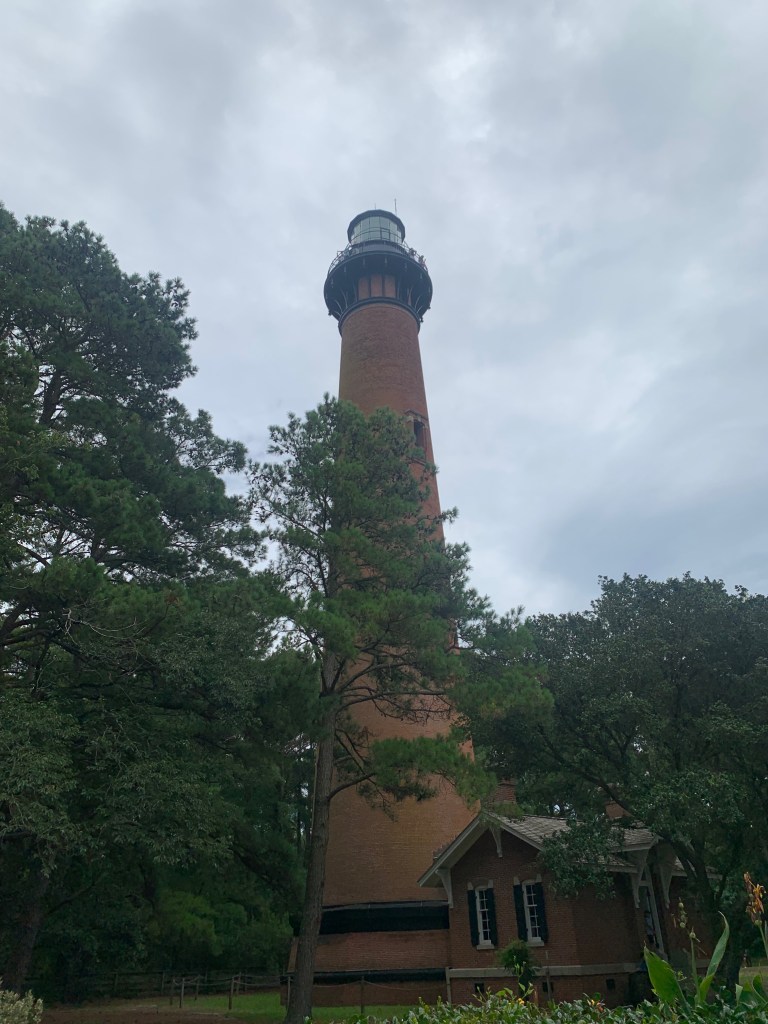
Be a Beacon of Light
 At Water’s Edge